End Use & Environment
Truck cargo, machinery, outdoor storage, scaffold enclosure, agriculture, warehouse curtain or OEM resale. Add rain, sun, wind, abrasion, cold, mildew, chemical splash or frequent-folding exposure where relevant.



Send DERFLEX the application, finished dimensions, material direction, reinforcement, hardware, quantity and packing requirements. We can then discuss a made-to-order tarp specification and quotation route for industrial, transport, agriculture, construction and OEM programs.
A useful quote should explain what is being priced. For custom tarps, the difference between a rough estimate and a production-ready quotation is usually the quality of the RFQ information.
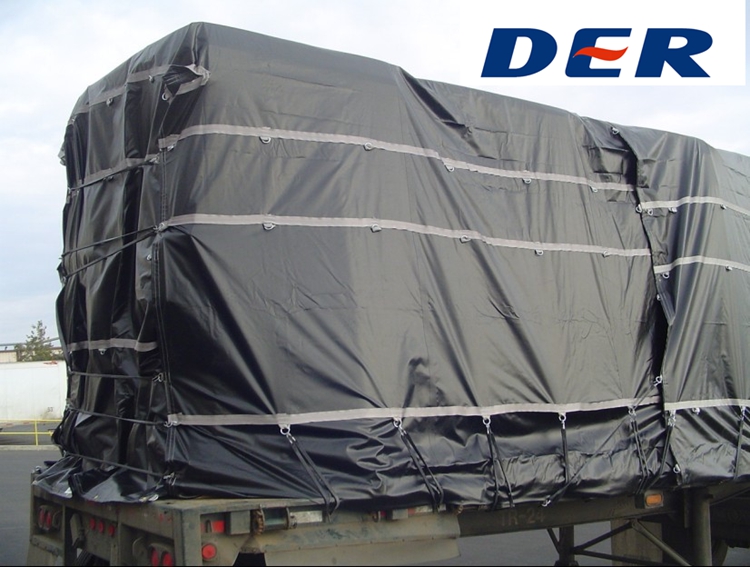
A short inquiry can start the conversation, but these seven data points make it easier to compare materials, identify hidden fabrication work and reduce revisions before sampling.
Truck cargo, machinery, outdoor storage, scaffold enclosure, agriculture, warehouse curtain or OEM resale. Add rain, sun, wind, abrasion, cold, mildew, chemical splash or frequent-folding exposure where relevant.
Provide length × width × drop, shape, openings, pockets and tolerance expectations. Irregular covers benefit from a dimensioned sketch, CAD drawing or marked photo.
State PVC coated polyester, laminated tarp, mesh, canvas or another direction if known. For PVC tarps, include target GSM, thickness, yarn / scrim requirement or reference sample when available.
Indicate welding or sewing, hem width, rope edge, webbing, double layer, corner patches, high-abrasion patches, sleeves, flaps and any zones that carry repeated pulling force.
Give grommet spacing, D-ring positions, straps, buckles, hooks, elastic, zippers or hook-and-loop layout. Hardware density can materially change fabrication time and cost.
Prototype, project batch, replacement series, container program or distributor SKU plan. A one-off cover and a repeat OEM program can use different costing and production planning.
Include logo, labels, barcode, carton or bale packing, pallet requirements, shipping marks, destination country / port and preferred Incoterm if freight should be considered.
A previous tarp, failed cover, installed photo or competitor-style sample can reveal stress points and construction details that dimensions alone do not show. Final specifications should still be confirmed in writing.
Custom tarp pricing is rarely a clean “finished area × price per square meter” calculation. The material layout, conversion work, hardware and order format all influence the finished cost.
Finished area plus hems, overlaps, seam allowance, panel layout, cutting loss and reinforcement patches. Roll width can affect yield.
Base textile, coating / lamination route, total GSM, surface finish and optional UV, mildew, cold-flex, FR or other agreed performance directions.
Cutting, welding, sewing, shaped panels, pockets, sleeves, windows, flaps, multiple seam lines and difficult handling increase labor time.
Webbing, rope hems, grommets, D-rings, straps, buckles, corner patches and dense tie-down layouts add both component and installation work.
Logo printing, labels, carton design, retail packs, barcodes, pallets, folding rules and export marks should be quoted as part of the program.
Prototype work, color matching, sample approval, inspection scope, documentation and repeat-order controls influence cost differently at each volume.
Not every buyer needs a production-ready quotation on the first email. Define whether you are budgeting, comparing suppliers or preparing an order so the quotation can match the decision you need to make.
Useful when the product is still being defined.
Useful when you want quotations built around the same specification.
Useful after the critical details have been approved.
The following is a specification starting point, not a promise that every option fits every job. Final structure, measurable performance and compatibility should be confirmed by application review, TDS, drawing and approved sample where required.
| RFQ Item | Common Direction | Why It Changes the Quote |
|---|---|---|
| Material | PVC coated polyester, laminated PVC tarp, mesh, canvas, clear PVC or application-specific technical fabric | Different structures vary in raw material, fabrication method, weather behavior and suitable end use. |
| Weight | DERFLEX publishes approximately 350–1200 gsm directions for many PVC tarp applications; heavier or specialized structures may be discussed separately. | GSM influences material consumption cost and handling, but should be evaluated with base fabric, coating and performance needs. |
| Size / Shape | Rectangle, square, fitted box cover, trailer cover, machine cover, curtain, cylinder cover or drawing-based irregular shape | Panel layout, seams, waste and fabrication time can change substantially with geometry. |
| Edge Finish | Welded hem, sewn hem, rope edge, webbing edge, double layer, reinforced corner or sleeve / pocket | Stress-point design often matters more than simply increasing material weight. |
| Hardware | Grommets / eyelets, D-rings, straps, buckles, rope, elastic, zipper, hook-and-loop or custom fixing points | Component count and attachment labor should be compared line by line between quotations. |
| Performance Direction | Waterproof construction, UV-stabilized formulation, mildew resistance, cold resistance, FR direction, anti-static or abrasion-focused options | Performance requirements may change material formula, top finish, testing route and minimum order planning. |
| Branding | Logo printing, color matching, warning marks, care labels, barcode and private-label carton | Printing method, artwork area, color count and packing detail can create tooling or setup work. |
| Supply Form | Roll goods, cut panels, semi-finished welded panels, complete finished tarps or OEM retail packs | The same fabric can carry very different conversion and packing cost depending on delivery format. |
Dimension language is one of the easiest places for two suppliers to price different products while appearing to quote the same tarp.
The dimensions expected after hemming, welding, sewing and other fabrication. For fitted or replacement tarps, finished size is usually the more useful commercial reference.
The fabric dimension before hems, folds, overlaps or trimming. This is useful for converters but can cause confusion when a buyer expects those numbers to be the installed dimensions.
The commercial objective is not to add steps. It is to remove expensive ambiguity before bulk production.
Confirm application, dimensions, photos / drawing, exposure, quantity and buyer channel.
Discuss fabric structure, GSM, coating, color, surface and performance direction.
Set seam type, hem, reinforcement, hardware positions, branding and packing.
Price the agreed specification and determine whether material, fabrication or finished-cover approval is needed.
Use the approved specification, drawing, sample and packing details as the reorder reference.
A quote for one equipment cover should not be structured the same way as a distributor program or a container of tarp rolls.
Priority: repeatable SKUs, price tiers, packaging, labels, color consistency and reorder documentation across a product range.
Priority: finished dimensions, high-stress reinforcement, tie-down layout, abrasion zones and replacement fit for real truck bodies.
Priority: drawings, installation method, site exposure, seams, access openings, attachment points and project delivery sequence.
Priority: roll width, GSM, weldability, coating consistency, color, surface finish and roll packing for local fabrication.
Priority: product grade architecture, logo, custom color, barcode, carton, retail presentation and repeat-order specification control.
Priority: accurate finished size, old-cover measurements, photos, hardware positions and a clear distinction between copied and improved details.
The lowest figure is not automatically the lower-cost solution if the quotations contain different materials, dimensions, hardware or packing assumptions.
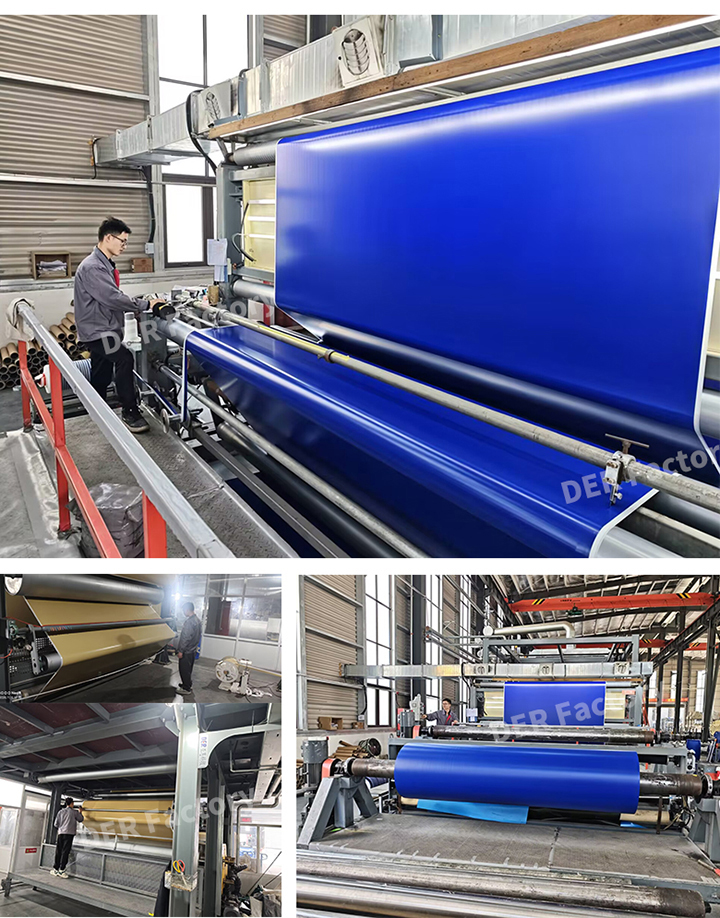
DERFLEX manufactures PVC coated fabrics and tarpaulin materials and supports custom roll supply, cut panels and finished tarp programs. This matters when the quotation needs to coordinate material structure with welding, reinforcement, hardware, branding and repeat-order control.
For a custom tarp project, the practical advantage is the ability to discuss the coated textile, finished-cover construction and OEM presentation as one specification rather than as unrelated purchasing items.
These six pages address the decisions buyers commonly make before or after requesting a custom tarp quote.
Short answers to common questions from importers, distributors, fleet operators, project buyers, converters and OEM teams.
Start with the application, finished size or drawing, material direction, quantity and destination. For a more comparable quotation, add seam / hem construction, reinforcement, grommet or D-ring layout, performance requirements, color, branding and packing.
Yes. Provide the use environment, expected handling, photos or a reference sample and the approximate dimensions. DERFLEX can discuss a material direction. Final construction should be confirmed before production rather than selected only from a generic weight label.
They may use different base fabrics, coating levels, panel layouts, seam methods, reinforcement, hardware spacing, printing, packing and quality requirements. The same outside dimensions do not mean the same bill of materials or fabrication workload.
DERFLEX is primarily positioned for B2B supply and can discuss prototypes, project batches, replacement programs, wholesale sizes, material rolls and OEM / private-label programs. Commercial feasibility and minimum quantities depend on the selected material, processing and order structure.
For a finished custom cover, finished size is usually the clearer starting point. If you are a converter purchasing panels or roll material, cut size may be appropriate. Always state which definition you are using and identify critical tolerances on the drawing.
Yes. Logo method, print area, color, labels, barcode, carton, bale or pallet format and export shipping marks can be included in the RFQ. These details should be quoted together with the tarp rather than added after the finished-cover price is approved.
For a faster technical review, attach a drawing or marked photo and separate must-have requirements from preferences. DERFLEX can discuss a practical material and fabrication route before the commercial specification is finalized.