
Tear at tie-down points
Prioritize base-fabric denier, thread density, tear strength, reinforced hems and hardware design rather than simply adding coating weight.



DERFLEX supplies double coated tarpaulin made with a reinforced polyester scrim and PVC coating on both faces. The material is developed for converters, truck-cover makers, tent fabricators, distributors and industrial buyers who need a weldable, weather-resistant fabric with configurable weight, width, color and surface treatment.
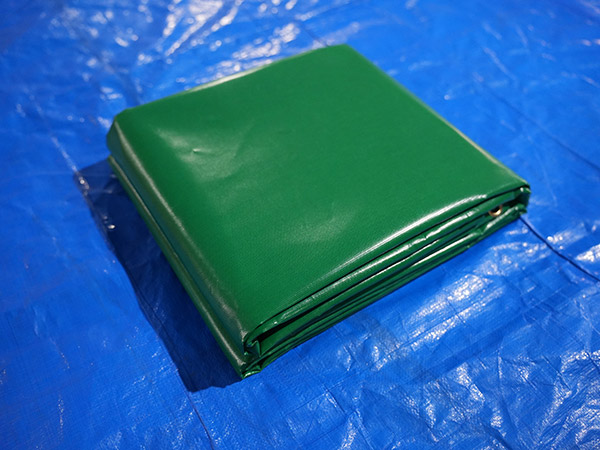
In industrial PVC tarpaulin purchasing, double coated tarpaulin normally refers to a textile reinforcement—most often high-tenacity polyester—with PVC applied to both faces. This creates a protected outer surface and a protected reverse surface instead of leaving the base fabric exposed on one side.
The phrase can be used differently by different suppliers. Some use “double coated” to mean coating on two sides; others use it for two coating passes or for a separate topcoat over a PVC layer. For procurement, the safest approach is to specify the actual cross-section, base-cloth construction, total coating weight and required surface treatment rather than relying on the phrase alone.
DERFLEX can match a PVC tarpaulin specification to the end use, whether the material will become a truck cover, industrial cover, tent roof, warehouse curtain or custom fabricated tarp.
The correct specification depends on tension, abrasion, climate, welding method, target service conditions and buyer standards. The ranges below are a practical starting point for quotation and sample selection—not a substitute for the final approved TDS.
| Parameter | Typical DERFLEX Project Options | Why Buyers Should Specify It |
|---|---|---|
| Base Fabric | Polyester scrim; common constructions include 500D, 800D, 1000D, 1300D, 1680D or custom | Influences tensile strength, tear resistance, dimensional stability and handling |
| Coating Structure | PVC coated on both faces; coating formula and coating balance adjusted by application | Defines surface protection, weldability, flexibility and reverse-face performance |
| Total Weight | Approx. 400–1200 gsm for common industrial programs; heavier grades can be discussed | Higher GSM may add coating mass and robustness, but should not replace strength data |
| Thickness | Approx. 0.35–1.20 mm depending on fabric and coating weight | Important for converter settings, folding behavior and finished-product design |
| Roll Width | Commonly 1.02–3.20 m; other widths subject to production feasibility | Affects welding layout, material yield, labor and finished seam count |
| Roll Length | 50 m, 100 m or project-specific packing | Should match converter handling, storage, container loading and cutting plans |
| Surface Finish | Glossy, matte, embossed, lacquered; acrylic or PVDF-type topcoat options where applicable | Impacts cleanability, appearance, printability, blocking and weathering behavior |
| Functional Options | UV stabilization, anti-mildew, anti-static, low-temperature formula, flame-retardant options | Functional claims should be tied to the agreed formula and requested test method |
| Color | Blue, green, grey, white, red, yellow, black, orange and custom matching | Color can affect heat absorption, visual branding and batch-control requirements |
| Fabrication | Hot-air welding, HF welding and sewing depending on material and finished design | Welding compatibility should be checked on the actual production formula |
Technical ranges are indicative. Final values, tolerances, certifications and test methods should be confirmed in the quotation, sample approval and product data sheet for each order.
A common purchasing mistake is to compare only weight. Two fabrics at the same GSM can perform differently because yarn structure, coating adhesion, PVC formulation and surface treatment are not identical. Start with what can fail in your application, then set the specification.
Prioritize base-fabric denier, thread density, tear strength, reinforced hems and hardware design rather than simply adding coating weight.
Consider coating thickness, surface treatment, fabric tension, contact geometry and whether both sides of the tarp are exposed to friction.
Specify UV stabilization, low-temperature flexibility and the required aging or color-retention test instead of using vague “outdoor grade” wording.
The fabric can be waterproof while a finished cover leaks at seams. Confirm welding method, overlap width, seam strength and fabrication quality.
Use suitable surface lacquer and anti-mildew options where required, and define cleaning chemicals if the cover is frequently washed.
State the target test standard at inquiry stage. Flame-retardant performance is formula- and test-specific and should be confirmed with documentation.
These terms describe different constructions, but none is automatically the correct choice for every job. Buyers should compare the actual TDS, intended processing method and project economics.
PVC coating protects both sides of the polyester scrim. Often selected for industrial covers, transport tarps and converter applications where both faces need a finished surface and welded fabrication.
Useful when only one working face requires the main coating or when weight, cost or a specialized reverse surface is more important than symmetric protection.
Uses laminated PVC film layers rather than the same coating process. It can be a practical option for many covers; final durability depends on film, scrim, adhesion and use conditions.
For applications with frequent handling and outdoor exposure, buyers often compare double coated PVC grades with heavy duty waterproof tarpaulin. The right decision should be based on test data and total lifecycle requirements, not a construction name by itself.
Many B2B buyers do not need finished tarps—they need stable roll goods that run consistently through cutting, hot-air welding, HF welding, sewing, printing or hardware installation. That changes what matters in purchasing.
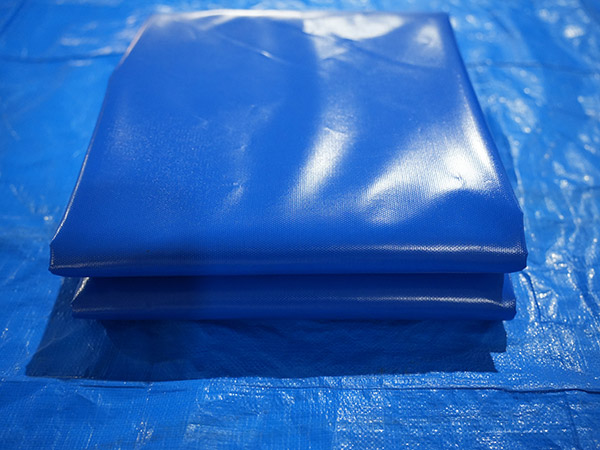
If your production is focused on truck and logistics covers, also review DERFLEX PVC tarpaulin for truck covers & transportation for application-specific specification ideas.
A useful manufacturer should convert an application requirement into a measurable specification. DERFLEX can support the process from material selection through sample approval and bulk roll production.
Share the finished product, climate, load, tension points, folding frequency, cleaning method and expected fabrication process.
Choose denier, scrim density, total GSM, coating balance and surface finish based on mechanical and environmental needs.
Specify UV, FR, anti-mildew, anti-static, cold-resistance, lacquer or printing requirements with target test methods where needed.
Validate color, hand feel, coating surface, welding behavior and critical test values before locking the production specification.
Double-side coated construction is especially useful where the reverse face is exposed to moisture, dirt, abrasion or repeated handling. Final suitability still depends on the specific fabric grade and finished-cover design.
Roll tarps, flatbed covers, side-curtain systems and general cargo protection. Mechanical strength and welding consistency are key procurement factors.
Machinery covers, yard-stock protection, plant maintenance covers and custom fitted covers exposed to weather and surface friction.
Material covers, temporary roofs, weather enclosures, partitions and containment products where cleanability and weldable seams are useful.
Event, commercial and industrial shelter systems requiring waterproof material, color options and optional flame-retardant formulations.
Equipment, feed, crop and storage protection where UV exposure, moisture and repeated seasonal handling should be considered in the specification.
OEM tarps, sewn/welded covers, branded roll goods and distributor programs with repeatable color, label and packaging requirements.
For shelter fabrication, see PVC tarpaulin for tents & awnings. For high-sun exposure, compare the project with UV resistant PVC tarpaulin options.
A supplier page can list attractive features, but procurement teams need evidence that the same construction can be repeated in bulk. Use the checklist below when comparing a double coated tarpaulin manufacturer.
DERFLEX focuses on PVC coated fabric and tarpaulin materials for international B2B programs. The value for buyers is not a single standard SKU, but the ability to align material construction, roll format and conversion requirements with the finished product.
Projects are discussed through measurable items such as yarn structure, GSM, width, finish, test method and fabrication process.
Material can be selected with hot-air/HF welding, sewing, edge reinforcement, eyelets or other conversion steps in mind.
Useful for importers, distributors and private-label buyers who need repeatable roll presentation and market-ready packaging.
Buyers sourcing stronger roll grades can also review heavy duty tarpaulin fabric for additional application and specification context.
These related pages cover material selection, outdoor exposure and common end uses. They are included as contextual links for buyers who are still defining the final specification.
Answers for importers, fabricators, distributors and industrial procurement teams comparing double coated tarpaulin fabric and roll supply.
Double coated tarpaulin generally means a reinforced textile—commonly polyester—with PVC coating applied to both faces. Because terminology varies by supplier, buyers should confirm the cross-section, base fabric, coating material and total GSM on the technical data sheet.
No. Coated and laminated tarpaulins use different production routes. A double coated fabric normally has coating applied to both sides of the scrim, while laminated tarpaulin bonds films to a textile reinforcement. Both can be suitable for waterproof covers; the correct choice depends on strength, adhesion, flexibility, processing and cost targets.
There is no single GSM that fits every application. Medium-duty covers may use lower weights, while truck, industrial and repeated-use products often need heavier grades. Buyers should compare tensile strength, tear strength, coating adhesion, base-fabric construction and environmental exposure together with GSM.
Yes. Project options can include custom GSM, base-fabric structure, width, color, surface finish, UV stabilization, anti-mildew, low-temperature formulation, flame-retardant options, roll packing and OEM labeling. Final feasibility depends on the specification and order plan.
Many PVC coated polyester tarpaulins are suitable for hot-air and high-frequency welding. Welding behavior depends on the exact PVC formula, topcoat and thickness, so converter trials should be performed on approved production samples before bulk fabrication.
Send the application, target GSM or current sample, roll width and length, color, surface finish, special functions, welding or sewing process, required test standards, quantity and destination. This allows the supplier to recommend a more accurate construction and quotation.
Send DERFLEX your target GSM, roll width, color, climate, fabrication process and end use. The team can recommend a practical double coated tarpaulin fabric for sampling and quotation.
Final technical performance is subject to the agreed specification, sample approval and applicable test method.