


 Engineered material solutions
PU Leather for Shoe Uppers Made for movement.
For footwear brands, shoe manufacturers and material importers, DERFLEX offers PU leather for shoes as an application-led roll material program. Specify the shoe upper material by its surface, backing, thickness, forming behavior and required tests—not by appearance alone. Discuss custom grain, color, hand feel and production-ready roll requirements before approving bulk supply.
Supply scope: PU synthetic-leather roll material. Finished shoes, soles and complete shoe assembly are not included by default.
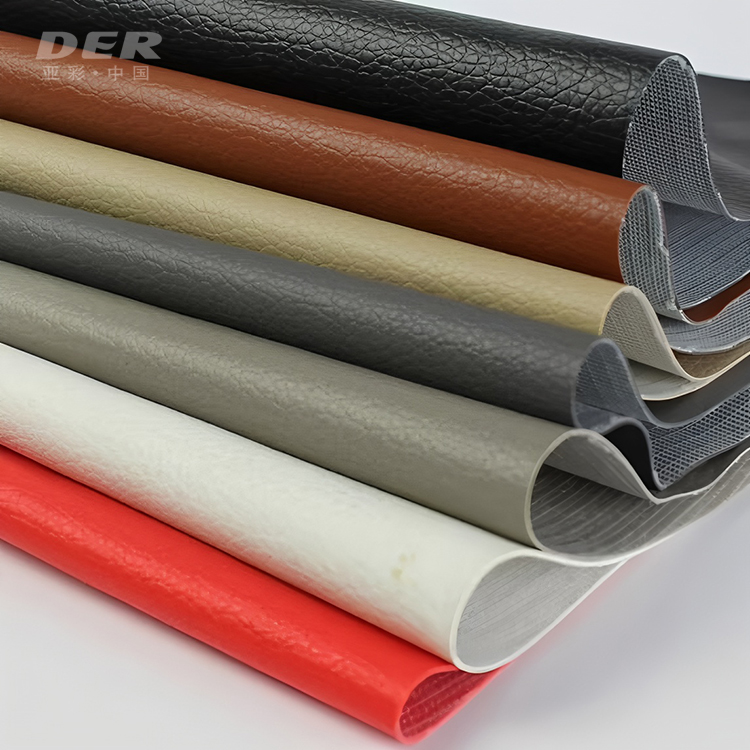
01 / Understanding the material
What is PU leather for shoe uppers?
A useful shoe upper material has to look right on the finished shoe and behave predictably as the upper is cut, stitched, formed around a last, bonded and repeatedly flexed.
PU leather for shoes is a synthetic, leather-look sheet material made with a polyurethane-based surface system over a backing such as fabric, nonwoven or microfiber. Designers can specify surface grain, gloss and color, while developers evaluate the complete layered construction for the correct footwear component.
Unlike a general-purpose upholstery roll, a footwear upper must work within a moving assembly. The vamp creases repeatedly, the toe area experiences abrasion, the quarter needs shape and stitching stability, and edges may be folded, skived or bonded. Shoe type, component location and production method therefore determine the appropriate grade.
The term “PU leather” does not prove a composition is animal-free: some PU-coated materials have split-leather bases. For fully synthetic labeling, request a complete material-composition declaration for the selected construction. The broader definitions are explained in DERFLEX's PU leather material guide.
Crease & repeated movement
The vamp and flex zones require material behavior that remains acceptable after repeated bending. Consider crease appearance, surface cracking and backing change at the relevant temperature.
Cutting, stitching & edges
Review cutting yield, grain orientation, needle damage, seam strength, edge folding and any skiving required to avoid bulky or weak upper joints.
Lasting & bonding fit
Evaluate stretch, recovery, shape retention and compatibility with the actual adhesive or lamination route. The approved material must work with the footwear factory's process.
Color, humidity & surface life
Assess rubbing, abrasion, sweat exposure and heat-humidity aging as appropriate. A visually attractive swatch does not prove durability in a customer's intended environment.
02 / Application-led selection
Match the PU shoe upper material to the shoe—not the other way around.
The same grain finish may need different backings and acceptance criteria in casual footwear, fashion uppers or heavier-duty shoes. Use this decision matrix to prepare a focused sample request.
| Shoe / upper area | Material priorities | What the factory should validate |
|---|---|---|
| Casual shoes & everyday sneakers | Flexible hand feel, controlled crease appearance, color and pattern consistency. | Vamp flexing, upper-to-lining compatibility, stitching, forming and finished-shoe comfort. |
| Fashion & dress shoes | Even grain or smooth finish, controlled gloss, clean edges and stable appearance. | Surface marks, skiving and folding behavior, lasting, adhesive compatibility and rub fastness. |
| Work & utility footwear | Contact-zone abrasion direction, stronger structure where needed, maintenance fit. | Abrasion, flex, tearing and project or market-specific footwear requirements; assess the assembled shoe. |
| Toe, quarter & reinforcement panels | Component-specific thickness, backing stability, shape and panel-to-panel repeatability. | Pattern yield, stitch holes, seam pull, reinforcement bond and shape retention after making. |
03 / Construction logic
Layers that determine how the upper behaves.
Two materials with the same appearance and nominal thickness can behave differently in skiving, stitching, lasting and long-term flexing. Ask suppliers to declare the complete structure.
Concept illustration only. Individual PU materials may use different layers, bonding routes and backings.
Backing changes the production equation.
- Woven / stable textile: discuss when pattern stability and controlled stretch matter in structured panels.
- Knitted or flexible textile: consider when softer handling or particular forming behavior is required; test dimensional recovery.
- Microfiber-based synthetic leather: evaluate for an upgraded structure or refined touch where the selected grade justifies it; see PU leather vs. microfiber leather.
- Special finishes: matte, smooth, embossed, pebbled or semi-gloss effects should be checked after sewing, folding and wear—not only on a flat swatch.
04 / OEM specification sheet
What to put on a shoe upper material RFQ.
The checklist below is designed for footwear factories and sourcing teams. It deliberately avoids invented universal ranges: the approved grade and your shoe pattern determine final numeric requirements.
| Specification | Buyer should define | Approval record |
|---|---|---|
| Material identity | PU synthetic leather; full composition, surface system and backing type; disclose any animal-derived layers. | Construction declaration and approved swatch. |
| Total thickness (mm) | Target nominal thickness and tolerance at the designated upper component. | Measurement method, conditioned sample and batch checks. |
| Roll width (mm), length (m) | Usable width, roll length, winding direction and conversion-machine fit. | Roll label, usable-width check and packaging approval. |
| Color, grain & gloss | Reference swatch, color standard, embossing repeat, touch and visual direction. | Physical master and defined viewing conditions. |
| Backing & stretch | Knitted, woven, nonwoven or microfiber structure; stretch and recovery priorities. | Cross-direction checks and pilot lasting sample. |
| Conversion behavior | Die/laser cutting if relevant, skiving, stitching, folding, embossing or bonding needs. | Sample cut-and-sew trial with production tools. |
| Required performance | Flexing, abrasion, peel/coating adhesion, rubbing, humidity aging and restricted substances as applicable. | Named methods, pass criteria and test reports for selected grade. |
| Repeat-order control | Shade tolerance, defect criteria, reference sample, lot traceability and labels. | Written sample approval and purchase specification. |
| Commercial scope | Estimated volume, roll packaging, destination, inspection and required documents. | Confirmed MOQ, lead time and shipping terms in quotation. |
05 / Performance & validation
Build a test plan around the likely failure mode.
Footwear material qualification is stronger when every test has a stated method, conditioning procedure, sample orientation and acceptance limit. Generic labels such as “anti-crack”, “waterproof” or “high abrasion” are not substitutes for results.
Test the relevant upper direction and temperature. Record cracking, delamination, whitening or appearance change after the agreed cycles.
Where hot and humid use or storage is expected, condition samples before checking flex and surface integrity. SATRA TM344 describes a route for PU footwear materials.
Review coating-to-backing adhesion and the relevant bonded or laminated assembly. Specify where the failure is allowed to occur.
Check toe, quarter and contact-zone performance. Consider dry/wet rubbing, color transfer and finish durability in actual use conditions.
Assess upper material strength together with stitch-hole damage and production seam geometry; a substrate test alone is incomplete.
Evaluate water penetration, moisture vapor behavior, aging and destination-market restricted substances only when relevant, using agreed methods.
From swatch to production
Already have an upper sample or design brief?
Send the intended shoe type, construction, color reference, upper component, volume and target tests. Our team can review a suitable roll-material development direction before bulk quoting.
06 / Real material photography
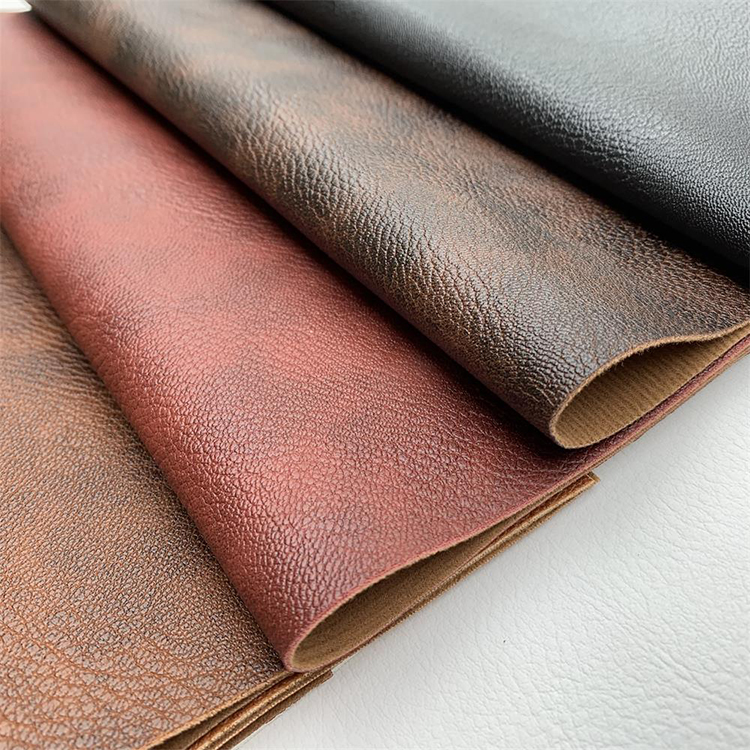
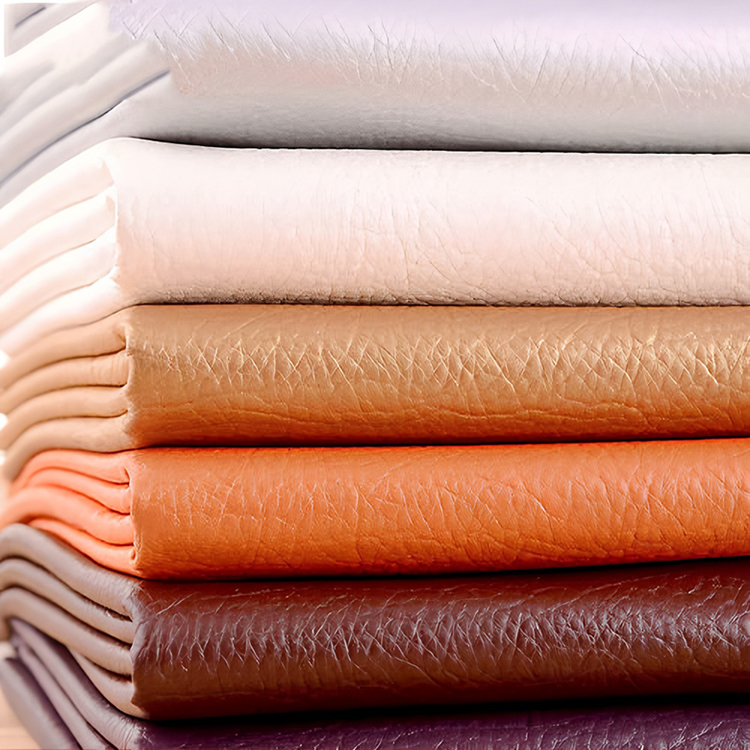
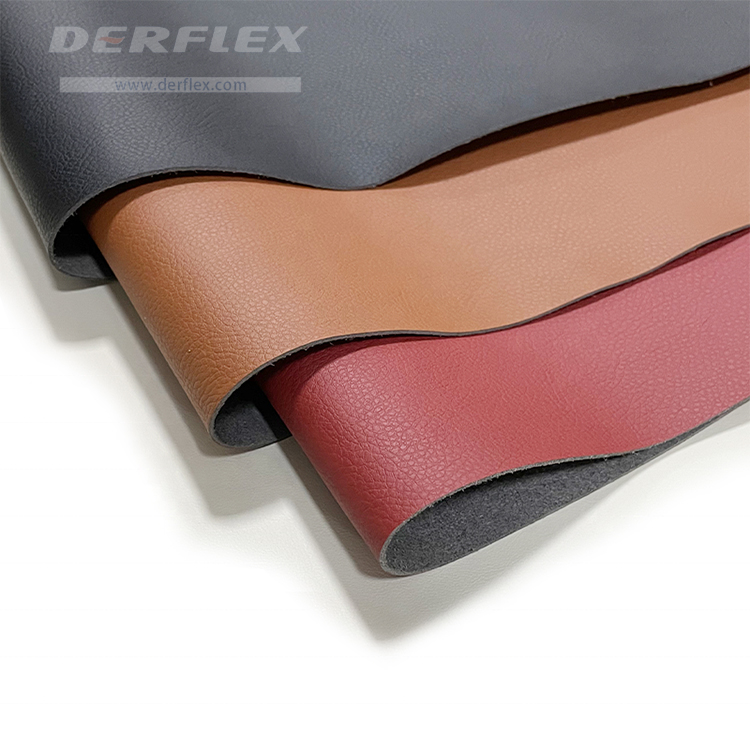
Surface character, color and backing options.
These photographs show actual PU/synthetic leather roll materials on DERFLEX's website. They illustrate face finishes and backing variety, not finished-shoe customer projects or guaranteed footwear-grade specifications.
07 / Material alternatives
PU vs. microfiber PU, PVC and genuine leather.
Choose by application and verified performance rather than a single material hierarchy. Each alternative can include different grades, construction techniques and price structures.
| Material route | Potential benefit | Footwear buying watchpoint |
|---|---|---|
| Textile-backed PU leather | Flexible range of surface and grain directions with roll-material customization. | Grade-specific flex, hydrolysis, adhesion and seam testing remain essential. |
| Microfiber PU leather | Can provide a denser backing and distinctive hand feel in suitable constructions. | Confirm actual composition and whether added structure justifies cost for the design. |
| PVC synthetic leather | May suit certain surface finishes or sourcing cost priorities. | Compare cold flex, hand feel, weight, aging and chemistry for the intended shoe. |
| Genuine leather | Natural grain and tactile properties sought in selected footwear categories. | Account for hide variability, cutting yield, care requirements and leather-specific testing. |
For a closer material comparison, use the DERFLEX PU vs. PVC leather guide and synthetic leather collection.
08 / Procurement workflow
From one approved swatch to repeatable footwear production.
Footwear factories usually make more reliable decisions when material development, conversion trials, test evidence and commercial terms are approved in sequence.
Define the upper
Send shoe type, component position, production process, target market and design references.
Choose construction
Review PU surface, backing, total thickness, grain, gloss, stretch and usable roll size.
Sample & verify
Cut, stitch and last trial panels; agree test methods, pass criteria and a signed master sample.
Control bulk rolls
Confirm shade references, lot inspection, roll labels, packing, delivery terms and reorder documentation.
See the broader custom PU leather manufacturer program or PU leather roll material overview for cross-industry supply options.
09 / Frequently asked questions
Answers for footwear sourcing teams.
These questions address common decisions when choosing PU leather for shoes and sending a specification to a material supplier.
Is PU leather suitable for shoe uppers?
PU leather can be used for shoe upper components when the selected grade meets the shoe's flex, seam, bonding, appearance and aging requirements. A satisfactory flat swatch is not enough; approve the material on representative cut, stitched and lasted footwear samples.
Which backing is best for PU leather shoe uppers?
There is no universal best backing. Woven or other stable textile backings can suit structured components, while softer knitted or selected microfiber constructions may help with forming or hand feel. Select the backing from the component location, stretch direction, seam behavior and approved test results.
What thickness should PU leather for shoes be?
Specify the nominal total thickness and tolerance from the intended shoe design, component location and production process. Review the tested sample for skiving, seam buildup, lasting, flexibility and abrasion; do not treat one thickness as suitable for all footwear.
How do buyers check whether shoe upper PU leather will crack?
Agree on flex resistance testing with defined method, temperature, number of cycles, specimen orientation and pass/fail criteria. Where heat and humidity are relevant, consider hydrolysis conditioning followed by mechanical tests. Confirm behavior again on a representative finished shoe.
Is PU leather shoe material waterproof or breathable?
Neither property can be assumed from the name PU leather. Water resistance and water-vapor permeability vary with the surface, backing, lamination, perforations, lining and shoe construction. Request the exact test methods and evaluate the finished assembly where necessary.
Can DERFLEX supply custom colors and bulk PU leather rolls for shoe factories?
DERFLEX can discuss PU leather roll supply with custom color, grain, gloss, backing, thickness and packing directions. Send the shoe type, upper component, reference sample or image, processing method, quantity, destination and testing requirements so the appropriate development and quotation scope can be confirmed.
10 / Related DERFLEX resources
Continue your material comparison.
Use these verified DERFLEX pages for material construction, thickness and sourcing questions that sit next to the footwear-specific brief.
OEM inquiry / Footwear rolls
Specify the upper. Build the right material.
Tell DERFLEX what your shoe needs to do, not simply what the leather should look like. A reference swatch, shoe photo or sketch is a useful starting point for material matching.
Request a PU Leather Quote ↗