


 Industrial coated textiles / OEM roll supply
PVC Fabric for Pool Cover Manufacturers
Reinforced PVC-coated polyester rolls for factories making swimming pool covers, replacement panels and selected retractable-cover programs. Compare the candidate material against pool chemistry, sun exposure, repeated roll-up movement, edge loading and your welding process. DERFLEX helps converters source and qualify fabric; a pool liner or complete safety cover system is a different product specification.
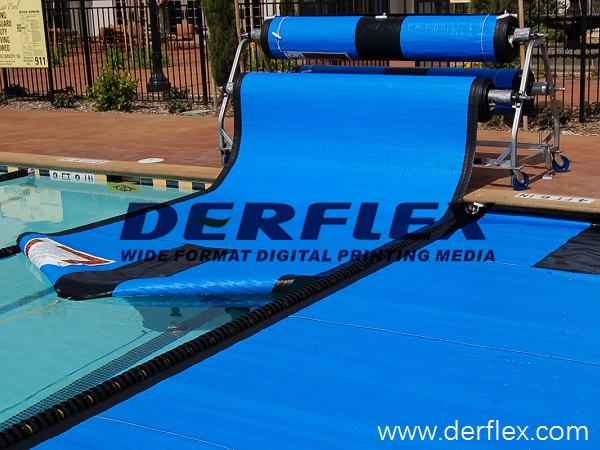
What fabric do pool cover manufacturers buy?
Manufacturers of solid swimming pool covers frequently start with reinforced PVC-coated polyester. A polyester scrim supports tensile loads, while PVC layers create a weather-facing, weldable barrier. The buyer then has to select a construction that behaves correctly in the actual cover: fixed, winterized, retractable, track-driven or manually rolled.
Pool chemistry matters because splashes, vapors, standing water and treatment residues can contact the cover. UV and repeated wet/dry exposure affect surface appearance and flexibility. Edge abrasion and rolling behavior become especially important when a cover moves through a track or repeatedly wraps around a drum.
A pool cover sits above the water as a protective product; a pool liner forms the watertight lining of the pool shell. They may both be flexible PVC, but their mechanical loads, installation methods, chemical exposure and verification procedures are not interchangeable.
Choose by cover mechanism and exposure, not only color
The conversion process and installed mechanics determine the purchase specification. Use the matrix as a discussion guide and validate the exact coated textile in the finished product.
| Finished pool cover | Primary material questions | Prototype decision |
|---|---|---|
| Manual roll-up or seasonal cover | Flexibility, weldable width, edge abrasion, storage, chlorine exposure | Weld seam strip plus rolled storage and weathering assessment. |
| Automatic track-driven cover | Lengthwise stability, repeat cycling, bead/webbing integration, rolling behavior | Run a prototype through the actual track and roller, checking edge distortion. |
| Stationary solid cover | Tensile transfer, reinforced panels, anchorage interface, drainage | Confirm engineered load path and finished-cover test obligations separately. |
| Replacement-cover converter | Match existing material thickness, surface, color and machine compatibility | Compare an approved old sample and trial conversion, not only a catalog GSM value. |
| Pool liner (different category) | Water-retention membrane, substrate contact, field welding and immersion | Use a liner-specific material and installation qualification route. |
Specify chemistry, outdoor durability and production yield
A purchasing sheet should describe the actual intended environment and test conditions. In particular, do not replace measured chlorine or accelerated-weathering results with vague “chemical proof” or “UV proof” claims.
Reinforcement and coating
Record polyester construction, coating sides, target mass and thickness. Request reported tensile and tear directions with test methods.
Pool-water exposure
Specify treatment type, expected concentration range, pH, contact frequency and temperature. Assess discoloration, adhesion and flexibility after relevant exposure.
UV and heat
Define outdoor climate and acceptance metrics for color shift, surface cracking and retained mechanical strength. Ask for method and exposure conditions.
Rolling and dimensional stability
Test repeated winding and unwinding at your actual drum radius and tension. Inspect curl, edge behavior, shrinkage and fabric memory.
Seam and webbing integration
Trial HF or thermal welding, reinforced hems, attachment webbing and any tracks, ropes or bead systems used by your product.
Surface and inventory controls
Approve gloss or matte finish, color master, roll width, roll-core format and cleanliness to reduce rejects and variation across seasonal orders.
Five-stage material and cover validation
Passing a base-fabric check is only the beginning. Cover makers should verify the assembled edge and relevant environmental loads before claiming a functional or safety characteristic.
01 · Control sample and geometry
Confirm shade, fabric direction, roll width, planned panel layout and weld overlaps. Keep a marked cut-off for every trial batch.
02 · Factory weld and edge tests
Make working seams and reinforced edges using the same webbing, machine and temperature range as planned production. Inspect separation and distortion.
03 · Chemical and sunlight review
Apply the project’s specified pool chemistry and UV protocols. Check surface, strength retention and adhesion rather than judging only initial appearance.
04 · Roll-up / track trial
Cycle a cover on its actual drum and, where present, in its guide tracks. Examine edge wear, creases, tracking, tension and rolling shape.
05 · Finished-product verification
If marketed as a safety cover, establish the applicable complete-system test and marking route. Material strength or a supplier report alone is not system certification.
Pool cover fabric is not pool liner material
A pool cover is manufactured to span or move above the water. It may need webbing, track interfaces, reinforced edges, rollers or handles depending on the system. Its cover fabric must be judged with its mechanism and the particular type of load imposed by use and maintenance.
A pool liner is a watertight membrane placed against the pool substrate, often with different thickness, weld planning, chemical and immersion requirements. Never substitute a cover roll for a liner because both are described as PVC. A request for a liner should follow the separate pool-liner product route.
DERFLEX can discuss bulk fabric-roll specifications for cover makers. A finished motorized cover, track set, anchors, automatic drive or certified safety-cover assembly should be quoted and qualified only where that complete supply scope has been explicitly agreed.
Actual DERFLEX material and application references
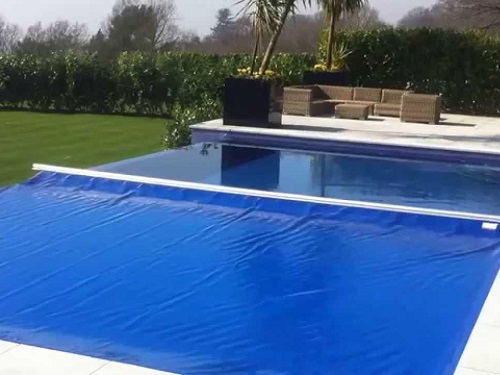
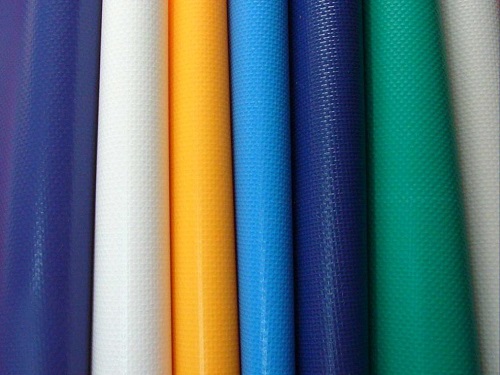
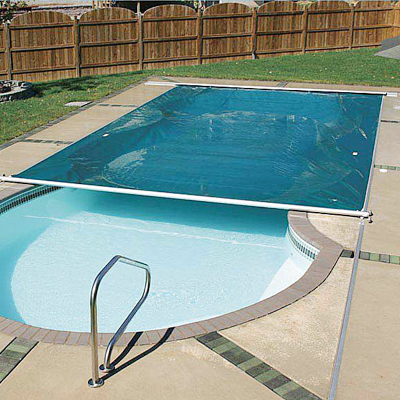
The photographs below are sourced from existing DERFLEX pages. They illustrate materials or related applications; they do not establish a certified grade or finished-project performance for this purchase.
Pool cover OEM buying checklist
Share the intended cover type before choosing a fabric code. Photos of the roller, existing cover or edge construction are especially helpful for replacement-program discussions.
Send with your inquiry
- Type of cover: manual, winter, automatic or stationary
- Finished dimensions, panel layout and estimated roll width
- Pool treatment chemistry, outdoor climate and contact pattern
- Roller diameter, cycle expectation and edge tracking geometry
- Desired color, surface and reference swatch
- Seam equipment, webbing, beads or fastener plan
- Named material tests and complete-cover approval route
- Expected order quantity, lot traceability and packing
How to approve a repeat order
Keep an approved material sample plus a welded, reinforced edge strip as your factory reference. A material supplier report cannot replace the cover-maker’s production test.
Before repeat-order release, verify color match, usable width, roll behavior, adhesion and representative seam performance. Confirm any formula changes that could affect chemical or UV performance.
Frequently asked questions
What is pool cover PVC fabric made of?
Many solid covers use polyester scrim reinforced with PVC coatings. Exact yarn, coating mass, finish, thickness and performance are selected for the cover design rather than assumed for all rolls.
Can pool cover PVC fabric be used as a swimming pool liner?
Not by default. Liners are water-retaining membranes designed for substrate contact and immersion. Covers operate over the pool and require different mechanical, edge and movement checks.
Is every PVC pool cover fabric chlorine resistant?
No universal claim is appropriate. Resistance depends on the formulation, chlorine level, contact duration, temperature and test method. Request grade-specific data and validate against actual pool conditions.
How can a fabricator check repeated roll-up performance?
Run the proposed fabric and a finished cover section on the real drum and tracks through representative cycles. Observe curl, creasing, edge wear, dimensional change and weld integrity.
Does the fabric supplier certificate make an automatic cover safe?
No. A material test cannot certify the complete safety cover, including webbing, tracks, drive, installation and load response. Follow the applicable system-level requirements.
What details should accompany a bulk pool cover fabric inquiry?
Send cover type, operating environment, roll width, coating target or reference sample, cover mechanism, joining method, color, requested tests, order quantity and destination.
Build a repeatable pool cover material program.
Send your cover mechanism, sample and exposure requirements. Discuss roll construction, conversion trials and repeat-batch controls before placing an OEM order.
DERFLEX / PVC-coated technical textiles. Selection and test evidence apply to the specific approved grade, not to every PVC-coated fabric or finished assembly.