


 Industrial coated textiles / OEM roll supply
PVC Fabric for Flexible Duct Manufacturers
PVC-coated polyester roll material for workshops that cut, weld, sew and assemble their own flexible ventilation ducts. Start with the duct construction and operating conditions, then choose fabric weight, coating behavior, roll width and the evidence your finished product needs. DERFLEX can discuss candidate fabric rolls for OEM conversion; duct engineering, reinforcement and installation require separate specification.
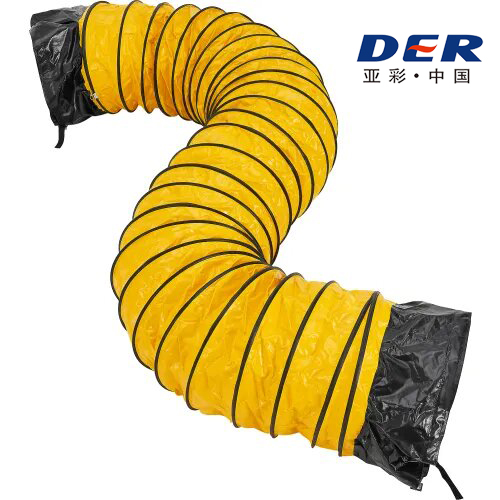
What is the right PVC duct fabric for a manufacturing line?
For a flexible ventilation duct manufacturer, the correct material is not simply the heaviest PVC tarpaulin. It is a coated textile that forms cleanly into the chosen duct geometry, makes repeatable longitudinal seams, survives the expected folding or dragging, and remains compatible with cuffs, hanging points and any spiral or ring reinforcement.
A woven polyester base gives the fabric tensile support while the PVC surface provides an air-limiting, cleanable and commonly heat-joinable layer. The grade must be judged against the actual machine, overlap, pressure direction and service exposure. Flat fabric waterproofness alone does not prove duct airtightness or pressure performance.
Buy roll goods when your own workshop controls cutting patterns, spiral wire insertion, sewing or welding and final fittings. If you need complete duct sections, use the existing DERFLEX finished-duct resources instead of treating this fabric-purchasing page as a system offer.
Match the roll material to the duct you actually build
Define the finished duct construction before comparing PVC coated fabric prices. The same roll may behave very differently when rolled tight, pulled through a mine gallery or suspended above a production line.
| Factory output | Fabric selection focus | Converter acceptance check |
|---|---|---|
| Layflat positive-pressure duct | Flexibility, coating bond, seam continuity and pack-down volume | Test seam strips and pressure response on a representative full-diameter section. |
| Spiral wire-supported duct | Repeated bending, abrasion where wire touches textile, dimensional stability | Build a short reinforced prototype and inspect inside contact zones after cycling. |
| Ring-supported hanging duct | Tensile load around hanger spacing, local eyelet or strap reinforcement | Load-check attachment points with actual ring spacing and suspension geometry. |
| Portable blower or extraction duct | Cold folding, handling scuff, operational temperature and pressure direction | Cycle a packed/unpacked assembly and check whether suction needs added support. |
Set measurable roll specifications, not vague “heavy duty” labels
Ask for an agreed master sample and a signed material sheet describing each property, test method and tolerance. Typical numbers used in another ventilation project are not automatic limits for yours.
Construction and weight
Define woven polyester yarn, coating on one or both sides, target mass per square metre and thickness separately. Weight does not directly determine thickness.
Cutting width and direction
Record usable width, edge trimming and warp/weft direction relative to the cylinder. Calculate layflat circumference and seam allowance to reduce waste.
Joining compatibility
Send hot-air, wedge, HF or sewing equipment details. Verify peel behavior, seam appearance and leak performance with the intended overlap and settings.
Service movement
Describe minimum bend radius, packing size, folding frequency, abrasion contact and transport. Compare material changes after relevant repetitive tests.
Airflow and pressure
Provide positive/negative pressure and temperature range. The finished assembly needs validation for leakage, collapse and reinforcement behavior.
Fire and electrical criteria
Name destination-market fire test, report format and any antistatic requirement early. Require results for the exact proposed grade, not a catalog family.
A practical six-stage converter qualification route
The meaningful trial is made on your manufacturing equipment and representative end-product geometry. Confirm the pass/fail numbers with your engineer or contract before placing a production repeat order.
01 · Incoming roll review
Photograph roll labels, check color, usable width, roll damage and face/back orientation. Record which lot entered each prototype.
02 · Seam trial
Make actual longitudinal and transverse welds or stitch samples using your equipment. Compare seam peel, flexing and possible pinholes after cooling.
03 · Fold-cycle test
Pack and deploy a representative duct repeatedly. Inspect coating whitening, cracked folds, stiff spots, delamination and volume after storage.
04 · Contact and abrasion test
Examine drag strips, wire contact and hanging interfaces. A good flat abrasion result may not predict damage at a reinforced joint.
05 · Functional prototype
Test leak paths, pressure behavior, end connections and suspension under the intended conditions. Confirm any flame or electrical evidence against the supplied roll grade.
06 · Sign-off and repeat baseline
Approve a retained sample, roll label, production revision, inspection frequency and change-control procedure before scaling up.
Separate raw PVC fabric sourcing from finished-duct manufacturing
The roll-supply route lets a duct factory retain its own cutting patterns, reinforcement sources, fittings and brand labeling. Ask DERFLEX to quote the selected PVC-coated fabric construction by usable width, intended roll length, color, packaging and required inspection records. Material compatibility should be demonstrated before any repeat-order commitment.
A separate finished-duct route may involve length, diameter, fittings, rings, hanging loops, mechanical reinforcement and fabrication drawings. Those items change both engineering responsibility and quotation scope; do not assume they are included in a per-square-metre fabric offer.
For tunnel, industrial or mine use, a material property such as flame retardance is only one part of a system specification. Ventilation flow, static behavior, structural support and applicable site approvals remain project-specific.
Actual DERFLEX material and application references
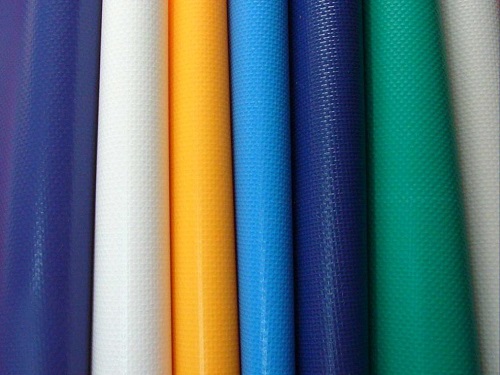
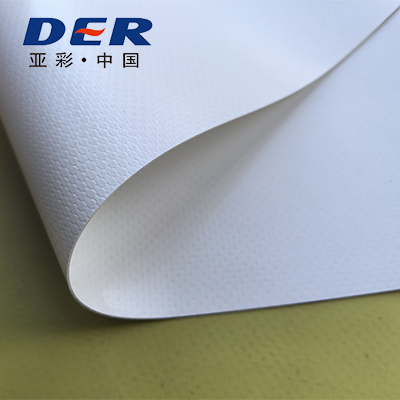
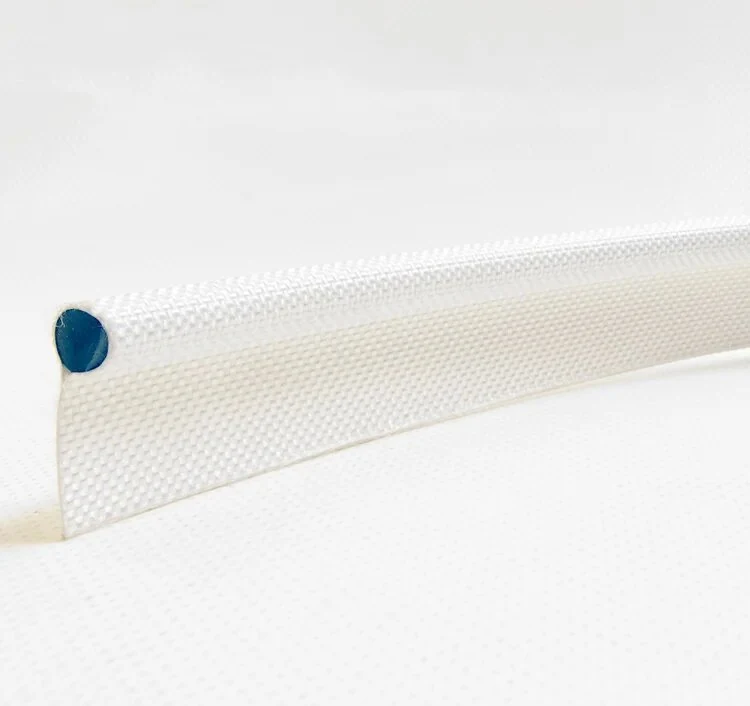
The photographs below are sourced from existing DERFLEX pages. They illustrate materials or related applications; they do not establish a certified grade or finished-project performance for this purchase.
RFQ brief for PVC ventilation-duct fabric rolls
Send a sketch or existing fabric swatch if you do not yet have a complete specification. These details help separate roll material pricing from complete duct assembly.
Send with your inquiry
- Duct type, diameter or circumference and length
- Positive/negative pressure and temperature exposure
- Expected fold cycles, dragging and reinforcement contact
- Target fabric weight/thickness or reference sample
- Usable roll width, projected area and monthly quantity
- Welding/sewing process and seam overlap drawing
- Named fire/antistatic tests and required evidence
- Color, packing method and destination market
How to approve a repeat order
Approve a master sample and keep one sealed counterpart for later color, touch and weld comparisons. Write down acceptable variation rather than relying on photos alone.
For subsequent lots, compare width, mass, coating behavior, weld trial and appearance with the same method. If the formulation or textile changes, request a revised sample and affected tests.
Frequently asked questions
Is PVC duct fabric the same as finished PVC ventilation ducting?
No. PVC duct fabric is reinforced coated textile supplied in rolls for conversion. Finished ducts also require seam construction, end cuffs, reinforcements, supports and functional performance tests.
Can flexible ventilation duct material be both sewn and welded?
Some PVC-coated constructions can be processed with hot-air, hot-wedge or high-frequency welding, and some assemblies are sewn. Actual suitability depends on coating, thread, equipment, layers and agreed seam tests.
Which fabric weight should a flexible duct manufacturer select?
There is no universal GSM value. Choose a candidate based on duct diameter, pressure, folding, handling, abrasion and finish, then compare trial sections and relevant tensile, tear and seam results.
Is every PVC-coated duct fabric flame retardant or antistatic?
No. Flame resistance and electrical properties depend on the specific formulation and test. Specify the relevant standard and request evidence tied to the exact grade and sample.
Does a waterproof fabric make the complete duct airtight?
Not automatically. Duct seams, joints, attachments, cuffs and penetrations can leak. Validate the assembled duct under its operating pressure and relevant conditions.
What should a factory send before requesting bulk PVC duct fabric rolls?
Provide duct construction, operating environment, roll width, expected usage, joining method, target properties, any needed tests and a physical sample or drawing if available.
Qualify the fabric on your duct line.
Share your drawing, production process and test requirements. We can discuss a candidate coated-fabric construction and a practical sample qualification sequence.
DERFLEX / PVC-coated technical textiles. Selection and test evidence apply to the specific approved grade, not to every PVC-coated fabric or finished assembly.