News
Company News

ETFE Cushion System for Roofs & Facades | DERFLEX

Update:2026/7/9 19:25:36 Views:
DERFLEX logo Architectural Fluoropolymer Film Support
Transparent building envelope

ETFE Cushion System

Lightweight pneumatic roof and façade panels engineered around daylight, thermal targets, weather loads and architectural form.

DERFLEX supports architects, specialist fabricators, contractors and material distributors with ETFE foil selection, printed-film options, sample coordination and project-specific specification discussions for 2-, 3- and 4-layer cushion assemblies.

Material supply and system engineering must be coordinated.

DERFLEX can support ETFE foil and material specification discussions. Final cushion geometry, welding design, frame, inflation equipment, drainage and structural verification should be completed by qualified project engineers and specialist fabricators.

Clear scope = more accurate quotation
System definition

What is an ETFE cushion system?

An ETFE cushion system is a lightweight building-envelope assembly made from two or more ETFE foil layers welded around the perimeter and held in a supporting frame.

Low-pressure air separates and pre-stresses the layers, creating a stable pneumatic panel. Depending on the layer arrangement and surface treatment, the cushion can provide high daylight transmission, solar shading, weather protection and improved thermal performance compared with a single foil skin.

The completed envelope normally includes foil cushions, perimeter extrusions, seals, air supply, pressure monitoring, non-return protection, drainage details and interfaces with the primary structure.

Typical cushion build-up

1
Outer ETFE foilClear, tinted or printed according to solar and visual targets
Weather face
2
Pressurized air chamberMaintains cushion form and distributes environmental loads
Pneumatic zone
3
Intermediate foil layerOptional layer used to refine thermal or shading performance
3/4-layer only
4
Inner ETFE foilCompletes the cushion and supports internal light diffusion
Interior face
5
Aluminium perimeter systemClamps the cushion and connects it to drainage and structure
Frame interface
Design value

Why design teams consider ETFE air cushions

The material is most useful when the project needs a transparent or translucent envelope without the dead load and visual rigidity associated with conventional glazing.

01

Low structural weight

Light foil panels can reduce cladding dead load and may allow a more efficient supporting structure, subject to the engineer’s design.

02

Daylight planning

Clear, printed and tinted layers help design teams balance transparency, diffusion, glare and solar gain.

03

Free-form geometry

Pneumatic cushions can follow curved roofs, faceted atriums and custom façade modules that are difficult to achieve with rigid panels.

04

Replaceable modules

Individual cushions can be designed as separate units, supporting localized inspection or replacement instead of full-envelope removal.

Layer selection

2-, 3- or 4-layer ETFE cushion?

Layer count is an early design decision, not a standalone performance guarantee. The final result also depends on cushion depth, foil thickness, air pressure, printed area, frame continuity and project geometry.

Efficient daylight envelope

2-Layer Cushion

Often evaluated for canopies, façade zones and roof areas where transparency and low weight are priorities and thermal targets are moderate.

2.9 W/m²Kindustry reference U-value*
Highdaylight potential
Discuss outer frit coverage, condensation strategy, cushion span and local climate before selection.
Balanced roof specification

3-Layer Cushion

A common direction for atriums, transport hubs, retail roofs and public spaces requiring a stronger balance of daylight and thermal control.

1.8 W/m²Kindustry reference U-value*
Flexibleprint combinations
The intermediate foil can support more detailed solar-control and insulation strategies.
Enhanced envelope approach

4-Layer Cushion

Considered where lower U-value direction, multiple air chambers or more advanced climate-response concepts justify added system complexity.

1.4 W/m²Kindustry reference U-value*
Advancedlayer coordination
Requires careful review of fabrication, controls, air distribution, maintenance access and cost.
*Reference values are commonly published for indicative layer comparisons. They are not DERFLEX performance guarantees. Project U-value, condensation risk and energy performance must be calculated for the actual cushion, frame, geometry and climate.
Product image display

ETFE envelope applications in real architectural forms

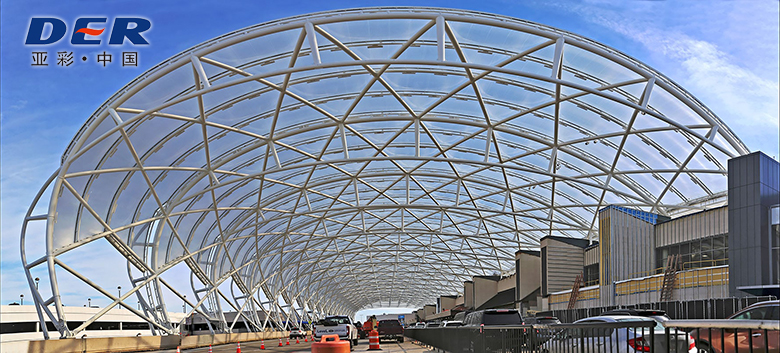
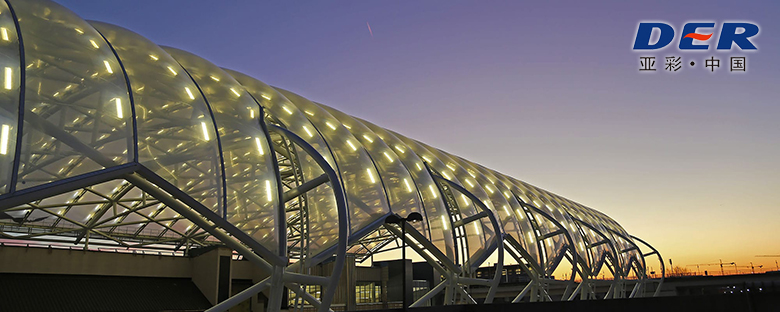
The images below show the type of lightweight transparent architecture associated with ETFE film and cushion-system design.

Transparent ETFE architectural roof structure supplied by DERFLEX
Large-span transparent roof directionSuitable for transport links, terminal zones, covered walkways and other daylight-focused envelopes.
Illuminated ETFE cushion style building envelope
Day-to-night architectural identityPrinted, tinted or illuminated ETFE can become part of the building’s visual language.
Performance planning

Specification factors that change the finished cushion

A useful quotation needs more than square metres. These variables influence material structure, fabrication, supporting frame and system operation.

Design factorWhat must be confirmedWhy it matters
Foil thicknessLayer-by-layer thickness according to cushion size and calculationAffects stress, handling, welding and response to wind or snow loads.
Layer count2, 3 or 4 foil layers and chamber arrangementChanges thermal direction, print strategy, system complexity and cost.
Frit patternPrinted coverage, dot geometry, color and layer positionControls daylight, glare, solar gain, appearance and possible adaptive shading concepts.
Panel geometryPlan shape, rise, span, corner details and cable reinforcementDetermines stress distribution, cutting pattern and connection design.
Air supplyOperating pressure, zoning, redundancy, sensors and standby strategyMaintains the pneumatic form and supports stable behavior during changing weather.
Frame and sealsExtrusion profile, gasket, thermal break, edge clamp and tolerancesInfluences air tightness, drainage, thermal bridging and installation quality.
Water managementPrimary and secondary drainage, slope and interface detailsHelps avoid water accumulation and protects the surrounding roof construction.
Code documentsFire, smoke, structural, energy and local approval requirementsDefines required tests, calculations and the responsible parties in the supply chain.
Application fit

Where ETFE cushion systems are commonly evaluated

ETFE is most compelling when architectural daylight, lightweight spans and a distinctive envelope are important to the project concept.

Sports & public venues

Stadium roofs and arena zones

Transparent or printed cushions can cover concourses and spectator areas while reducing roof-envelope weight.

Transport

Airports and railway hubs

Large daylight surfaces can create brighter circulation zones and a visually open passenger environment.

Retail & hospitality

Atriums and shopping centres

Pneumatic roof modules support enclosed public spaces with daylight and controlled solar performance.

Education & nature

Botanical gardens and campuses

High light transmission and light structure are useful for conservatories, courtyards and learning spaces.

Building envelope

Façades and feature walls

Clear, translucent, printed or illuminated cushions can form a recognizable architectural skin.

Urban connections

Walkways and entrance canopies

ETFE can cover transitional areas where a conventional glazed roof may add unnecessary weight.

Project workflow

From concept information to supply-ready foil specification

Early alignment reduces repeated sampling and prevents the material order from being separated from the final cushion engineering.

STEP 01

Define the envelope

Share roof or façade use, drawings, panel concept, climate and project stage.

STEP 02

Set performance goals

Confirm daylight, U-value direction, frit coverage, fire review and design-life expectations.

STEP 03

Coordinate foil options

Discuss layer thickness, transparency, print, color, roll width and fabrication route.

STEP 04

Approve samples

Review visual samples and relevant material documentation before bulk production.

STEP 05

Control supply records

Confirm specification, packing, traceability, delivery sequence and repeat-order reference.

Procurement guidance

Information to send before requesting an ETFE cushion quotation

The more complete the project brief, the easier it is to separate film supply, cushion fabrication, aluminium system, inflation equipment and installation scope.

Project input checklist

  • Roof, skylight, atrium or façade application
  • Concept drawings, cushion dimensions and total area
  • Target 2-, 3- or 4-layer arrangement
  • Wind, snow, rain and temperature design conditions
  • Required transparency, color or printed frit pattern
  • Thermal, condensation and solar-control targets
  • Local fire, smoke and building-code direction
  • Fabrication location, required roll width and delivery schedule

DERFLEX material support

  • Architectural ETFE foil thickness discussion
  • Clear, printed and visual sample coordination
  • Material data and specification communication
  • Roll format, packing and export delivery planning
  • Batch reference support for repeat procurement
  • Coordination with the customer’s cushion fabricator or engineer
Scope reminder: system design, structural calculations, welding patterns, frame engineering, air-control design and site installation remain subject to the agreed project scope and qualified specialist responsibility.
FAQ

ETFE cushion system questions

Practical answers for architects, contractors, fabricators and procurement teams.

How does an ETFE cushion system stay inflated?

Dedicated air-supply units maintain low internal pressure. A complete design normally includes sensors, controls, non-return protection, distribution pipes and a redundancy or standby strategy appropriate to the project. The system maintains shape rather than creating continuous airflow through the cushion.

What is the difference between ETFE foil and an ETFE cushion?

ETFE foil is the material layer. An ETFE cushion is a complete pneumatic panel made from multiple foil layers welded together and installed in a frame with air supply, seals and drainage. Buying foil does not by itself create a finished cushion system.

Should I choose a 2-, 3- or 4-layer ETFE cushion?

Two layers can suit daylight-focused applications with moderate thermal targets. Three layers are commonly evaluated for a more balanced envelope. Four layers may support lower U-value direction or more advanced layer strategies. Final selection requires project calculations and code review.

Can ETFE cushions reduce solar heat gain?

Yes. Printed frit patterns, tinted foil and different layer combinations can reduce or redistribute solar transmission. The pattern, printed percentage and layer position should be modeled against daylight, glare, cooling and visual requirements.

Can ETFE cushions be used on façades as well as roofs?

Yes. ETFE cushions can be designed for façades, feature walls and other enclosure zones. Wind pressure, drainage, access, edge details, fire strategy and the interface with the primary structure must be reviewed for the specific orientation.

What happens if an ETFE cushion is damaged?

Response depends on the location and extent of damage. Small punctures may be temporarily repaired by a qualified specialist, while an individual cushion may be replaced when necessary. Inspection and repair procedures should be part of the project maintenance plan.

Does DERFLEX provide a complete installed cushion roof?

DERFLEX supports ETFE foil selection, samples, specification communication and material supply discussions. Complete system engineering, cushion fabrication, aluminium framing, inflation equipment and installation depend on the agreed scope and normally require qualified specialist partners.

What should I send to receive a useful proposal?

Send the project type, drawings, cushion dimensions, total area, layer concept, design loads, daylight and thermal targets, print requirements, code direction, fabrication location, delivery destination and required schedule.

Start with the project brief

Discuss your ETFE cushion material requirements with DERFLEX

Share drawings, layer concept, foil thickness direction, print target, quantity and delivery location. The team can review the material scope and identify information still needed from the system engineer or fabricator.

Technical values shown on this page are for early-stage comparison. Final material and system performance must be verified against project calculations, local codes and approved documentation.
Consulting Services
+86-021-54361792 / 54361798
Email
sales@derflex.com