Weather Exposure
Rain, snow, road spray and surface contamination call for a coated structure, practical overlaps and suitable seam construction.




DERFLEX manufactures custom freight tarps and coated fabric solutions for flatbed cargo, trailers, lumber, steel, machinery, construction materials and mixed logistics loads. Choose PVC roll goods, cut panels, semi-finished assemblies or completed covers with project-specific reinforcement and hardware.
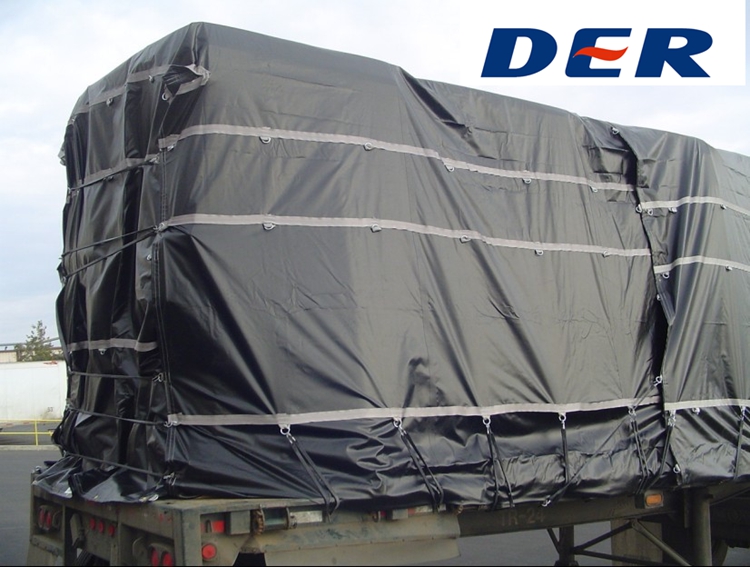
Freight tarps are protective covers used over cargo carried on flatbeds, step decks, open trailers and other exposed transport platforms. The term can include general cargo tarps, lumber tarps, steel tarps, machinery covers, smoke tarps, side-curtain materials and custom covers for unusual freight.
In daily operation, the tarp must work with the load shape, tie-down method, route weather, driver handling and replacement plan. A thicker material alone does not solve poor fit, exposed sharp edges, weak hardware zones or excessive wind movement.
Rain, snow, road spray and surface contamination call for a coated structure, practical overlaps and suitable seam construction.
Loose areas can flap and fatigue. Correct dimensions, fastening rows and tension planning help reduce unnecessary movement.
Steel corners, lumber bands and machinery projections require pads, wear strips, corner protectors or localized reinforcement.
D-rings and grommets transfer load into the fabric. Webbing layout and reinforced patches should follow the pulling direction.
Heavier fabric may increase wear resistance but can also slow deployment. The specification should balance service needs and driver usability.
Fleets and distributors benefit from controlled dimensions, hardware positions, colors, labels and repeat-order documentation.
A well-specified freight tarp begins with the load profile. Different cargo shapes create different drop, abrasion, fastening and handling requirements.
Crates, packaged goods and mixed cargo on open decks.
Design focus: adaptable coverage, practical tie-down spacing and balanced handling weight.
Timber, plywood, drywall, wallboard and high-profile building materials.
Design focus: deeper drops, end flaps, multiple D-ring rows and load-height adjustment.
Plate, pipe, rebar, fabricated parts and low-profile industrial freight.
Design focus: shorter drops, high tear performance and abrasion control at contact points.
Equipment, fabricated assemblies, construction machines and non-uniform loads.
Design focus: pattern development, shaped panels, reinforced projections and planned access points.
Semi-trailers, side-curtain systems and repeated loading routes.
Design focus: dimensional stability, surface appearance, frequent fastening and fleet branding.
Selected waste, landscape, agricultural and bulk transport applications.
Design focus: containment, airflow, roll-system compatibility and the required level of weather protection.
Actual DERFLEX product images show finished truck covers, trailer curtain fabric and flatbed tarp construction.
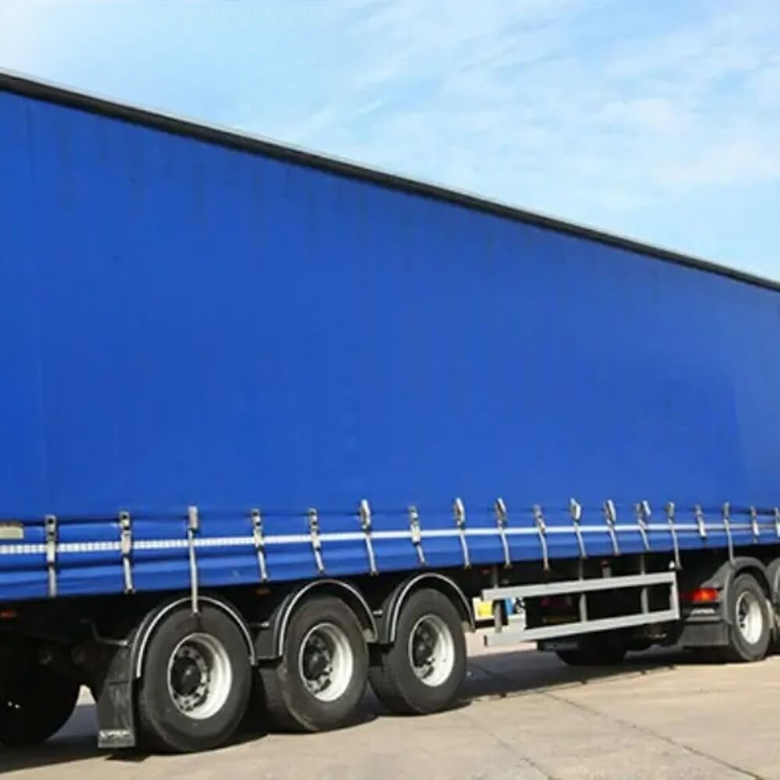
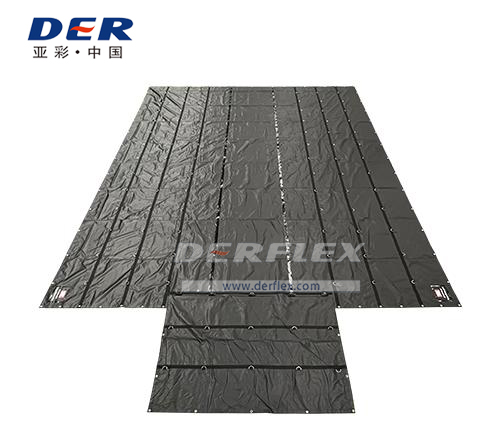
Material selection should reflect cargo sensitivity, abrasion exposure, handling frequency and whether full weather protection or airflow is required.
A common direction for long-haul flatbed freight where water resistance, tear performance, weldability and repeated outdoor use are priorities.
A lighter coated construction can reduce deployment effort for frequent handling, smaller loads or routes where extreme abrasion is not the primary risk.
Mesh is used when airflow and load containment are more important than complete rain protection, including selected bulk, landscape or waste-hauling systems.
Use the following as a procurement starting point. Final construction should be confirmed against cargo, vehicle, route and required test standards.
| Specification Area | DERFLEX Standard / Custom Direction | Buyer Decision Point |
|---|---|---|
| Material | PVC coated polyester, PVC laminated fabric, vinyl-coated structures and selected mesh fabric | Choose by weather protection, abrasion, weldability, handling and system compatibility. |
| Typical Weight | Approx. 550gsm, 650gsm, 750gsm, 900gsm, 1100gsm or project-specific construction | Higher weight can increase durability but also affects deployment and folded bulk. |
| Base Fabric | High-tenacity polyester scrim with yarn and density matched to the product structure | Scrim construction influences tensile, tear and dimensional stability. |
| Width | Roll widths up to approximately 3.2m depending on material line and order specification | Wider fabric can reduce seam count and improve fabrication efficiency. |
| Surface | Matte, glossy, semi-matte, embossed, lacquered or other project-specific finish | Surface choice affects appearance, cleanability, friction and outdoor aging direction. |
| Functional Options | Water-resistant / waterproof coated structures, UV resistance, anti-mildew, cold-flexible, flame-retardant, abrasion or oil-resistant directions | State the target market and requested test method before quotation. |
| Fabrication | Hot-air or HF welded seams, stitched-and-welded details, reinforced hems, webbing and wear patches | Seam method should reflect water protection, production format and field repair needs. |
| Hardware | Grommets, D-rings, buckles, hooks, ropes, pockets, shortener rows and custom attachment points | Confirm spacing, metal finish, pulling direction and compatibility with the vehicle. |
| Branding | Custom color, logo printing, item marking, private labels, cartons and pallet configuration | Useful for fleet standardization, distribution and private-label programs. |
| Supply Format | Roll goods, cut panels, semi-finished kits, finished freight tarps or repeat replacement sets | Select according to local fabrication capacity and inventory model. |
Performance descriptions and ranges are configuration-dependent. Final values, tolerances, test reports and compliance statements should be confirmed in the approved technical specification, sample and sales agreement.
Field performance often depends more on how stress is distributed than on fabric weight alone. DERFLEX can plan reinforcement around the perimeter, hardware rows, load contact points and folding zones instead of adding unnecessary mass everywhere.
This approach can help buyers build a freight tarp that is durable where it needs to be while remaining practical to deploy, fold, store and replace.
The quotation process is more useful when it captures how the tarp will be used, not only the finished width and length.
Truck or trailer type, cargo, dimensions, route, climate, handling frequency and target order quantity.
Material weight, drops, flaps, panel layout, seams, surface finish and performance options.
Webbing, corner patches, D-rings, grommets, shorteners, ropes, pockets and attachment spacing.
Material swatch, color, print, accessory sample or first-article cover according to project complexity.
Production records, inspection, packaging, item identification and documented replacement specifications.
DERFLEX can adapt the supply format to the customer's production capability, sales channel and replacement cycle.
For tarp converters and fabricators that cut, weld and install hardware locally.
For regional workshops that want reduced cutting time while keeping local assembly flexibility.
For fleets, distributors and projects requiring ready-to-deploy covers with agreed hardware layouts.
For importers and brands needing custom color, print, labels, cartons and repeat product codes.
A complete brief helps the material and fabrication team avoid generic assumptions and return a more relevant specification.
Even a heavy duty freight tarp benefits from correct installation and routine inspection.
These six closely related pages cover truck types, load profiles, custom fabrication and coated material selection.
Heavy duty PVC tarp solutions for flatbeds, trailers, dump trucks and fleet cargo protection.
Explore →Open-deck covers for machinery, pallets, building materials, lumber and steel freight.
Explore →Deep-drop freight covers for timber, plywood, wallboard and tall construction loads.
Explore →Shorter-drop, reinforced covers for steel plate, pipe, rebar and compact industrial cargo.
Explore →Made-to-order dimensions, hardware, reinforcement, color and private-label finishing.
Explore →Coated fabric selection for converters, fleets and finished truck cover manufacturing.
Explore →Share your vehicle, cargo, dimensions, reinforcement plan, quantity and destination market. DERFLEX will review the project and propose a practical material and fabrication direction for quotation.
Practical answers for trucking companies, distributors, importers, tarp converters and industrial shippers.
Freight tarps cover exposed cargo during transport on flatbeds, step decks, trailers and other open platforms. They help protect lumber, steel, machinery, pallets, building materials and mixed freight from rain, road spray, dust, sunlight and debris, while the fastening system helps keep the cover controlled in transit.
PVC coated polyester is commonly selected when buyers need a combination of weather protection, tear strength, weldability and repeated outdoor use. Selected mesh fabrics are used for applications that prioritize containment and airflow. The final choice should match the cargo, route, handling frequency and required standards.
Flatbed tarps are an important type of freight tarp, but the broader freight tarp category can also include lumber tarps, steel tarps, machinery covers, smoke tarps, trailer curtains and custom covers for specialized cargo.
Yes. Custom options can include overall dimensions, side drops, end flaps, panel shapes, webbing, wear patches, grommets, D-rings, shortener rows, rope hems, colors, logo printing and packaging. Feasibility depends on the approved order specification.
Consider cargo edges, weather exposure, route distance, handling frequency, driver usability and target replacement cycle. A heavier tarp is not automatically the best choice if it becomes difficult to deploy. DERFLEX can help compare durability and handling requirements before sampling.
DERFLEX can discuss PVC roll goods, cut panels, semi-finished kits and completed freight tarps. The supply model can be matched to converters, fleets, distributors, trailer builders and private-label programs.