



Agricultural & Industrial Insulation Blanket Materials
Build a blanket specification around the job: a weather-facing shell, a suitable thermal core and seams that protect the assembly. DERFLEX supplies coated fabrics for converters and OEM buyers developing greenhouse insulation quilts, seasonal thermal covers and industrial protective blankets.
Start with the exposure temperature, moisture, handling method and required supply form. Specify outer-shell roll material separately from core insulation and finished-blanket performance.

01 / DERFLEX
What are insulation blanket materials?
Insulation blanket materials are the fabrics, thermal core, backing and joining components used to make a flexible thermal cover. The shell manages exposure and handling; the core provides the main resistance to heat flow. A plain waterproof tarp is not a complete insulated blanket.
CONCEPTUAL LAYER STACK · Schematic, not an approved product cross-section.
Seams, quilting, overlaps, edge binding and fixing zones complete the design. Optional reflective layers require a defined facing direction and installation arrangement.
Buy a defined layer, or a defined assembly.
A request for “insulation blanket fabric” can mean the outer skin alone, quilted composite material or a finished cover. State which item you want priced so suppliers compare the same scope.
For PVC-coated outer fabrics, separate the reinforcement and coating specification from any padding or liner. Review the wider industrial coated-fabric range when selecting the shell.
Core insulation, lamination or quilting, hardware and finished blanket fabrication should be named individually in the quotation. Do not assume that core manufacture, roll-up machinery, installation or thermal-system design is included.
Agricultural quilt or industrial blanket?
Begin with where the blanket operates and how it moves. Similar-looking covers can need very different shells, cores and attachment details.
On smaller screens, scroll the comparison table horizontally.
| Application | Material direction to evaluate | Priority checks | Design boundary |
|---|---|---|---|
| External greenhouse night quilt | Weather-facing coated shell with a flexible, retained core. | Wet mass, low-temperature flex, repeated rolling, film-contact compatibility and closed edges. | Review winding clearance, support loads, drainage and daytime retraction. An opaque quilt changes light availability. |
| Agricultural service-area partition | Cleanable shell and liner around an application-matched core. | Cleaning exposure, condensation, abrasion and secure panel connections. | Preserve planned ventilation and access. A sealed blanket does not manage livestock air quality. |
| Equipment or storage weather cover | Reinforced outer fabric with separately selected padding and contact liner. | Rain entry, cold folding, corners, chafe points, openings and handling frequency. | Check the covered equipment's heat release and moisture escape before enclosing it. |
| Concrete or bridge curing cover | Weather shell with a core and joints selected for the curing plan. | Overlap layout, edge hold-down, retained thickness and site temperature monitoring. | The construction team defines the curing conditions and any heating. Fabric specifications do not prove concrete maturity. |
| Hot pipe, valve or process jacket | An engineered high-temperature facing, liner and core system. | Contact and radiant exposure, continuous versus peak temperatures, closure and maintenance access. | Do not default to PVC-coated polyester against a hot surface. Verify the limiting layer and every joining component. |
Direct-to-crop frost fleece is a different product class: plant loading, light transmission, air and water movement matter. For general weather-cover applications, see agricultural tarpaulin uses; select a separate insulated assembly where thermal resistance is needed.
Specify the shell and the core separately.
A tougher shell can improve handling without making the core a better insulator. A heat-resistant core does not raise the temperature limit of the outer coating, adhesive or closure.
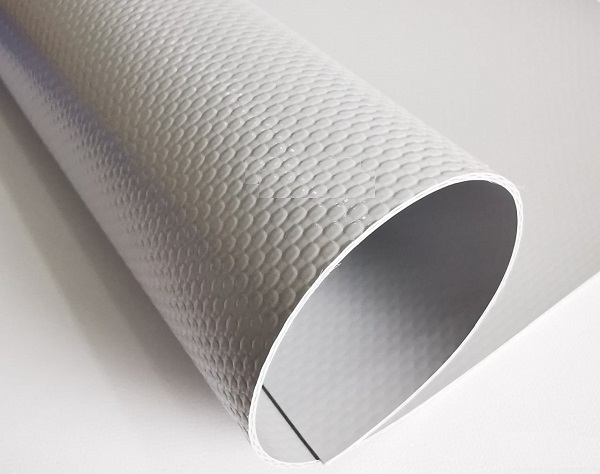
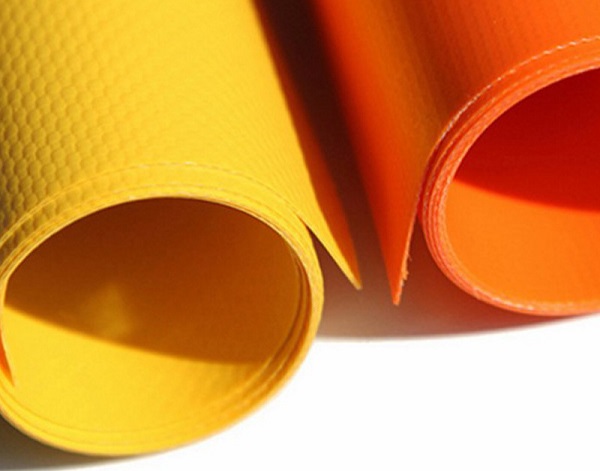
PVC-coated polyester shell
A candidate for weather covers, reusable quilt facings and cleanable blanket exteriors within the selected grade's limits. Specify coating adhesion, flex, tear resistance and the relevant water test.
Compare PVC-coated fabric construction by the approved material, rather than color or total blanket weight.
Foil or metallized laminate
Useful to evaluate when radiant exchange is part of the duty. Identify real foil versus metallized film, backing, bond and face orientation. Surface appearance does not establish a heat rating or thermal resistance.
See the foil and fiberglass construction guide for layer identification.
Coated glass textiles
For elevated-temperature projects, evaluate an appropriate glass textile, coating and liner with the full assembly. The coating and seam system may limit use before the glass reinforcement does.
The silicone-coated fiberglass material page provides a separate starting point for heat and movement requirements.
Rock wool, fiber padding or foam?
Choose the core from documented performance in the intended assembly. These are material families to evaluate, not a list of confirmed DERFLEX core stock.
Scroll horizontally on smaller screens to compare core requirements.
| Core family | What to specify | What to demonstrate |
|---|---|---|
| Rock wool / mineral wool | Exact fiber product, binder, density, thickness and any facing or retention layer. | Fiber containment, stability after flexing, moisture behavior and the assembled blanket's handling mass. A core fire classification does not classify the complete blanket. |
| Fibrous padding or felt | Fiber chemistry, construction, area mass, thickness and required retention method. | Recovery after rolling, resistance to shifting or clumping, moisture retention and performance after the agreed handling sequence. |
| Foam or bubble structure | Polymer, cell structure, thickness, bonding and relevant service limits. | Compression set, flexing, aging, seam compatibility and assembly-level thermal evidence. Do not substitute a generic foam name for a defined grade. |
Thermal resistance must identify the tested construction, thickness, conditioning, test method and units. Do not infer an R-value from GSM, advertise a generic core conductivity as full-blanket performance, or transfer one test result to every assembly.
Make competing quotations comparable.
Use one brief for the shell fabric and one for the finished construction. If a parameter is not yet defined, describe the application and request a sample proposal.
On smaller screens, scroll the specification table horizontally.
| Field | Information to record |
|---|---|
| Supply item | Outer fabric roll, inner liner, cut panel, composite or finished blanket. Identify who supplies and assembles the core. |
| Outer material | Coating and reinforcement; face/reverse finish; color reference; nominal area mass in g/m² and thickness in mm with tolerances. |
| Roll format | Usable width in mm or m, roll length in m, permitted joins and roll identification. |
| Thermal duty | Minimum ambient temperature; each face's operating temperature in °C; peak duration; contact or radiant exposure; desired protection period. |
| Core & liner | Exact core family and grade; thickness in mm; density in kg/m³ or area mass in g/m² where applicable; liner and fiber-retention requirements. |
| Water & cleaning | Rain, washdown or condensation; cleaning agents and concentration; drying process; water-entry acceptance for seams and openings. |
| Assembly | Deployed dimensions, overlap, quilting or weld layout, finished mass, openings, reinforced zones and fixing method. |
| Evidence & acceptance | Required test methods and conditions, sample construction, acceptance limits, inspection records and batch traceability. |
Approve the construction you will actually use.
A shell swatch helps screen the material. A representative blanket section reveals what happens at the seams, bends, edges and fixing points.
Freeze the layer stack.
Record the shell, core, liner, bond and thread or weld system. Keep an identified sample and document any proposed substitution.
Include the difficult detail.
Use an actual seam, corner, fixing patch and any service opening. Validate welding or stitching with the chosen material and equipment.
Reproduce the duty.
Agree the temperatures, wetting, cleaning, folding or rolling sequence. Observe cracking, leakage, core movement, bond failure and thickness recovery.
Link evidence to the order.
Set measurable acceptance criteria. Tie any thermal or fire report to the tested construction; retain roll, fabrication and inspection references for repeat supply.
Before you order
Resolve these details in the drawing and sample review, while changes are still straightforward. If a brief uses the term “three-proof fabric,” name the three required properties and their test conditions; the trade label alone is not a specification.
Keep the core dry without trapping moisture.
Detail rain shedding, overlaps, penetrations and edge closures. Quilting holes and stitched seams need their own water-entry solution. Check condensation and drying access rather than assuming a waterproof face makes the assembly watertight.
Check the roll-up mechanism.
Supply roller dimensions, available clearance, panel size, operating frequency and drive constraints. Trial the full thickness. Core compression, wet weight and reinforced edges can change winding behavior and required effort.
Protect fixings and contact surfaces.
Keep point loads away from unsupported padding. Detail reinforcement around attachments and openings, and check friction against greenhouse film, corners or machine edges. Confirm compatibility with the actual contacted material.
Define maintenance and the heat boundary.
Agree cleaning chemistry, drying, storage and inspection triggers. Repair exposed cores or damaged closures before reuse. Keep heater clearances, service access and hot surfaces within the approved assembly design.
Questions about insulation blanket materials
Bring application photos, a simple sketch and expected quantities if the material specification is still open.
Can PVC-coated fabric provide thermal insulation on its own?
PVC-coated fabric is primarily a protective shell in this type of blanket. Meaningful blanket-level thermal resistance depends on the core, layer arrangement, seams and installed conditions. Select the shell for its own exposure and fabrication requirements.
Is the same material suitable for agriculture and hot industrial equipment?
Not automatically. An exterior greenhouse quilt is selected around weather, rolling and crop-management needs. A hot pipe or process jacket requires temperature-rated facing, liner, insulation and closures. The temperature at each layer determines the material route.
Does a rock wool core make the entire blanket non-combustible?
No. The shell, binder, adhesive, liner, thread and closures are part of the finished assembly. Request evidence for the exact construction and intended requirement instead of extending the core's classification to the complete product.
How should I choose blanket thickness and weight?
Specify the protection task, exposure period and handling constraints first. Compare documented thermal performance at the stated construction and thickness, then check finished mass, compression recovery and roll-up fit. Greater GSM alone does not establish better insulation.
Can a waterproof outer fabric keep the insulation core dry?
It helps only when seams, quilting, edges, overlaps and openings are designed for the same exposure. Request a water-entry check on a representative assembly, and define how condensation or accidental moisture will be removed.
What should I send DERFLEX for a material quotation?
Send the application, intended supply form, dimensions or roll width, temperature and moisture conditions, operating method, quantity, destination and required documents. Add your core preference or a current sample if available. Core supply and finished fabrication should be confirmed explicitly.
Source the right fabric for your blanket program.
Send the working conditions and the item you need supplied. DERFLEX can discuss the coated-fabric requirement against a defined material and sample brief.
Include these details
- Application photos, drawing and deployed or roll dimensions.
- Required supply: shell, liner, composite or finished blanket.
- Minimum ambient and actual surface temperatures; rain, washing and condensation.
- Core preference, rolling or folding method, fixing details and target performance.
- Quantity, destination, planned date and required test or inspection documents.
The checklist is a purchasing worksheet, not a technical data sheet or a performance certificate.