



Mining maintenance · Material & panel specification
Hydraulic Oil Splash Guard Fabric for Mining Maintenance
Specify removable curtain panels for incidental, low-energy hydraulic-oil splash and oily contamination around maintenance work. Start with the actual fluid, cleaning cycle, access openings and runoff path.
Discuss coated-fabric rolls or custom panels with DERFLEX. Approve the body, window and attachments for your stated maintenance duty.
01 / Define the job
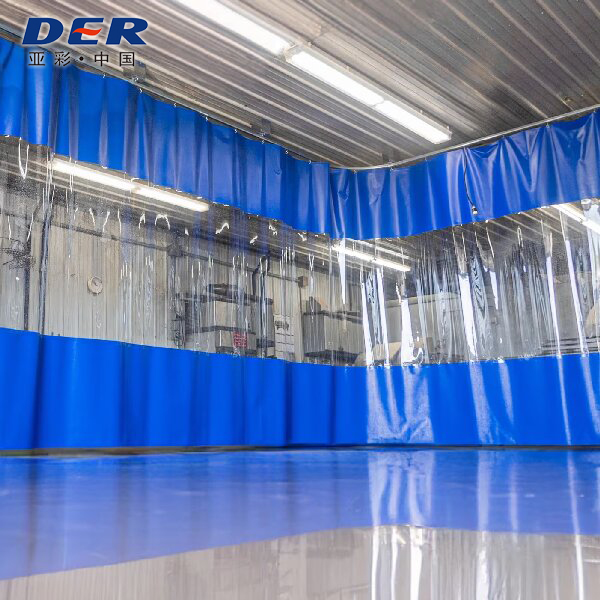
Define incidental splash and the protected work zone
Hydraulic oil splash curtain fabric is a flexible panel material used to intercept incidental droplets and oily residue within a defined maintenance area. Its suitability depends on fluid compatibility, panel layout, handling and cleaning. An oil-resistant surface alone does not establish the performance of the finished curtain.
Describe how oil reaches the curtain
Identify low-energy drips or splashes from drained parts, oily tools or component handling after the equipment has been made safe under the site's maintenance procedure.
Map the surfaces to keep clean
Mark nearby benches, stored parts and adjacent work areas. Include corners, side gaps, drafts and the path used to move components through the opening.
Plan the maintenance sequence
Show where panels hang during the task, how they are removed, and where wet panels are cleaned and stored without transferring oil to the clean side.
Application boundary: this page covers non-pressure, low-energy contamination screening. It does not specify protection against pressurized leaks, high-pressure jets, hose burst or hose whip, or personnel-protective splash screens. No safe pressure or jet rating is claimed. HSE identifies pressurized hydraulic-fluid jets as an injection hazard; see its hydraulic injection safety alert.
For a wider cover-material overview, see oil-contact tarp selection. For broader site covering tasks, explore mining tarp applications.
02 / Identify the exposure
Specify the hydraulic fluid and cleaning routine
“Hydraulic oil” is not a complete material specification. Record the trade name, grade and current SDS or technical sheet. Identify the base-fluid family—such as mineral oil, water-glycol or an ester/synthetic formulation—rather than transferring a result from one fluid to another. An ISO viscosity grade alone does not establish chemical compatibility.
On a small screen, scroll the table horizontally to compare all fields.
| Input | What to record | Why it changes the specification |
|---|---|---|
| Hydraulic fluid | Manufacturer, product name, grade, base-fluid family and known mixtures or contamination. | Compatibility must relate to the actual formulation, including its additives. |
| Contact pattern | Droplet deposition, repeat wetting, time before wiping, and whether oil remains in folds. | A wiped splash and prolonged trapped contact are different exposure conditions. |
| Temperature | Fluid temperature at contact, ambient range and the cleaning temperature, in °C. | Temperature affects both material response and handling; a general fabric range is not an oil-contact rating. |
| Cleaning cycle | Cleaner trade name, working dilution, dwell time, frequency, wiping or rinse method. | The cleaning step can be more demanding than the oil. Review the cleaner and residue sequence together. |
| Mechanical duty | Panel size, removal frequency, folding, grit, drafts and contact with equipment edges. | Reinforcement and coating durability must suit handling as well as liquid exposure. |
Opaque reinforced body
PVC-coated polyester is a candidate for a cleanable, reinforced curtain body, subject to the named fluid and cleaning trial. Select coating construction, flexibility and fabric strength together. Increasing GSM does not by itself improve oil resistance.
Use the chemical-contact specification guide to prepare the exposure and acceptance brief.
Clear window & alternative materials
Approve a clear film independently for the oil, cleaner, haze, scratching and its connection to the body. Opaque-body approval does not cover the window. Where the proposed PVC construction does not meet the brief, a different coated textile needs its own evaluation.
Review TPU fabric options and sample validation as a separate material discussion, without assuming universal compatibility.
03 / Make access part of the drawing
Design removable panels, viewing and service access
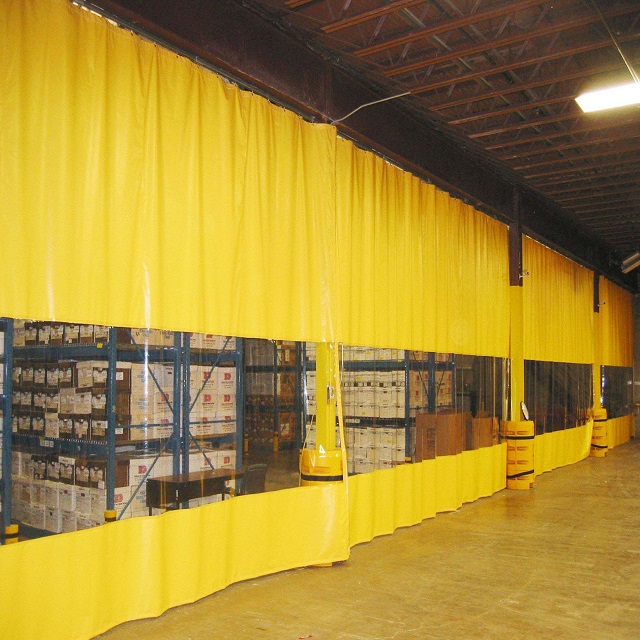
Build the drawing around how technicians inspect, remove and reinstall each panel. A removable oil splash curtain fabric panel needs a repeatable hanging interface, a clear wet-side orientation and a lower edge that returns to the same collection position after service.
Reinforced removable hanging points
Show the support line, eyelet or attachment centers, reinforcement and panel identification. Review the support for panel self-weight, handling and drafts. Fabric eyelets do not establish the capacity of the support structure.
Viewing where it is useful
Locate a window against the required sightline. Keep it clear of repeated folding and abrasive contact where practical. Approve the film-to-fabric joint and clarity after cleaning.
Service openings that close predictably
Map component-removal paths and opening direction. Consider overlapping flaps or other agreed closures; review whether oily grit will impair them. Do not treat a zipper or hook-and-loop edge as a liquid-tight seal.
A replaceable lower section
Where the duty supports it, discuss a separately replaceable skirt. Define its overlap and wet-side orientation, avoid oil-trapping folds, and show the final relation to the collection tray.
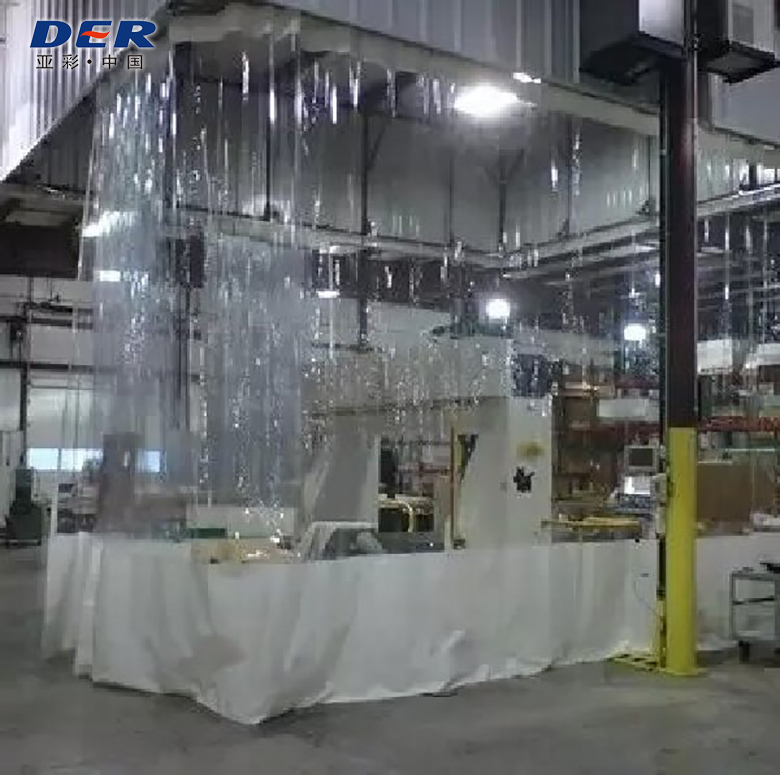
A hanging panel and a fitted equipment cover solve different access problems. If the requirement is an enclosure over the machine itself, review custom machinery cover construction.

04 / Follow the oil beyond the curtain
Direct runoff into a separate collection system
A hanging hydraulic equipment splash curtain redirects droplets; it does not provide collection capacity. Coordinate its wet face, lower edge and service openings with a separate tray, liner or collection floor designed for the actual fluid and expected inflow.
Keep the drip line inside
Show where oil leaves the skirt and where it lands. Account for panel movement and side-edge bypass. Avoid a hem that bridges oil onto the clean floor or forms an unplanned pocket.
Leave recovery access
Allow inspection, tray removal and cleanout without dragging a wet panel through walkways. The collection-system designer must define capacity, support, recovery and overflow arrangements.
Check after every refit
Confirm the skirt and tray alignment after a curtain is removed. A panel that is correctly hung but outside the collection boundary can return oil to the surrounding work area.
Keep supply responsibilities visible in the quotation
Specify whether the order covers roll fabric, cut panels or fabricated curtain panels. Tracks, structural supports, floor liners, trays, recovery equipment and installation are separate scope items unless expressly included in the agreed quotation. No collection-system rating is implied by the fabric description.
05 / Use condition-based inspection
Inspect coated panels and attachments
Check the curtain before use, after removal and cleaning, and after an unusual exposure. Set the recurring interval from the actual duty and initial trial observations. A calendar replacement interval should come from service evidence, rather than a generic fabric-life claim.
| Inspect | Look for | Response |
|---|---|---|
| Coated body | Persistent tack, swelling, blisters, cracking, exposed reinforcement or a change in flexibility. | Remove an affected panel from the duty and review fluid, cleaner and batch information before reuse. |
| Window & joints | Haze that obstructs viewing, abrasion, split corners or lifting at the joint. | Restore the required sightline and joint condition through an approved repair or component replacement. |
| Hanging & access edges | Elongated eyelets, torn backing, loose fittings, damaged closures or gaps after refitting. | Check both the attachment and surrounding fabric; correct alignment and the cause of concentrated loading. |
| Lower skirt & collection | Grit abrasion, oil-trapping folds, a drip line outside the tray or obstructed recovery access. | Clean and inspect the interface; replace worn sections and recheck the runoff route. |
Log panel ID, fabric batch, installation date, fluid and cleaner used, exposure changes, photographs and the action taken. Staining alone is not a reliable measure of retained strength or barrier condition. The coated-tarp maintenance checklist provides broader care guidance; the approved oil-contamination cleaning procedure takes priority for this application.
Before you order
Turn the application into a material and panel specification
Start with a drawing, a splash-duty description and the fluid details. DERFLEX can review roll-material and custom panel options around those inputs. No universal GSM, thickness or oil-contact temperature is assigned to this application before the construction is selected.
| Specification | Required definition |
|---|---|
| Body material | Approved construction and surface, nominal mass in g/m², thickness in mm where relevant, roll width in mm and agreed tolerances. GSM cannot be converted directly to thickness. |
| Panel drawing | Finished width and hanging drop in mm, measurement datum, quantity by panel ID, seam positions, overlaps and wet-side orientation. |
| Windows & openings | Clear-film identity, viewing dimensions and height, service-opening locations, closures and required removal sequence. |
| Attachments & skirt | Fixing centers, reinforcement, hanging interface, lower-edge construction and separate collection boundary. |
| Acceptance & documents | Named fluids and cleaners, exposure conditions, visual and functional criteria, sample identification and the required material or test documents. |
| Commercial scope | Rolls or fabricated panels, order quantity, color, labeling, packaging, destination and requested delivery plan. Confirm feasibility, MOQ and lead time in the quotation. |
Agree the sample approval plan
- Record a baseline. Identify the candidate fabric, clear film, joint sample and attachment detail. Photograph and measure the properties relevant to the panel duty.
- Reproduce the contact and cleaning sequence. Agree fluid, temperature, wetting time, cleaning product, dilution, dwell and repetitions. Include trapped contact if the drawing could create it.
- Assess the complete detail. Check coating condition, flexibility, window clarity, joint integrity and attachment condition against agreed criteria. Select mechanical tests and thresholds with the relevant laboratory where needed.
- Approve a first panel in the intended layout. Verify fit, opening, removal, refitting and the runoff path. Record the approved drawing revision and construction before bulk supply.
A water leak check does not establish resistance to the specified hydraulic fluid. This is a proposed validation workflow, not a report of completed testing or a personnel-protection assessment.
Buyer questions
Hydraulic oil splash curtain fabric FAQ
Can a PVC curtain be used around hydraulic oil?
A selected PVC-coated construction may be a candidate for incidental low-energy oil splash after review of the actual fluid and cleaning cycle. Approval must cover the chosen body, window and joints. A general waterproof or oil-resistant description does not establish compatibility for every hydraulic fluid.
Does a heavier fabric provide better oil resistance?
Not by itself. Mass affects handling and can relate to reinforcement or coating quantity, but chemical compatibility depends on the formulation and exposure. Specify mechanical duty separately from the liquid-contact acceptance criteria.
Can the curtain stop a pressurized hydraulic leak or hose burst?
No such protection is specified here. These material and panel options are for non-pressure, low-energy contamination screening. Pressurized leaks, hose burst restraint and personnel protection require a separately engineered and validated solution.
Can clear windows and removable service panels be included?
They can be discussed on the drawing, subject to material and fabrication feasibility. Define sightlines, opening direction, removal frequency, reinforcement and the window-to-body connection. Validate the clear film and closure detail independently, including their response to cleaning.
Does the lower curtain edge replace a spill tray or containment liner?
No. The lower edge should direct runoff into a separate collection boundary. Tray or liner compatibility, capacity, recovery and installation belong to the collection-system specification. Recheck alignment whenever a curtain is removed and refitted.
What is needed for a quotation and technical review?
Send the fluid name and SDS or technical sheet, cleaner details, incidental splash description, contact temperature and duration, curtain drawing, quantity and destination. Add photographs of the hanging points, required sightlines and collection interface. Ask for documents corresponding to the proposed construction rather than a generic oil-resistance certificate.
Start with the actual maintenance duty
Send fluid details, curtain drawings and the splash duty description.
Give DERFLEX the exposure and interface information needed to review an oil splash guard material and a practical supply scope for your workshop or OEM panel program.
Include these in your inquiry
- Fluid and cleaner names, with SDS or technical sheets.
- How splash occurs, temperature and time before cleaning.
- Panel drawing, hanging points, windows and service openings.
- Lower-edge and separate collection-system details.
- Rolls or fabricated panels, quantities, destination and document needs.