



Portable Wash Bay Containment Liner Fabric for Mine Sites
Specify the collection floor around what actually reaches it: hot wash water, diluted degreaser, oil residues and abrasive mine grit. DERFLEX supplies coated textile roll materials for fabricators developing portable wash-bay liners. This guide helps wash-bay manufacturers, mine-site cleaning contractors and environmental equipment integrators define the material, drainage interfaces and supported-floor construction before sampling.
Supply focus: coated fabric rolls. Agree any cut panels, welded components or replacement liners separately in the quotation.
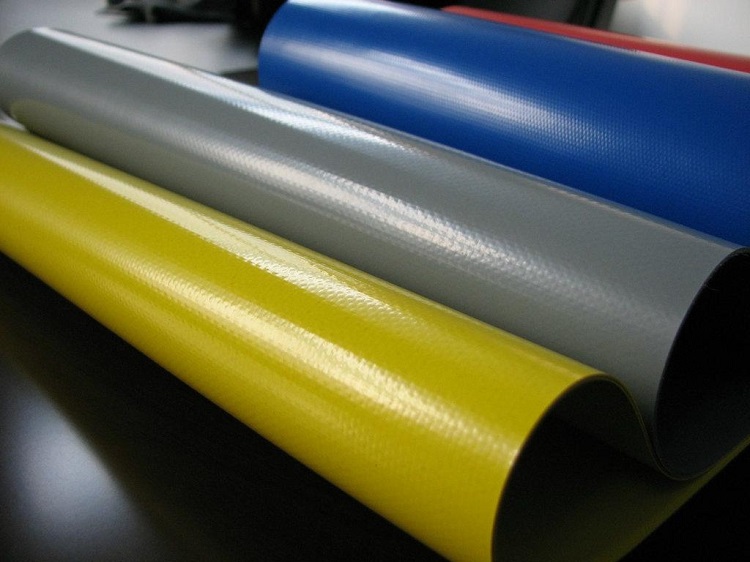
What does the liner do?
A portable wash bay liner is the flexible liquid-collection layer beneath the washing zone. Its coating, welded seams and sealed interfaces must retain the intended wash mixture while directing runoff to recovery. A mining wash bay liner needs chemical and hot-wet exposure review, grit protection and a defined support arrangement. The fabric itself provides neither wastewater treatment nor an automatic vehicle-bearing capacity.
Separate collection floor from splash curtains
Follow the water from the equipment surface to the recovery outlet. Each part has a different job—and needs its own approval.
Vertical splash control
FunctionCurtains intercept spray and guide runoff toward the collection boundary.
Interface to resolvePosition the lower curtain edge inside the wet envelope. A hanging hem alone does not seal the floor.
Horizontal liner
FunctionThe supported floor membrane collects contaminated water through continuous seams and sealed connections.
Interface to resolveSpecify corners, perimeter upstands, entry details, outlet positions and access for inspection.
Support & recovery
FunctionThe base or deck supports the operation; the recovery equipment transfers collected water for the site's treatment or disposal route.
Interface to resolveThe system designer establishes load paths, usable holding volume, flow management and downstream treatment.
For the vertical enclosure, use the separate pressure washing curtain selection guide. For floor-to-wall fabrication, compare containment berm fabric and welded basin details.
Map detergent, wash temperature and mixed residues
A detergent's trade name, pH or dilution alone cannot qualify equipment wash water containment fabric. Build a contact list for the fresh cleaner, runoff mixture and cleaning process used on the liner itself. Include concentrated spills if they are credible.
| Exposure | Record from the site | Resolve before material approval |
|---|---|---|
| Detergent & degreaser | Product name, current SDS, supplier use instructions, in-use concentration, mixing sequence and rinse method. | Evaluate the selected coating, weld and gasket against the proposed contact conditions. A general “chemical resistant” label is insufficient. |
| Hot wash water | Maximum delivered water temperature, temperature reaching the liner, contact duration, cooling and any direct spray or steam. | Use a representative hot-wet exposure trial. An ambient or dry-service temperature range does not approve hot washdown. |
| Oil & mixed residues | Hydraulic oil, lubricant, fuel traces and other identified contaminants; likely concentration and time before removal. | Review each relevant medium and representative mixtures. Oil-contact evidence does not automatically cover fuel, additives or solvent cleaners. |
| Sand, mud & mineral fines | Solids loading, particle size, angular grit, settlement locations and proposed removal tools. | Assess abrasion and local puncture risk with the proposed wear protection and cleaning procedure. |
| Wet storage & redeployment | Time left wet, fold condition, storage temperature, drying procedure and frequency of moving the bay. | Include the actual rinse, dry, fold and reopen sequence in qualification. Examine seams and protected areas as well as exposed fabric. |
On smaller screens, scroll the table horizontally to read all three columns.
Choose a candidate construction
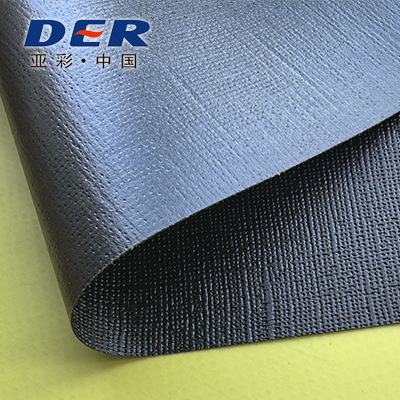
Start the discussion with PVC-coated polyester roll fabric when it matches the conversion process and the proposed exposure can be qualified. Identify the wetted coating face, reinforcement, backing and surface finish.
Where hydrocarbon exposure changes the selection, compare the TPU coated fabric range for oil-contact applications. The exact grade still needs wash-chemical, hot-wet and fabrication evidence; a polymer name is not a pass result.
Design drainage and sediment collection interfaces
Set the collection low point, sediment access and recovery route before freezing the floor pattern. Put serviceable connections where they can be inspected without dismantling the vehicle support.
Collection-floor layout
Concept schematic · not to scale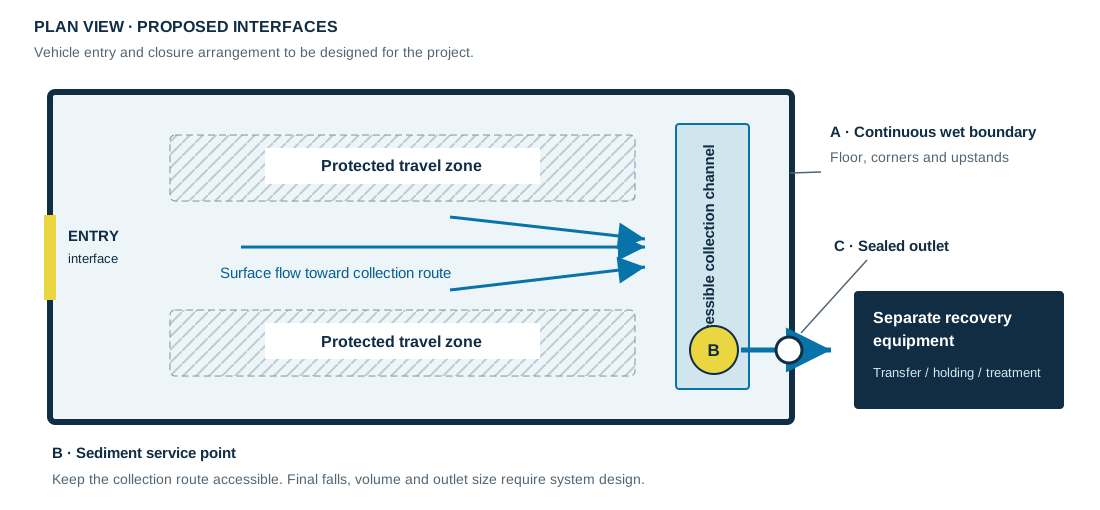
A · Collection boundaryInclude spray return, entry details and perimeter closure in the wet envelope.
B · Sediment accessAllow removal of grit before it blocks the collection route; retain access for liner inspection.
C · Outlet assemblySupport pipework independently. Match the seal, fitting and barrier material to the approved exposure.
Design for the solids as well as the water
Specify where coarse debris is intercepted and how it is removed. A removable basket or accessible collection pocket is a design option to review, rather than a substitute for the site's sediment-management process. Keep sharp tools away from the barrier during cleaning.
Record washer flow, simultaneous wash stations and other inflows. The designer should consider reduced drain performance, pump stoppage and the operating response before water can escape the boundary.
Make the penetration a controlled detail
Show the selected welded flange or clamped fitting, gasket contact, backing support and connection to external pipework. Avoid unsupported hose weight and inaccessible joints. Do not treat a hole cut in the fabric as a finished drain.
Leak-check the assembled connection at the agreed water depth and duration, then repeat after the exposure and handling sequence. State which parts are included in each supplier's quotation.
Collection is one stage of water management. The liner does not remove detergent, emulsified oil or dissolved contaminants. The system integrator must select recovery and treatment for the actual mixture and establish the site's permitted reuse or disposal route.
Protect the liner under wheels and support members
Fabric weight is not a vehicle load rating. A supported membrane, the driving surface, the base and the bearing points must be considered together. Use the actual vehicle configuration—including tracked machines, turning and braking—when the system designer reviews the assembly.
Separate the load path from the barrier
Concept section · not a structural design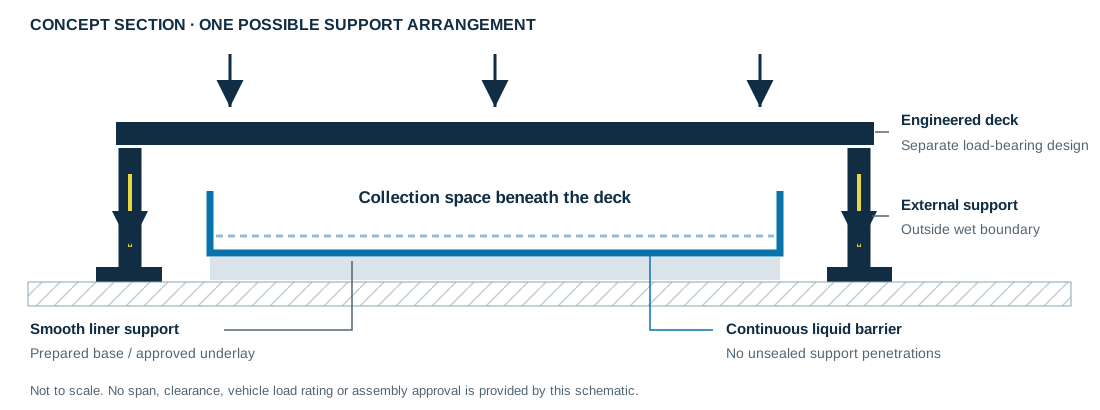
Wheel paths and entry transitions
Review approach geometry, turning, braking and trapped stones. Where travel occurs over a liner, qualify the actual direct-contact arrangement, local wear layer and support. Keep a replacement wear strip distinct from the continuous liquid barrier; it cannot conceal an untested floor joint.
Deck feet, edges and base preparation
Remove sharp debris, control unsupported gaps and detail bearing points so load does not become a cutting or pinching action. Show how any underlay drains or remains inspectable. The liner should not be expected to bridge a structural opening.
Replaceable zones with accessible boundaries
Identify entrance protection, wheel-track wear sheets and sediment-cleaning areas by position. Plan removal without damaging the collection membrane. If the barrier itself is modular, qualify each wet joint and document how a replacement panel is resealed and checked.
Broader covering duties have different requirements. See the mining tarps application overview for equipment and site protection outside the wash-water collection floor.
Validate repeated wash and deployment cycles
Define a project cycle before choosing how many to run: deploy, wash, recover, remove sediment, rinse, dry, fold and reopen. Temperature, duration and cycle count must come from the actual project.
The following is a proposed qualification framework. It is not a report that a DERFLEX wash-bay grade or completed system has passed these checks.
| Stage | What to include | Record and acceptance basis |
|---|---|---|
| Baseline material | Identified grade, coating faces, nominal mass and thickness, dimensions, material condition and control sample. | Record agreed methods, sampling and limits for barrier behavior, mechanical properties and coating bond. |
| Wash exposure | Actual cleaner and representative residues under defined concentration, temperature, contact time, rinse and drying conditions. | Examine swelling, tackiness, hardening, cracking and coating separation; measure relevant retained properties against the control. |
| Fabricated interfaces | Production-intent seam, corner, reinforcement and drain assembly using the intended equipment and components. | Record process details and failure locations. Check leakage and required joint performance after conditioning. |
| Handling & service trial | Proposed support, wear protection, sediment removal and fold sequence; representative traffic only under an approved trial plan. | Log each cycle, inspections, repairs and stop conditions. Recheck the barrier and interfaces before release for further service. |
Scroll horizontally on smaller screens. Agree numerical acceptance limits with the project team before testing.
A coupon test and an assembly trial answer different questions. Compare the same grade, face, direction and test basis before and after exposure. Use the coated-fabric test methods and report checklist to prepare comparable records. A cycle count alone does not establish service life.
Specify the material and the finished interfaces separately
For washdown containment mat material, use an order-specific data sheet rather than borrowing a general tarp range. The fields below are an RFQ framework; they are not a stock-grade specification or an offer for a complete wash bay.
| Requirement | Define in the inquiry | Approval output |
|---|---|---|
| Construction | Candidate polymer and reinforcement; wetted face, backing, surface finish and intended welding process. | Identifiable grade and revision, with the approved sample. |
| Mass & thickness | Required g/m² and mm where known; otherwise supply the exposure and handling brief for review. | Nominal values, tolerances and measurement basis. Do not convert GSM directly to thickness. |
| Width & panel layout | Usable floor dimensions, perimeter development, seam allowances, fitting positions and planned wear zones. | Usable roll width, cut layout, seam map and material utilization agreed before ordering. |
| Liquid & hot-wet exposure | Cleaner documentation, contaminants, concentrations, maximum temperature and contact duration. | Matched evidence or an agreed qualification plan covering material and fabricated details. |
| Mechanical & barrier checks | Support arrangement, abrasion and puncture hazards; required fabric, bond, seam and leakage acceptance. | Named procedures, relevant directions, conditioning, units and purchase limits. |
| Fabrication boundary | Rolls, cut panels, welded components or a replacement liner; identify the party supplying each fitting and wear layer. | A quotation listing included items and approved drawings. The deck, pumps and treatment require separate scope agreement. |
| Repeated supply | Quantity, panel IDs, spare sections, roll identification and retained reference samples. | Order and batch records connecting supplied material to the approved specification. |
| Packing & delivery | Maximum handling size or mass, folding constraints, destination and required delivery date. | Confirmed packing, commercial terms, MOQ and lead time in the quotation. |
Swipe or scroll to view all columns. No generic fuel, temperature, traffic or service-life rating is implied.
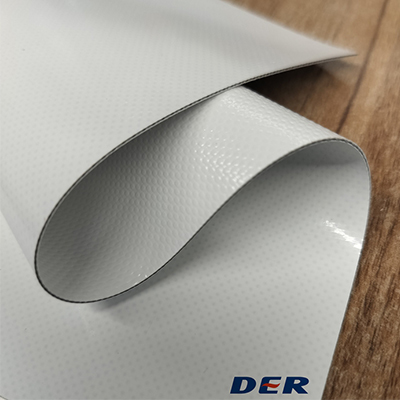
Send the conditions the liner will actually face
Start with a sketch, photographs and the following four evidence items. A complete floor drawing is more useful than requesting “the heaviest waterproof fabric.”
- Floor and drainage drawingUsable dimensions, collection boundary, seam preferences, low points, outlet positions, curtain return and entry arrangement.
- Actual wash-chemical listCleaner names, SDS and use instructions, dilution, residues, maximum wash temperature and contact time.
- Support structure drawingBase condition, deck or grating, wheel/track routes, support members, bearing interfaces and the system designer's operating constraints.
- Representative floor sampleA production-intent material, seam and outlet detail for exposure and handling trials, with the planned wear layer and replacement zones.
Define the replacement decision
Record where inspections will occur and who releases the liner for reuse. Review exposed seams, folds, low points and hidden grit beneath wear sheets. Agree the action for leakage, coating cracks, delamination, damaged connections or a change in the cleaner.
Make quotations comparable
Specify the same grade, usable width, panel geometry, fabrication boundary, quantity and packing basis. Cutting yield, wet joints, drain details and spare wear sections can change cost independently of fabric mass.
Ask DERFLEX which order-specific technical data and relevant reports are available. Sample terms, fabrication scope, MOQ, lead time and any warranty belong in the written quotation.
Portable wash bay liner fabric FAQ
Is wash-bay floor liner fabric the same as a pressure washing curtain?
Can PVC-coated fabric handle hot water and degreaser?
What GSM or thickness should a mining wash bay liner use?
Can mining vehicles drive directly over the fabric?
How should the liner connect to the drain?
Does DERFLEX supply the complete wash bay and water-treatment system?
Send wash chemicals, maximum wash temperature and floor layout.
Include the support drawing, wash frequency, sediment-removal method, quantity and destination. Use that brief to discuss a candidate coated fabric and an appropriate sample plan.