News
Industry News

Greenhouse Blackout Tarps: Materials, Light Leaks & Ventilation | DERFLEX

Update:2026/10/14 19:48:54 Views:
Horticulture · Photoperiod control · B2B supply

Greenhouse Blackout Tarps Light Leaks, Ventilation
and Material Selection

Specify a cover that controls incoming light while fitting the way your greenhouse moves air, opens and closes. A dark sheet alone does not establish a dependable blackout system.

DERFLEX supplies greenhouse covering materials and custom tarpaulin options for commercial growers, greenhouse fabricators and OEM buyers. Discuss black/white film, opaque coated-fabric constructions, custom panel sizes and reinforced finishing against your project drawing. Approve light blocking, handling weight and seam details together before bulk production.

Roll goods & fabricated-panel enquiries · Project-specific sample approval

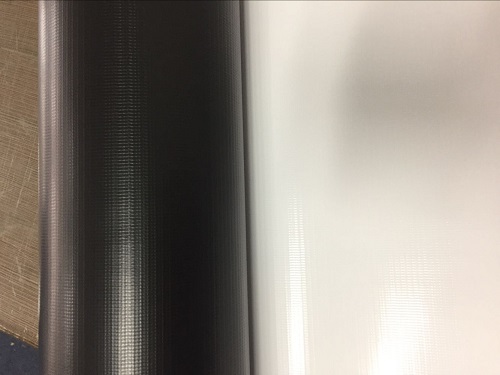
MATERIAL FIRST. SYSTEM VERIFIED. Black and white coated tarpaulin rolls shown on the DERFLEX website
Start with the construction, then close every light path.Actual DERFLEX coated-material photograph. Color and appearance are reference points; blackout performance must be confirmed on the selected material and assembled cover.
01 / LIGHT CONTROLOpaque sheet + closed seams and edges
02 / CLIMATE CONTROLAir exchange during the closed period
03 / MECHANICAL FITWeight, folds and travel matched to the system
The buying decision

Blackout is a system.
The tarp is one layer.

A greenhouse blackout tarp is an opaque covering used to create a controlled dark period. Its light-blocking construction, edge closures and ventilation arrangement work together to support the grower’s photoperiod plan.

For crops such as chrysanthemums and poinsettias, the grower sets the required dark interval and acceptable light exposure. Material selection should follow those requirements rather than a generic “black tarp” label. Purdue Extension explains photoperiod control and blackout-cloth use.

What makes a greenhouse tarp suitable for blackout?

It needs verified low light transmission through the sheet, a closure layout that prevents edge and seam leaks, and a compatible way to manage heat and humidity while covered. UV resistance, dark color and high GSM do not establish blackout performance by themselves.

01 / Material selection

Choose the construction
for the operating cycle.

Separate the need for darkness from the need for weather protection, low curtain weight or water-vapor movement. A heavier cover can increase handling and drive loads without correcting a gap around a door.

The matrix compares material families. It is a selection guide, not a list of tested DERFLEX blackout grades.

Greenhouse blackout material selection matrix
Material familyWhere to consider itKey trade-offApproval priority
Black/white PE filmLight-deprivation covers where low sheet mass and broad coverage matter.A solid barrier needs a separate air-exchange strategy. Punctures, folds and attachment edges need attention.Opacity, UV suitability, tear behavior and repeated-handling sample.
Opaque reinforced PE tarpRemovable covers needing a reinforcing textile or scrim.Reinforcement helps carry handling loads; weave and color still do not prove blackout.Coating continuity, crease damage, perimeter fixing and seam light leaks.
Opaque PVC-coated polyesterReusable fabricated panels, reinforced side curtains and welded cover assemblies.Weight and bending stiffness can increase roller torque and packed volume. A solid coating is not a breathable climate screen.Actual opacity, cold flexibility, compatible welds and system load limits.
Purpose-made interior blackout screenRetractable greenhouse curtain systems needing low packed volume and specified moisture behavior.Specialist structures vary. “Breathable” does not mean unrestricted airflow or automatic condensation control.System-supplier compatibility, measured light transmission, air/vapor properties and edge seals.
Ordinary shade clothDaytime light reduction and crop shading.Open shade fabric transmits light and generally cannot deliver a controlled dark period.Use a separate blackout layer when the crop programme requires darkness.

For solid fabricated covers, review the underlying PVC tarpaulin material options. For daytime shading, see greenhouse shade fabric.

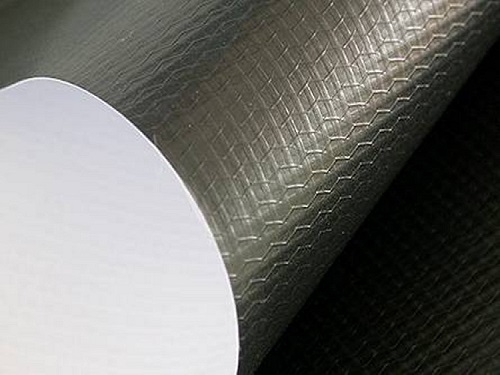
Which side faces the sun? A white or reflective face is commonly oriented toward solar exposure to limit absorbed heat; a dark functional layer provides opacity. Follow the approved construction and installation orientation. Neither surface color nor reflection removes the need for climate control.
02 / Find the weak point

Map the light leak
before replacing the fabric.

An opaque sheet can still leave a bright line at a seam, bottom edge or ventilation opening. Identify whether light passes through the material or around it; the corrective action is different.

Inspect the closed assembly under the outside-light conditions it will encounter. Include the fan-on state and every position of the curtain travel.

Symptom → likely light path → detail to review
Observed symptomLikely sourceDetail to review
Diffuse glow across a panelInsufficient sheet opacity or local coating variation.Test the material away from edges, then compare it with the approved sample using the agreed measurement method.
Bright line between panelsInsufficient overlap, seam opening or exposed stitch holes.Review the closure through its full travel. Use a compatible welded joint or an opaque backing detail where the assembly requires it.
Light around roof or end-wall edgesThe moving curtain does not meet the fixed perimeter seal.Draw the junction in section, including brackets, rails and the closed stop position. Allow for movement without a direct light path.
Flashes near the lower edgeWind lift, fan pressure or an uneven base opens the skirt.Check the lower seal and retention under operating pressure. Add support or a designed sealing profile instead of excessive point tension.
Glow at a door, zipper or pipeUncovered access closure or service penetration.Review opaque flaps, sealed collars or a baffled entry. Test the detail after repeated opening and closing.
Bright vent or fan openingA direct line of sight through the air path.Use a designed light trap and verify fan performance with the added resistance.
Pinpoints after repeated foldingAbrasion, punctures or crease-related damage.Inspect contact points and folds. Repair using an approved opaque, material-compatible construction and repeat the light check.

Specify an overlap detail, not a universal overlap number. Required coverage depends on geometry, tension, movement and closure accuracy. A larger loose overlap can still open under pressure. Show its orientation and sealed position on the drawing.

For frequently used access points, the zippered tarp construction guide explains useful layouts. A zipper still needs a light-blocking closure detail when used in a blackout assembly.

03 / Ventilation & humidity

Keep an air path.
Remove the light path.

A solid blackout tarp restricts air exchange through the covered area. Design the intake, exhaust and moisture strategy for the closed condition; the white outer face alone cannot keep a sealed greenhouse cool.

Purpose-made screen fabrics and solid films behave differently. The NGMA curtain-systems guide distinguishes impermeable PE film from porous curtain constructions.

  1. Keep intake and exhaust working while covered.

    Locate openings outside the curtain’s travel. Fit light traps where daylight would otherwise enter; avoid uncovered gaps used as improvised vents.

  2. Account for pressure drop.

    Baffles, filters, insect screens and ducting add resistance. Select the fan at the actual operating static pressure and verify delivered airflow with the blackout system closed.

  3. Separate air movement from moisture removal.

    Circulation fans mix air; they do not replace outside-air exchange or dehumidification. Track crop-zone temperature and humidity during the dark interval.

  4. Check condensation and water pockets.

    Prevent sagging areas that can collect leaks or condensate. Anti-drip treatment changes droplet behavior; it does not remove water vapor or replace drainage.

Conceptual baffled ventilation light trapA direct light ray is intercepted by an opaque baffle while an air path bends around staggered barriers. This diagram does not specify dimensions or airflow capacity. LIGHT-TRAP PRINCIPLE OUTSIDEGREENHOUSE Direct light blocked Opaque, staggered baffles Air turns through the baffled passage
Concept diagram only. Baffle geometry must control reflected as well as direct light. Specify pressure drop, clearances and cleanability with the ventilation-system designer.
04 / Panels & moving parts

Build the cover around
its travel and fixing points.

Blackout curtain fabric is repeatedly bent, pulled and stored. Approve the moving assembly as well as the flat material sample. For a separate daylight roof layer, review greenhouse films and covering options.

01 — MANUAL PULL-OVER

Control mass and snagging.

Use a panel layout that operators can move without dragging over rough fasteners or sharp frame edges.

  • Define pull edges and reinforced handling zones.
  • Keep opaque closure flaps clear of the travel path.
  • Provide dry, protected storage when retracted.
02 — ROLL-UP COVER

Check the whole roll.

Seams, pockets and patches can create uneven roll buildup. Greater thickness is not automatically an upgrade.

  • Confirm roller diameter and allowable fabric mass.
  • Review pocket inside size and seam placement.
  • Cycle the sample at the expected temperature.
03 — RETRACTABLE INTERIOR

Match the curtain system.

Sliding or suspended systems require compatible curtain weight, flexibility and packed dimensions.

  • Get approval from the system supplier.
  • Include perimeter seals and end-wall interfaces.
  • Review clearance to lamps, heaters and services.
Joining method matters. PVC-coated fabrics may suit hot-air or HF welding when the grade is compatible. PE and specialist screen fabrics require their own joining route. Sewing can create light paths through needle holes; verify any opaque backing and the assembled seam. Do not assume a printable blockout banner is suitable for repeated greenhouse curtain duty.
05 / Procurement specification

Turn “blackout” into
an approvable requirement.

There is no universal GSM, thickness or shade percentage that proves the completed greenhouse is dark enough.

Agree on the crop-zone acceptance criteria with the grower, then ask the supplier to confirm the material and fabrication details below.

Specification worksheet — final values confirmed with DERFLEX for the selected construction
Specification itemWhat to defineHow it affects the order
Material & layer structureBlack/white film, reinforced PE or opaque coated polyester; identify the light-blocking layer and face orientation.Controls fabrication route, handling and application suitability.
Light transmissionTarget, spectral range, direct/diffuse conditions, detector sensitivity and method; sample, seams and installed assembly assessed separately.Do not substitute a UV rating or visual color judgment for an agreed opacity check.
Mass & thicknessGSM and/or thickness with tolerances; finished panel mass where system loading matters.Confirm the selected grade. No blanket weight or mil recommendation applies to every system.
Width, length & cut planAvailable roll width, seam positions, finished size and tolerances; separate cutting size from installed coverage.Determines seam count, waste, shipping volume and installation fit.
Mechanical requirementsTensile/tear direction, seam strength, edge pull resistance, bending and abrasion exposure.Agree the relevant method and acceptance values before approval.
UV & temperatureInternal or external exposure, local climate, movement temperature and any required aging evaluation.UV treatment and cold-flex behavior must suit the actual operating environment.
Seals & accessoriesWelds, hems, pockets, reinforced attachment zones, flaps, collars and fastener positions.Put light-sealing details and attachment geometry on the drawing.
Air/vapor behaviorSolid barrier or specialist screen; any requested permeability result plus the greenhouse ventilation arrangement.A sheet property cannot establish whole-greenhouse airflow.
FR & chemical exposureRequired fire-test standard, permitted cleaners and exposure to crop-protection products.Grade-specific evidence and compatibility require confirmation; no blanket certification is implied.
Supply & packagingRolls or fabricated panels, quantity, identification, rolling/folding direction and destination.MOQ, price, sample plan, lead time and packing are quoted against the confirmed specification.

Measure the curved surface, not just the floor.

A greenhouse’s plan width is not the cover path over the roof. Measure along the intended route, then identify end-wall drops, side skirts, closures and moving overlaps. Label every panel, fixed edge and operating face.

For replacement covers, an old stretched or torn panel is a reference; confirm its dimensions against the frame and hardware.

Put three separate dimensions on the drawing

Required covered areaInstalled coverage
Panel after finishingFinished size
Fabric before joiningCutting allowance
06 / Sample acceptance

Approve one assembly
before scaling the order.

Use the same material, seam, reinforcement and closure details intended for production. Combine supplier sample checks with commissioning in the actual greenhouse.

STEP 01 / FLAT SAMPLE

Check the sheet.

Inspect for pinholes and coating variation. Agree how light transmission will be measured and reported, including detection limits.

STEP 02 / JOINT SAMPLE

Check the details.

Make a seam, hem, pocket and closure mock-up. Evaluate light blocking and mechanical integrity after representative flexing.

STEP 03 / CLOSED SYSTEM

Check the greenhouse.

With normal fans operating, inspect crop-height points near edges, doors and vents under relevant outside-light conditions.

STEP 04 / HANDOVER

Record the standard.

Retain sample identity, drawing revision, agreed readings, closure positions and repair method for future replacement orders.

Visual inspection locates leaks; it does not certify a transmission percentage. Use a suitable calibrated detector for the agreed light level and spectrum. A phone camera or uncalibrated app can miss low-level light or misrepresent it through automatic exposure.

Review DERFLEX’s material quality-control process, then agree the specific blackout and finished-panel checks required for this order.

07 / Project enquiry

A clearer brief.
A more useful quotation.

DERFLEX can review covering materials, custom dimensions, reinforced edges and fabricated tarp details. Send the project scope so material supply, finished-panel work and greenhouse-system responsibilities are clear.

Send these details with your enquiry

  • Crop programme and required dark-period conditions
  • Greenhouse drawing, cover path and panel schedule
  • Internal/external use; manual, roll-up or sliding system
  • Material preference, opacity target and test method
  • GSM/thickness preference, UV and temperature exposure
  • Seams, skirts, pockets, flaps and fixing-point layout
  • Ventilation openings, light traps and moving clearances
  • Quantity, destination, packaging and required delivery date

Samples, MOQ & delivery

Request a representative sample and, where relevant, a fabricated mock-up. MOQ and lead time depend on the selected construction, custom formulation, size, finishing and order quantity; confirm them in the quotation.

What drives price?

Polymer and reinforcement, layer construction, usable width, total area, cutting yield, seam count, reinforcement and required testing all influence cost. Compare quotes against the same finished specification and supply scope.

Keep repeat orders consistent

Use panel IDs, operating-face labels, drawing revisions and a retained approved sample. Review whether rolled packing or controlled folds better suit the material and installation sequence.

Buyer questions

Before you specify
a blackout cover.

Direct answers to the questions that change material selection and installation details.

Ask about your application
Can a normal black tarp be used as a greenhouse blackout tarp?

Only if its opacity and the completed closure meet the project requirement. Black color alone does not establish blackout performance. Check the sheet, seams, edges, doors and ventilation openings under the intended outside-light conditions.

Is shade cloth the same as blackout cloth?

No. Ordinary shade cloth reduces light and usually has an open structure. Blackout cloth is selected to create a controlled dark period. A high shading percentage does not by itself prove the crop zone meets a blackout requirement.

What thickness or GSM should I choose?

There is no universal value. Select opacity, tear behavior, flexibility and handling weight together, then confirm compatibility with the cover mechanism. Greater thickness or GSM can add load without improving edge sealing or light control.

Should the white or black side face outward?

A white or reflective face commonly faces solar exposure to reduce absorbed heat, while a dark functional layer provides light blocking. Follow the selected construction’s installation instructions and verify opacity in that orientation. Ventilation remains necessary.

How can I ventilate a greenhouse while the blackout tarp is closed?

Use an intake and exhaust arrangement with suitable light traps or baffled air paths. Include their resistance when selecting the fan, and check airflow and crop-zone conditions with the blackout cover fully closed.

Are greenhouse blackout tarps breathable?

Solid PE film and solid PVC-coated tarp should not be treated as breathable greenhouse climate screens. Purpose-made blackout screens can have different air and vapor properties. Request relevant test data and design greenhouse ventilation separately.

How do I find light leaks after installation?

Close the system under the relevant outside-light conditions and inspect seams, edges, doors, vents and penetrations with normal fans operating. Use visual checks to locate defects and a suitable calibrated detector to assess agreed crop-zone acceptance limits.

Can DERFLEX quote custom panels or roll goods?

DERFLEX accepts enquiries for greenhouse covering materials and custom tarp options. Provide the construction, dimensions, quantities, closure details and destination. Confirm the available blackout grade, sample plan, fabrication scope, MOQ and lead time with the quotation.

Technical reading: Purdue Extension — Managing Photoperiod in the Greenhouse; NGMA — Internal and External Greenhouse Curtain Systems. These references inform the application guidance; they are not DERFLEX product certifications.

Plan the material. Confirm the details.

Bring us the greenhouse drawing.
Define the blackout cover toge, ther.

Share the cover path, operating system, opacity requirement and quantity. Request a material proposal and the sample checks needed for your application.

Request a Quote Material specification · Custom fabrication review · B2B sourcing

DERFLEX · Coated fabrics, greenhouse covering materials & custom tarpaulins

Back to top ↑ · Application guidance; final specification by approved sample and drawing.

Consulting Services
+86-021-54361792 / 54361798
Email
sales@derflex.com