Drawstring Tarps for Custom Cinch Covers & OEM Supply
Drawstring tarps use a movable cord inside an edge channel to gather the perimeter. They can form a leaf-collection bundle or tighten a fitted cover around equipment, furniture and stored items. For B2B sourcing, the important choice is how the material, cord route and finished shape work together.
DERFLEX supplies custom tarp materials and finished cover programs. Bring your proposed drawcord design for review alongside size, color, reinforcement, printing and packaging requirements.
Drawstring construction, hardware and supply terms are confirmed for the agreed project.
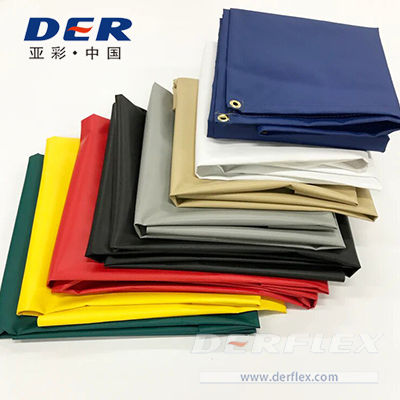
DERFLEX material & finished tarp referenceActual DERFLEX PVC tarp reference. The pictured eyelet tarp illustrates material and finishing options; the proposed drawstring channel is confirmed separately.
Choose the use firstCollection sheet or fitted protective cover
Specify a sliding cordChannel, exits, pull tails and closure method
Approve the finished sampleFit, gathering effort, seams and repeat operation
Start with the job
One closure concept. Two different tarp designs.
A leaf tarp closes around its contents. A protective cover closes around an object. The pattern and reinforcement should follow that difference.
01 / COLLECT & GATHER
Drawstring leaf & yard tarps
A flat sheet lets users rake or blow leaves onto an open surface, then gather the perimeter to reduce spillage during manual cleanup.
What drives the specification
Light handling weight and easy spreading
Cord access when the sheet is loaded
Ground-contact abrasion and reinforced exits
Separate handling design for the intended load
02 / COVER & CINCH
Fitted drawcord covers
A hood or shaped cover sits over a defined object. A lower drawcord adjusts the opening, helping the cover fit around a suitable retention area.
What drives the specification
Finished geometry and installation clearance
Side drop and cord closure position
Wear patches, drainage and ventilation
Additional anchors for exposed installations
Design illustrations, not product photographs. DERFLEX's custom tarp program provides the wider material and finishing context. This page focuses on a free-running drawcord and the checks needed before bulk production.
Material selection
Choose a fabric that can gather, handle and protect as required.
The most suitable material is the one that balances the finished cover's weight, flexibility, wear and exposure. A thicker sheet may improve some wear characteristics while making a tight perimeter harder to cinch.
Design directions for discussion; confirm the finished construction by sample.
Project
Material direction
Why consider it
What to check
Leaf collection & garden cleanup
Lightweight woven PE is a common market choice; discuss available supply options.
Lower handling weight for spreading, folding and gathering.
Drag wear, exit reinforcement, pull access and handling limits.
Reusable equipment & storage cover
Application-matched PVC coated polyester.
Weldable panels, reinforced wear zones and a coating suited to the service environment.
Gathering stiffness, total cover weight, seam construction and support points.
Furniture, grill or irregular object cover
Flexible coated fabric selected against the finished pattern.
Can be shaped around protrusions with a project-specific lower closure.
Fit over the widest point, abrasion against finishes and under-cover moisture.
Airflow or debris-control application
Suitable mesh construction, where available for the program.
Air passage can matter more than rain exclusion.
Mesh is not a waterproof substitute; review debris size and edge stability.
For coated-fabric construction and performance options, review DERFLEX PVC tarpaulin materials. Select GSM, thickness, coating and base fabric together; no single number establishes the finished cover's strength or service life.
The detail that makes it work
A drawcord must slide. A reinforced rope hem may not.
A drawstring tarp needs a movable cord, a channel with adequate clearance and reinforced access points. A rope sealed into a hem can strengthen the edge without allowing it to gather.
Illustrative channel detail, not to scale. Keep the cord free from welds and stitches. The drawing and sample establish the actual channel, exit and closure construction.
01Allow the cord to travel
Match channel clearance to the cord diameter, material bulk and gathered folds. Keep seams and welds out of the sliding path. Long perimeters may need divided cord sections to reduce pull resistance.
02Reinforce the exits
The cord changes direction and bears against the opening when pulled. Specify exit positions, smooth contact surfaces and reinforcement that extends beyond the opening.
03Make the closure usable
Place pull tails where users can reach them after fitting or loading. Check the proposed knot, toggle, cord lock or other closure against cord size, pull force and exposure.
04Define fixed versus movable
Put “free-running drawcord” on the order drawing when gathering is required. Compare rope hems and webbing reinforcement when the edge also carries attachment loads.
Know this before you order
A cinched edge is not a water seal
Rain protection depends on the coated panel, seams, drape, drainage and opening direction. Do not treat the gathered opening as watertight containment.
A closure is not a load rating
Do not infer lifting, dragging-load or highway retention ratings from the cord or fabric GSM. Define the handling and anchoring requirements separately.
Cover geometry still matters
A tight lower edge does not prevent pooling on top or condensation underneath. Consider support, drainage, ventilation and additional fixing points as required.
Measurement guide
Measure the object. Then specify the finished cover.
Record the maximum outside dimensions and the intended cord closure position. Object dimensions, finished-cover dimensions and fabric cutting dimensions are different; label each clearly.
Capture the widest installation point
Measure handles, rails, lids, legs and other protrusions. A lower opening that cinches correctly may still be too small to pass over the object when fully open.
Choose the flat sheet or shaped hood
A flat sheet creates excess fabric at corners. A fitted hood uses a tailored top and side panels. For rectangular loads, compare box-shaped covers before deciding whether a drawstring is the appropriate finishing detail.
Locate the channel and cord exits
Mark the side drop, retention area, pull direction and accessible exit points. For round covers, record the maximum diameter, profile and intended closed circumference.
Separate fit allowances from seam allowances
Specify required finished dimensions and agreed tolerance. Let the fabrication pattern account for seams, hems and channel construction. Approve the cover on the real object or a representative fixture.
Drawing-ready requirements
Specify the whole cover, not just its outside size.
A useful drawstring tarp quotation defines the fabric, pattern, movable cord, channel, closure and operating environment. The following table is a purchasing checklist rather than a published stock specification.
Custom drawstring tarp requirements to confirm with DERFLEX
Specification
Include in your request
Approval point
Use & construction
Leaf collection sheet, flat cover, fitted hood, round cover or another defined geometry.
Confirm feasibility, pattern and intended handling.
Finished dimensions
Length × width, diameter, side drop, opening size and fitting clearance; state units.
Agreed finished-size tolerance and trial fit.
Fabric
Material, GSM or thickness where specified, color, finish, flexibility and exposure.
Match the approved fabric sample and relevant performance requirements.
Drawcord
Material, diameter, sections, pull-tail length, retention and replacement requirements.
Free movement, acceptable pulling effort and closure compatibility.
Channel & exits
Channel position and clear size; exit count, locations, reinforcement and hardware.
No blocked path, rough contact points or inadequate reinforcement.
Seams & protection
Proposed joining method, corner construction, wear patches, vents and water shedding.
Finished sample reviewed under the agreed conditions.
Branding & packaging
Artwork, label, instructions, unit packing, carton requirements and order quantity.
Approved appearance, packing sample and markings.
DERFLEX's tarp fabrication capabilities include material conversion, joining, reinforcement and custom finishing. Drawcord channel details must be checked against the selected material and approved construction.
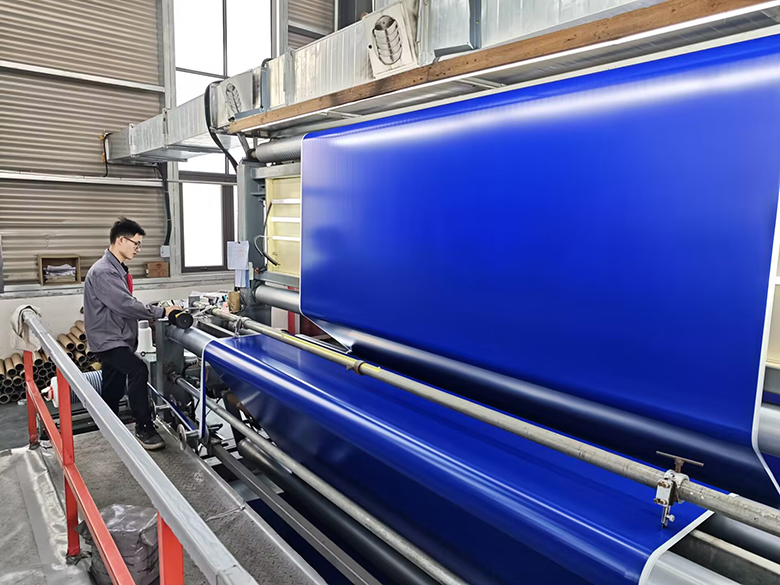
Material & manufacturing referenceCoated fabric construction is the starting point. The finished channel, seams and reinforcement add a separate layer of design and approval.
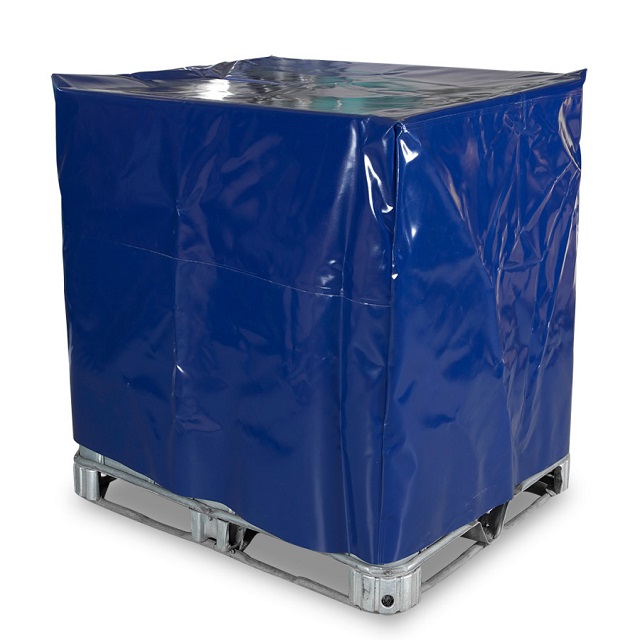
Fitted-cover geometry referenceThis actual DERFLEX cover shows a shaped hood and side panels. It is not presented as a confirmed drawstring model.
Before bulk approval
Evaluate the finished sample. Not just the fabric swatch.
A swatch cannot demonstrate gathering, closure access or fit. Approve a representative finished cover and record the agreed acceptance criteria for repeat supply.
01 / FIT
Install, close and remove
Confirm that the fully open cover passes over protrusions, reaches the correct side drop and can be removed without excessive force.
02 / OPERATION
Repeat the drawcord cycle
Open and cinch the cover repeatedly using the agreed procedure. Check snagging, pulling effort, cord retention and whether the tail stays accessible.
03 / CONTACT
Inspect exits and wear zones
Look for cord rubbing, rough hardware, seam interference, opening distortion and contact against the protected object's corners or finish.
04 / EXPOSURE
Assess the complete cover
For rain protection, inspect seams, pooling and water entry at openings. For outdoor use, specify the required UV, temperature and exposure criteria.
05 / HANDLING
Agree the intended limits
Define manual handling, dragging surfaces and any separate anchors or handles. Avoid treating fabric weight or cord strength as an assembly load rating.
06 / CONSISTENCY
Freeze the approved construction
Retain the drawing, sample, fabric reference, cord detail, hardware, packing and agreed tolerances as the repeat-order specification.
A frequent procurement mistake: choosing a heavier material before checking how tightly it must gather. Review the sample's stiffness, folded bulk and pulling effort alongside abrasion and weather requirements.
Factory sourcing / custom development
Turn a cover idea into a quotable specification.
Importers, distributors, cover brands and equipment OEMs can use DERFLEX's custom material and finished-tarp supply capabilities to develop an application-specific program.
Start with the use case and a sketch. Confirm the proposed drawstring construction, then agree the sample, production specification and commercial terms. For color, logo, label and packing requirements, see the OEM and private-label tarp program.
What affects drawstring tarp price?
Fabric and total area, pattern complexity, seam length, channel construction, cord and closure hardware, reinforcement, printing, order quantity and packing all affect the quotation. MOQ, sample charges and lead time depend on the confirmed design; request them together.
Include your quantity, delivery destination and required date.
Buyer questions
Drawstring tarp FAQs
Direct answers about material choice, waterproofing, sizing and custom sourcing.
What is a drawstring tarp?
A drawstring tarp has a movable cord inside a perimeter channel. Pulling the cord gathers the edge, allowing a flat sheet to cl, ose around light garden debris or a fitted cover to tighten around an object. Its suitability depends on the material, channel, reinforcement and intended use.
Are drawstring tarps waterproof?
A tarp made from suitable waterproof coated fabric can shed rain, but a gathered drawstring opening is not a watertight seal. Seams, vents, cord exits, pooling and the direction of exposure affect the finished cover. Specify the complete construction and confirm it with a representative sample.
Is a rope-in-hem tarp the same as a drawstring tarp?
No. A fixed rope hem adds body or reinforcement to an edge. A drawstring must slide through its channel to gather the perimeter. An order should explicitly state whether the cord is fixed or free-running, where it exits and how it is secured.
Which material should I choose for a leaf tarp or a fitted cover?
Lightweight woven PE is commonly used for leaf collection because it is easier to spread and handle. PVC coated polyester is a useful direction for reusable fitted covers requiring weldable panels and reinforced wear zones. Compare the finished sample for gathering effort, weight, abrasion and exposure rather than choosing by GSM alone.
How do I measure for a custom drawstring cover?
Record the maximum length, width or diameter, protrusions and required side drop. Mark where the cord will close and how the cover will be installed. For a fitted hood, specify the finished dimensions and fitting clearance; for a flat sheet, include both side drops and any extra corner drape. Confirm the final pattern by trial fitting.
Can I use the drawcord to lift a load or secure a highway cover?
A drawcord is a closure component unless the complete assembly has been designed and validated for another purpose. It does not establish a lifting rating or a highway retention rating. Specify separate load-bearing handles or an appropriate anchoring system when the application requires them.
Can DERFLEX quote bulk or private-label drawstring tarp projects?
DERFLEX supplies custom tarp materials and finished custom cover programs with size, color, reinforcement, printing and packaging options. Submit the proposed drawstring geometry for feasibility review. Cord routing, closure hardware, MOQ, sample cost and production schedule should be confirmed for the agreed design before ordering.
Define the fit. Confirm the cord. Approve the sample.
Share your cover geometry and operating conditions with DERFLEX to begin a custom drawstring tarp discussion.