


HDPE Pond Liner Supplier for Aquaculture, Reservoir, Landscaping, and Industrial Water Containment
DERFLEX supplies custom HDPE pond liner materials for fish ponds, shrimp ponds, irrigation reservoirs, decorative ponds, wastewater containment, and water storage projects that need dependable waterproofing, outdoor durability, and consistent factory support.
For serious buyers, choosing an HDPE pond liner supplier is not just about comparing a price per square meter. It is about choosing a manufacturing partner that understands how liner thickness, roll width, welding method, UV exposure, installation conditions, and long-term water retention all affect project performance. That is where DERFLEX brings more value than a generic trader or a listing-only supplier.
- Custom thickness and roll configuration support
- Factory-direct OEM and private-label cooperation
- Application-focused guidance for aquaculture and water storage
- Stable supply for project buyers, distributors, and importers
Why Buyers Search for a Real HDPE Pond Liner Manufacturer
Reliable pond lining is not only about waterproofing. It is about reducing seepage loss, protecting soil structure, improving water management, lowering repair frequency, and ensuring that the containment system continues to perform after months and years of outdoor use.
Specification ranges depend on liner construction, surface design, and project use conditions.
What an HDPE Pond Liner Is and Why Serious Buyers Choose It
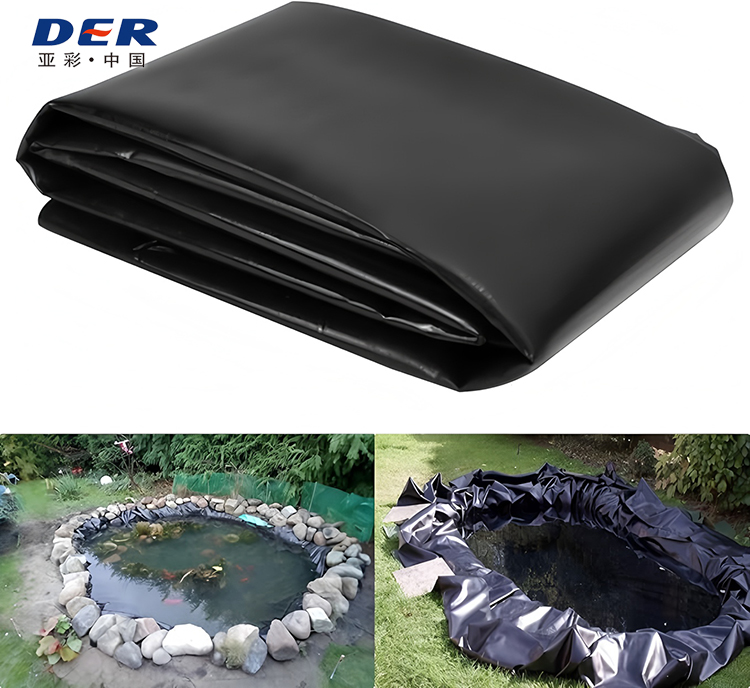
An HDPE pond liner is a synthetic waterproof barrier made from high-density polyethylene and used to prevent water from migrating into surrounding soil. In practical terms, it forms the engineered lining that allows a pond, reservoir, or containment basin to hold water reliably over time. It is widely used in fish farming, shrimp aquaculture, irrigation storage, ornamental ponds, artificial lakes, wastewater containment, and various industrial or municipal water management projects.
The reason professional buyers often start with the phrase HDPE pond liner supplier rather than simply searching for “pond liner” is that the supplier relationship matters almost as much as the material itself. A supplier should not only sell rolls. A capable supplier should understand specification matching, installation variables, shipping considerations, and the commercial needs of importers, engineering contractors, and distributors.
HDPE is commonly selected when the job demands very low permeability, dependable outdoor stability, strong chemical resistance, and solid performance across large containment areas. Compared with many flexible sheet options, HDPE is valued for its balance of durability and long-term waterproof integrity. Buyers often prefer it for projects where leakage risk, maintenance burden, and lifecycle cost are more important than obtaining the lowest possible initial material price.
At DERFLEX, the pond lining product logic is built around real applications instead of vague marketing language. That means material recommendations can be aligned with aquaculture, irrigation, industrial water storage, landscaping, and wastewater projects according to the actual conditions on site, not according to a one-size-fits-all catalog description.
Why Supplier Selection Changes Project Outcomes
Two HDPE liners may look similar on paper, but field performance can differ once the liner is exposed to base irregularities, water pressure, UV radiation, temperature cycling, and installation handling. A reliable supplier helps reduce those performance gaps before they become expensive failures.
- Better thickness matching for actual risk level
- Clearer advice on welding, overlap, and seaming
- More predictable manufacturing and repeat-order consistency
- Support for custom roll lengths and shipping efficiency
- Improved communication for project deadlines and documentation
Main Benefits Buyers Expect from a Competitive HDPE Pond Liner Supplier
1. Reliable Waterproof Barrier
The most basic and most important function of a pond liner is still the one that matters most: stopping water seepage. For fish ponds, irrigation storage, and landscaping reservoirs, water loss directly affects operating efficiency, water cost, and project predictability. HDPE is widely chosen because it offers a highly impermeable barrier for long-term containment use.
2. UV Resistance for Outdoor Exposure
Pond and reservoir liners are often exposed to sun, wind, and large temperature swings. Outdoor durability is therefore not optional. HDPE liner systems are frequently selected because they are suited to prolonged outdoor service where UV resistance and weather stability are important buying criteria.
3. Chemical Stability
Many buyers do not purchase pond liners for clean water only. Some projects involve fertilizer contact, saltwater influence, wastewater exposure, or changing pH conditions. HDPE is valued for strong chemical resistance, which is one reason it is commonly used beyond decorative ponds and into industrial and environmental containment.
4. Mechanical Strength
Installation damage is a real source of failure. Subgrade irregularities, handling stress, slope edges, and anchoring tension can all challenge the liner. A professionally supplied HDPE geomembrane helps buyers balance thickness, surface type, and project requirements for better mechanical reliability.
5. Project Scalability
Small koi ponds and large irrigation reservoirs have very different commercial logic. A supplier capable of supporting both standard and customized requirements can help buyers scale from pilot order to repeat procurement without changing material strategy every time a project grows.
6. OEM and Market Adaptation
For wholesalers and private-label distributors, the supplier relationship often includes more than material production. It may include packaging, custom marks, documentation, and specification positioning for different markets. DERFLEX supports OEM and custom cooperation to help buyers align product supply with their own commercial channels.
7. Better Lifecycle Economics
The best value is not always the cheapest liner. Buyers who look at installation losses, future maintenance, replacement risk, and operating downtime often discover that a more reliable liner system offers a lower total cost over the service life of the project.
8. Factory-Direct Communication
A manufacturer-led workflow usually means faster clarification on dimensions, roll layout, packaging, shipment planning, and production lead time. This matters when the order is tied to contractors, seasonal farming schedules, or distributor replenishment plans.
9. Global Procurement Confidence
Importers and engineering buyers need repeatability. They want the next order to perform like the previous order. Stable manufacturing, quality control, and consistent specification management are major reasons buyers seek an experienced geomembrane and pond liner supplier rather than purchasing only on opportunistic price.
Need OEM HDPE Pond Liner for Distribution, Project Supply, or Private Label Sales?
Send your target application, thickness range, roll size request, order quantity, and destination market. DERFLEX can recommend a practical HDPE pond liner supply solution for wholesale buyers, contractors, aquaculture projects, and long-term import programs.
Typical Technical Specifications for HDPE Pond Liner Supply
Exact specification should always be matched to the project, but professional buyers usually want a clear working range before discussing custom orders. The table below consolidates the main product logic DERFLEX uses across its pond lining, aquaculture liner, and geomembrane product pages. Final construction can vary by use condition, liner design, and commercial target.
| Property | Typical Supply Range / Notes | Buyer Relevance |
|---|---|---|
| Material | HDPE geomembrane; selected projects may also compare HDPE with PVC, LLDPE, or reinforced geomembrane alternatives | Material choice should follow service life target, shape complexity, and chemical / UV exposure |
| Thickness | 0.3 mm – 2.0 mm on pond lining systems; selected geomembrane items also shown in 60 mil and 80 mil textured constructions | Thickness strongly influences puncture risk, durability, and commercial positioning |
| Width | Up to 8 m on selected pond lining materials; some geomembrane constructions shown in 5 m – 7 m widths | Roll width affects seam count, installation efficiency, and shipping plan |
| Roll Length | Approximately 50 m – 200 m per roll depending on specification | Important for installation layout and freight planning |
| Color | Black, blue, gray, green, custom colors | Black is widely preferred for UV performance; blue is often selected in aquaculture for visibility |
| Waterproof Rating | 100% impermeable liner logic | Core requirement for water storage and containment integrity |
| Temperature Range | -30°C to 70°C | Relevant for outdoor projects with seasonal climate variation |
| UV Performance | Outdoor-use oriented; selected pond lining pages indicate 5+ years outdoor and 15–20 years standard-use expectations depending on structure and use condition | UV resistance is critical in exposed pond and reservoir environments |
| Tensile Strength | Selected aquaculture liner pages indicate 2000 – 4000 N/5 cm for some constructions | Supports handling, installation, and long-term stress resistance |
| Surface Design | Smooth or textured depending on geomembrane construction and application | Textured options can be relevant where friction performance is required |
| Seaming / Welding | Hot air welding, field seaming, and project-oriented joining solutions | Seam quality is a major performance factor on large-area jobs |
| Customization | Custom thickness, size, color, packaging, OEM label, private brand support | Useful for importers, distributors, project contractors, and repeat buyers |
All values should be confirmed against the final project specification, order details, and application target before procurement.
Main Applications for HDPE Pond Liner Supply
Fish Farming Ponds
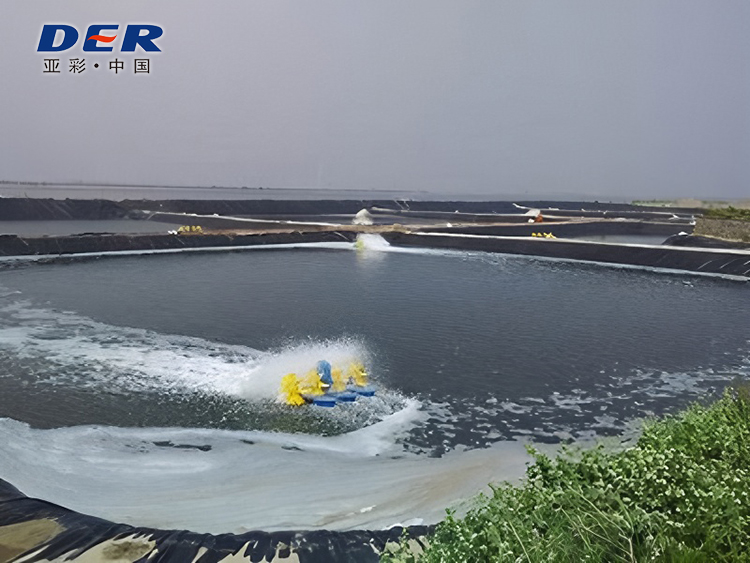
In fish farming, stable water retention is a foundation for operational control. A dependable liner helps reduce seepage loss, simplify water management, and protect the integrity of the pond bottom. For commercial aquaculture, that means better control over water level, less waste, and more predictable production management.
Buyers supplying fish farms often look for black or blue HDPE pond liner with thickness matched to pond dimensions, subgrade condition, and service life expectation. In this category, the supplier’s ability to provide consistent material and practical installation logic is more valuable than a simple low quote.
Shrimp Farming Systems
Shrimp farming presents a more demanding water management environment than many decorative or low-intensity pond uses. Chemical resistance, outdoor stability, cleaning practicality, and long-term waterproof integrity matter. HDPE lining is frequently considered because buyers want a strong barrier system that performs reliably under continuous production conditions.
For export-oriented aquaculture operations, supplier stability also matters because the same material may be needed again for expansion phases, replacement planning, or adjacent facilities.
Irrigation Reservoirs
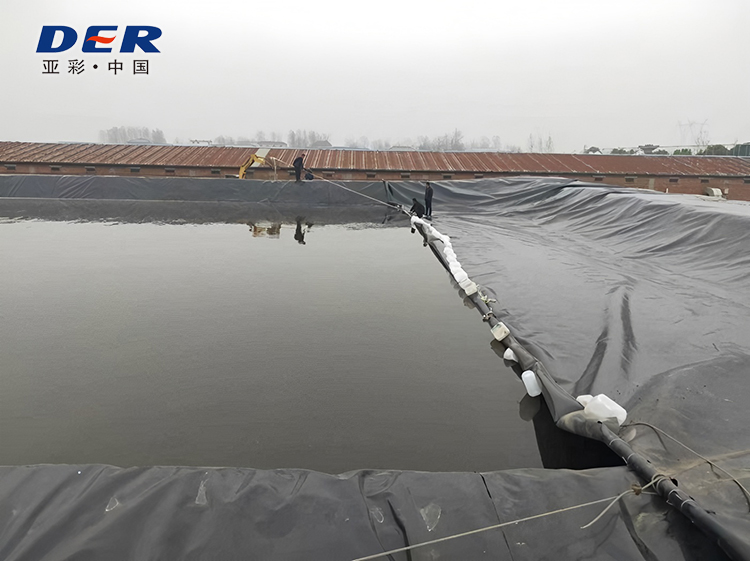
Irrigation projects depend on water conservation. Seepage loss directly reduces the value of every cubic meter stored. HDPE pond liner helps agricultural users preserve valuable water resources in reservoirs, channels, and farm ponds. In regions where water access is seasonal or tightly managed, a good liner improves storage efficiency and reduces the hidden cost of soil infiltration.
Reservoir buyers often focus on large-area coverage, seam management, and overall lifecycle economics. That is why a professional supplier should be able to discuss width planning, overlap strategy, and handling conditions, not only material pricing.
Decorative and Landscaping Ponds
Garden ponds, landscape water features, and artificial lakes still require technical reliability even though the use looks more aesthetic. If the liner fails, appearance quality is quickly lost and repair becomes disruptive. HDPE can be a strong option where durability and water containment are prioritized, especially on larger landscaping jobs where project owners want lower risk over time.
Color, surface appearance, and edge finishing may also affect the final choice, which is why custom support can be commercially useful in this segment.
Industrial Water Containment
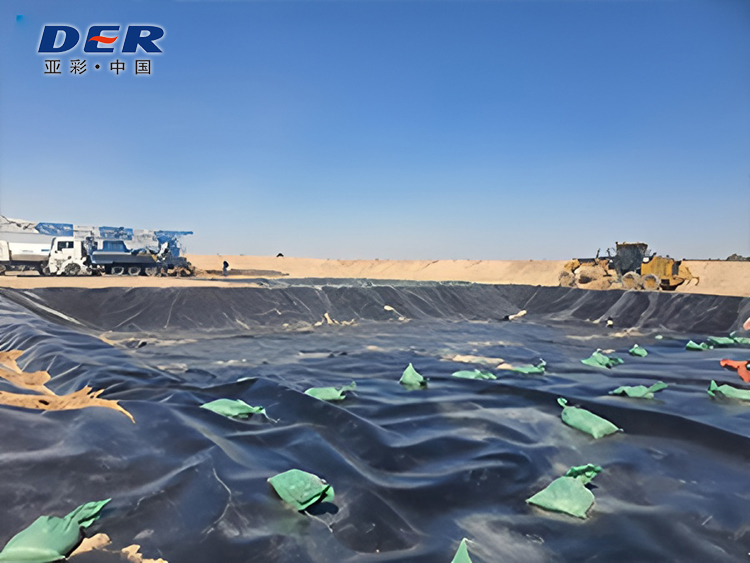
Industrial water storage systems often require lining that can resist not only water pressure, but also fluctuating temperatures, maintenance activity, and possible chemical contact. HDPE is widely used in containment projects because of its barrier performance and chemical stability. Buyers in this sector usually expect documentation discipline, repeatable supply, and product consistency over multiple orders.
Wastewater Treatment and Environmental Projects
Wastewater lagoons, containment basins, and environmental engineering systems are some of the most specification-sensitive applications for geomembranes. The buying decision here usually goes beyond “pond liner” and into full containment logic. HDPE is commonly evaluated because it is recognized for low permeability and robust chemical performance in controlled containment environments.
Artificial Lakes and Municipal Water Features
Projects that combine public visibility and large water area need materials that remain stable through weather exposure and daily environmental stress. A supplier for these projects must be able to support large-volume planning, dimensional coordination, and project communication at a more professional level than consumer-focused liner sellers.
General Water Storage and Backup Containment
Some buyers need liners not for ponds in the traditional sense, but for backup storage, temporary containment, water retention cells, or other engineering uses. In these cases, “HDPE pond liner supplier” is still the search term even when the final application falls into a broader containment category. This is why a professional product page should speak to multiple buying intents rather than only one narrow use case.
How to Evaluate an HDPE Pond Liner Supplier Before You Buy
Many buyers compare only thickness and price, but those two numbers rarely tell the full commercial story. The right supplier should help you reduce waste, improve installation efficiency, protect performance expectations, and build a repeatable sourcing model for future business.
Check Application Fit
Confirm whether the liner is intended for aquaculture, irrigation, landscaping, industrial containment, or environmental engineering. The best construction for one use may not be the best choice for another.
Review Specification Range
Ask about thickness, width, color, surface design, roll length, and available customization. A serious supplier should be comfortable discussing real options rather than offering vague answers.
Understand Supply Capability
Can the supplier support repeat orders, OEM packaging, market-specific requirements, and delivery planning? Project and distribution buyers need more than one-time material availability.
Confirm Quality Logic
Look for an organized quality system, material testing discipline, and willingness to discuss practical use conditions. This is a stronger sign of reliability than sales language alone.
HDPE Pond Liner vs Other Common Pond Lining Options
Professional buyers often compare HDPE with PVC, LLDPE, clay-based sealing, or unlined earth retention. The correct choice depends on project scale, geometry, subgrade condition, performance target, and maintenance expectations. The table below is designed to help procurement teams think in practical terms.
| Comparison Point | HDPE Pond Liner | PVC Pond Liner | LLDPE / Softer PE Option | Clay / Unlined Solution |
|---|---|---|---|---|
| Waterproof Integrity | Excellent impermeability and widely trusted in containment projects | Very good waterproofing for many pond applications | Good waterproofing with stronger flexibility advantages | Variable; often less predictable over time |
| UV and Outdoor Durability | Strong outdoor positioning for exposed use | Can perform well but depends on formulation and reinforcement | Often selected where flexibility is important | Dependent on soil and climate; less engineered control |
| Chemical Resistance | Strong; one of the main reasons it is chosen for many engineering projects | Application dependent | Application dependent | Limited and inconsistent |
| Flexibility for Irregular Shapes | Lower than very flexible liner systems | Usually stronger in complex-shape adaptability | Often easier to conform than HDPE | Not a membrane system; depends on earth shaping |
| Large-Scale Reservoir Use | Commonly preferred | Possible but may not always be first choice | Used in selected applications | High seepage risk unless treated |
| Installation Considerations | Needs proper planning for welding, panel layout, and handling | Often more forgiving in smaller or irregular ponds | Can simplify some shape-related installations | Lower material cost but weaker performance control |
| Lifecycle Economics | Strong for projects prioritizing long-term performance | Good when flexibility and installation convenience are important | Useful when a softer membrane is desired | Often appears cheap at first but may cost more through seepage and maintenance |
| Best Fit | Aquaculture, reservoirs, industrial water containment, environmental works | Koi ponds, flexible pond systems, custom shapes, certain aquaculture uses | Applications needing more flexibility than HDPE | Low-budget, low-control situations where engineered performance is not required |
A material comparison is most useful when it is linked to a real use case. A professional supplier should help you choose based on project reality rather than only a generic ranking of materials.
Reference Project Scenario: Commercial Aquaculture Pond Expansion
Project type: a mid-scale aquaculture operator planned to expand lined pond capacity for higher-value fish production while reducing water loss and simplifying pond maintenance. The site required a more dependable barrier layer than compacted soil retention alone.
Main challenges: the operator wanted lower seepage, better water-level control, easier maintenance planning, and a liner strategy that could be repeated in later expansion phases. Cost mattered, but the buyer was more concerned with long-term operating stability than with buying the cheapest sheet available.
Material decision logic: HDPE pond liner was prioritized because of its impermeability, outdoor durability, and suitability for commercial containment applications. Specification selection focused on pond dimensions, expected service life, installation conditions, and subgrade preparation.
Why This Scenario Matters to Real Buyers
The value of a good liner in aquaculture is not limited to preventing leakage. It also supports more stable water management, more predictable production conditions, and lower repair interruptions. That is why repeat buyers often care less about a small difference in unit price and more about whether the supplier can support consistent specification across multiple orders.
Typical Procurement Priorities
- Consistent material quality for phased expansion
- Practical width and roll planning to reduce seam burden
- Reliable delivery schedule aligned with construction timing
- Clear communication on installation and handling precautions
- Commercial flexibility for project growth and reorder support
This section is a representative project scenario written to reflect common commercial buying logic for aquaculture liner procurement.
Why Global Buyers Consider DERFLEX as an HDPE Pond Liner Supplier
Manufacturer Mindset, Not Listing-Only Sales
DERFLEX product pages consistently position the company as a manufacturer-oriented supplier that supports real industrial and water-containment applications. This matters because serious buyers need more than a website catalog. They need a supply partner who understands how to align liner material with actual use conditions.
Whether the requirement is an aquaculture pond liner, a geomembrane for water retention, or a broader pond lining system, the supplier’s ability to discuss performance logic is a strong differentiator.
20+ Years of Manufacturing Experience
DERFLEX states across multiple official pages that it has more than 20 years of manufacturing experience in industrial fabrics and related material systems. For international buyers, this history supports confidence in process discipline, export familiarity, and repeat-order communication.
Global Export Reach
DERFLEX also states that its products are supplied to more than 100 countries, and on several pages to 120+ countries. That level of export exposure is important for buyers who need a supplier familiar with international shipping, documentation, and commercial follow-through rather than a supplier focused only on local sales.
Custom and OEM Support
For importers, distributors, and brand owners, custom production support is essential. DERFLEX highlights OEM and custom capability across many product categories, including pond lining, fish pond liner, aquaculture liner, and technical fabric supply. That means buyers can discuss thickness targets, size, roll length, label requests, and packaging requirements according to their own market model.
Quality Systems and Compliance Orientation
Across official DERFLEX product pages, the company references ISO 9001 quality management along with SGS testing, REACH compliance, and RoHS compliance on multiple product lines. This shows a quality-oriented commercial approach that many international buyers expect before moving forward with higher-value orders.
Application Breadth
DERFLEX does not position pond lining as a narrow niche product. Its official content connects pond liners to aquaculture, irrigation reservoirs, industrial water containment, landscaping ponds, and broader water storage systems. That wider application base is a useful sign for buyers who need a supplier capable of supporting adjacent project categories, not only one single use case.
Talk to DERFLEX About Custom HDPE Pond Liner Supply
If you need a manufacturer for aquaculture liner, fish pond liner rolls, reservoir geomembrane, custom pond liner packaging, or long-term B2B procurement, send your project details and target market. DERFLEX can propose a practical supply path based on application and order type.
Installation and Handling Precautions for HDPE Pond Liner
Prepare the Subgrade Properly
No liner performs at its best when installed over a poor base. Stones, roots, sharp debris, and uneven compaction can increase puncture risk and create stress points. Before installation, the subgrade should be smoothed, cleaned, and prepared according to project requirements.
For higher-risk sites, buyers may also consider a cushioning or protective layer depending on engineering recommendations and final use conditions.
Plan Panel Layout Before Deployment
Roll width, panel direction, overlap, anchoring, and welding sequence should all be planned before the material is spread across the site. Better planning reduces installation waste and lowers the chance of seam-related problems.
Protect the Liner During Handling
Dragging, folding over sharp corners, or leaving the liner exposed to uncontrolled site traffic can damage material before the project is even commissioned. Handling discipline is part of performance protection.
Use Appropriate Welding and Seaming Methods
Large-area HDPE liner systems depend heavily on seam quality. Welding method, overlap consistency, cleanliness, and field conditions all affect long-term performance. A supplier should be able to discuss how seam planning fits the chosen liner format.
Consider Temperature and Weather
Outdoor installation should account for ambient temperature, wind conditions, and site exposure. Liner behavior, welding efficiency, and crew handling can all be affected by weather variables.
Inspect Before Filling
Before the pond or reservoir is filled, the liner should be checked for visible damage, seam integrity, and edge anchoring condition. Preventive inspection is much easier and less expensive than corrective repair after water loading.
Final installation should follow the p, roject engineer’s requirements, the liner specification, and the site-specific construction method.
OEM, Packaging, Lead Time, and Export Support
OEM / Private Label
DERFLEX supports custom cooperation for buyers who need their own market-facing product program. This may include customized thickness positioning, commercial naming, private packaging, label integration, and related B2B support.
Custom Dimensions
Project buyers often need custom width planning, cut lengths, or shipment-friendly roll layouts. A good supplier should help optimize not only material performance, but also packing and transport efficiency.
Stable Repeat Orders
Many buyers do not stop after one purchase. They need a supplier who can maintain specification consistency across future reorders, seasonal replenishment, or expansion-stage procurement.
Fast and Clear Communication
Lead time, packaging details, quantity planning, and destination-country requirements all affect the buying decision. Manufacturer-level communication reduces misunderstandings and helps projects move forward faster.
Documentation Support
International buyers commonly need technical details, compliance references, packaging information, and order confirmation clarity. Organized documentation is part of a professional supply process.
Distribution-Friendly Supply
If you are building a local distribution business for pond liners, aquaculture liners, or geomembranes, it helps to work with a supplier that understands resale logic, not just direct project shipment.
Frequently Asked Questions About HDPE Pond Liner Supply
What does an HDPE pond liner supplier actually provide?
A professional supplier provides more than rolls of membrane. The supplier should help buyers understand suitable thickness, width, color, seaming method, packaging options, and the commercial logic behind the recommended construction. For B2B buyers, that may also include OEM service, documentation, and repeat-order support.
Is HDPE better than PVC for pond lining?
Not in every case. HDPE is often favored for large-scale outdoor containment because of its impermeability, chemical resistance, and long-term durability. PVC is often favored where greater flexibility and easier adaptation to irregular shapes are more important. The better material depends on the project objective.
What thickness is common for HDPE pond liner?
Common specification discussions often start within a broader range from about 0.3 mm to 2.0 mm, while selected geomembrane constructions are also discussed in mil-based formats such as 60 mil and 80 mil. The right choice depends on the project scale, base condition, service-life target, and mechanical stress level.
Can HDPE pond liner be used for fish farming and shrimp ponds?
Yes. HDPE liner is widely considered for fish ponds, shrimp farms, aquaculture reservoirs, and broader water containment systems. Buyers usually evaluate it for water retention, outdoor stability, and operational reliability over time.
Do you offer custom size and OEM packaging?
DERFLEX supports custom and OEM cooperation on many product lines, including pond lining systems. Depending on the project and order structure, buyers can discuss custom thickness, roll configuration, color, private-label packaging, and distribution-oriented supply requirements.
What color is best for pond liner?
Black is widely selected because it performs well outdoors and is commonly preferred for UV exposure. Blue is often chosen for aquaculture visibility. Green may be preferred for landscaping integration, while gray is sometimes selected for industrial water containment.
How long can an HDPE pond liner last outdoors?
Outdoor service life depends on material formulation, thickness, site preparation, exposure level, seam quality, and maintenance conditions. HDPE is often selected specifically because buyers want a durable outdoor liner solution rather than a short-term membrane.
Can an HDPE pond liner supplier support distributors instead of only project buyers?
Yes. Many importers and regional sellers need supplier support for resale, not only for one-time projects. That is why OEM options, packaging support, repeat-order consistency, and stable communication are important when selecting a supplier.
What information should I include in my inquiry?
Include the application, pond or reservoir dimensions, thickness target if known, estimated quantity, preferred color, destination country, and whether you need OEM support. This helps the supplier recommend a more accurate solution.
What related products should I also compare?
Depending on the project, buyers may also compare fish pond liner, aquaculture pond liner, reservoir liner, reinforced geomembrane, PVC pond liner, and broader water storage membrane solutions. The correct comparison depends on shape complexity, cost target, and service environment.
How B2B Buyers Usually Purchase HDPE Pond Liner
Start with the Use Case, Not Only the Keyword
Many inquiries begin with a short term like hdpe pond liner supplier, but procurement normally becomes much more detailed within the first discussion. The supplier needs to understand whether the real job is a fish pond liner, shrimp pond liner, irrigation reservoir liner, artificial lake liner, wastewater lagoon liner, or a general geomembrane containment project. Each of these may share the same material family while requiring different priorities in thickness, panel layout, surface choice, and installation planning.
That is why serious product pages should speak to the broader decision process rather than only repeating a single keyword. The buyer is not only searching for information. The buyer is trying to reduce commercial risk before an order is placed.
Define the Commercial Objective Clearly
A project contractor may want stable lead time and installation-friendly panel logic. A distributor may need repeat-order consistency, private packaging, and market-ready sizing. A farm operator may focus on water retention and long service life. A landscaping buyer may care more about appearance, edge treatment, and total installed cost.
When the objective is clear, the supplier can recommend a more useful structure and avoid generic answers that do not really help the purchase move forward.
Confirm the Site Conditions
Subgrade condition, slope geometry, expected sunlight exposure, local climate, mechanical traffic, and maintenance frequency all influence specification. A liner that performs well in a flat irrigation basin may not be the right recommendation for a heavily used aquaculture system with more frequent cleaning and movement on site.
Better supplier communication at this stage often saves much more money than trying to negotiate one last discount later in the process.
Plan for the Full Lifecycle
Professional buyers increasingly evaluate liners by total lifecycle economics. They look at installation labor, seam density, repair probability, service continuity, maintenance burden, replacement timing, and the cost of water loss if seepage occurs. A liner that is slightly more expensive at purchase may still be the more profitable choice over the actual life of the pond or reservoir.
This is especially important in agriculture and aquaculture, where operational stability directly affects productivity and profitability.
Quality Control Points Buyers Should Discuss with a Pond Liner Supplier
Raw Material Consistency
The base resin and production discipline behind the liner strongly influence repeatability. Buyers rarely see this directly, but they feel the effect in product stability, roll consistency, and field performance.
Thickness Control
Thickness should not only exist on a datasheet. It should be controlled in manufacturing with enough discipline to keep the delivered material aligned with the expected use condition.
Surface Quality
Uniform surface condition matters because liners are installed, joined, and stressed across large areas. Surface inconsistency can complicate both handling and visual inspection.
Mechanical Performance
Tensile and tear-related performance are relevant to handling, installation, and service risk. Buyers should ask about the practical performance logic, not only the most attractive marketing phrase.
Packaging Discipline
Improper packaging can damage an otherwise good liner before it reaches the destination site. Export buyers should confirm roll protection, identification, and handling logic in advance.
Documentation Clarity
A well-organized supplier should be able to communicate specification, customization details, lead time, packaging, and quality references clearly enough that the buyer can make a decision with confidence.
How Different Industries Think About HDPE Pond Liner Procurement
Aquaculture Buyers
Aquaculture buyers usually focus on long-term water retention, easy pond management, stability across production cycles, and the ability to expand lined capacity later. They often think in operational terms: Will this liner help reduce leakage, simplify cleaning, and keep my system predictable?
These buyers may also compare HDPE with flexible pond membrane systems when pond geometry becomes more irregular.
Agricultural Reservoir Buyers
Agricultural reservoir buyers usually focus on water conservation, cost per stored volume, and large-area coverage. They often want a supplier who understands field realities and can help plan liner widths and roll lengths efficiently.
For this group, the supplier should be able to discuss the commercial impact of seam count, handling, and installation timing.
Landscaping and Water Feature Buyers
These buyers are more sensitive to final appearance, edge treatment, and integration with the surrounding design. At the same time, they still need dependable waterproofing because visual quality deteriorates quickly when water retention fails.
Where design shapes become more complex, buyers often compare the durability advantage of HDPE with the shape-handling advantage of more flexible membranes.
Environmental Engineering Buyers
Environmental and wastewater buyers usually take a more technical approach. They are likely to ask about barrier performance, chemical resistance, documentation, and project suitability in greater depth. For them, a supplier’s process discipline and responsiveness can matter as much as the product itself.
These customers are often less willing to take chances with under-specified material because failure can create major cost and compliance problems.
Mistakes Buyers Make When Choosing Pond Liner Suppliers
Buying on Price Alone
The lowest quote may come with lower performance certainty, limited communication, or weak repeat-order consistency. A liner purchase should be judged against total project cost, not only invoice cost.
Ignoring Installation Reality
Even a good material can underperform if the installation plan is weak. Seam layout, weather conditions, and handling need to be considered from the start.
Using a Generic Specification for Every Job
Different pond sizes, climates, and industries do not always need the same thickness or configuration. Standardization helps, but blind standardization can also create avoidable risk.
Not Planning for Expansion
Commercial pond and reservoir operators often expand later. If the supplier cannot maintain specification consistency, future expansion may become harder and more expensive.
Underestimating Packaging and Freight
Large rolls, long routes, and repeated handling all affect delivered condition. Export packaging logic should be part of the procurement discussion.
Skipping Clear Inquiry Details
A vague inquiry produces a vague quotation. Buyers who describe use case, size, quantity, and destination usually receive faster and more useful recommendations.
Maintenance and Operational Tips for Longer Pond Liner Service Life
Inspect the Exposed Areas Regularly
Regular inspection makes it easier to identify edge stress, accidental cuts, or site-related wear before these turn into larger issues. This is especially useful in commercial aquaculture and reservoir environments where any interruption can affect operations.
Control Site Traffic
People, equipment, and maintenance tools can damage liners if site use is not managed properly. A basic protection and access plan often reduces unnecessary wear.
Keep Edges and Anchors Stable
Pond liner performance does not depend on the middle area alone. Edge detailing and anchoring condition should be checked so that tension and displacement do not create avoidable problems over time.
Address Small Damage Early
Minor damage is usually easier to manage than advanced damage. Preventive maintenance is one of the simplest ways to protect the longer-term value of a lined pond system.
Additional Buyer Questions That Support Search Visibility and Inquiry Conversion
Are you an HDPE pond liner manufacturer or a trading company?
DERFLEX positions itself across its official product pages as a manufacturer-oriented supplier with long-term experience in industrial fabrics, pond lining materials, and related geomembrane applications. Buyers looking for factory-direct communication often prefer this model because it supports clearer specification and repeat-order control.
Can I buy HDPE pond liner in bulk for resale?
Yes. The page is written with wholesale, distribution, OEM, and private-label use in mind. Bulk buyers usually ask about repeat consistency, custom packaging, and shipment planning in addition to product price.
Do you supply liners for irrigation reservoirs as well as fish ponds?
Yes. DERFLEX official pond lining content covers fish farming ponds, irrigation reservoirs, landscaping ponds, industrial water storage, and wastewater treatment related applications. The final recommendation should depend on project conditions.
Can blue HDPE pond liner be supplied for aquaculture?
Blue is one of the color options referenced in DERFLEX pond lining content and is often considered useful in aquaculture environments where better visibility inside the pond is desired.
What is the advantage of wider liner rolls?
Wider rolls can reduce the total number of seams in a project, which may improve installation efficiency and simplify layout planning. The right width still depends on freight, handling, and field installation conditions.
Do you support custom pond liner packaging for importers?
Yes. DERFLEX highlights OEM and custom support across multiple relevant categories. Importers can discuss packaging, labels, roll lengths, and market-oriented commercial presentation.
Is textured HDPE available?
DERFLEX’s geomembrane page references textured 60 mil and 80 mil constructions in one-side and two-side textured formats. Availability should be confirmed against the specific order plan and project requirements.
What related search terms should buyers compare?
Common related search terms include hdpe geomembrane supplier, reservoir liner manufacturer, fish pond liner supplier, aquaculture pond liner manufacturer, waterproof pond liner, custom pond liner factory, and geomembrane liner supplier. A strong product page should naturally address these related intents inside the content.
Buying Language Real Customers Use When Searching for HDPE Pond Liner Suppliers
“I need an HDPE pond liner supplier for fish farming”
This query usually comes from aquaculture operators, importers serving aquaculture markets, or contractors working on pond infrastructure. What they really want is not just a liner sheet. They want a solution that can help hold water reliably, reduce seepage, and stay serviceable in outdoor farming conditions.
That means the best page for this query should cover pond liner thickness, color choices, durability, customization, and supplier credibility in a way that feels practical rather than overly promotional.
“I need an HDPE geomembrane supplier for a reservoir”
This buyer is often more focused on area coverage, seam planning, and long-term containment performance. The project may be agricultural, municipal, or industrial. A supplier who can explain width range, welding logic, and project matching will normally win more trust than a supplier who only posts a short specification list.
“I need custom pond liner rolls for resale”
This search intent usually belongs to distributors and wholesalers. They may care about private packaging, stable reorder quality, custom sizing logic, and clear communication that helps them build their own local market.
For these buyers, factory-direct support often matters because it makes long-term category building easier and reduces dependence on unstable spot sourcing.
“I need a waterproof liner that lasts outdoors”
This is a durability-first query. The buyer may not even know the exact material yet. They are searching for confidence more than they are searching for a product name. Pages that explain UV resistance, weather exposure, installation precautions, and lifecycle economics usually perform better for this audience than pages that repeat technical language without context.
Quick Checklist Before You Send a Quote Request
Application
Fish pond, shrimp pond, irrigation reservoir, artificial lake, wastewater lagoon, industrial water storage, or landscaping pond.
Project Size
Length, width, depth, slope details, and whether the project is a single installation or a multi-pond system.
Thickness Target
If you do not know the exact thickness yet, state the expected service level and use environment so the supplier can recommend a practical range.
Color Requirement
Black, blue, green, gray, or custom color depending on application and market preference.
Order Quantity
Sample, trial order, project quantity, container-level supply, or recurring wholesale demand.
Commercial Need
Standard material, OEM packaging, private label, project shipment, or long-term distribution support.
When Buyers Should Stay with HDPE and When They Should Compare Other Membranes
HDPE is usually the stronger starting point when the project is large, exposed, and performance-driven. Reservoirs, wastewater systems, containment ponds, and many commercial aquaculture projects fall into this category because the buyer wants dependable impermeability and durable outdoor use. In those cases, HDPE often fits the project logic well.
However, projects with unusually complex shapes, decorative contours, or very specific installation preferences may still justify a comparison with more flexible membrane systems. A reliable supplier should be open about this and recommend the material that best matches the job rather than forcing every application into a single product category. That kind of honesty improves buyer trust and usually leads to better long-term cooperation.
For this reason, the strongest inquiries usually describe the actual pond or reservoir challenge instead of asking only for a catalog. Once the supplier understands the target use, it becomes much easier to recommend whether standard HDPE is ideal, whether a textured geomembrane should be discussed, or whether another pond lining route deserves comparison before the order is finalized.
Recommended Related Pages for Internal Linking
To strengthen category relevance and capture broader search intent, this page can connect to related DERFLEX content around aquaculture, water containment, geomembrane, and agricultural lining applications.
Why International Buyers Approach Pond Liner Procurement Differently
Importers Need Predictability
For importers, the main issue is often not whether one shipment can be produced. The real question is whether the same product logic can be repeated across future orders. That means the supplier should be able to maintain consistency in thickness, color, roll format, packaging, and communication. DERFLEX repeatedly positions itself as a long-term export supplier, which is relevant for buyers building stable sourcing channels rather than one-off purchases.
Consistency becomes even more important when the buyer is selling into a local distribution network. Once a specification performs well in the market, the distributor usually wants the next order to behave the same way. A supplier who cannot support that consistency creates unnecessary commercial risk.
Project Buyers Need Timing
Engineering and project buyers often work around construction schedules, water availability windows, or farming seasons. Delays do not only affect material delivery. They can delay site preparation, labor deployment, and project commissioning. This is why project buyers evaluate a supplier’s communication discipline and delivery planning almost as seriously as the liner specification itself.
In many cases, the supplier that answers clearly and plans carefully wins even when it is not the absolute lowest-priced option.
Brand Owners Need OEM Structure
Some buyers are not purchasing for direct end use. They are building their own branded product program. For them, OEM support is not a side topic. It is central to the business model. They may need custom roll labels, private packaging, specification alignment for regional demand, and a supplier who understands how to support resale rather than only project installation.
That is why a page built for commercial conversion should mention OEM, custom, wholesale, manufacturer, and supplier logic naturally throughout the content.
Regional Markets Use Different Buying Language
In some markets, buyers search for HDPE pond liner. In others, they search for geomembrane, fish pond liner, reservoir liner, or waterproof liner sheet. Good product content bridges these search habits by addressing the real application behind each phrase. That helps the page communicate more clearly to both human buyers and search systems.
DERFLEX already uses this broader content style across pond lining and aquaculture pages, which is why this standalone page follows the same logic.
Looking for a Reliable HDPE Pond Liner Supplier?
DERFLEX can support aquaculture pond lining, irrigation reservoir lining, landscaping water retention, industrial containment, and customized OEM liner programs. Share your application, dimensions, and order plan to receive a practical recommendation from a factory-oriented supplier.
DERFLEX can evaluate requests for aquaculture liner, fish pond liner, irrigation reservoir liner, industrial water containment membrane, and other related geomembrane supply needs based on project dimensions, operating environment, and commercial objectives.