


Which PVC tarpaulin specifications should a truck cover fabricator request?
Build a truck tarp around a controlled material specification—not a GSM number alone. For roll converters, curtain-side workshops and fleet-cover OEMs, the right request covers polyester scrim, PVC construction, strength in both directions, usable roll width, welding performance, outdoor exposure and repeat-batch acceptance.
Use this fabrication-focused buyer checklist to obtain a comparable quotation, qualify samples on your own production line and protect the consistency of future orders.
Ask for a tested construction, not just a fabric weight.
A truck cover fabricator should request the PVC tarpaulin's coating method, polyester yarn and weave, nominal GSM and thickness with tolerances, usable roll width, roll length, warp/weft tensile strength, tear resistance, coating adhesion, waterproofing, UV and cold-flex performance, surface finish and color. The request should also define the intended welding or sewing method, seam-strength test, edge reinforcement, packing and lot identification. Ask for the exact model's dated technical data sheet, test methods, approved production sample and agreed batch-acceptance limits. The final material choice depends on truck type, cargo abrasion, regional climate, handling frequency and the finished cover design.
Truck cover fabric specification request matrix
Use the same field names when comparing suppliers. DERFLEX publishes transport-fabric sourcing directions, including common 550–900 g/m² projects and polyester constructions such as 1000D × 1000D; these are starting points, not guaranteed values for every model. Require the chosen product code and its own tested limits before contract sign-off.
| Field to request | Supplier response required | Why the fabricator needs it |
|---|---|---|
| Material system | PVC coated or laminated polyester; coating on one or both faces; topcoat and finish designation. | Determines surface feel, weld behavior, coating bond and intended exposed face. |
| Base fabric construction | Polyester yarn specification (for example 1000D × 1000D), warp/weft count, weave type and unit of count. | Controls load-bearing structure; matching GSM alone will not match strength. |
| Finished weight | Nominal g/m², applicable tolerance and method such as ISO 2286-2 when specified. | Impacts handling, material consumption and freight; not a proof of durability. |
| Thickness | Nominal millimetres, tolerance and test method when needed; note that mil is a thickness unit. | Relates to stiffness, folding, hardware interfaces and material consistency. |
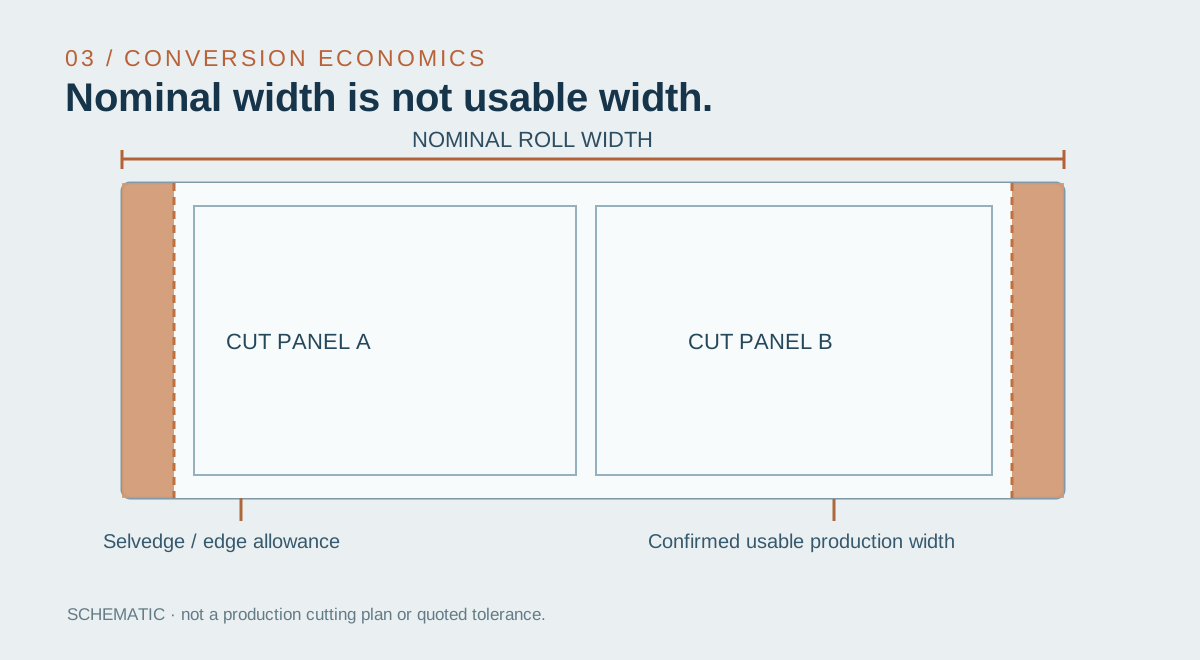
| Width / length | Nominal and usable roll width, edge allowance, roll length, splice policy and size tolerances. | Affects panel nesting, usable cutting yield, seam count and line downtime. |
| Tensile strength | Warp and weft minimum values in N/5 cm or another agreed unit; specimen direction and ISO 1421 or stated method. | Checks resistance to distributed pull through the panel and its restraints. |
| Tear resistance | Warp/weft test values and method, e.g. ISO 4674-1; distinguish test geometry and units. | Helps assess propagation risk around cuts, pinholes and loaded edges. |
| Coating adhesion | Peel/adhesion result for the exact grade with ISO 2411 or another agreed method. | Relevant to delamination, local damage and repeated bending. |
| Environmental behavior | Water resistance method and result; UV/weathering conditions; cold-flex test such as ISO 4675 if required. | Connects laboratory evidence to actual cargo routes and storage environments. |
| Welding behavior | Intended HF/RF, hot-air or hot-wedge route; compatible face, sample coupon and agreed seam acceptance. | A material can be sound yet unsuitable for a converter's particular process. |
| Surface and color | Gloss/matte/lacquer, color reference, print method, ink compatibility and agreed appearance tolerance. | Supports branding, cleanability and replacement-batch consistency. |
| Optional compliance | Only applicable, product-specific fire, chemical or market records with report number, version and scope. | Prevents an unrelated certificate being used as proof for the ordered fabric. |
| Packing & traceability | Core size, winding direction, protective wrap, labels, roll ID, batch number and sample retention policy. | Supports production flow, warehouse handling and dispute resolution. |
| Purchasing approval | Controlled TDS revision, reference sample, agreed tolerances, COA/inspection format and change-notice procedure. | Allows repeat orders to be judged against one approved specification. |
Methods are examples of commonly used technical references—not claims that a particular DERFLEX grade has passed them. Final test methods, values and allowed tolerances must match the approved model and purchase agreement. For related inspection methods, see tarpaulin testing standards.
What is inside the PVC tarpaulin roll?
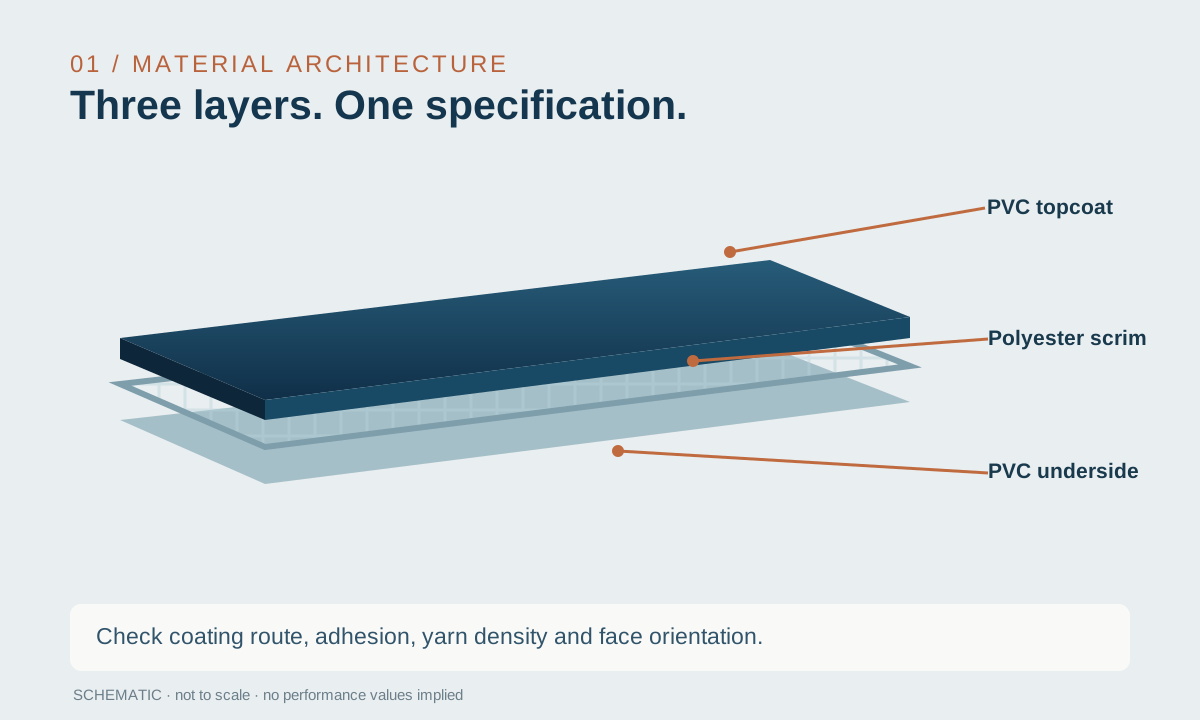
When two rolls share a nominal GSM, they can still differ substantially in base-yarn density, PVC mass distribution, adhesion, plasticizer system and surface treatment. These variables change conversion behavior, not just the material's appearance.
Questions that expose hidden differences
- What carries the tensile load? Ask for the polyester reinforcement construction, yarn count and warp/weft performance—not only the total mass of the finished sheet.
- How is PVC bonded? Request the coating or lamination route and adhesion data relevant to repeated flexing and seam formation.
- Which face should be welded or printed? Topcoats and lacquers may alter adhesion or ink behavior; confirm the production orientation.
- How stable is the supplied roll? Clarify usable width, curling or winding constraints, visible surface defects and the approved sample's identity.
DERFLEX discusses both coated and laminated PVC fabric routes. Buyers moving from one construction to another should run a new trial rather than assume their existing welding program transfers unchanged. Compare the underlying families in the PVC tarpaulin fabric roll range.
Different truck cover systems demand different evidence
The best grade is determined by the loads applied to the finished cover and how often it moves. A high-GSM roll may be excessive in one moving system and insufficient at an unreinforced stress point in another.
Friction & tie-down loads
Prioritize tear propagation, tensile properties, abrasion exposure and local strengthening around straps, D-rings or grommets. Supply cargo geometry, sharp-edge risks and finished-cover pattern.
Confirm: edge protection, hem design, panel seam direction and hardware pitch.
Repeated handling & print
Evaluate consistent flat panels, weld performance, color, print coating and reinforcement at curtain tension points. A side-curtain assembly may have separate vehicle-body or restraint requirements.
Confirm: tension interfaces, end closures, tracking system and any required system testing.
Flex cycles & abrasion
Focus on cold flexibility, repeated rolling, coating bond, rough cargo contact, weight and the chosen reel mechanism. The lightest or heaviest material is not automatically best.
Confirm: bend geometry, moving contact surfaces and debris/temperature exposure.
For ready-made covers versus raw-roll supply, see truck tarpaulin cover options and PVC tarpaulin for truck covers.
Qualify cutting yield, seam strength and reinforcement before the full order
Converting a large truck cover turns material properties into a production outcome. The roll must unwind predictably, the usable width must fit the cutting plan, and the seam must survive the relevant loading—not merely look clean after welding.
Trial on the actual line
Record roll flatness, edge condition, feed tension and net panel width. Ask whether joins or splices occur within a roll, and how they are marked.
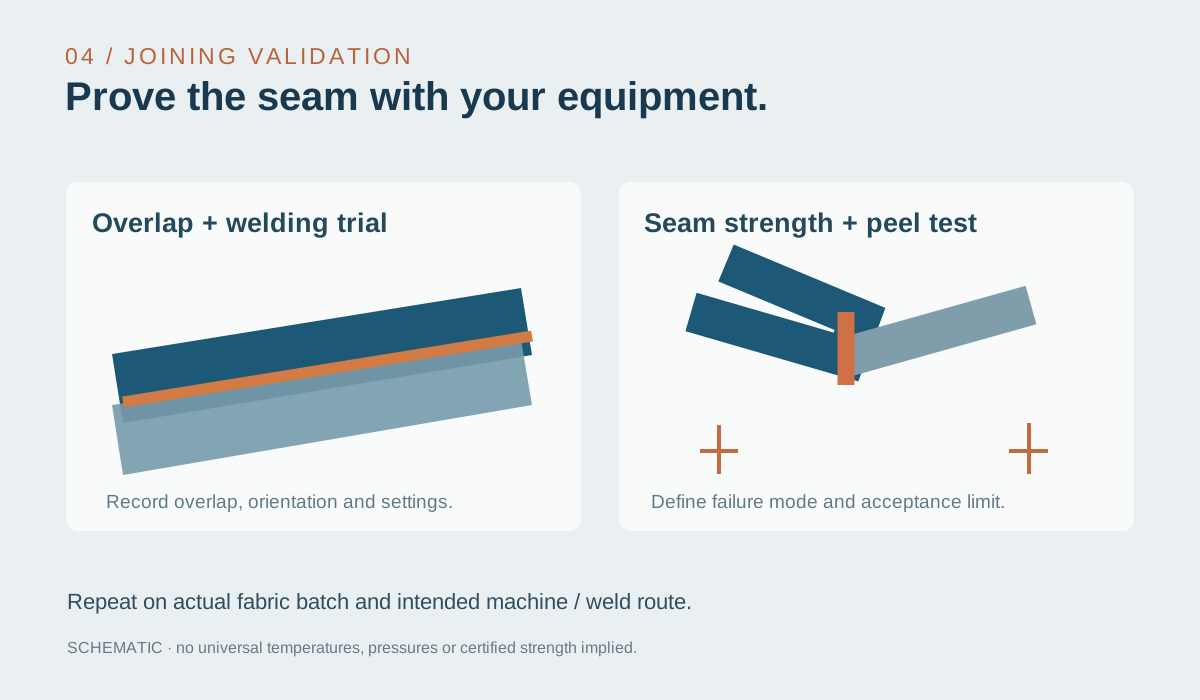
Make production-like coupons
Use the actual welding or sewing method, lap design, face orientation and reinforcement material. Agree seam test condition and minimum result.
Lock the approved process
Retain the fabric sample, coupon identifiers, machine setup sheet and defect acceptance rules before authorizing repeat batches.
Design around local stress, not uniform sheet strength
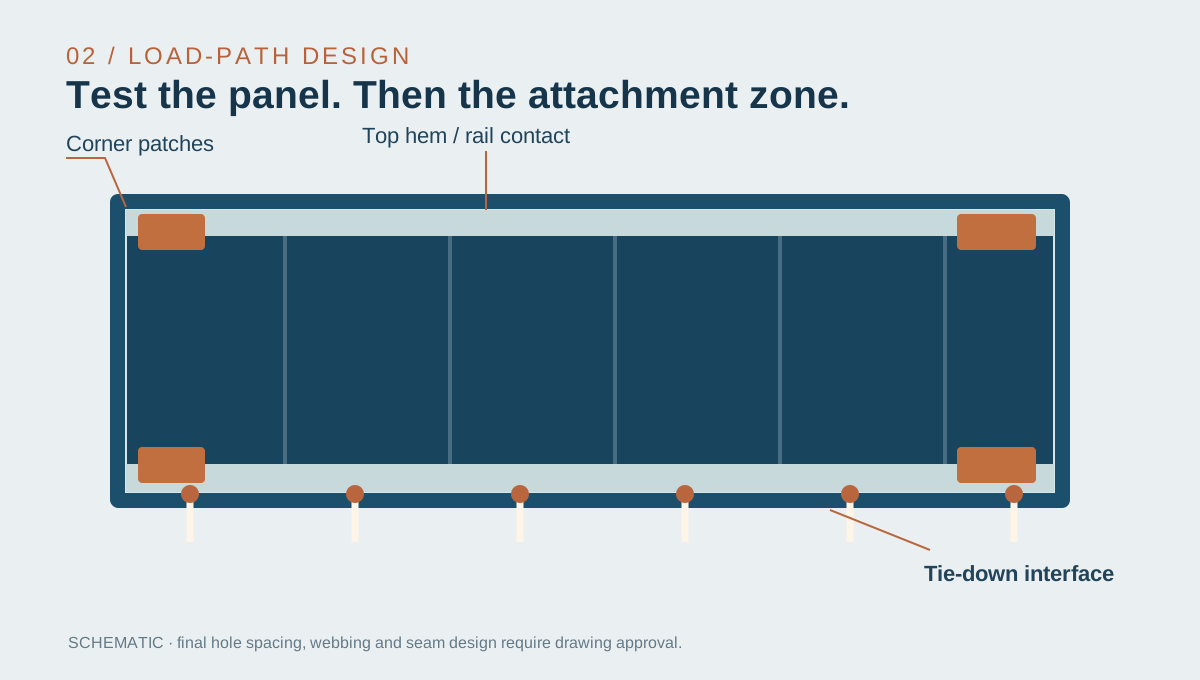
Top rails, repeated folds, grommets, tensioned corners and strap routes can initiate failure even when the base material passes its laboratory test. Give the supplier a dimensioned drawing showing fold direction, seams, attachments and abrasion contacts. Verify whether the chosen reinforcement can be bonded or stitched to the base fabric without local peeling or distortion.
Our PVC tarp seam welding guide explains fabrication trial priorities; your final weld recipe must be proven on the actual machine and material lot.
Which test reports and batch records should the supplier provide?
A good initial TDS is only the first layer of confidence. For a recurring converter program, match the paperwork to one material code, one finish and one approved production revision. Agree the inspection scheme before the purchase order, not after a delivery claim.
Controlled TDS and material ID
Product code, formula/coating route, revision date, physical values, declared minimums, tolerances and testing references. Separate measured data from marketing descriptions.
Production trial record
Approved physical roll sample, face identification, welding or sewing coupon, joint layout, print trial if relevant and mutually agreed failure criteria.
Lot identity and inspection
Roll IDs, batch/lot label, inspection sampling plan, agreed test result record or certificate of analysis where included, packing details and handling observations.
Change and deviation control
Reference-sample comparison, color tolerance, approval of substitute yarn or coating changes, deviations, disposition of defective rolls and re-test protocol.
Before you order: send a fabricator-ready RFQ
Buyers who do not yet have a complete drawing can begin with truck type, a photograph of the existing cover, approximate size, intended use and planned quantity. Add the technical items below as soon as the material and process trial advances.
Truck cover fabricator — request checklist
Include the following in your RFQ or attach an equivalent specification schedule.
- Vehicle type and application (flatbed, side curtain, dump, roll-up)
- Fabric roll only, precut panels or finished cover
- Truck dimensions, cover pattern and estimated production volume
- Proposed GSM, yarn construction and required minimum strength
- Nominal / usable width, roll length, splices and tolerance
- Color, topcoat, printing method and finish approval
- Welding / sewing equipment, seam type and reinforcement details
- Exposure: UV, cold, abrasion, water, fold cycles
- Required test method, documents and pass/fail criteria
- Quantity, delivery country, roll label and packaging needs
Scope the application
Share truck format, cargo, expected movement and market requirements; short-list an appropriate material structure.
Evaluate an identified sample
Approve dimensions, appearance, lab values and production-line welding or sewing behavior.
Freeze the purchase specification
Lock model, tolerance, acceptance evidence, roll labeling, approved packaging and change procedure.
A practical supply conversation for truck-cover converters
DERFLEX supports discussions around PVC coated polyester rolls and truck tarpaulin applications. The useful first step is to connect the selected construction to your fabrication line and the finished-cover duty—not to choose a catalog label in isolation.
Discuss material options
Compare coated or laminated constructions, common transport weight directions, colors, finish and handling preferences.
Define the conversion interface
Review cutting width, weld or sewing suitability, seam layout and the material/fittings boundary with your workshop.
Agree evidence before bulk orders
Ask about product-specific samples, dated specifications, test documentation and inspection format, subject to the selected grade.
Keep repeat orders comparable
Specify roll labels, approved appearance, packing configuration and change controls in the purchase documents.
To see published DERFLEX material directions, start with the truck tarpaulin fabric range or a specific 650gsm PVC tarpaulin grade overview. Confirm all final numbers against the offer and approved sample.
Go deeper into material, testing and fabrication
Use these connected DERFLEX resources to move from a sourcing framework to the specific cover design, test plan and roll program.
Truck tarpaulin fabric specification FAQs
Short answers to the questions that usually delay the first material quote or the handover from samples to production.
Is 650gsm PVC tarpaulin enough for truck covers?
It may be suitable for some truck covers, but GSM alone cannot establish fitness. Check the polyester structure, warp/weft tensile and tear values, abrasion, handling frequency and attachment design. Compare a specific 650gsm sample against the intended duty and approved drawing.
Which matters more for a fabricator: tear strength or tensile strength?
Both matter in different failure situations. Tensile data describes resistance to distributed pulling loads, while tear data helps assess propagation after local damage. Request results in both material directions with named test methods and acceptance limits; neither replaces reinforcement design.
What width information should be requested for cutting PVC tarp rolls?
Ask for the nominal roll width, minimum usable width, selvedge allowance, roll-length tolerance, winding condition and splice policy. Use the usable—not just the catalog—width to calculate panel yield and seam count, and verify it on the converter's machine.
How can a buyer verify that PVC tarp fabric is weldable?
Request an identified roll sample and produce test coupons using the actual HF/RF, hot-air or hot-wedge equipment, face orientation and seam design. Define the seam test, conditioning and acceptable failure mode before approving production. A generic “weldable” description is not a seam-strength guarantee.
Do truck side-curtain fabrics need EN 12641-2 certificates?
The required evidence depends on the vehicle and the applicable buyer or regulatory specification. EN 12641-2 addresses curtainsider tarpaulin requirements; a fabric report alone does not demonstrate that the entire trailer body or load-restraint system complies. Confirm system-level scope with the responsible vehicle engineer.
What should be checked, before ordering a second truck tarp fabric batch?
Confirm the same approved grade and TDS revision, color reference, usable width, mechanical limits, surface finish, identified samples and test/inspection arrangements. Ask how any changes to yarn, coating, topcoat or winding will be notified and approved.
Can I buy material rolls rather than finished truck covers from DERFLEX?
DERFLEX presents PVC coated polyester roll supply for converters and also discusses finished covers for suitable projects. State clearly whether the purchase covers raw rolls, precut panels or finished tarps, because fabrication work, hardware and system parts are not automatically included in a roll quotation.
Request PVC truck cover fabric specifications for your production line.
Send DERFLEX your truck application, target construction, roll size, welding method, drawing or existing sample and volume plan. Ask for a grade-specific data sheet and discuss the sample-to-production verification steps before committing to bulk supply.