


 Technical coated textiles
OEM fabric supply
Pergola Roof PVC Fabric for Retractable Systems
A retractable pergola roof is more than waterproof fabric. It is a moving assembly where coating flexibility, repeated folding, seam position, fabric width, guide details and drainage all influence results. DERFLEX supports PVC-coated polyester fabric selection for pergola roof converters and OEM buyers. Share your roof geometry, folding arrangement, target appearance and production method so the fabric can be evaluated alongside the real track and tensioning system—before a repeat order is specified.
Material supply focus · Coated textile rolls · Finish and process compatibility must be confirmed on production samples
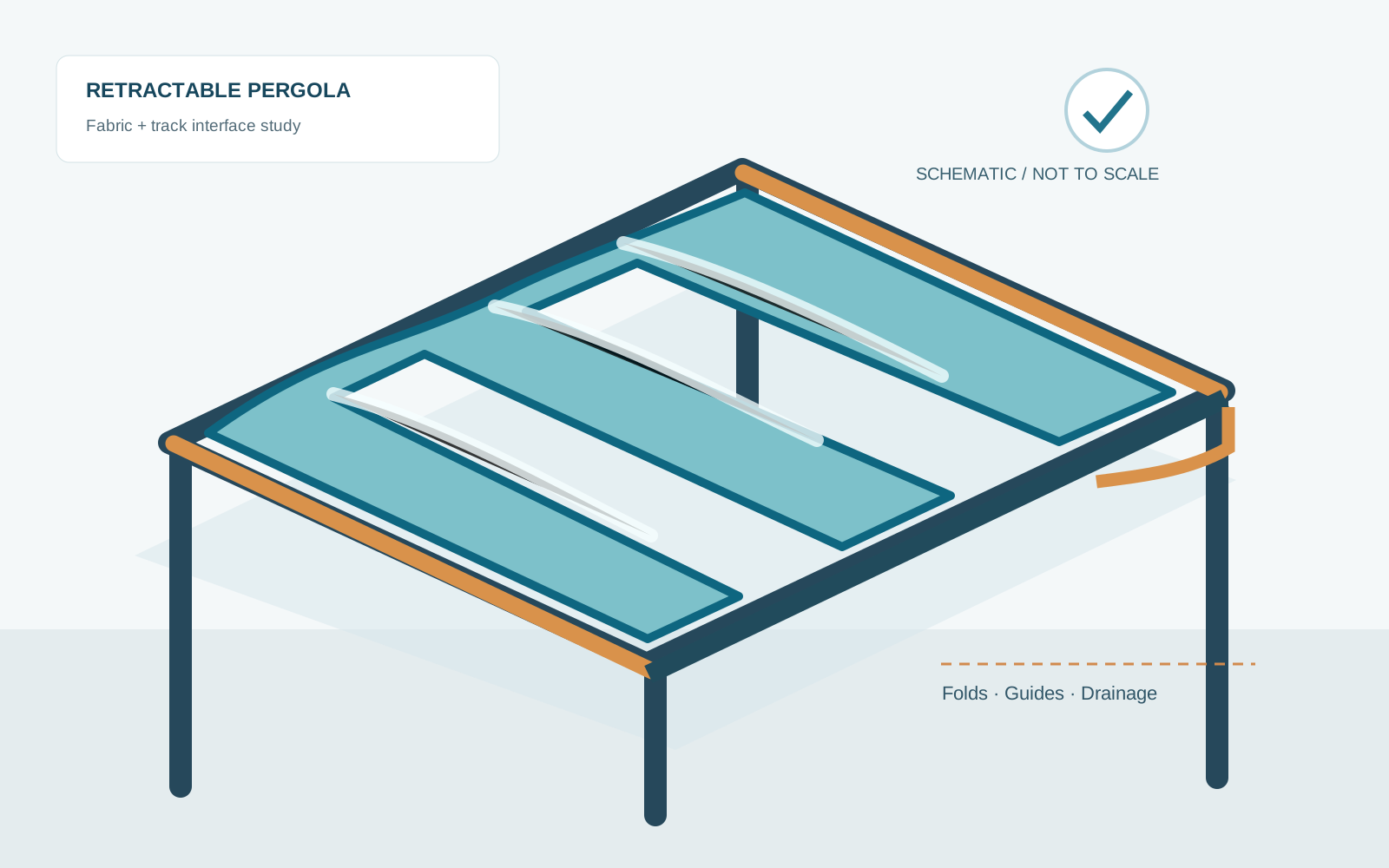
For a retractable pergola roof, start with a PVC-coated polyester textile that can be fabricated into the required panels, then verify coating flexibility after repeated folding, the behavior of optional PVDF or other surface treatments at welds, and the real width available after selvage and edge allowances. A waterproof roll does not by itself make the assembled roof watertight, wind-rated or suitable for year-round exposure. The complete assembly needs appropriate slope, drainage, side guides, reinforcement, fabric tension and an operating protocol.
Select a roof textile for movement, not just rain
Pergola fabric must balance three different demands: outdoor exposure, fabrication into fitted panels and regular opening and closing. A material approved for a fixed canopy may not perform identically when folded or dragged through guides.
What a useful fabric construction contains
A woven polyester reinforcement carries mechanical loads and helps control shape. PVC coatings provide the flexible water-barrier surfaces and permit selected welding processes when the formula and contact faces are compatible. An optional acrylic, PVDF-containing or other top finish can improve selected cleaning and weathering properties, but it may change adhesion, weld response, touch and appearance. The precise top-coat system must be confirmed for the proposed fabrication process.
Ask for a specification tied to the actual proposed grade. Material mass (g/m²), thickness (mm), reinforcement yarn and weave, warp/weft strengths, coating adhesion, color, opacity, finish and nominal roll width belong in the same approval record. A generic “architectural membrane” description is not sufficient for a moving roof.
Material priorities by operating condition
- Frequently retracting roof: fold behavior, coating recovery and crease whitening after the intended cycle exposure.
- Exposed patio roof: UV/weathering evidence, water management and a finish that suits local cleaning practices.
- Wide restaurant terrace: usable width, panel layout, seam placement and repeatable color between rolls.
- Light-transmitting roof: actual translucency and thermal comfort, not color names alone.
- Cold or hot climate: flexibility and surface behavior under a stated temperature and exposure profile.
| Specification field | Why the buyer needs it | Approval evidence / question |
|---|---|---|
| PVC-coated polyester structure | Determines load path, handling and thermoplastic joinability. | Construction sheet for selected grade; coating on each side. |
| GSM and thickness | Affects stiffness, folding effort and panel mass; neither alone proves durability. | Named grade, measurement method and allowable tolerance. |
| Surface / PVDF treatment | Changes soiling, cleanability, face orientation and possible weld compatibility. | Exact finish, weldable face and cleaning recommendations. |
| Nominal and usable width | Sets panel joins, cutting yield and guide-pocket layout. | Roll width less rejected edges / process allowances. |
| Mechanical properties | Controls deformation under tension and around fittings. | Warp/weft tensile, tear and adhesion results for the chosen grade. |
| Outdoor and flex testing | Helps evaluate intended exposure and repeated motion. | Test conditions, durations, cycle definition and pass criteria. |
Selection fields, not a promise that every construction or optional treatment is available in every width or color. Confirm an applicable DERFLEX grade and its current data sheet before specifying limits.
Make repeated folding a material acceptance test
Folding creates a different failure pattern from simple outdoor aging. The high-curvature line can develop visible creasing, surface whitening, localized stiffness, coating cracks or delamination long before a broad flat panel shows damage.
A practical sample-trial sequence
- Record the real fold radius, crease direction, panel tension, operating travel and expected opening frequency.
- Prepare samples in production orientation with any proposed weld, hem, keder or edge attachment.
- Cycle them through the buyer-defined bend and motion procedure, including the environmental temperatures that matter.
- Inspect the fold lines and attachments for appearance change, pinholes, layer separation and loss of movement clearance.
- Retest relevant strength, adhesion, water resistance or seam properties after cycling if those properties govern safety or usability.
Why “weatherproof forever” is not a meaningful claim
Weather exposure varies with sunlight, pollutants, salt, rain, cleaning chemicals, temperature, roof pitch and the time the roof remains folded while wet. Surface treatment and accelerated UV hours cannot be converted automatically into a universal service-life guarantee. For exterior installations, specify the climate, maintenance and expected folding duty; then compare evidence for the same grade and test conditions.
Translate fabric width into tracks, seams and drainage
A roof drawing should show the fabric as a component of the entire pergola. Material width, joins, side guidance, intermediate support and water paths must be considered together.
Width and joining
The roll's advertised width is not the same as the panel's finished coverage. Allow for selvage rejection, cutting variation, weld overlaps, pocket folds, reinforcement strips and finished edge dimensions. For a broad roof, decide whether seams run parallel or perpendicular to travel, whether they cross high-flex zones, and how the overlap thickness behaves while stacking.
One wider roll can reduce the number of joins but may increase material handling difficulty or change the approved coating specification. Compare the cut plan and processing capability for actual panel shapes before choosing width solely to reduce seam count.
Guides, keder and pockets
Track interfaces may use keder-style bead attachments, pockets, clamp bars or custom retainers. These are separate dimensional and mechanical questions: finished bead diameter, textile tongue width, pull-out resistance, edge abrasion and clearance under real loading. Do not assume a material quote includes guide rails, motor, rollers, tension devices, structural frame or installation.
Drainage and water entry
Even a fully coated roll cannot prevent water from entering an incorrectly designed edge or overflowing a gutter. Evaluate roof fall, trough capacity, splash, side seals, wind-driven rain and water retention when the roof stops mid-travel. Local ponding can load the textile and change its travel path. The system designer must decide its water, wind and snow operating limits.
| Roof design choice | Material consequence | Question before approval |
|---|---|---|
| Deep accordion folds | Repeated high-curvature lines; potential visible creasing. | What fold radius, stack height and cycle test are required? |
| Long span between supports | Greater sag and retained-water sensitivity. | Where are the supports, falls and water outlets? |
| Side guide or keder track | Edge abrasion, concentrated pull and precise finished dimensions. | What rail profile, bead dimension and retention test apply? |
| Multi-roll panel | Weld overlaps may intersect moving folds. | Which joint position and weld method pass trials? |
| Translucent PVC surface | Different daylight and solar-gain experience than opaque fabric. | What transmission, glare and heat expectations apply? |
Actual DERFLEX material and related outdoor applications
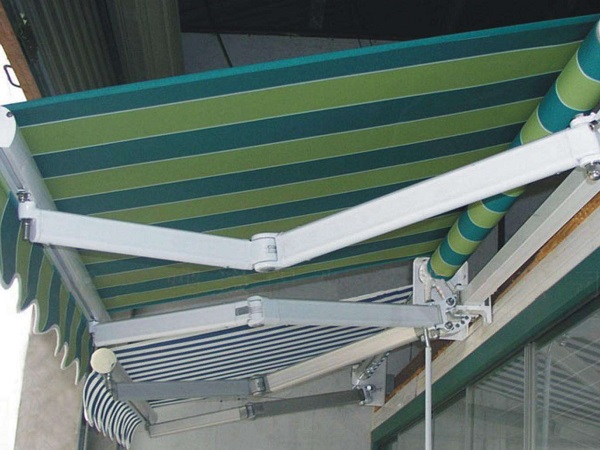
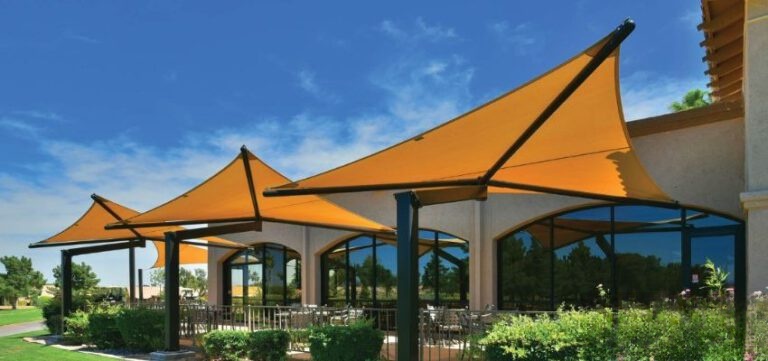
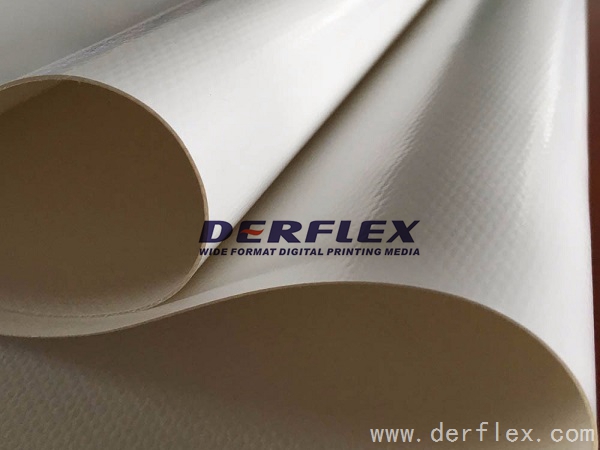
The images below show an outdoor folding awning mechanism, a fixed shade canopy and a coated membrane roll. They are reference photographs from DERFLEX pages, not documentation of a tested DERFLEX retractable pergola roof system.
What to send a pergola roof fabric supplier
Send this brief for a usable quote
- Finished roof length, width, fall and a roof plan or simple marked photograph.
- Fixed or retractable operation; manual or motorized; expected folding cycle and stack geometry.
- Requested color, opacity or translucency, surface appearance and cleaning expectations.
- Panel design, seam direction, welding or sewing process, edge pockets and keder details.
- Required usable roll width, approximate material quantity, order frequency and delivery destination.
- Relevant weather, cold/heat and fire-performance requirements; standards or approvals required for the finished project.
DERFLEX can discuss coated textile rolls and material selection. Pre-cut panels or fabricated covers, if requested, must be explicitly confirmed. Frame, motor, rails, controls, structural certification and roof-system performance do not follow automatically from a fabric supply quotation.
Before you order
- Agree the exact material grade and whether a surface finish is present on one or both faces.
- Test the selected grade in your own folds, welds and guide hardware before bulk procurement.
- Approve master sample color and appearance under appropriate lighting; control batch identification.
- Define sampling, inspection and acceptance for finished usable width, defects and any relevant test values.
- Design drainage, wind/snow limitations and safe operating instructions with the pergola-system supplier.
Frequently asked questions
Is PVC-coated polyester suitable for a retractable pergola roof?
It can be suitable when the selected grade passes the project’s folding, welding, weathering and mechanical trials. Material approval does not certify the frame, guides, drainage or complete roof assembly.
Does PVDF make a pergola roof permanently weatherproof?
No. PVDF-containing finishes can aid selected outdoor surface properties, but actual life depends on exposure, formulation, folding, installation and maintenance. Evaluate the named grade and its reports.
Will any PVC roof fabric work with hot-air or HF welding?
No. Coating chemistry, surface finish, face orientation, seam design and machine settings affect joinability. Approve a seam sample from the proposed grade before volume production.
How do I choose the correct roll width?
Start from the finished panel plan. Deduct selvage, cuts, hems, pockets and welded overlaps from nominal roll width, then compare waste and seam locations against the roof travel path.
Can DERFLEX supply the aluminum track, frame and motor?
This page describes coated fabric supply and material review. Rails, structural frames, motors, controls and complete pergola installation must be separately confirmed with the relevant system supplier.
What should a factory test before a repeat order?
Test actual folds and edge attachments, seam quality, appearance after cycling and the project-relevant water and mechanical properties. Record the exact grade, test conditions and pass/fail criteria.
Related materials and technical resources
Explore the material, application and fabrication guides relevant to your project.
Specify the fabric around your roof system.
Send a drawing, expected folding duty, track profile, desired finish and quantity. DERFLEX can review a suitable coated fabric direction and the samples you need to validate it.