News
Company News

Heavy Duty Tarp Maintenance Checklist | Cleaning, Inspection, Storage & Reuse

Update:2026/10/1 18:17:06 Views:
DERFLEX Heavy Duty Tarp Care Guide

Heavy Duty Tarp Maintenance Checklist

Cleaning, inspection, storage and reuse procedures for PVC heavy duty tarps used in transport, construction, agriculture, equipment protection and industrial covering.

A durable tarp can still fail early when dirt becomes abrasive, wet material is folded into storage, small cuts are ignored, or tie-down hardware keeps loading a damaged edge. This guide turns tarp care into a repeatable maintenance routine for operators and B2B buyers.

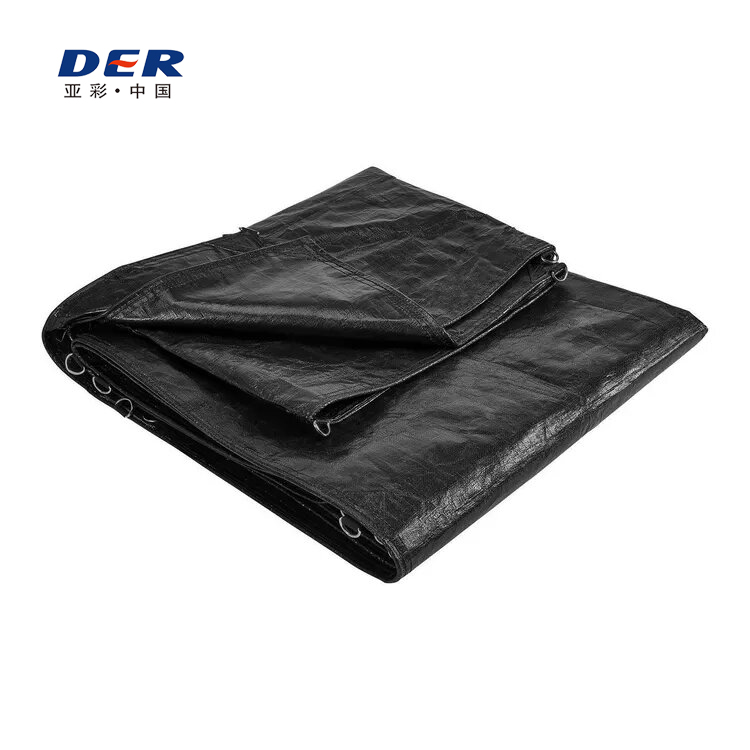
DERFLEX black heavy duty PVC truck tarp with reinforced edges and D-rings
Reusable tarp performance is a system. Material, seams, hems, webbing, grommets and daily handling all influence service life.
6-Stepmaintenance cycle
15-Pointinspection checklist
3-Levelreuse decision
PVC Focuswith material notes
Quick Answer

How do you maintain a heavy duty tarp?

Clean off abrasive dirt with water and a mild compatible cleaner, rinse thoroughly, dry both sides completely, inspect the coating, fabric, seams, hems and attachment hardware, repair small defects before they grow, then store the tarp clean and dry away from sunlight, heat, chemicals and sharp objects.

Unload & shake off debris Wash gently Rinse & fully dry Inspect stress zones Repair or quarantine Store & log condition
Maintenance Logic

Why heavy duty tarps need a maintenance system—not occasional cleaning

For reusable industrial covers, the first visible tear is often the end of a chain that started earlier: grit at an abrasion point, repeated creasing, a loose grommet, a stressed seam, trapped moisture or a small cut that continued to propagate.

01

Keep dirt from becoming abrasion

Sand, grit and dried mud can act like abrasive media when the tarp rubs against cargo, framing or itself during folding and transport.

02

Catch damage while it is local

A small puncture, worn corner or lifting seam is easier to isolate before load, wind and repeated handling enlarge the damaged zone.

03

Protect tie-down points

Grommets, D-rings, webbing and hems concentrate load. Maintenance should inspect the fabric around the hardware—not just the hardware itself.

04

Prevent storage damage

Putting a wet or contaminated tarp into a tight fold can create odor, staining, microbial growth, coating problems or hard creases before the next use.

Scope: the cleaning and care guidance below is written primarily for reusable PVC-coated polyester tarps. PE, canvas, mesh and specialty-coated fabrics can require different cleaners, drying methods and repair systems. When a tarp carries chemicals, food-contact residues or regulated contaminants, follow the product-specific safety and cleaning procedure rather than a generic tarp routine.
Step 1 · Cleaning

How to clean a heavy duty PVC tarp without creating new damage

The goal is not aggressive scrubbing. The goal is to remove particles and residues while preserving the coating, welded areas, printing and reinforced details.

1

Dry removal first

Open the tarp on a clean surface. Shake, sweep or gently brush away loose grit, gravel, leaves and debris before adding water.

2

Use a mild wash

Use clean water, a soft cloth or soft-bristle brush, and a mild cleaner known to be compatible with the tarp material. Test an unfamiliar cleaner on a small inconspicuous area first.

3

Work in sections

Clean from the least contaminated area toward the dirtiest area. Give extra attention to folds, hems, reinforcement patches and hardware zones where contamination collects.

4

Rinse completely

Remove cleaner residue with fresh water. Residue left on the surface can attract dirt or interfere with later welding, patching or handling.

Avoid solvent damage: do not assume acetone, MEK, fuel, strong aromatic solvents, concentrated bleach or other aggressive chemicals are safe for every PVC formulation, lacquer or printed surface. Obtain material-specific compatibility guidance when chemical cleaning is necessary.
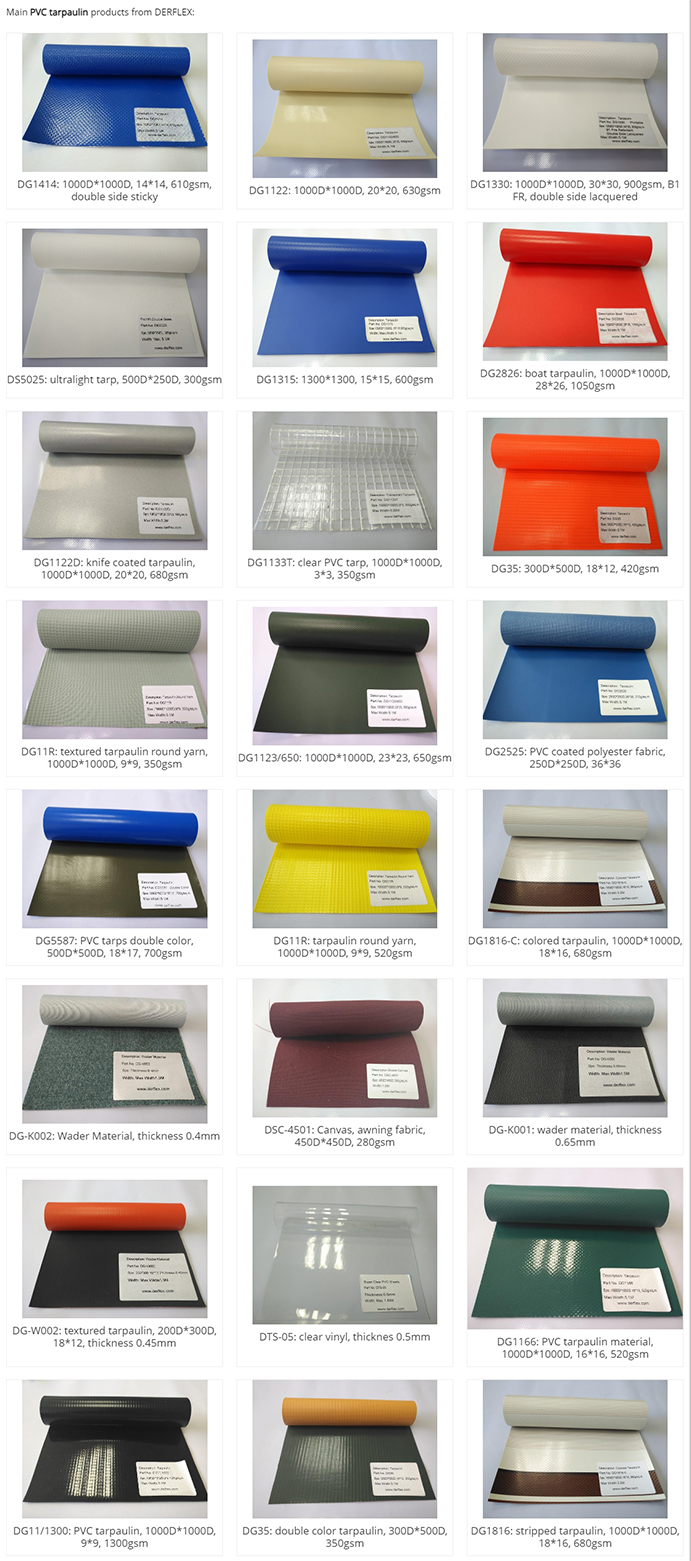
DERFLEX PVC tarpaulin roll samples showing different coated constructions and surfaces

Surface finish matters

Gloss, matte, lacquered and embossed PVC surfaces do not all respond identically to the same cleaner. Match cleaning practice to the approved material construction.

Cleaning question Preferred practice What to avoid Why it matters
Loose dust / grit Remove before wet washing. Grinding dry particles into the surface. Reduces avoidable abrasion and scratching.
General soil Mild compatible cleaner, soft brush or cloth, fresh-water rinse. Hard wire brushes or sharp scrapers. Protects the PVC coating and top finish.
Pressure washing If permitted for the product, use conservative pressure, a broad spray pattern and distance from seams/hardware. Concentrated jet directly at welded seams, grommets or damaged coating. A high-energy jet can enlarge existing defects.
Oil / chemical residue Identify the contaminant and verify cleaner compatibility first. Guessing with strong solvents. Chemical incompatibility can soften, stain or embrittle a coating.
Before storage Dry both faces, hems, folds and hardware zones completely. Folding while damp. Reduces moisture-related odor, staining and storage damage.
Step 2 · Inspection

Inspect the load path: surface → fabric → seam → hem → hardware

A visual pass should follow the places where forces enter and travel through the tarp. The center sheet matters, but edge reinforcement and attachment zones often deserve closer attention because they see repeated tension, flutter and handling.

Surface coating

Look for cuts, punctures, abrasion polish, deep scuffing, cracking, tackiness, blistering, peeling, exposed scrim or localized delamination.

Base fabric / scrim

Check whether yarns are exposed, broken, stretched or distorted around tears and high-load zones. Damage to reinforcement is more serious than cosmetic surface marking.

Welded or sewn seams

Inspect for opening, lifting edges, skipped areas, needle damage, leakage paths, hard creases or tearing immediately beside the seam.

Hems & corners

Check edge wear, rope hems, webbing, corner patches and fold lines. Corners can combine tension, abrasion and repeated handling in one small area.

Grommets & D-rings

Look for deformation, corrosion, sharp edges, looseness and—most importantly—elongated holes or tearing in the reinforced fabric around the fitting.

Webbing, straps & tie-downs

Check fraying, cuts, melted areas, loose stitching, worn loops and uneven load paths that pull one point harder than the rest of the cover.

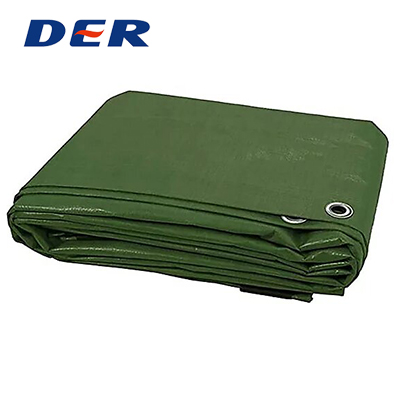
Green waterproof heavy duty PVC tarp with metal eyelets

Check every eyelet zone

A sound metal eyelet is not enough if the surrounding hem or fabric has begun to elongate or split.

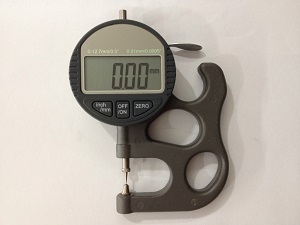
DERFLEX thickness inspection gauge for PVC coated materials

Separate visual wear from specification checks

Field inspection finds damage; factory or lab measurement verifies properties such as thickness, weight and mechanical performance when needed.

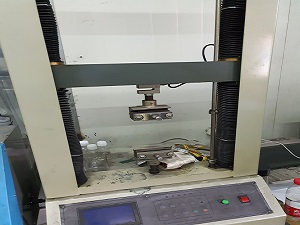
DERFLEX tensile testing equipment for coated fabric strength evaluation

Strength is not visible from color

For repeat procurement, combine field feedback with defined material and strength requirements instead of judging a tarp only by appearance or GSM.

Step 3 · Reuse Decision

Reuse, repair or remove from service?

Use condition and load location to decide. A tiny cosmetic mark in a low-stress area is different from a growing tear beside a grommet or a seam opening on a transport cover.

GREEN · REUSE

Serviceable

No structural tears, no opening seams, attachment points are secure, surface remains flexible, and the cover still fits and tensions correctly.

AMBER · REPAIR FIRST

Local defect

Small puncture, local abrasion, minor edge wear or early seam/hardware defect that can be professionally repaired before the next demanding cycle.

RED · QUARANTINE

Structural concern

Growing tears at load points, widespread cracking or delamination, multiple failed attachments, major seam separation, contaminated material with unknown compatibility, or any condition that makes safe retention uncertain.

Safety note: a repair that closes a hole is not automatically a structural repair. For truck, lifting-adjacent, elevated, wind-loaded or other safety-relevant applications, the repaired construction must still be suitable for the loads and attachment method.
01Find the defectMark both ends of a cut or crack so growth can be monitored.
02Clean & dryRepair surfaces need to be free of moisture, loose dirt and incompatible residue.
03Match the repairUse a patch, weld, seam repair or hardware replacement appropriate to the tarp construction.
04Inspect the perimeterConfirm the repair did not create a new stiff edge, load concentration or unsealed path.
05Record & recheckTag repaired zones so they receive extra attention at the next inspection.
Step 4 · Storage

Store a heavy duty tarp clean, dry, supported and protected

Storage should preserve flexibility and keep the next deployment from starting with damage that happened in the warehouse.

Storage factorRecommended practice
MoistureDry both faces, folds, seams and reinforced edges completely before packing.
Sunlight / heatStore under cover, away from direct sunlight, hot pipes, heaters and localized heat sources.
Floor contactKeep the tarp on a clean rack, shelf or protected pallet rather than directly on a wet or dirty floor.
Sharp objectsSeparate from metal corners, exposed nails, cable ends, cutting tools and forklift contact zones.
Folding / rollingAvoid forcing a cold, stiff or dirty tarp into tight folds. For large covers, use a practical fold/roll method that minimizes hard creases and dragging.
ChemicalsKeep away from fuels, solvents, oils and unknown chemicals unless the specific tarp formulation has verified compatibility.
IdentificationLabel size, application, last inspection date and repair status so damaged tarps are not accidentally returned to service.
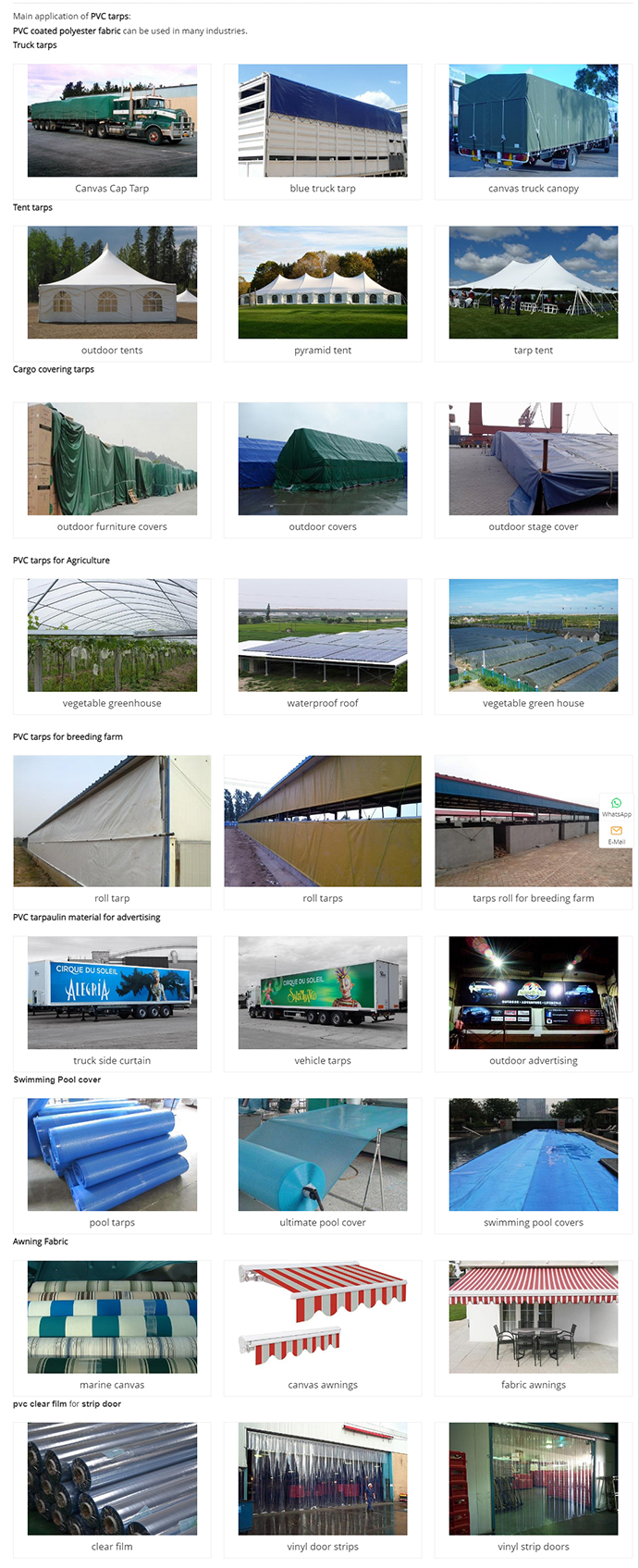
DERFLEX PVC tarpaulin application board for trucks tents agriculture storage and industrial uses

Storage method should follow the application

A truck tarp that is handled every day, a seasonal agricultural cover and a large industrial sheet do not experience the same fold cycles, contamination or deployment loads. Maintenance frequency should follow actual duty.

Reuse & Lifecycle Cost

Measure maintenance by service cycles, not by purchase price alone

For reusable B2B tarps, procurement value comes from how many suitable service cycles the cover completes with acceptable protection and manageable repair cost.

Lifecycle cost per use = (purchase + maintenance + repair + handling cost) ÷ completed service cycles

Track failures by location

If repeated damage appears at the same corners, grommets or abrasion zones, the next procurement specification may need different reinforcement—not simply a heavier fabric.

Track failures by environment

UV exposure, low-temperature handling, wind flutter, chemicals, dragging and cargo geometry create different wear patterns. Record the operating condition with each failure.

Feed field data back into the next order

Maintenance records can improve future drawings, wear-patch placement, seam layout, hardware spacing and material selection for repeat OEM programs.

Maintenance Frequency

A practical inspection schedule for reusable industrial tarps

There is no single interval for every tarp. Use the schedule below as a working framework and shorten the interval for high wind, road use, heavy abrasion, chemicals, extreme temperatures or frequent folding.

When Minimum check Best for catching Action if abnormal
Before each deployment Seams, tie-down points, major tears, fit and contamination. Damage that could fail immediately under load. Repair, replace hardware or quarantine before use.
After dirty / wet use Clean, rinse, dry and inspect abrasion zones. Grit, mud, trapped moisture and fresh cuts. Do not store until clean and dry.
At routine service intervals Full 15-point inspection and condition log. Slow-growing seam, coating, hem and hardware wear. Plan repair before the next demanding cycle.
Before seasonal storage Deep clean, complete dry, repairs, labeling and protective storage. Damage that would worsen unnoticed in storage. Store only after release status is recorded.
After unusual event Inspect after strong wind, load shift, chemical spill, severe abrasion or impact. Hidden local damage from an abnormal event. Escalate inspection before return to service.
15-Point Checklist

Heavy Duty Tarp Maintenance Checklist

Use this as a pre-use, post-cleaning or storage-release checklist. Print the page and mark items manually if your maintenance system is paper-based.

1. Loose debris removed No grit, stones or sharp particles trapped in folds.
2. Surface washed Dirt and residue removed with compatible cleaning method.
3. Tarp fully dry Both faces, seams, hems and fold zones are dry.
4. No critical punctures Holes and cuts are repaired or the tarp is quarantined.
5. Coating remains stable No widespread cracking, peeling, blistering or delamination.
6. Scrim not structurally damaged Reinforcing yarns are not badly broken or distorted.
7. Welded seams closed No lifting, opening or leakage path visible.
8. Sewn seams sound No skipped, broken or pulling stitches in load zones.
9. Hems intact Edge folds, rope hems and bindings are not separating.
10. Corners reinforced No growing tears where multiple load directions meet.
11. Grommets secure No sharp, loose, deformed or pulling eyelets.
12. D-rings secure Ring, webbing and surrounding patch remain stable.
13. Webbing / straps sound No fraying, cuts, melted areas or loose attachment.
14. Correct storage condition Dry, shaded, clean and protected from chemicals and sharp objects.
15. Status recorded Reuse / repair / quarantine decision and inspection date documented.
Material-Specific Care

PVC, PE, canvas and mesh tarps should not be maintained as if they were identical

MaterialCommon maintenance focusKey caution
PVC coated polyesterCoating condition, welds, abrasion, hems, hardware, complete drying and chemical compatibility.Strong solvents or excessive heat can damage certain PVC/topcoat systems.
PE tarpLaminate wear, punctures, eyelet pull-out, crease damage and edge fraying.Repair approach and long-term heat/UV behavior differ from PVC.
CanvasDrying, mildew prevention, fabric tears, seams and breathable storage.Do not treat a breathable canvas system as a waterproof PVC sheet.
Mesh tarpBroken yarns, edge reinforcement, grommets and localized tears.Airflow reduces pressure but does not remove tie-down and edge loads.
Design for Maintainability

The best maintenance program starts before the tarp is manufactured

For repeat B2B orders, field wear data can be translated into a better tarp specification: reinforcement where abrasion actually occurs, attachment spacing matched to the use, and a construction that can be inspected and serviced consistently.

Specify wear zones

Map contact with sharp cargo edges, bows, frames, rails and corners so wear patches can be considered where the tarp repeatedly rubs.

Specify load entry points

Define grommets, D-rings, webbing, rope hems and reinforcement around the actual tie-down method rather than adding hardware without a load plan.

Specify the service environment

UV exposure, cold handling, mildew risk, chemicals, flame-retardant needs and folding frequency should be discussed before material approval.

DERFLEX Manufacturing Context

Heavy duty tarp supply built around repeatable specifications

DERFLEX publishes a heavy-duty PVC coated polyester direction covering 450–900gsm, with finished tarp options including heat welding, sewing, reinforced hems, grommets, webbing, D-rings and custom OEM details. Final construction should be confirmed against the real application and approved specification.

For buyers building a reusable tarp program, maintenance records are valuable purchasing data. Repeated abrasion, seam opening or attachment failures can be fed back into the next drawing and material discussion.

60,000㎡published production area
450+published employees
25+published senior engineers
120+countries & regions served
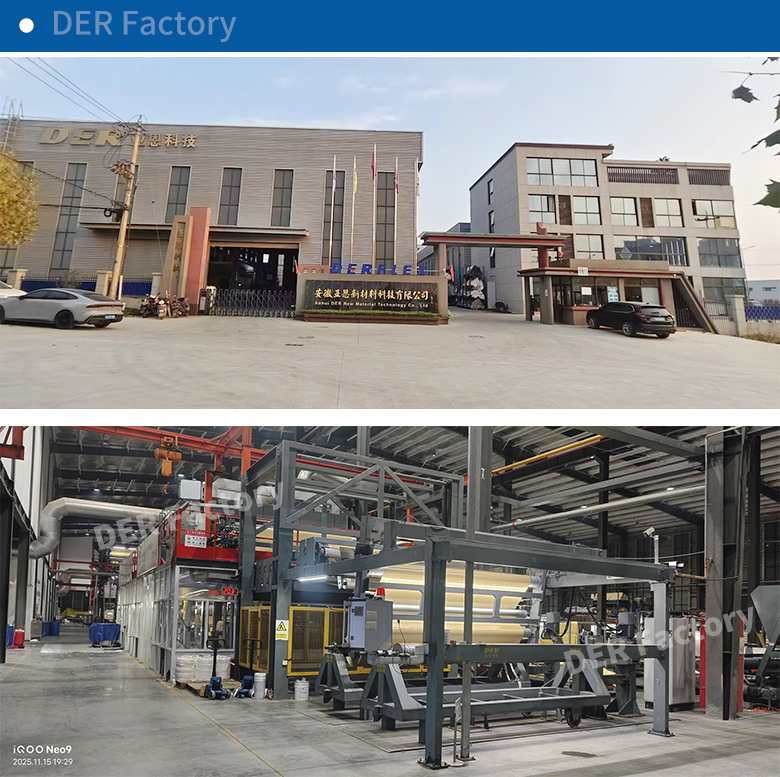
DERFLEX factory exterior and PVC coated fabric production line
People Also Ask

Heavy Duty Tarp Maintenance FAQ

Direct answers for maintenance teams, distributors, fleet operators, contractors and industrial buyers.

What is the best way to clean a heavy duty PVC tarp?
Remove loose abrasive debris first, then use clean water with a mild cleaner known to be compatible with the PVC coating. Use a soft brush or cloth, rinse thoroughly and dry the tarp completely before folding or storage. Test unfamiliar cleaners on a small hidden area first.
Can I pressure wash a heavy duty tarp?
Some PVC tarps can tolerate careful pressure washing, but a concentrated high-pressure jet can damage coating, enlarge cuts or drive into seams and hardware zones. If pressure washing is permitted for the specific material, use conservative pressure, a broad spray pattern and adequate distance.
How often should a heavy duty tarp be inspected?
Inspect before each demanding deployment and after unusual events such as strong wind, impact, load shift, severe abrasion or chemical exposure. Reusable fleet and industrial tarps should also have a scheduled full-condition inspection based on service intensity rather than waiting for a visible failure.
Should a tarp be folded while wet?
No. Dry both sides, hems, seams and fold zones before storage. Trapped moisture can promote odor, staining, microbial growth and coating or fabric problems, especially during long storage periods.
When should a damaged heavy duty tarp be repaired instead of replaced?
Localized punctures, abrasion spots, edge damage or hardware defects may be repairable when the surrounding material remains sound. Quarantine the tarp when tears are growing through load-bearing zones, seams are widely separating, the coating is broadly cracked or delaminated, or the integrity of the cover is uncertain.
How can I extend the service life of a heavy duty tarp?
Use a tarp correctly specified for the application, avoid dragging it over sharp surfaces, control tie-down loads, clean abrasive dirt, dry before storage, inspect seams and hardware early, repair local defects promptly, and store the tarp protected from sunlight, heat, chemicals and sharp objects.
What information should I send a manufacturer when recurring tarp damage appears?
Send photos of the damage location, application, finished size, material/GSM if known, climate, fold frequency, tie-down method, hardware spacing, abrasion contact points, load movement and the number of service cycles before failure. This lets the next specification address the actual failure mode.

Need a heavy duty tarp designed for repeated use?

Send DERFLEX your application, size, quantity, climate, abrasion points, tie-down method, target material direction, reinforcement map, hardware layout and maintenance feedback. The specification can then be discussed around the real duty cycle instead of thickness alone.

Maintenance recommendations should be adapted to the approved material, application, contamination type, safety requirements and supplier instructions for the specific tarp.

Consulting Services
+86-021-54361792 / 54361798
Email
sales@derflex.com