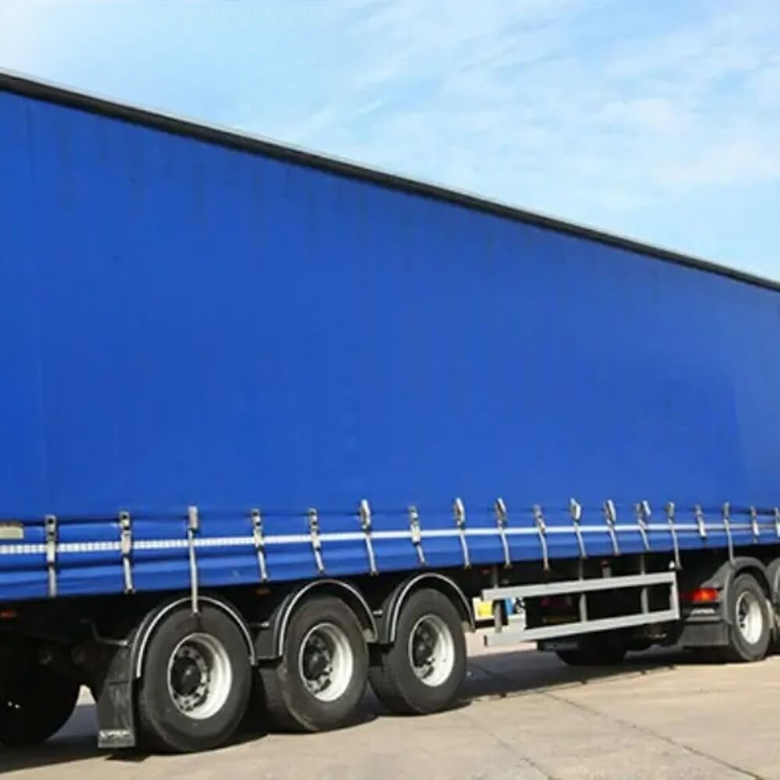
1. Truck & Trailer Cargo
Transport tarps protect loads from weather, road spray and contamination while coping with wind, folding and tie-down cycles. See DERFLEX truck tarpaulin solutions for transport-specific selection.



A heavy duty tarp is not simply a thicker sheet. It is a reinforced cover system built to survive a defined combination of weather, abrasion, movement, tie-down stress and repeated handling.
This guide helps distributors, contractors, fleet operators, fabricators, procurement teams and OEM buyers compare tarp materials, understand the parts that control service life, identify common failure modes and match construction details to real applications.
A heavy duty tarp is a reinforced protective cover intended for higher-stress use than a light temporary tarp. The defining factors are not only thickness or weight, but also base-fabric strength, waterproofing direction, UV resistance, abrasion behavior, seam design, edge reinforcement, attachment geometry and how often the tarp will be handled.
For reusable truck, construction, machinery, outdoor storage and industrial covers, PVC coated polyester is a common material direction because a woven polyester core can carry load while the PVC surface provides waterproofing, cleanability and heat-weldable fabrication. Polyethylene, canvas and mesh remain useful when low handling weight, breathability or airflow is more important than a sealed heavy-duty cover.
DERFLEX already maintains focused resources for the definition of a heavy duty tarp and a dedicated industrial heavy duty tarp buying guide. This page concentrates on durability logic, versatility and application decisions.
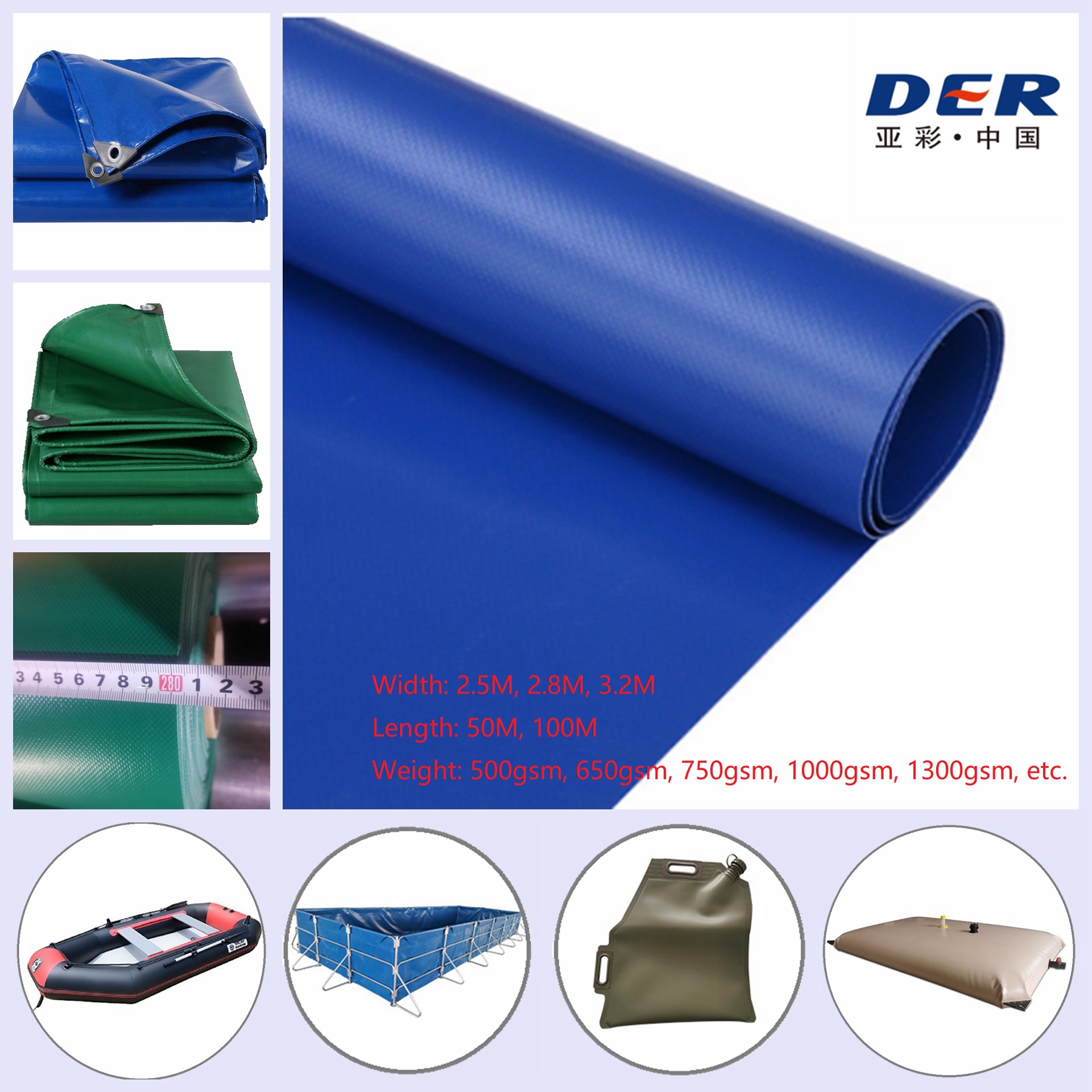
A tarp can have a high GSM or mil thickness and still fail early if the load enters the material through weak edges, poorly placed grommets, unprotected sharp contact points or a seam that does not suit the fabrication method.
The woven reinforcement carries much of the tensile load and helps slow tear growth. Yarn, weave and dimensional stability matter when the tarp is pulled, rolled, tied down or stretched over large spans.
PVC coating, PE lamination, treatment or finish influences waterproofing, UV behavior, abrasion resistance, cleanability, flexibility and weldability. The correct surface depends on the use environment.
Heat-welded seams, hems, webbing, rope edges, corner patches, D-rings and grommets determine how a finished tarp manages local stress. The sheet alone does not decide service life.
Continuous flapping, excessive loose fabric, sharp unprotected edges, poor drainage, over-tensioning and dragging can damage even a robust tarp. Durability therefore includes installation practice.
For many real tarp systems, the first problem is not a uniform hole in the middle of the fabric. It is a local failure at a corner, seam, grommet, folded edge, sharp-contact zone or area that flaps continuously. That is why a better heavy duty specification includes a reinforcement map—not only a heavier base sheet.
The best material decision begins with the expected failure mode. Different risks call for different design responses.
Repeated fabric movement can fatigue seams, hems and attachment points. Reduce loose spans, support the cover and distribute tie-down load.
Cargo edges, trailer rails, concrete, steel and rough ground can wear the surface. Add wear pads or reinforcement where rubbing cannot be eliminated.
A heavy tarp can still puncture on corners or protrusions. Protect sharp points before increasing total fabric weight.
Long outdoor exposure requires a suitable UV package and climate-compatible material. Temperature cycling also affects flexibility and handling.
A waterproof surface does not guarantee a waterproof finished cover. Seams, openings, pockets, stitching and installation geometry must also shed water.
Grommets and D-rings concentrate load. Reinforcement underneath them and realistic spacing are more important than simply adding more hardware.
“Heavy duty” describes intended performance, not a single material family. The correct choice depends on waterproofing, breathability, handling weight, abrasion, airflow, fabrication and replacement strategy.
| Material Direction | Where It Works Well | Durability Advantages | Trade-Offs to Check | Typical B2B Uses |
|---|---|---|---|---|
| PVC / Vinyl Coated Polyester | Reusable waterproof covers with frequent handling, welding and reinforcement. | Strong textile core, sealed surface, weldable fabrication, good abrasion and cleanability direction. | Heavier than economy PE; formulation and reinforcement should match climate and handling cycle. | Truck tarps, industrial covers, construction, machinery, storage, agriculture, OEM covers. |
| Heavy Duty PE / Poly | Large-area economical coverage where low handling weight matters. | Lightweight, waterproof surface, practical for temporary or seasonal work. | Not automatically suited to high-cycle abrasion, road movement or long repeated industrial use. | Temporary roofing, storage, seasonal covers, general construction protection. |
| Canvas / Treated Textile | Applications where airflow and reduced condensation are priorities. | Breathability, textile handling, useful abrasion behavior for selected dry applications. | Do not assume full waterproofing; treatment, shrinkage, mildew and saturation behavior need review. | Equipment, lumber, workshop protection, breathable storage covers. |
| Mesh Tarp | Containment, shade and applications that need airflow or lower wind load. | Ventilation, reduced wind pressure, lighter handling and debris-control capability. | Not a sealed waterproof rain barrier; openness and edge strength must be specified. | Dump loads, shade, fencing, debris, landscaping, privacy and ventilation applications. |
For a material-focused product route, see DERFLEX vinyl coated polyester fabric. Final suitability should be confirmed against the actual application and approved production specification.
This matrix is a sourcing framework rather than a universal industry standard. It helps buyers define the direction of a quotation before final technical data is confirmed.
| Use Condition | Material Direction | What to Prioritize | Finishing Direction | Buyer Watchpoint |
|---|---|---|---|---|
| Temporary weather cover | PE/poly or lighter project-specific tarp | Low handling weight, quick installation, adequate waterproofing | Reinforced corners and practical tie points | Do not over-specify if replacement is acceptable and use is short. |
| Repeated outdoor storage | PVC coated polyester or suitable UV-stabilized tarp | UV, waterproofing, edge strength, fold/reuse cycle | Welded panels, reinforced hems, local wear pads | Plan drainage and ventilation; avoid water pooling and wind lift. |
| Truck / trailer cargo | Heavy duty PVC coated polyester or mesh by cargo | Tear, abrasion, flexibility, highway wind, tie-down loads | Webbing, D-rings, grommets, welded seams, edge reinforcement | Driver handling weight and cargo geometry are part of the specification. |
| Construction / industrial jobsite | PVC coated fabric, PE, mesh or specialty textile by task | Abrasion, puncture, UV, anchoring, project safety requirements | Reinforcement map, close attention to corners and fixing zones | Flame-retardant direction should only be specified when a real requirement and test standard are defined. |
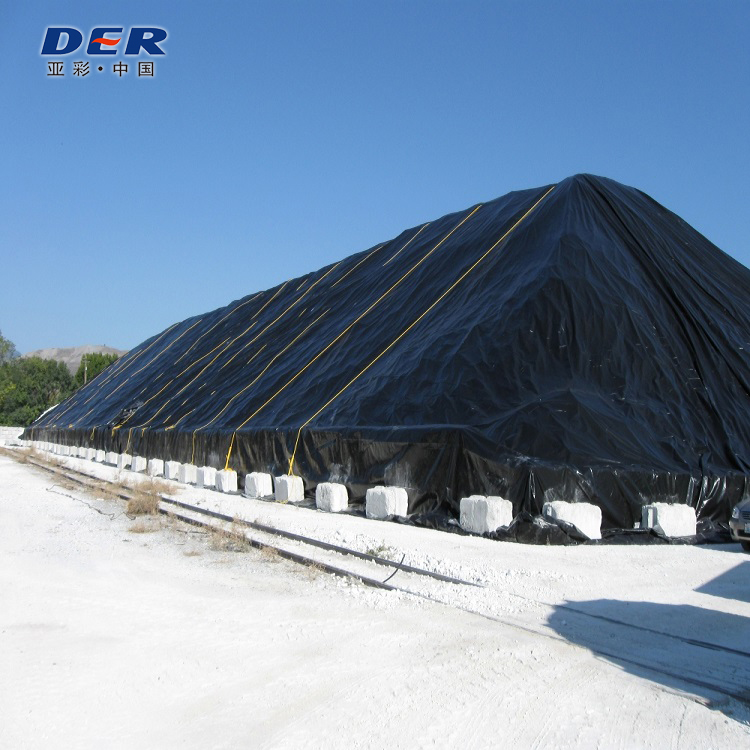
| Mining / bulk stockpile | Heavy PVC cover or mesh depending containment and airflow | Large-panel stability, abrasion, weathering, edge loads | Strong perimeter reinforcement and planned anchoring | Large covers need installation planning; material strength alone does not control wind load. |
| OEM repeat program | Project-specific coated textile | Batch consistency, color, width, fabrication, packaging, traceability needs | Approved drawing, sample and controlled hardware layout | Repeat supply consistency can matter as much as the first-order material price. |
The common thread is not an industry label. It is a job where rain, wind, contamination, abrasion or repeated handling would overwhelm a light temporary cover.
Transport tarps protect loads from weather, road spray and contamination while coping with wind, folding and tie-down cycles. See DERFLEX truck tarpaulin solutions for transport-specific selection.
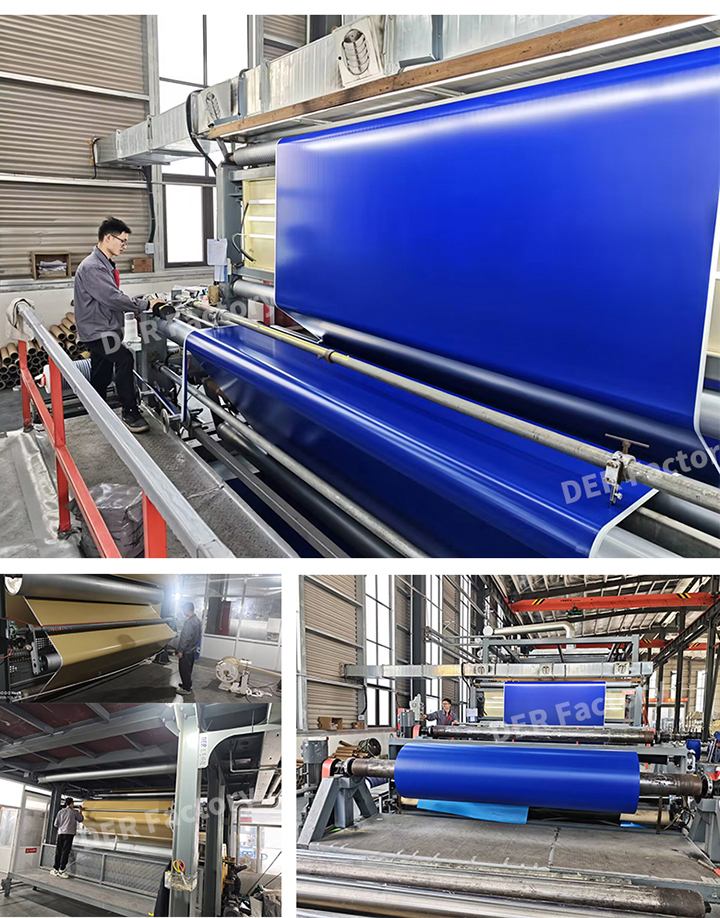
Machines, generators, fabricated parts and plant equipment benefit from fitted or draped waterproof covers with reinforcement at protrusions and repeated-access zones.
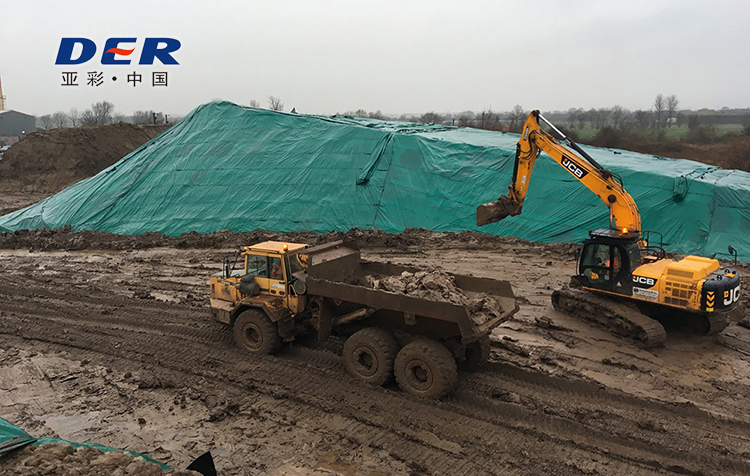
Building materials, temporary openings, equipment and work zones may require abrasion resistance, anchoring, UV durability and project-specific safety direction. Explore construction tarps.
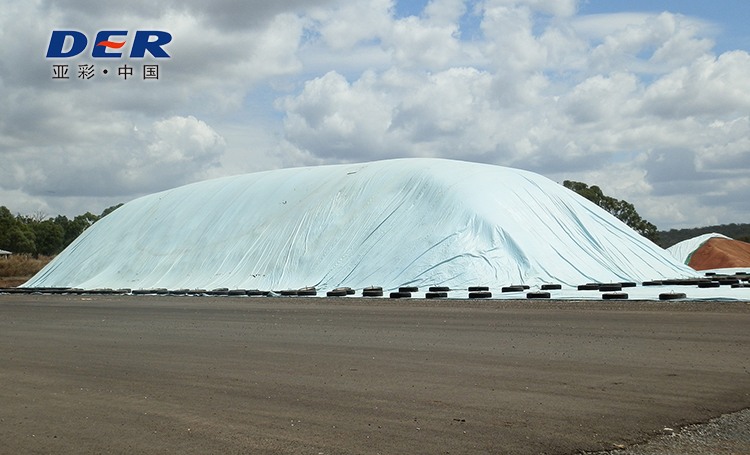
Large-area covers help manage rain exposure, dust and material protection. Panel layout, perimeter loads and installation method become critical as cover size increases.
Hay, feed, fertilizer, machinery and seasonal stock need UV-aware, wind-secured covers with practical handling weight. DERFLEX also maintains a focused agriculture tarp resource.
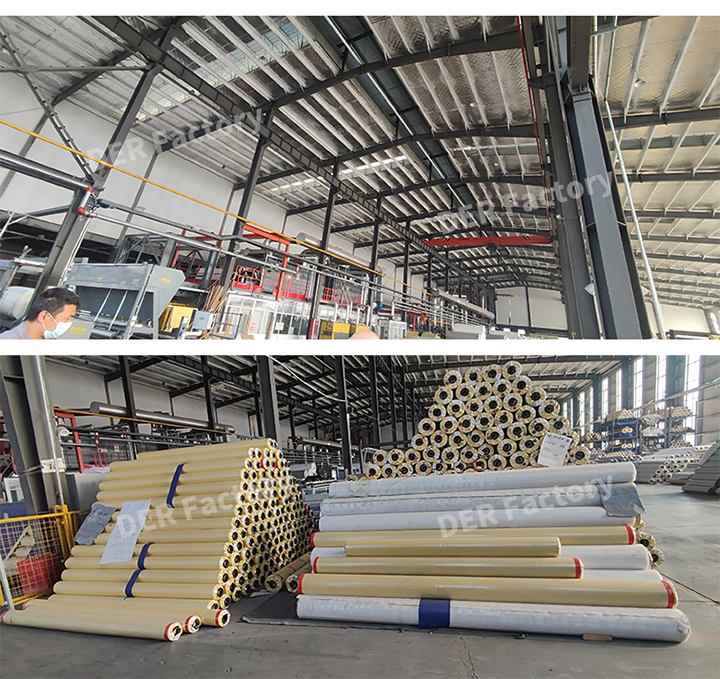
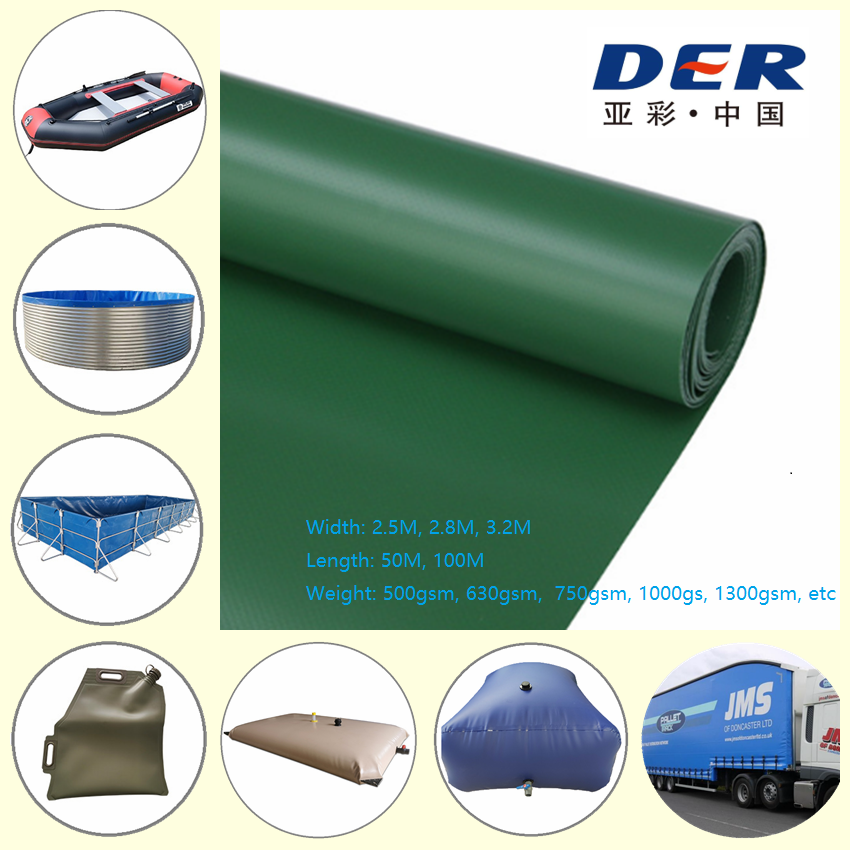
Bulk buyers often need roll goods, panels or finished covers with controlled color, width, reinforcement, labeling and repeat-order consistency rather than a generic retail stock size.
For a longer application list, DERFLEX has a dedicated page on what heavy duty tarps are used for. The most important sourcing rule is to connect each use to its actual stress profile instead of treating every “heavy duty” label as equivalent.
For custom covers, a robust material should be paired with a fabrication plan that controls seams, edges, high-wear zones and load transfer.
Large covers require multiple panels. The seam method should match the material and waterproofing target. For PVC coated polyester, hot-air or high-frequency welding may be used depending on the production setup and product design.
The perimeter is where installation loads enter the tarp. Webbing, rope edges, multilayer hems, corner patches and hardware backing can spread those loads and reduce local tearing.
Do not specify grommet spacing independently from edge reinforcement. A dense grommet pattern attached to a weak hem can still fail.
Identify where the tarp touches rails, cargo corners, machinery or rough surfaces. Add sacrificial wear layers, corner pads or protective barriers at predictable contact points.
Local reinforcement can be more efficient than increasing the weight of the entire cover when wear is concentrated in a few zones.
Heavier material can improve durability reserve but also increases manual handling weight. Large covers may need folding plans, straps, lifting assistance or storage space that keeps the tarp clean and dry.
Balance physical durability with crew handling, deployment time and shipping weight. The heaviest option is not automatically the most practical.
A lower-cost cover can be the correct choice for short-term work. A heavier reusable cover makes more sense when replacement, downtime, cargo damage, labor or disposal becomes the larger cost.
Material weight, coating, hardware, size and custom fabrication all influence unit price. Compare quotations only when the underlying specifications are equivalent.
Very heavy covers can increase labor time, driver effort and storage burden. Practical duty selection should include ergonomics and deployment frequency.
For critical cargo, equipment or production assets, one early failure may cost more than the difference between a basic tarp and a better engineered cover.
A clear requirement lets the supplier recommend material and fabrication more accurately and reduces the risk of comparing unlike quotations.
The images below are hosted on DERFLEX and are placed with descriptive alt text and supporting captions for image-search relevance.

These six links are focused on different sub-intents so the guide acts as a topic hub rather than competing with every specialist page.
Short, direct answers to common selection and sourcing questions.
A heavy duty tarp is a reinforced cover intended for more demanding exposure, handling or attachment loads than a light temporary cover. Material weight matters, but a professional specification also considers base fabric, coating or lamination, tear resistance, waterproofing, UV exposure, seams, reinforced edges and the tie-down system.
PVC coated polyester is commonly used for reusable waterproof truck, construction, equipment and industrial covers because it combines a woven textile reinforcement with a sealed, weldable PVC surface. PE, canvas and mesh can be better choices for lower weight, breathability or airflow-focused applications.
No. Thickness or GSM can increase material mass, but service life also depends on base-fabric strength, coating quality, UV exposure, abrasion, seam quality, edge reinforcement, installation and how much the tarp flaps or rubs during use.
High-stress zones usually include corners, grommets, D-ring positions, rope edges, seams, sharp-contact points and areas that rub against cargo or equipment. Reinforcing, predictable wear zones can be more effective than increasing the weight of the whole tarp.
No. Solid PVC and many PE tarp constructions are used for waterproof protection, while mesh is designed for airflow and canvas may be breathable or only water-resistant depending on treatment. For a finished tarp, seams, stitching, openings and installation geometry also affect water entry.
DERFLEX's existing industrial heavy-duty guide presents a common heavy-duty direction of about 500–1300 gsm. That range is not a universal standard: final GSM should be selected together with base fabric, coating, finished size, handling frequency, abrasion, climate and reinforcement needs.
Use an attachment layout that spreads load across reinforced edges, minimize loose fabric that can flap, protect sharp contact points and follow the installation requirements of the structure or vehicle. Very large covers may require a dedicated anchoring plan rather than simply adding more grommets.
Provide the application, finished dimensions or drawing, preferred material direction, target GSM or thickness if known, exposure conditions, reinforcement and hardware layout, color, quantity, branding or packing requirements, destination and any applicable test or compliance requirement.
Send DERFLEX the application, finished size, weather and abrasion exposure, handling frequency, material preference, reinforcement details and quantity. The team can review a practical material and fabrication direction before quotation.
Technical note: ranges and selection examples on this page are purchasing guidance, not universal performance guarantees. Final suitability should be confirmed against the actual application, approved sample, production specification, fabrication method and applicable test or compliance requirements.