UV & Heat
Sunlight and thermal cycling age the polymer surface. High-altitude, high-UV and hot climates can push a tarp toward the lower end of its service-life range.



A PVC tarp can be a multi-year outdoor cover, but there is no single life-expectancy number that applies to every tarp. UV exposure, wind movement, abrasion, material construction, seam design, reinforcement, installation and maintenance usually determine which part fails first.
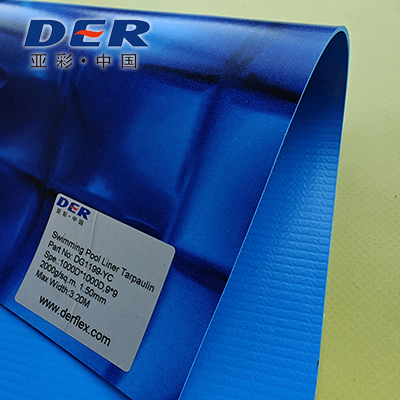
For procurement planning, a UV-stabilized PVC-coated polyester tarp is often treated as a roughly 3–5 year continuous-outdoor solution, while enhanced heavy PVC systems with suitable formulation, protective finish and well-designed fabrication may be planned around 5–8+ years in appropriate conditions. Sheltered or seasonal use may run longer; severe sun, wind flap, abrasion, sharp edges, chemical exposure, poor drainage or overloaded attachment points can shorten service life substantially.
The useful life of a vinyl or PVC tarpaulin is better predicted from its duty cycle than from GSM alone. A static equipment cover, a flatbed truck tarp and a seasonal farm cover can use similar-looking PVC-coated fabric but experience very different UV, wind, abrasion and handling loads.
| Working condition | Planning direction | Main life-limiting risks | Specification priority |
|---|---|---|---|
| Sheltered / intermittent use | Upper end of the selected material's normal service range may be realistic. | Storage folds, local abrasion, contamination, handling damage. | Balanced GSM, clean storage, repairability, correct folding. |
| Continuous outdoor static cover | Multi-year PVC service is a practical planning objective. | UV, heat cycling, standing water, perimeter tension. | UV package, drainage, welded seams, reinforced edges. |
| Truck / trailer / mobile cover | Calendar life varies widely because motion and contact zones often fail first. | Wind flutter, road vibration, cargo edges, repeated tensioning. | Abrasion control, webbing, D-rings, wear pads, close fit. |
| Construction / jobsite cover | Depends strongly on temporary vs. repeated reuse and contact surface. | Dragging, puncture, sharp steel, concrete abrasion, loose tie-downs. | Tear strength, puncture control, repair plan, reinforced perimeter. |
| Agricultural / seasonal cover | Seasonal removal and dry storage can extend usable calendar life. | UV, pooling, soil contamination, rodents, machinery contact. | UV resistance, cleanable surface, drainage and protected storage. |
| Industrial / chemical environment | Cannot be estimated from weather exposure alone. | Oils, solvents, salts, heat, process contamination. | Confirm chemical compatibility and project-specific material requirements. |
For the material itself, see DERFLEX's PVC tarp material and custom manufacturing page.
Sunlight and thermal cycling age the polymer surface. High-altitude, high-UV and hot climates can push a tarp toward the lower end of its service-life range.
A loose tarp repeatedly bends, snaps and loads its edges. Continuous flapping can fatigue coating, seams, grommets and reinforcement before the center sheet looks old.
Rubbing over steel corners, concrete, cargo edges or rough frames can remove the PVC surface locally. One unprotected contact point can become the first leak or tear.
Ponding water adds weight and pulls on seams and attachment points. Shape, pitch and support matter as much as waterproof material.
Grommets, D-rings, hems and webbing transfer tension into the tarp. Poor spacing or concentrated load can cause pull-out even when the base sheet remains usable.
Folding a dirty or wet tarp can trap grit and moisture. Oils, solvents or incompatible chemicals may also affect the PVC surface and should be reviewed before use.
GSM is only the total mass per square meter. It does not independently describe the base-fabric construction, coating formulation, coating adhesion, UV package, lacquer/top finish, seam quality, or how loads enter the finished cover.
For a reusable industrial tarp, the center sheet and all fabricated details need to survive the same duty cycle. Heat-welded seams, reinforced hems, webbing, corner patches, D-rings and grommet spacing should be treated as part of the service-life system.
For higher duty requirements, compare DERFLEX heavy duty vinyl tarp constructions instead of comparing only a generic “heavy duty” label.
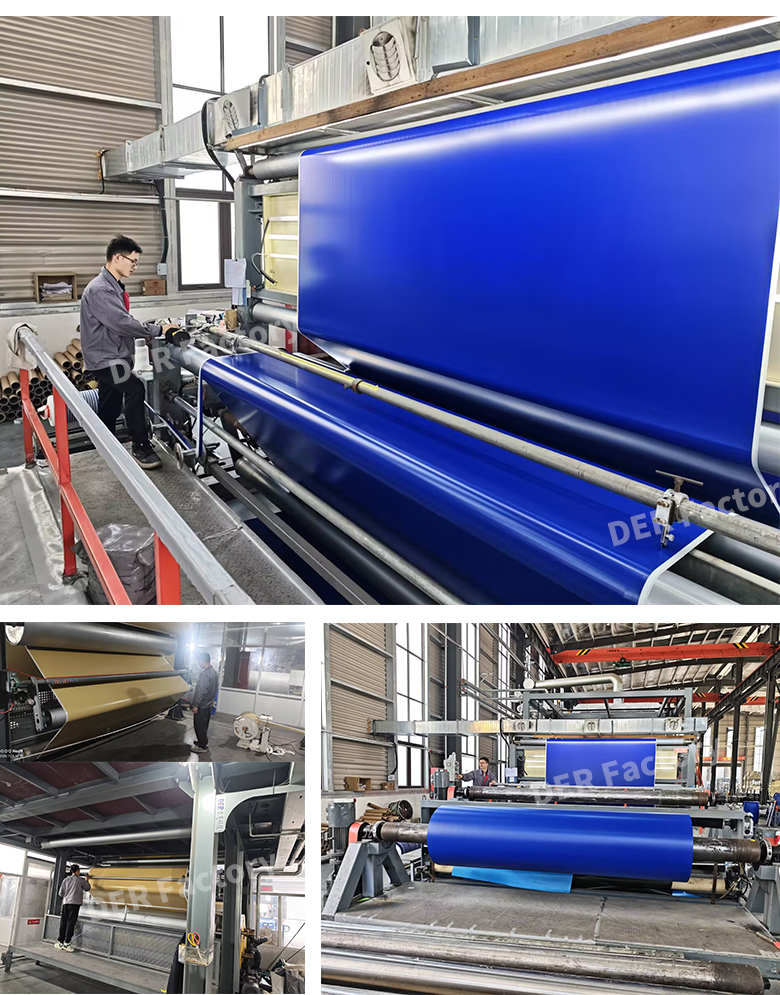
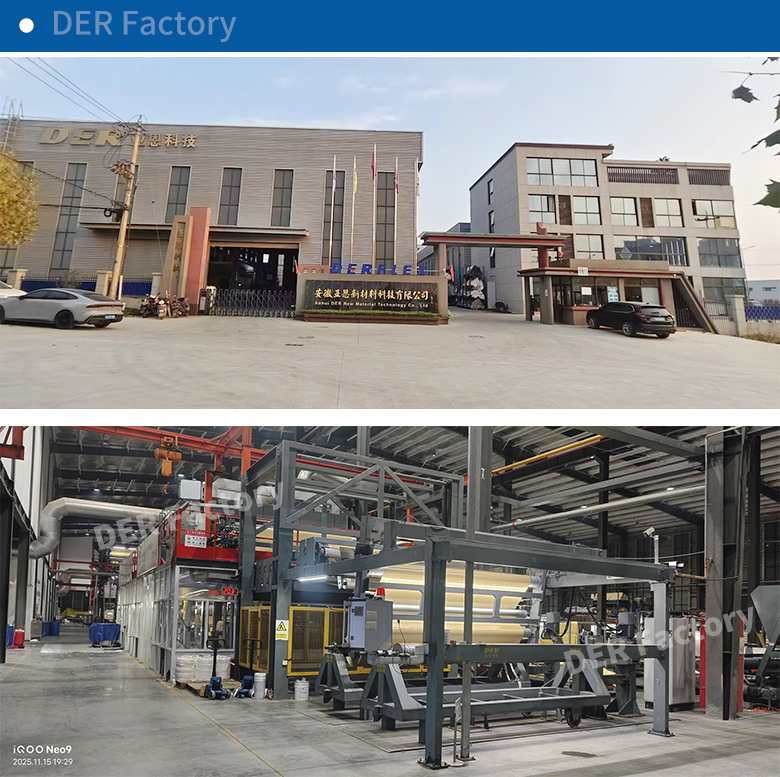
Material consistency, coating quality and fabrication design influence how a PVC tarpaulin behaves after repeated weather and load cycles. Factory control therefore matters most for repeat B2B programs where the same specification must be reproduced across multiple orders.
A tarp does not become unsafe because it reaches a birthday. Replacement decisions should be based on the condition of the coating, fabric, seams, edges and attachment zones. The matrix below is a practical inspection framework for fleet, facility and project teams.
| Inspection zone | Good / monitor | Repair soon | Replace / engineering review |
|---|---|---|---|
| Surface coating | Good: flexible, continuous surface; normal cosmetic aging. | Repair: localized abrasion, pinholes or small worn contact areas. | Replace: broad cracking, brittle surface or repeated leak zones. |
| Base fabric | Good: no exposed or broken reinforcement yarns. | Repair: small local tear away from critical load points. | Replace: major tear propagation, distorted weave or structural loss. |
| Seams / welds | Good: continuous bonded seam without lifting. | Repair: localized edge lift or small separation. | Replace: repeated or long seam separation in loaded areas. |
| Hems / webbing | Good: flat, intact and evenly loaded. | Repair: fraying or local wear before hardware pulls through. | Replace: torn perimeter with insufficient sound material for safe repair. |
| Grommets / D-rings | Good: hardware seated without elongation around holes. | Repair: early ovalization, small edge cracks or localized pull. | Replace: repeated pull-outs or widespread attachment-zone failure. |
A tarp that is still repairable can often stay in service if localized damage is addressed before it spreads. See the DERFLEX guide to tarpaulin cleaning, repair and life extension.
This simple estimator does not predict warranty life. It helps procurement teams identify whether a project is closer to the lower, middle or upper end of a normal PVC tarp service range.
This estimator is a purchasing aid, not an ASTM/ISO test method, laboratory prediction or warranty statement.
Use wear pads, edge protection or local reinforcement where the tarp crosses steel corners, frames or abrasive cargo.
Keep the cover secure enough to reduce flutter, while avoiding concentrated tie-down forces that distort grommet or D-ring zones.
Avoid low points that hold rainwater. Standing water adds load and increases seam and perimeter stress.
Remove abrasive grit and incompatible chemicals, then allow the tarp to dry before storage.
Small abrasion zones, cuts or seam issues are easier to control before repeated movement turns them into large failures.
For fleets, distributors and OEM programs, preserve material grade, color, surface finish, reinforcement map and hardware layout so replacement tarps remain consistent.
For custom dimensions, reinforcement and OEM finishing, review DERFLEX custom tarp manufacturing options. For a broader material and product overview, visit the DERFLEX tarp manufacturing hub.
A quality PVC-coated polyester tarp is generally selected for multi-year outdoor use. As a planning reference, UV-stabilized PVC systems are often considered around 3–5 years in continuous outdoor service, while enhanced heavy PVC systems may be planned around 5–8+ years in suitable conditions. Actual life can be shorter or longer depending on UV, wind, abrasion, fit, reinforcement and maintenance.
It can happen in favorable or intermittent service, but 10 years should not be treated as a universal expectation. A buyer should validate the material grade, UV exposure, movement, fabrication details and project environment instead of purchasing from a calendar-life claim alone.
Not automatically. More mass can improve puncture and wear resistance, but base-fabric strength, coating formulation, adhesion, UV resistance, seams, edge reinforcement, hardware loading and installation can be equally important. A well-engineered lighter tarp can outlast a heavier tarp that flaps or rubs against sharp edges.
Many field failures begin at local stress zones: abrasion points, fold lines, seams, grommets, D-rings, hems or corners. The center sheet may still look usable while an overloaded attachment area is already close to failure.
Replacement becomes more appropriate when cracking or brittleness is widespread, structural yarns are damaged, seams repeatedly separate, attachment points are failing across multiple areas, or repairs can no longer restore safe load transfer and weather protection.
Reduce wind flutter, protect sharp contact points, prevent water pooling, clean abrasive contamination, dry before storage, inspect seams and hardware, and repair small damage early. For repeat programs, use the same approved material and reinforcement specification on replacement orders.
For demanding repeat-use and industrial applications, PVC-coated polyester is often chosen because it offers strong tear and abrasion resistance, good weldability and multi-year outdoor-service potential. PE can be a better fit where low weight, temporary use and low initial cost matter more.
Provide the application, dimensions, target service environment, UV level, wind and abrasion exposure, fixing method, expected handling cycle, material weight or thickness if known, reinforcement and hardware layout, quantity, destination and any required testing or compliance criteria.
Send DERFLEX the application, finished dimensions, expected exposure, target GSM or thickness, fastening layout, reinforcement needs, quantity, destination and required test criteria. The team can review a practical PVC tarp material and fabrication direction for quotation.
Service-life figures on this page are general sourcing and planning references, not product warranties. Final performance depends on the approved specification and real operating conditions.