Material structure
PVC coating protects the surface while the polyester base fabric carries tensile and tear loads. Coating quality, base-cloth construction and adhesion all affect useful life.



Heavy duty PVC tarps are usually selected for multi-year outdoor service, but real lifespan is controlled by UV exposure, wind movement, abrasion, seams, edge reinforcement, handling and maintenance—not by GSM alone.
This guide helps procurement teams compare service life, cost per service year, replacement labor and failure risk before choosing a PVC tarpaulin specification.
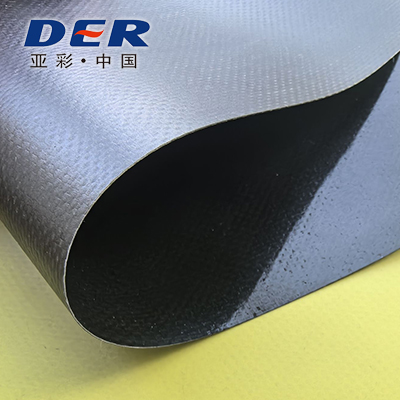
As a sourcing reference, UV-stabilized PVC-coated polyester is commonly planned around 3–5 years of continuous outdoor service, while enhanced heavy PVC systems with a suitable formulation, protective finish and well-designed fabrication may be planned around 5–8+ years in appropriate conditions. These are planning ranges, not warranties. Severe UV, wind flap, abrasion, sharp edges, pooling water, chemicals or overloaded attachment points can shorten service life substantially.
Most heavy duty tarp failures begin at the first weak point: a rubbed coating, a flapping edge, an overloaded grommet, a stressed seam or a repeatedly folded crease.
PVC coating protects the surface while the polyester base fabric carries tensile and tear loads. Coating quality, base-cloth construction and adhesion all affect useful life.
High UV, heat cycling, salt, road spray, industrial contamination and chemicals can age a tarp faster than a sheltered installation.
Constant flapping, dragging and rubbing over steel, concrete or cargo edges can end service life before the center sheet shows serious weather aging.
Heat-welded seams, hems, webbing, D-rings, corner patches and grommet spacing determine how concentrated loads enter the finished cover.
A correctly fitted tarp that drains water and stays under controlled tension can outperform a heavier tarp that is loose, overloaded or poorly supported.
Early repair of local wear, cleaning, dry storage and protection of sharp contact points can delay the damage chain that leads to full replacement.
Use the table as a procurement planning framework rather than a product warranty.
| Working condition | Planning direction | Main life-limiting risks | Specification priority | ROI implication |
|---|---|---|---|---|
| Sheltered or intermittent outdoor use | Upper end of the selected material’s service range may be realistic | Storage damage, folding, occasional abrasion | Balanced GSM, repairability, storage practice | Premium over-specification may not be necessary |
| Continuous outdoor static cover | Multi-year PVC service is a practical planning objective | UV, heat, water pooling, edge tension | UV formulation, drainage, welded seams, reinforced perimeter | Longer replacement interval can lower annualized cover cost |
| Truck / trailer / repeated transport | Life depends heavily on motion and contact zones | Wind flap, road vibration, sharp cargo, daily handling | Abrasion control, webbing, D-rings, edge map, fit | Downtime and change-out labor become major cost factors |
| Construction / industrial yard | Specification should be failure-mode driven | Dragging, puncture, debris, chemicals, uneven tie-down | Wear pads, reinforcement, repair plan, compatible finish | Damage to protected equipment or materials can dominate tarp price |
| Severe UV / coastal / mining / chemical exposure | Generic “years of life” estimates become less reliable | Combined UV, salt, abrasion, chemicals and hardware corrosion | Application-specific formulation, evidence, sample approval | Risk-adjusted procurement matters more than lowest initial price |
Planning ranges should be confirmed against the approved material, fabrication method, climate, installation geometry and any project-specific test requirements.
For fleets, industrial covers and repeat OEM programs, replacement frequency, labor and operational disruption can outweigh the initial difference in material cost.
This is a purchasing framework, not an accounting standard. It forces two options to be compared over the same service interval.
Enter your own figures. The tool compares annualized ownership cost; it does not predict product life.
High service life depends on controlling the first failure point, not simply buying the heaviest sheet available.
Long sun exposure can harden, fade or weaken a coating. The procurement response is a suitable outdoor formulation and realistic weathering evidence.
Repeated flexing creates fatigue and pulls on seams and edges. Better fit, balanced tension and fixing geometry can materially change useful life.
Steel rails, cargo corners, concrete, roof edges and dragging can wear through a coating locally while most of the tarp remains serviceable.
Concentrated pull at a few fixing points can tear a tarp that is otherwise strong. Webbing, hems, corner patches and D-rings must match the load path.
A waterproof tarp is not automatically a load-bearing roof. Pooling adds weight, stretches panels and increases seam and attachment stress.
Dirty, wet folding can trap grit and moisture. Oils, solvents, salts or incompatible chemicals may also attack the surface or hardware.
A heavy duty PVC tarp is a composite material. The polyester scrim or base fabric carries mechanical load; the PVC coating creates the waterproof surface, protects the reinforcement and enables professional welding and finishing.
DERFLEX’s current heavy-duty tarp range includes PVC-coated polyester structures with customizable weight, thickness, surface finish and finished-tarp processing. For detailed product specifications, review the DERFLEX Heavy Duty Tarps page.
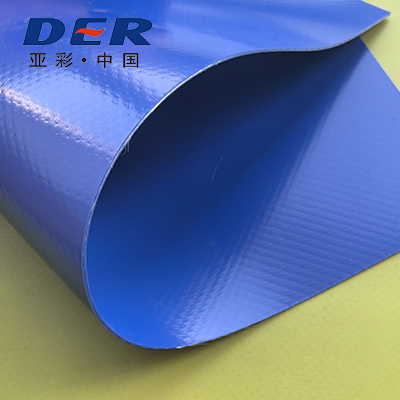
A longer-life cover is not automatically the right answer for every job. Match the material investment to use duration, asset risk and replacement cost.
| Buyer situation | Economic logic | Likely sourcing direction |
|---|---|---|
| Temporary project with low-value protected goods | Replacement is cheap and disruption is low | A lower-cost PE/poly cover may be rational if it meets the exposure requirement |
| Seasonal cover reused every year | Storage quality and repeated installation drive lifecycle cost | Compare a durable reusable PVC grade against repeated replacement of lighter covers |
| Truck / trailer fleet | Driver labor, downtime, road abrasion and cargo exposure matter | Prioritize reinforced PVC construction, fit, hardware and wear zones |
| Industrial equipment or high-value inventory | Failure consequence can be far greater than tarp price | Use risk-adjusted lifecycle cost rather than initial price alone |
| OEM / distributor repeat program | Returns, warranty handling and brand consistency affect margin | Lock a repeatable material and fabrication specification, not only a product nickname |
Translate target service life into measurable operating conditions and construction details that can actually be reviewed.
| What to define | What to tell the supplier | Why it changes lifespan |
|---|---|---|
| Use cycle | Permanent outdoor, seasonal, daily truck use, weekly folding, emergency use, etc. | Movement and handling can create more fatigue than weather alone |
| Climate | Sun exposure, temperature range, rainfall, snow, salt, humidity | Defines UV, cold-flex, mildew and weathering direction |
| Abrasion map | Rails, corners, sharp cargo, rough ground or machinery contact | Local wear zones often determine the first failure |
| Size & geometry | Finished dimensions, unsupported spans, drainage and tie-down layout | Poor geometry creates flap, pooling and concentrated stress |
| Fabrication | Welded or sewn seams, hems, rope edge, webbing, D-rings, grommets, patches | A strong sheet can still fail at a weak seam or attachment point |
| Evidence required | Relevant test methods, sample approval or batch requirements | Turns a vague durability claim into a controlled procurement specification |
Condition-based replacement can prevent both premature disposal and unsafe over-extension of a damaged cover.
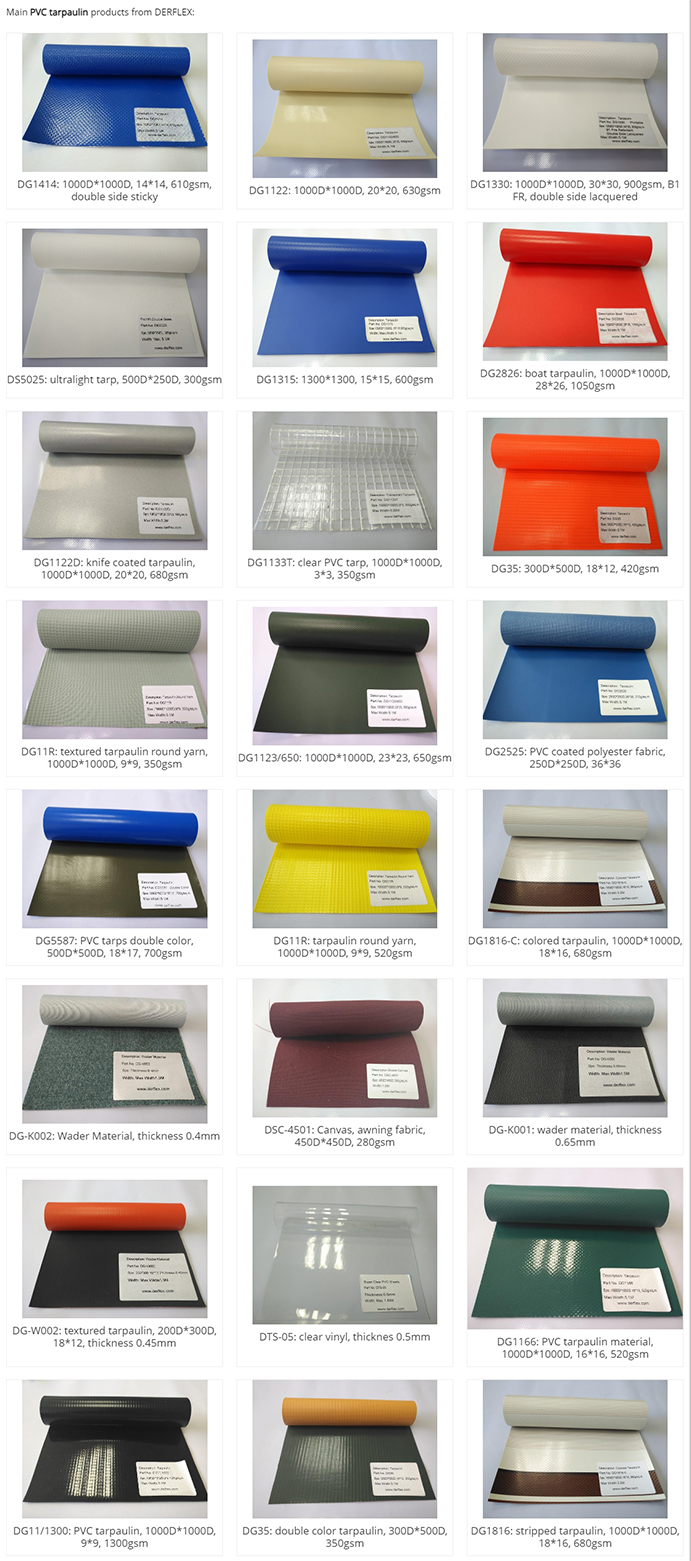
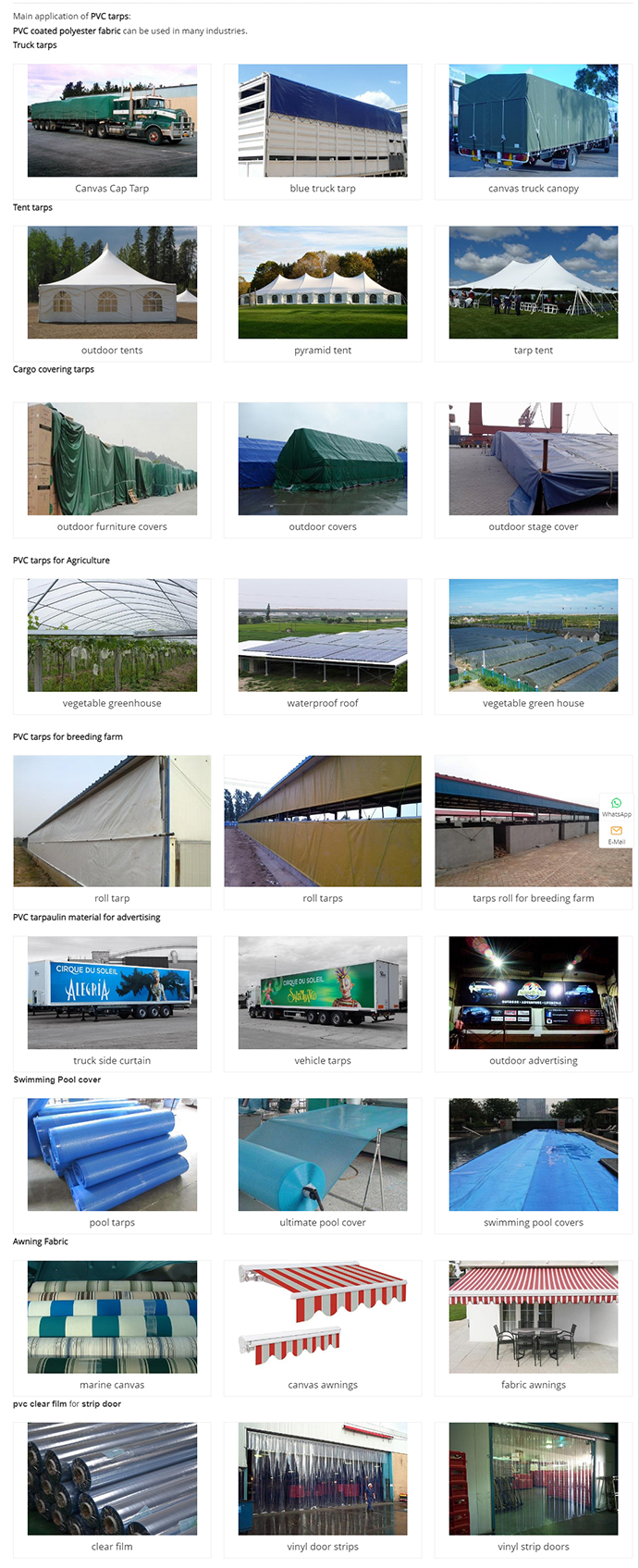
Real product and application imagery helps buyers connect service life to material structure, reinforcement and working environment.
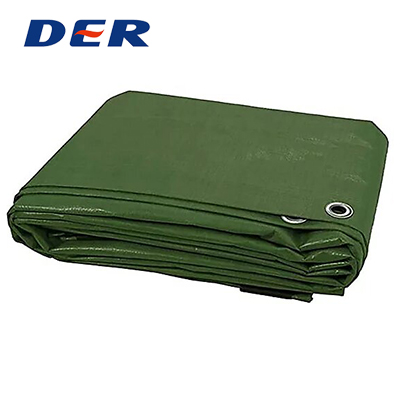
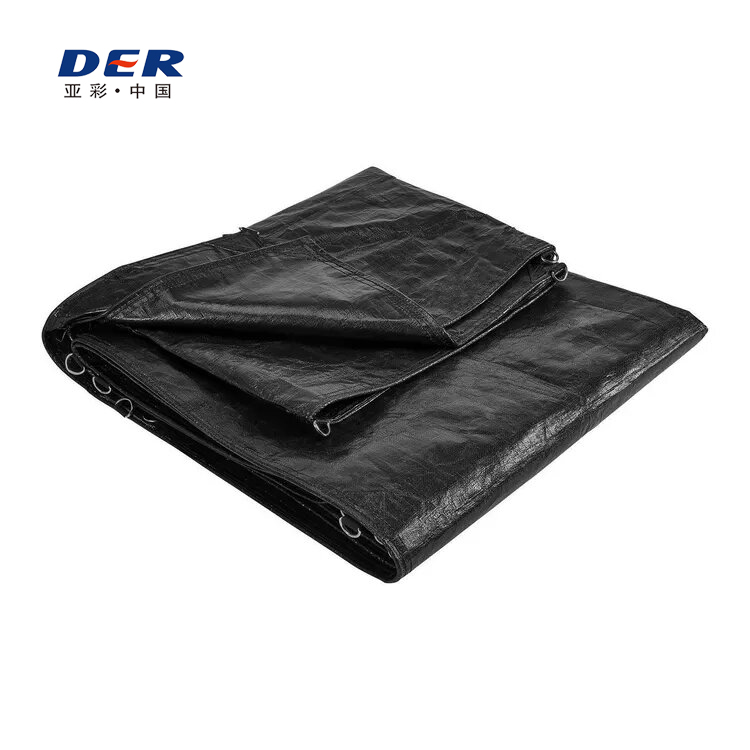
These mistakes often create more lifecycle cost than the material price difference between two tarps.
Weight does not reveal UV formulation, base-cloth structure, coating adhesion, weldability or reinforcement design.
A static storage cover and a highway truck tarp face different fatigue cycles even when the material looks similar.
Saving cost on webbing, corners or hardware can move the first failure to the attachment system.
Accelerated weathering is a comparison tool; it should not be converted directly into calendar life without context.
For fleets and industrial covers, the cost of removing, reinstalling and stopping work may exceed the tarp price difference.
Small cuts and worn hardware are cheaper to repair before they redistribute load and trigger larger damage.
These verified DERFLEX resources cover adjacent material, lifespan and specification decisions.
There is no universal service-life number. As a procurement planning reference, UV-stabilized PVC-coated polyester is commonly planned around 3–5 years of continuous outdoor use, while enhanced heavy PVC systems may be planned around 5–8+ years in suitable conditions. Actual life depends on UV, wind movement, abrasion, seams, reinforcement, fit, chemicals, storage and maintenance.
No. Higher GSM can improve puncture and wear resistance, but service life also depends on the polyester base fabric, coating formulation, adhesion, UV resistance, seam design, edge reinforcement and installation. A well-specified lighter tarp can outlast a heavier tarp that flaps or rubs against sharp edges.
Compare annualized lifecycle cost: purchase price plus repairs, replacement labor and any meaningful downtime or failure allowance, divided by realistic service years. This lets a higher-priced tarp be compared fairly against a cheaper cover that needs more frequent replacement.
Some PVC tarp systems can remain in service for very long periods under favorable conditions, but ten years should not be treated as a universal purchasing promise. For critical projects, define the environment, duty cycle, construction details and evidence requirements rather than buying on a headline lifespan claim.
Common causes include chronic wind flap, abrasion on sharp or rough surfaces, concentrated loading at grommets or D-rings, standing water, severe UV/heat, incompatible chemicals and repeated folding along the same crease.
Repair is reasonable when damage is localized and the surrounding material remains flexible and strong. Replacement is safer when cracking, delamination, repeated edge failures, broad waterproofing loss or base-fabric weakness is widespread.
Send the application, finished size, quantity, target material weight or performance direction, outdoor exposure period, UV/wind/abrasion conditions, temperature range, seam and reinforcement details, hardware layout, color, packaging, destination and any required test or compliance criteria.
Send DERFLEX your duty cycle, climate, size, GSM or performance target, abrasion points, reinforcement layout, quantity and destination. The team can review a practical PVC tarpaulin direction for quotation instead of relying on a generic “heavy duty” label.
Service-life ranges and calculator outputs on this page are planning tools, not warranties or laboratory predictions. Final performance depends on the approved material, finished construction, installation, environment, handling and maintenance.