News
Industry News

How to Compare Tarp Samples from Different Manufacturers | DERFLEX

Update:2026/7/28 18:46:11 Views:
Industrial Tarp Sourcing Guide

How to Compare Tarp Samples from Different Manufacturers

A useful sample comparison does more than ask which tarp feels thicker. It places every supplier on the same specification, checks measurable fabric performance, tests fabrication details and verifies whether the approved sample can be repeated in production.

  • Compare like with like
  • Record MD and CD test values
  • Evaluate hems, seams and hardware
  • Confirm batch traceability
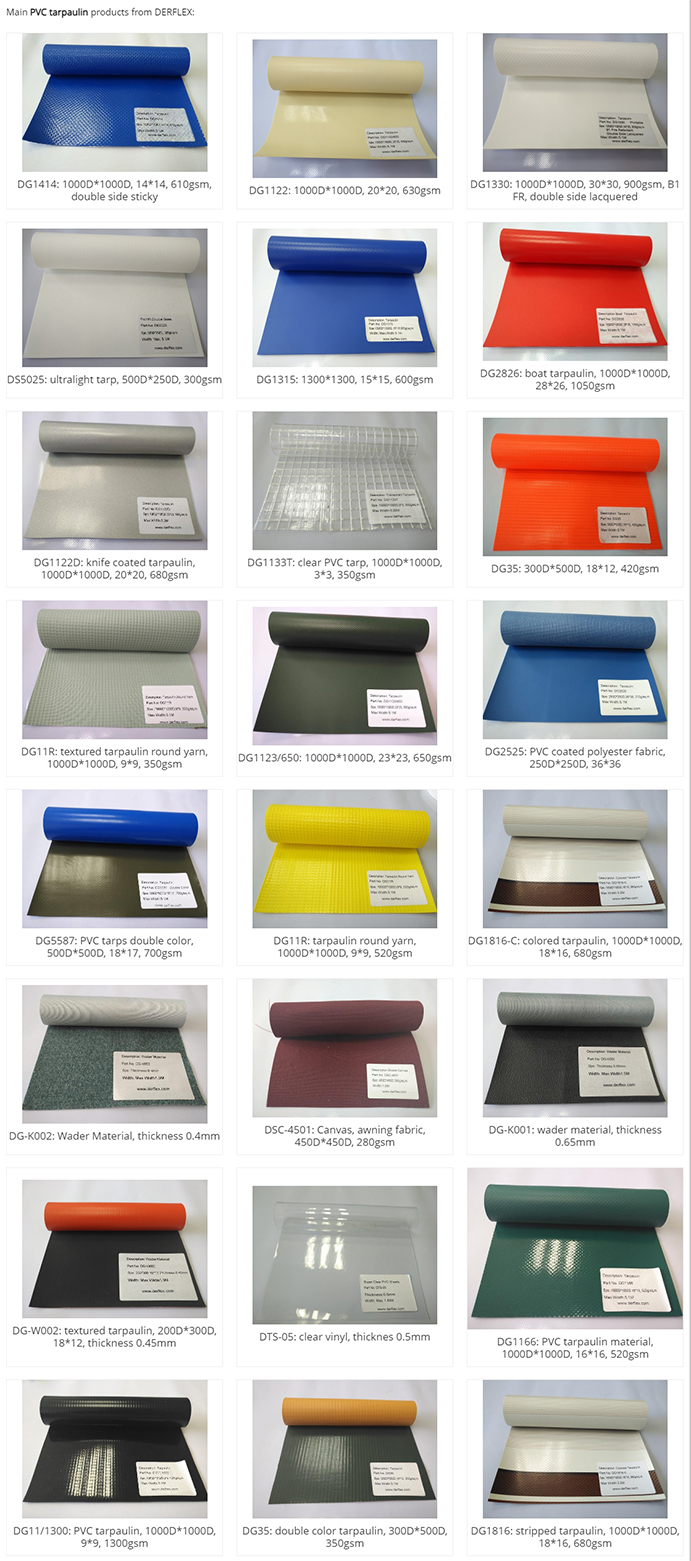
DERFLEX PVC tarpaulin samples in different weights, colors and fabric structures
Compare identified samples, not anonymous swatches Each piece should be linked to a material code, weight, construction, finish, production date and test record.
The Core Procurement Problem

Two Tarp Samples Can Look Similar and Perform Very Differently

Color, surface gloss and hand feel are easy to compare. The factors that affect field performance are often hidden inside the fabric structure, coating bond, reinforcement design and production controls.

Visual similarity is not specification equivalence

A heavier-feeling sample may contain more coating but a weaker base fabric. Another sample may be thinner yet use a denser or higher-tenacity scrim. Without verified weight, thickness, yarn construction and directional strength data, a hand comparison can favor the wrong material.

The first sample is only one part of supplier evaluation

Industrial buyers also need to know whether color, coating adhesion, roll length, weldability, edge construction and packaging can remain consistent across the commercial order and later repeat orders. A strong sample that cannot be reproduced is not a dependable sourcing result.

Buyer rule: Before comparing manufacturers, issue one written sample brief to every supplier. Use the same material family, nominal GSM or thickness, dimensions, color reference, finish, test methods, reinforcement details and intended application.
A Repeatable Evaluation Method

The Eight-Step Tarp Sample Comparison Protocol

This workflow is suitable for importers, distributors, fabricators, fleet operators, construction buyers, agricultural suppliers and OEM private-label programs.

Lock the comparison basis

Send one specification sheet to all manufacturers. State the application, target material, nominal weight, width, color, finish, exposure conditions, fabrication method and acceptance criteria.

Code the samples

Assign neutral labels such as A, B and C. Keep supplier names separate during the first visual and physical review to reduce brand and price bias.

Measure before handling

Record actual mass per area, thickness, sample dimensions, color and visible construction. Use multiple readings rather than one spot measurement.

Review the internal fabric

Check yarn denier, weave or knit density, thread uniformity and MD/CD orientation. These influence tensile behavior, tear propagation and dimensional stability.

Compare laboratory performance

Request tensile, tear, coating adhesion, waterproofing and relevant weathering values using the same test method and conditioning procedure.

Run fabrication trials

Weld or sew each sample using the production process planned for the finished tarp. Check seam appearance, peel resistance, shrinkage, curling and process window.

Stress the finished details

Inspect hems, webbing, corners, grommets, D-rings, pockets and welded overlaps. Many failures begin at load-transfer points rather than in the middle of the sheet.

Verify production repeatability

Ask how the approved sample will be linked to raw materials, formula, line settings, color control, inspection records, packaging and future repeat orders.

Printable Buyer Tool

Tarp Sample Comparison Scorecard

Replace “pass / fail” with your project limits. Use the same units and test standards for every manufacturer, and keep supplier claims separate from independently measured results.

Comparison item What to record Why it matters Sample A Sample B Sample C
Sample identity Code, material number, date, batch or trial reference Prevents an approved swatch from becoming disconnected from mass production
Material system PVC coated polyester, PVC laminated, PE woven, canvas or mesh Different systems should not be compared as though they are interchangeable
Actual GSM / oz Average of multiple conditioned specimens Confirms delivered mass and reveals coating or substrate differences
Actual thickness Average, minimum and maximum readings Shows uniformity; thickness alone should not be used as a strength rating
Base fabric Yarn denier, weave count, construction and MD/CD orientation The reinforcement core strongly influences tensile and tear performance
Tensile strength MD and CD values, test method, specimen width and conditioning Indicates resistance to pulling loads across both fabric directions
Tear strength MD and CD values plus the specified tear method Indicates how a cut, puncture or edge damage may propagate
Coating adhesion Peel value, coating-to-fabric bond and delamination observations Affects folding durability, welding, weather exposure and service stability
Water resistance Hydrostatic or specified waterproof test; check pinholes and seams separately Separates sheet waterproofness from finished-cover seam performance
Surface and color Gloss, embossing, shade, color tolerance, rubbing and visible defects Important for brand programs, welding consistency and market presentation
Weld / seam trial Equipment, temperature, speed, pressure, seam width and failure mode Confirms the sample can be processed on the buyer's actual production route
Edge reinforcement Hem layers, webbing, corner patches, rope, stitching or welding pattern Transfers installation load and often determines finished-tarp life
Grommets / hardware Material, diameter, spacing, setting quality, pull-out behavior and corrosion direction Weak or poorly installed hardware can invalidate a strong fabric
Functional options UV, flame-retardant, cold-flex, anti-mildew, anti-static or chemical requirements Only compare options supported by suitable test reports for the quoted grade
Documentation Data sheet, test report, declaration, revision date and sample linkage Shows whether evidence applies to the exact material being offered
Commercial repeatability MOQ, tolerance, lead time, packing, labeling, change control and repeat-order policy Converts a successful sample into a manageable supply program

Tip: print this section or export the page to PDF for supplier meetings. The blank columns are intentionally left open for project-specific results.

Performance Evidence

Six Tests That Reveal More Than Hand Feel

Test selection should follow the application. The values are comparable only when the same method, conditioning, specimen direction and units are used.

MD/CD

Tensile strength

Compare machine and cross direction results. A single combined number can hide directional weakness that matters during tensioning or fabrication.

TEAR

Tear propagation

Confirm the tear method and specimen direction. Tear performance is not the same as tensile strength and can differ between similar-weight samples.

BOND

Coating adhesion

Inspect peel behavior after folding, welding and conditioning. Weak bonding may lead to delamination even when the initial surface looks acceptable.

H₂O

Waterproof performance

Test the base sheet and the finished seam separately. Pinholes, needle lines and poorly welded overlaps can create different failure paths.

UV

Weathering relevance

Review the formulation or aging evidence for the intended climate. Avoid treating a general “UV resistant” statement as a service-life guarantee.

WELD

Fabrication window

Compare how easily a stable seam can be produced without scorching, surface damage, excessive shrinkage or unpredictable process adjustment.

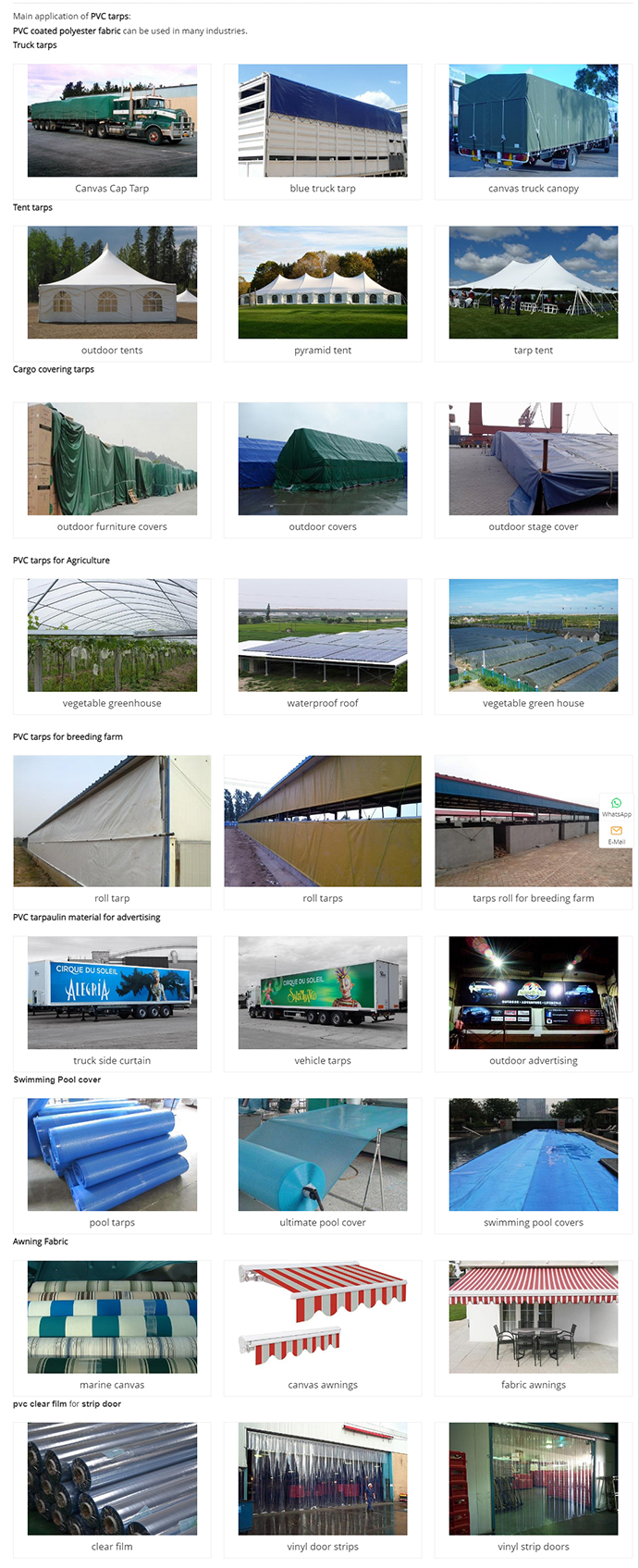
Examples of PVC tarpaulin applications including truck covers, tents, agricultural covers and pool covers
The same sample should be evaluated against its real application: wind, abrasion, folding, welding, fastening, climate and handling frequency.
Application Matching

Do Not Choose a Sample Without Simulating the Intended Use

A sample that performs well as a static storage cover may not be the right choice for a moving truck tarp, a frequently folded curtain, a tensioned shelter or an agricultural cover exposed to soil and chemicals. The comparison plan should reproduce the dominant stresses of the final product.

  • Truck and trailer covers: prioritize repeated flexing, abrasion, edge loads, weld strength and hardware layout.
  • Construction covers: review puncture risk, tear propagation, wind tie-downs, flame-retardant direction where required and repairability.
  • Agricultural covers: consider UV exposure, moisture, mildew direction, chemical contact, seasonal folding and field handling.
  • Tents and shelters: confirm dimensional stability, weld appearance, color consistency, cold flexibility and project compliance.
  • OEM roll supply: focus on roll-to-roll uniformity, usable width, length accuracy, defect marking, packaging and change control.
Common Sourcing Errors

Red Flags During Tarp Manufacturer Comparison

These signals do not automatically disqualify a supplier, but they should trigger additional questions, measurements or production verification.

Different samples for price and testing

The quoted material, display swatch and tested grade should carry one traceable identity. Otherwise, the evidence may not apply to the offered product.

“Heavy duty” without a construction

Ask for actual material type, weight, thickness, yarn structure, strength values and reinforcement details instead of relying on an undefined label.

Only one-direction strength data

Woven and coated fabrics can behave differently in MD and CD. Both directions should be reviewed for the intended load path.

Test reports with no grade linkage

Check the product code, sample date, standard, result, laboratory and report revision. A broad report may not cover the exact sample.

No production tolerance

A nominal value is incomplete without an agreed tolerance, sampling plan and action for out-of-spec rolls or finished tarps.

Hardware treated as an afterthought

Grommet material, spacing, washers, corner reinforcement, webbing and setting quality should be included in the sample approval.

Decision Weighting

Change the Score Weight for the Buyer and Application

There is no universal winning sample. A suitable decision model reflects the risks of the actual program rather than giving every criterion equal importance.

Distributors

Weight repeatability, labeling, packaging, color continuity, product range and support for multiple market grades.

Fabricators

Weight weldability, usable width, flatness, roll tension, coating bond, defect control and stable machine settings.

Fleet operators

Weight abrasion, tear behavior, edge strength, repairability, fastening design and performance under repeated movement.

Project buyers

Weight documentation, specified test results, dimensional control, production inspection and delivery coordination.

DERFLEX Sample Development

Turn a Reference Sample into a Controlled Tarp Specification

DERFLEX supports PVC tarpaulin rolls, custom panels and finished tarp programs for buyers who need more than a visual match. A project can begin with an existing sample, drawing, application brief or target data sheet, then move through material selection, trial production, test confirmation, fabrication review and production control.

Available directions can include custom GSM, width, color, surface finish, UV resistance, cold-flexibility, flame-retardant options, anti-mildew treatment, roll packing and OEM labeling, subject to the selected grade and project requirements.

Send a Sample or Specification
  • Incoming controlBase fabric, PVC materials, additives and supplier qualification review.
  • Process controlCoating thickness, line temperature, tension and surface monitoring.
  • Laboratory supportTensile, tear, weight, thickness, adhesion and project-related tests.
  • Final inspectionColor, roll length, surface, labels, packaging and traceability records.
  • Fabrication supportHot-air or high-frequency welding discussion, hems, webbing and hardware.
  • OEM planningCustom color, roll format, branding, packing and repeat-order specification control.
FAQ

Questions Buyers Ask When Comparing Tarp Samples

What should I compare first when I receive tarp samples?

First confirm that all samples match the same written brief. Then record sample identity, actual weight, thickness, material system, base fabric construction and finish before performing handling or destructive tests.

Is the heaviest tarp sample always the strongest?

No. Higher mass may come from more coating, a heavier base fabric or both. Tensile strength, tear resistance, yarn construction, coating adhesion and reinforcement design should be reviewed together.

How can I compare tensile and tear values from different suppliers?

Use the same test standard, specimen direction, dimensions, conditioning, units and reporting format. Record machine direction and cross direction results separately. Values from different methods should not be ranked directly.

Should I test a tarp sample before asking for a quotation?

A preliminary quotation can help screen suppliers, but the final commercial comparison should be based on an agreed specification and an identified sample. Otherwise, a lower price may represent a different construction.

How do I check whether the production order will match the approved sample?

Approve a coded specification, define tolerances, request pre-production confirmation, agree on inspection items and require batch or roll traceability. Packaging labels and test records should refer to the same material code.

Can DERFLEX match an existing tarp sample?

DERFLEX can review a physical sample, data sheet, drawing or application brief and discuss a suitable PVC tarpaulin direction. Final matching depends on measurable construction, performance requirements, available production routes and order conditions.

Compare Samples on Evidence, Not Appearance Alone

Send DERFLEX your current sample, application, target weight, required tests, dimensions, color, fabrication details and estimated quantity. The team can review a suitable material and sample-development route for your project.

Material ranges, optional functions and testing arrangements depend on the selected grade, quantity, production feasibility and agreed project specification. Sample evaluation should be confirmed against the buyer's actual application and applicable requirements.
Consulting Services
+86-021-54361792 / 54361798
Email
sales@derflex.com