
News
Industry News

How to Print Logos on PVC Tarps: Screen, Digital & UV Printing | DERFLEX

Update:2026/8/15 18:20:49 Views:
PVC Tarp Printing Guide · B2B Branding & OEM

How to Print Logos on PVC Tarps: Screen, Digital and UV Printing Compared

A logo on a PVC tarp has to survive more than the print room. It may be folded, pulled over cargo, rubbed against equipment, exposed to rain and sun, welded into large panels and handled repeatedly. The right printing route therefore starts with the tarp material and the field use—not with artwork alone.

This guide compares screen printing, conventional wide-format digital printing and UV-cured digital printing for custom printed PVC tarps, truck covers, equipment covers, industrial sheets and private-label tarp programs.

Quick Answer

Which printing method should you choose?

Choose screen printing when the artwork is mainly one to a few solid colors, the design repeats across a larger order, and you want a robust, simple branding route.

Choose digital printing when the artwork contains gradients, photos, many colors, small text or frequent design changes.

Choose UV-cured digital printing when rapid curing, crisp detail and short-run flexibility are valuable—and when adhesion on the exact PVC coating has been proven by sampling.

Fleet logo

Screen printing is often efficient for a repeated two-color company mark on a stable tarp specification.

Full-color campaign

Digital or UV digital printing is usually the practical route for gradients, photos and complex graphics.

Variable IDs

Digital workflows are better suited to changing fleet numbers, QR codes or different artwork versions.

Important terminology: “UV printing” is not always a completely separate family from digital printing. UV ink can be used in digital inkjet systems, and UV-curable ink can also be used in some screen-printing workflows. For a practical buyer comparison, this page uses digital printing to mean conventional wide-format solvent/eco-solvent inkjet routes and UV printing to mean UV-cured digital inkjet.
Method Breakdown

How Each Logo Printing Method Works on PVC Tarp Material

The printing process is only one part of the result. The PVC coating, surface finish, ink chemistry and subsequent welding or fabrication steps need to work as one system.

01

Screen Printing

A stencil is created on a mesh screen and ink is pushed through the open image area onto the PVC surface. Each spot color normally needs its own screen and print pass.

  • Efficient when the same logo repeats over a larger batch.
  • Well suited to large text, simple marks and limited-color branding.
  • Color-by-color setup makes highly complex artwork less efficient.
  • The correct vinyl/PVC-compatible ink and curing conditions are essential.
02

Digital Printing

Wide-format inkjet equipment prints directly from the digital file. Solvent or eco-solvent ink systems are common in flexible-sign and PVC media workflows.

  • No screen making, so artwork changes are easier.
  • Handles CMYK graphics, gradients and photographic details.
  • Useful for smaller batches, multiple SKUs and personalized graphics.
  • Drying, ink penetration and post-print handling should match the chosen media.
03

UV Digital Printing

Digital printheads deposit UV-reactive ink and UV light cures it rapidly. This shortens the wet-ink stage and supports sharp, detailed graphics.

  • Fast curing supports quick proofing and short-run production.
  • Good for detailed logos, text and multi-color graphics.
  • Surface adhesion must be checked on the exact PVC coating.
  • Flexible tarps should also be tested for folding and repeated bending.
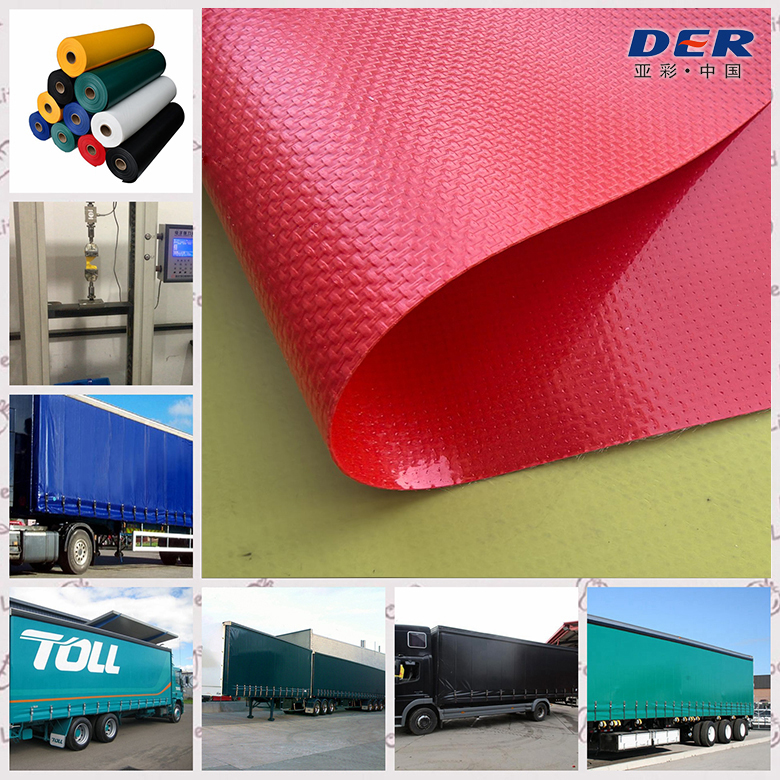
DERFLEX PVC tarp material and truck tarpaulin applications for custom logo printing
DERFLEX PVC tarpaulin material and truck tarp application image. Printed branding should be planned together with fabric surface, panel layout and fabrication details.
Material Comes First

Why the PVC Tarp Surface Changes the Print Result

PVC tarpaulin is not one universal printing surface. A glossy lacquered truck tarp, a matte coated cover, a laminated economy tarp and a printable banner-grade PVC can respond differently to the same ink. Plasticizers, surface treatment, coating formulation, gloss level and contamination can influence wetting, adhesion and color appearance.

That is why a reliable custom tarp program should identify the base material before approving the print. If the production tarp changes after a logo sample is approved, the print result may change as well.

Surface finishGloss, matte, lacquer and embossing can change ink contact and perceived color.
Tarp colorDark or saturated base colors may require different artwork or an opaque underlayer.
FlexibilityA truck tarp folds and rolls; the print should be evaluated under bending, not only flat.
FabricationWelding, hems, webbing and hardware can interfere with printed areas if layout is not coordinated.

Review DERFLEX PVC tarp material options →

Print-Zone Engineering

Where You Put the Logo Can Matter as Much as How You Print It

A visually correct logo can fail early if it sits directly on a fold line, abrasion zone, weld overlap or high-tension hardware area.

Preferred print zones

Place branding on broad, visible panels that stay comparatively flat during use. Keep the critical parts of the logo away from locations that are repeatedly folded, clamped, tied, scraped or welded.

Truck side curtains: position large fleet marks between structural straps and away from recurring roller/fold tracks where practical.
Equipment covers: keep logos off sharp corners and high-contact edges that rub against the machine.
Construction tarps: separate text and QR codes from eyelet rows, seam overlaps and high-tension tie-down points.
Private-label tarps: reserve consistent logo coordinates in the production drawing so repeat orders look aligned.

Artwork rules buyers should freeze

  • Vector artwork (AI, EPS, SVG or print-ready PDF) when available.
  • Finished print size and exact location from tarp edges or construction references.
  • Brand color reference, not just an RGB screen preview.
  • Minimum text size and viewing distance for important information.
  • Whether white underprint is needed on colored PVC.
  • Bleed, seam allowance and safe distance from grommets, D-rings, webbing or welds.
  • Artwork revision number and approval date for repeat-order traceability.
For QR codes or small technical marks, request a production-scale proof and scan/readability check on the actual material rather than judging only from a PDF.
Application-Based Selection

Match the Printing Route to the Real Tarp Job

The same artwork may need a different print approach depending on how the tarp is used, handled and sold.

Truck & Trailer Fleets

Repeated logos, fleet names and large unit markings often favor simple, repeatable printing with strong visibility from a distance.

OEM / Private Label

Distributors may need stable logo location, brand colors, product marks, packaging and future reorders under one controlled specification.

Events & Promotions

Complex full-color artwork, sponsor graphics and shorter campaign runs often point toward digital workflows.

Industrial Covers

Identification marks, safety messages and asset numbers should be placed away from abrasion and service-access zones.

Production Control

How to Qualify a Printed PVC Tarp Before Bulk Production

For B2B orders, “the sample looks good” is not enough. The approved print should be linked to the same material code, surface, artwork and fabrication route that will be used in production.

1

Define use

State application, outdoor exposure, folding, abrasion and expected viewing distance.

2

Freeze material

Confirm PVC tarp construction, color, surface finish and production code.

3

Review artwork

Fix logo size, color reference, safe zone, underprint and revision.

4

Make proof

Print on the actual or production-equivalent PVC material, not a generic substitute.

5

Test handling

Check adhesion, rubbing, folding and basic water-wipe behavior relevant to the use.

6

Lock bulk file

Record approved material, artwork, print route, placement and packing for repeat supply.

Adhesion check

Verify that the cured print remains attached to the selected PVC surface after reasonable handling. The test method should match the project rather than relying on visual inspection alone.

Fold & flex check

Repeatedly bend or fold the sample in the way the finished tarp will be handled. Look for cracking, lifting or whitening at the print area.

Rub / abrasion check

Evaluate printed areas that may contact straps, cargo, frames or equipment. If severe abrasion is unavoidable, consider moving the logo or using a replaceable branded patch.

Color approval

Approve against a defined reference under agreed lighting. Brand-sensitive programs should keep a physical or measured reference for repeat orders.

Water & cleaning check

Confirm that normal wiping or expected cleaning does not immediately damage the print. Avoid assuming resistance to aggressive solvents unless specifically validated.

Finished-tarp review

After welding and hardware installation, confirm that no seam, eyelet, D-ring, webbing or fold obscures important artwork.

RFQ Guide

What to Send for a Custom Printed PVC Tarp Quote

A clear inquiry lets the supplier evaluate the material, printing route and fabrication as one product instead of quoting a logo separately from the tarp.

RFQ itemWhat to provideWhy it matters
ApplicationTruck tarp, equipment cover, construction tarp, event cover, resale product, etc.Defines exposure, flexing, abrasion and viewing conditions.
Finished dimensionsSize list or drawing, including whether dimensions are cut size or finished size.Determines panel layout and available print zone.
Material targetPVC coated/laminated structure, GSM or duty level, color and surface finish.Controls the physical surface that receives the ink.
ArtworkVector file, logo dimensions, color reference and revision.Determines print complexity, number of colors and proofing route.
Print quantityNumber of finished tarps or printed meters/panels per design.Strongly influences whether screen or digital workflow is more practical.
FinishingWelded seams, hems, webbing, eyelets, D-rings, straps, Velcro or sleeves.Prevents the logo from conflicting with fabrication details.
Performance needsOutdoor use, UV exposure, cold weather, flame-retardant direction, frequent cleaning, etc.Helps match fabric and ink system to the service environment.
Packing & brandingLabels, cartons, barcode, private label, folding and pallet requirements.Connects the print program with OEM or distributor presentation.

Final printing feasibility, color result, sample route, quantity requirements, lead time and commercial terms should be confirmed against the selected material and artwork before order release.

DERFLEX Manufacturing Approach

Printed Tarps Should Be Engineered as Tarps First

A print shop can reproduce artwork, but an industrial tarp program also has to control the base fabric, PVC surface, weld layout, edge reinforcement, hardware and final packing. DERFLEX approaches printed tarp projects from the material and fabrication side so the logo plan can be coordinated with the functional product.

  • PVC coated fabric and finished tarp directions
  • Custom sizes, colors, reinforcement and hardware
  • Logo, private-label and OEM packaging coordination
  • Roll material, panels or finished tarp supply depending on project
  • Specification records to support repeat B2B orders

Material-first selection

Match the print method to the real PVC coating and application instead of selecting the printer in isolation.

Print-zone coordination

Place graphics around seams, webbing, eyelets, D-rings, folds and abrasion points before fabrication begins.

OEM repeatability

Control artwork revision, color direction, dimensions and packaging for future replenishment orders.

Buyer-ready quotation

Combine material, printing, fabrication and packing details in one RFQ so commercial comparisons stay meaningful.

FAQ

Logo Printing on PVC Tarps: Buyer Questions

What is the best way to print a company logo on a PVC tarp?

For a simple logo repeated across a larger order, screen printing is often a practical direction. For complex full-color artwork, gradients, photos or frequent artwork changes, digital printing is usually more flexible. UV-cured digital printing can add fast curing and sharp detail, but adhesion and flexibility should be proven on the exact PVC tarp surface before bulk production.

Is UV printing better than digital printing for PVC tarps?

UV printing is usually a type of digital printing rather than a completely separate family. The important comparison is between the ink/curing systems and their compatibility with your tarp. UV-cured ink offers rapid curing, while solvent or eco-solvent digital systems interact with PVC media differently. The better choice depends on surface chemistry, artwork, volume, outdoor exposure and folding behavior.

Does screen printing last longer on a truck tarp?

Screen printing can provide a substantial ink layer and is widely used for durable simple graphics, but service life still depends on the PVC coating, ink chemistry, curing, abrasion, fold location and outdoor exposure. A logo printed directly over a high-rub fold or strap line can wear early regardless of the print method.

Can full-color photos be printed on heavy-duty PVC tarps?

Yes, when the selected tarp surface is compatible with the digital ink system. Full-color digital or UV-cured digital printing is generally better suited to photographs, gradients and detailed multi-color artwork than traditional spot-color screen printing.

Can DERFLEX make branded truck tarps with logos and fleet numbers?

DERFLEX can discuss custom tarp programs that combine PVC tarp material, finished dimensions, reinforcement, grommets or D-rings, logo printing, fleet identification, labels and export packing. The suitable printing route is confirmed according to artwork, quantity, tarp surface and end-use conditions.

What artwork file should I send for tarp logo printing?

Vector artwork such as AI, EPS, SVG or print-ready PDF is preferred for logos. Also provide the finished print size, logo location, brand color reference and artwork revision. If only a raster file is available, send the highest-resolution original rather than a compressed screenshot.

Build a Print-Ready Tarp Specification

Send Your Tarp Size, Logo Artwork and Order Quantity

Tell DERFLEX where the tarp will be used, the material or GSM target, finished size, color, artwork, print dimensions, reinforcement details, quantity and packing requirement. The team can review a practical material, printing and fabrication route for your custom printed PVC tarp program.

Consulting Services
+86-021-54361792 / 54361798
Email
sales@derflex.com