True drop stitch architecture
Confirm a connected upper and lower textile face, spacer-yarn layout and nominal uninflated or inflated panel-height definition.




Buy TPU double wall fabric as a controlled roll-goods program—not as an undefined quantity of “DWF.” DERFLEX supports wholesale TPU drop stitch enquiries for inflatable-product converters that need to compare minimum orders, feasible spacer heights, usable roll widths, TPU face constructions, batch checks and export packing before committing to bulk supply.
Tell us what you manufacture, how you weld it and how many square meters you expect to consume. We can review a practical sampling and quotation scope; confirmed minimums and lead times depend on the approved material specification.
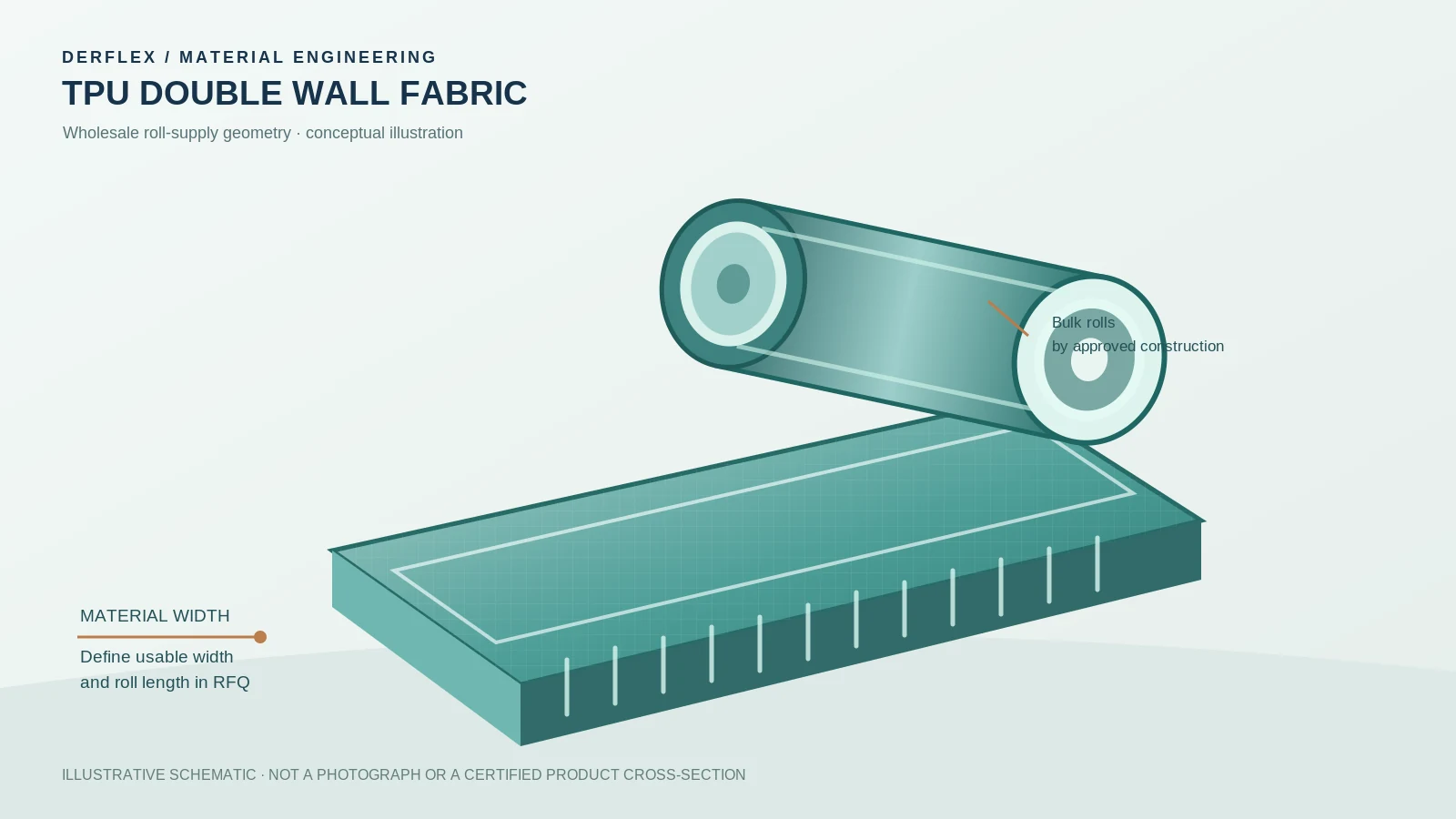
Wholesale TPU DWF bulk rolls are raw three-dimensional spacer textiles intended for industrial conversion. Two fabric faces are connected by internal yarns that help an inflated chamber hold a planar profile. TPU coating or lamination on the faces provides a weldable barrier direction, subject to material and seam validation. The roll is not a finished airtight structure by itself.
Confirm a connected upper and lower textile face, spacer-yarn layout and nominal uninflated or inflated panel-height definition.
Specify TPU polymer chemistry, coating or film-bonded face, finish and weld compatibility rather than relying on “TPU” alone.
Sidewalls, valves, seams, assembly certification, pressure rating and completed boat or dock are separate scopes.
For material architecture and engineering tests, consult TPU drop stitch fabric engineering and the broader double wall fabric overview. This page focuses specifically on wholesale purchasing and repeat roll supply.
There is no reliable single MOQ for every TPU DWF grade. Minimum order quantity depends on the construction the factory can run, not merely the buyer's requested square meters. A repeat of an approved structure may have a different minimum from a newly developed spacer height or custom-coated color.
| Buying situation | Main MOQ factors | How to request it |
|---|---|---|
| Repeat of an approved structure | Current production plan, remaining input material, color and roll format | Provide the previous sample or written grade reference and required delivery window. |
| New spacer height or yarn system | Spacer-textile construction, setup and manufacturability | Share a dimensioned section drawing, base-yarn direction and trial quantity. |
| Custom TPU faces or finish | Coating/film construction, color change, finishing trials and bonding validation | Specify both TPU faces, processing method, surface and required test evidence. |
| Multiple SKUs in one purchase order | Whether each variant needs a separate material or coating run | List heights, widths, colors and areas per variant; do not assume combined quantities meet each MOQ. |
| Scheduled repeat purchasing | Forecast confidence, agreed acceptance, storage and release arrangements | Provide total program forecast plus each release size and planned shipment dates. |
A small startup or prototype requirement should be treated as a development enquiry, not automatically as a standard wholesale minimum. A sample quantity, trial run and repeat-production MOQ may have separate pricing and acceptance steps. Ask the supplier to identify each one clearly.
Normalize every quotation to the same usable width, DWF height, coating configuration, quality criteria and shipment basis. A lower nominal minimum does not establish a better buy if it delivers another construction or excludes trial and inspection expenses.
Wholesale quotations can be expressed in square meters, linear meters or complete rolls. Those are not interchangeable unless usable width is known. Distinguish production width from usable finished width, and agree how roll joints, edge trim, markings and short lengths are treated.
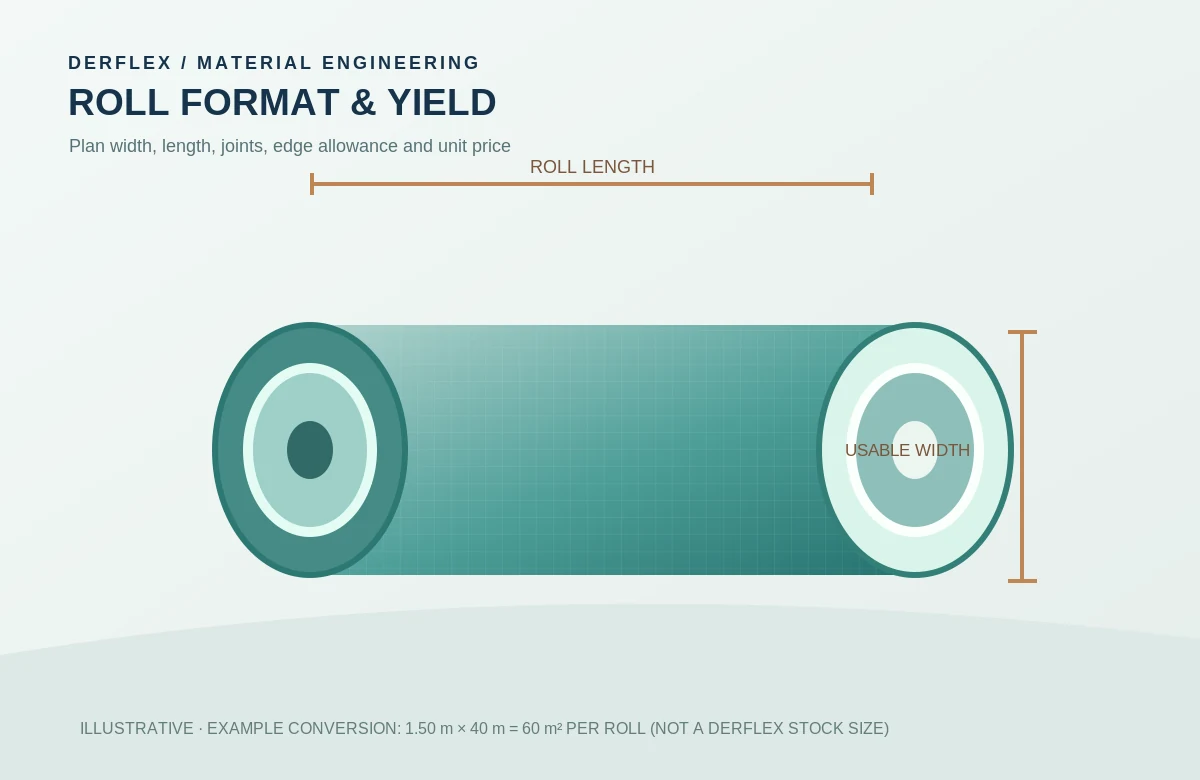
If a theoretical roll has 1.50 m usable width and 40 m usable length, its purchasing area is 60 m². Eight such rolls represent 480 m². If a quotation is per linear meter, divide or multiply using its stated usable width before comparing with a per-square-meter offer.
This example is only arithmetic. It is not a DERFLEX standard width, roll length, MOQ or available SKU.
Cutting yield depends on finished-product panel nesting, seams, reinforcement strips and machine feed. Share a cutting plan where possible; buying only by lowest unit price can increase offcuts and weld labor.
A useful TPU DWF purchase brief has two parts: the fabric construction you want delivered, and the finished product conditions it must support. A nominal 150 mm panel height or 2000D textile direction can be submitted as a feasibility request, but must not be treated as an already-approved standard DERFLEX grade.
| Specification item | What to state in the RFQ | Acceptance question |
|---|---|---|
| DWF construction | True spacer yarns, face fabric and nominal spacer height (mm), tolerance required | Which height measurement method applies? |
| Base textile | Polyester or nylon; yarn count and weave/knit direction, if known | Are face and internal yarn specifications distinguished? |
| TPU system | Polyether or polyester direction; coating or lamination; one or two TPU faces | Is the actual bond and weldable face defined? |
| Working conditions | Water exposure, temperature, folding, abrasion, targeted chamber pressure | What must be tested on the finished chamber? |
| Roll supply | Usable width, roll length, color, finish, each variant and total m² | How are joints, defects and partial rolls reported? |
| Conversion | Hot-air, heat-sealing or RF/HF trial route; edge seam and fitting details | Have cooled seam coupons and leakage trials been approved? |
| Shipment | Core, wrap, pallet preference, labels, destination, requested shipping terms | Which dimensions, weights and documents will be confirmed? |
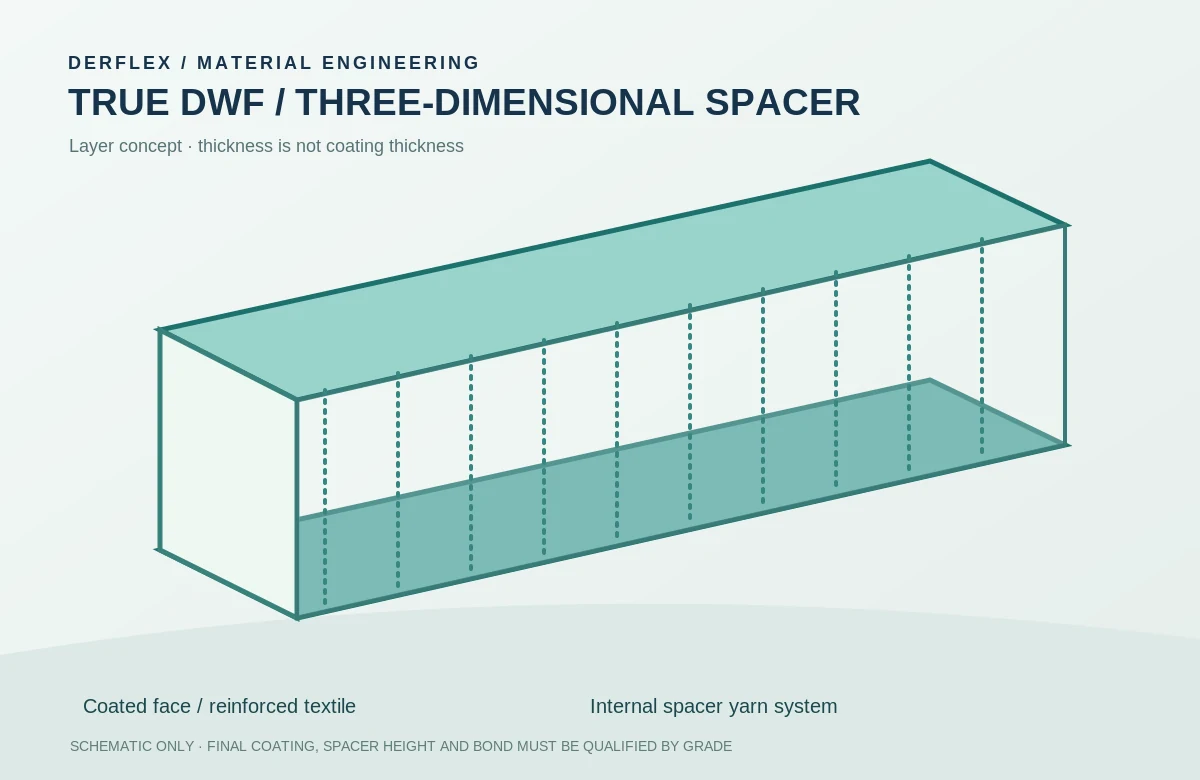
Double-sided TPU may help when the design requires sealing, reinforcement or patch processing on both faces. It also changes bonding, weight, cost and production complexity. Standard two-sided TPU coated woven fabric is not automatically true double wall fabric; the internal spacer system remains essential.
For related but non-spacer material, compare TPU coated fabric manufacturer supply and TPU material fabric.
Price comparisons are meaningful only when they use the same fabric definition and delivery scope. A TPU DWF quote is affected by the spacer construction, TPU consumption, width efficiency, customization, qualification effort and packing—not simply by the label “wholesale.”
Panel height, yarn configuration and textile construction determine the base input and setup complexity.
TPU chemistry, bonded or coated structure, layer consumption and coverage of one or both faces affect material requirements.
Excess edge loss, short rolls, joints or poor nesting can change the effective material price per finished panel.
Tooling, fabric trials, adhesion evaluation and sample-chamber validation may be quoted separately.
A single long run, mixed colors and staggered releases may have different production economics.
Core, roll diameter, pallet protection, shipping terms, route and destination influence landed cost.
Ask for an itemized quotation with unit basis, accepted net area, separate setup or sample costs, packaging, applicable shipping terms and any batch testing. No universal price, fixed MOQ or guaranteed delivery window is asserted on this page.
A reliable TPU DWF wholesale program needs more than a correct total area. Define what is measured on every roll, what requires representative laboratory or production trials, and what belongs to finished-chamber validation. Record acceptance limits against a named grade before repeating an order.
The last item is a converter-level assembled-product test, not a value guaranteed by a raw fabric roll.
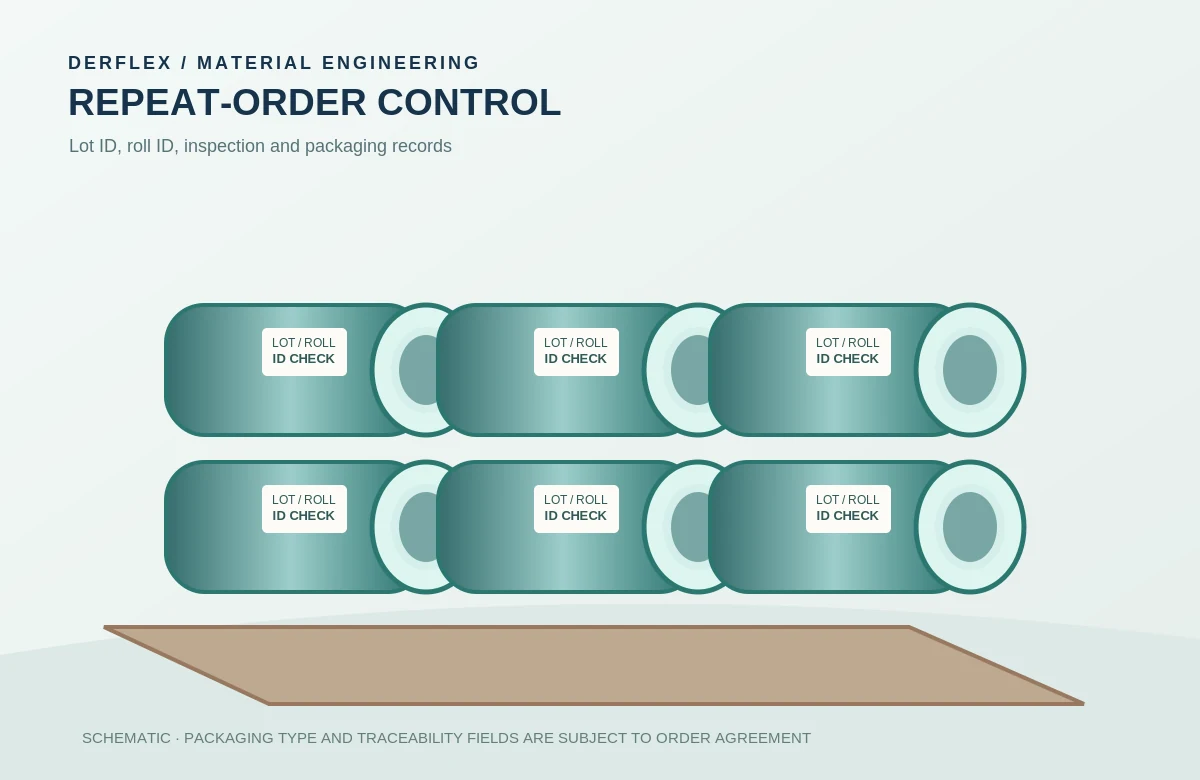
Keep the approved reference sample and written revision together. If a different TPU film, spacer yarn or color formulation is substituted, assess whether welding, peel and chamber testing must be repeated before production release.
Order planning is different for each inflatable industry. The points below describe possible DWF development uses rather than claiming DERFLEX has completed or certified projects in every category.
Focus on panel width, wet-storage behavior, edge-weld access, abrasion zones and finished air-deck testing. Explore TPU inflatable boat fabric for related marine textile selection.
Focus on height consistency, finished weight, surface markings, reinforced seam strips and fold/pack behavior.
Focus on panel nesting, repeated loading, joined edge behavior, pressure testing and production batch consistency.
Where a TPU face is not required, compare materials with PVC drop stitch fabric. For wet-exposure TPU chemistry selection, see polyether TPU coated fabric.
A simple approval chain reduces confusion when several teams—purchasing, production, QC and freight—are involved. Each step should result in a written record that the next team can use.
Product drawing, TPU/face direction, quantity, required width and shipment country.
Agree structure, color, coated surface, weld testing and target inspection methods.
Confirm grade, variant-level MOQ, roll format, net area, packaging and delivery terms.
Match roll labels and checks to the approved specification and resolve deviations before cutting.
You do not need a finished technical drawing to start. A photo of the current fabric, the product application and a forecast quantity are enough for an initial conversation. To obtain a comparable written quote, include as many of these details as you know.
Scope note: material roll quotation excludes automatically supplied valves, sidewall assemblies, installation, design certification, pressure ratings for a complete product and independent testing unless expressly agreed. Examine first-off samples and production welds before large-scale cutting.
There is no universal MOQ for every TPU DWF construction. Minimum quantity depends on whether an approved structure can be repeated or a new spacer height, coating, color or width requires a separate run. Send the specification and target quantity to obtain a project-specific minimum.
Either unit can be used if it is stated clearly. Square meters equal usable width in meters multiplied by usable length in meters. Ask whether pricing is per linear meter, per square meter or per complete roll, and how edge trim or joints are treated.
Custom roll formats can be discussed during engineering and commercial review. Feasible width and length depend on the selected DWF structure, winding stability, handling limits and production arrangement. Confirm tolerances and end-of-roll acceptance before a purchase order.
Potentially, but different colorways, heights or face constructions may need separate production batches and therefore separate minimum quantities and pricing. Itemize each variant in the RFQ instead of assuming one combined MOQ.
Agree a reference sample, inspect the drop-stitch height and face surface, trial welding on production equipment, and test a representative inflatable chamber. Record acceptable tolerances, lot identification and release criteria before moving to repeat bulk supply.
This page concerns TPU double wall fabric roll goods for converters and OEM manufacturers. Complete air decks, valves, certified boats, installed systems or pressure-rated assemblies are not included unless separately specified and confirmed in writing.
Share the height, face construction, welding process, expected square meters and delivery destination. Discuss sample, trial run, quotation unit and repeat-order control before production.