



Double-Sided TPU Drop Stitch Fabric for Airtight Marine Structures
Develop flat, inflatable marine panels with true drop stitch spacer textile and TPU sealing faces specified on both sides. This PVC-free DWF procurement route is intended for air-deck, kayak-floor, tender-floor and portable marine platform designers who need to control material composition, welding compatibility and air retention—not merely choose a polymer name. DERFLEX can review the requested two-face TPU construction and material supply scope against your drawing, qualification plan and downstream converting process.
Roll-goods development discussion. Finished chambers, valves, complete marine products and product certification require separate confirmation.
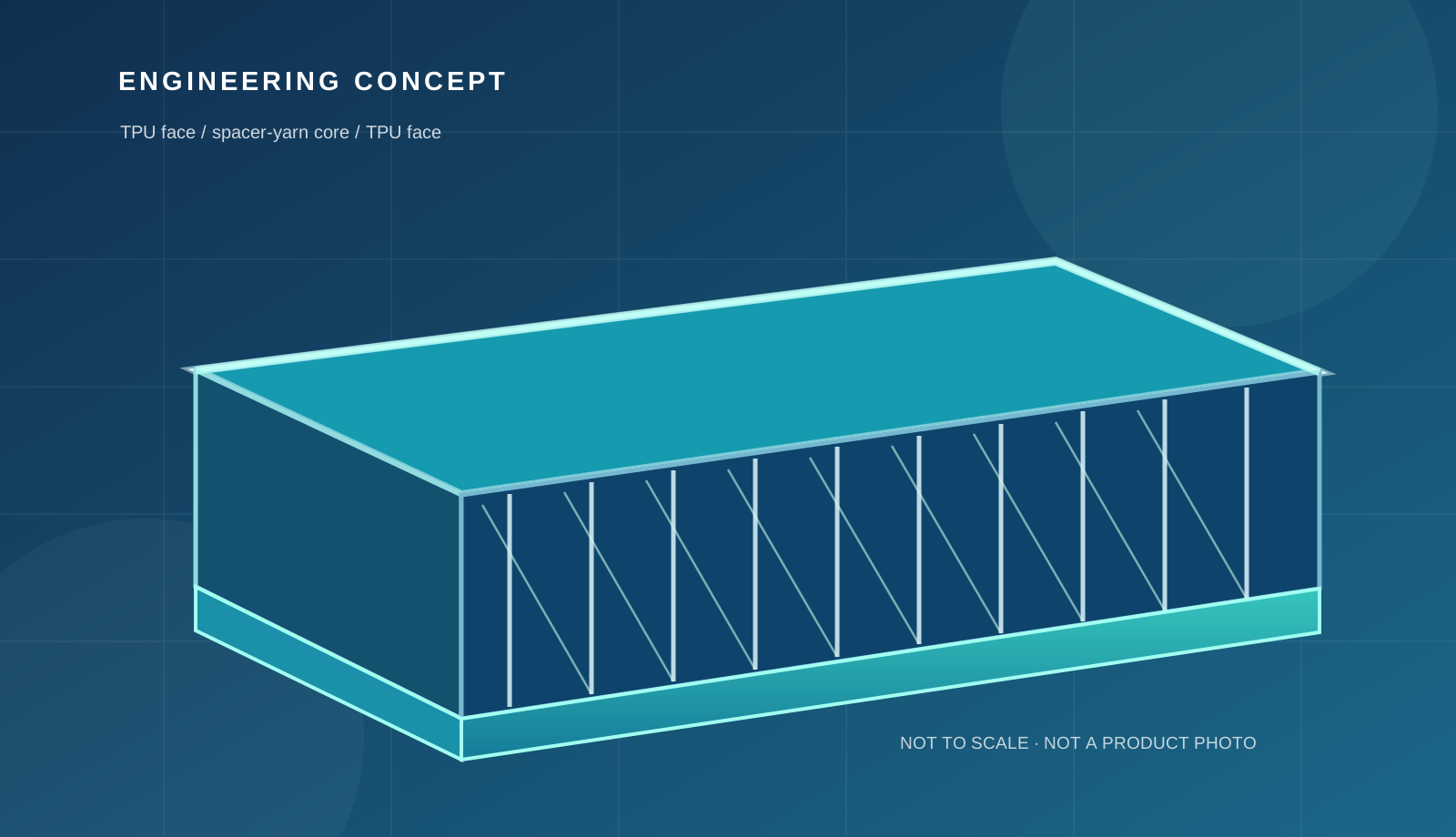
What Is Double-Sided TPU Drop Stitch Fabric?
Double-sided TPU drop stitch fabric is a three-dimensional spacer textile with two reinforced skins connected by many internal yarns. TPU is specified on both exterior faces to create sealable surfaces for conversion into a flat inflatable chamber. The connecting yarns limit face separation and determine the nominal inflated panel height. The final airtightness, safe pressure and durability belong to the assembled panel—not the untreated textile or an isolated roll sample.
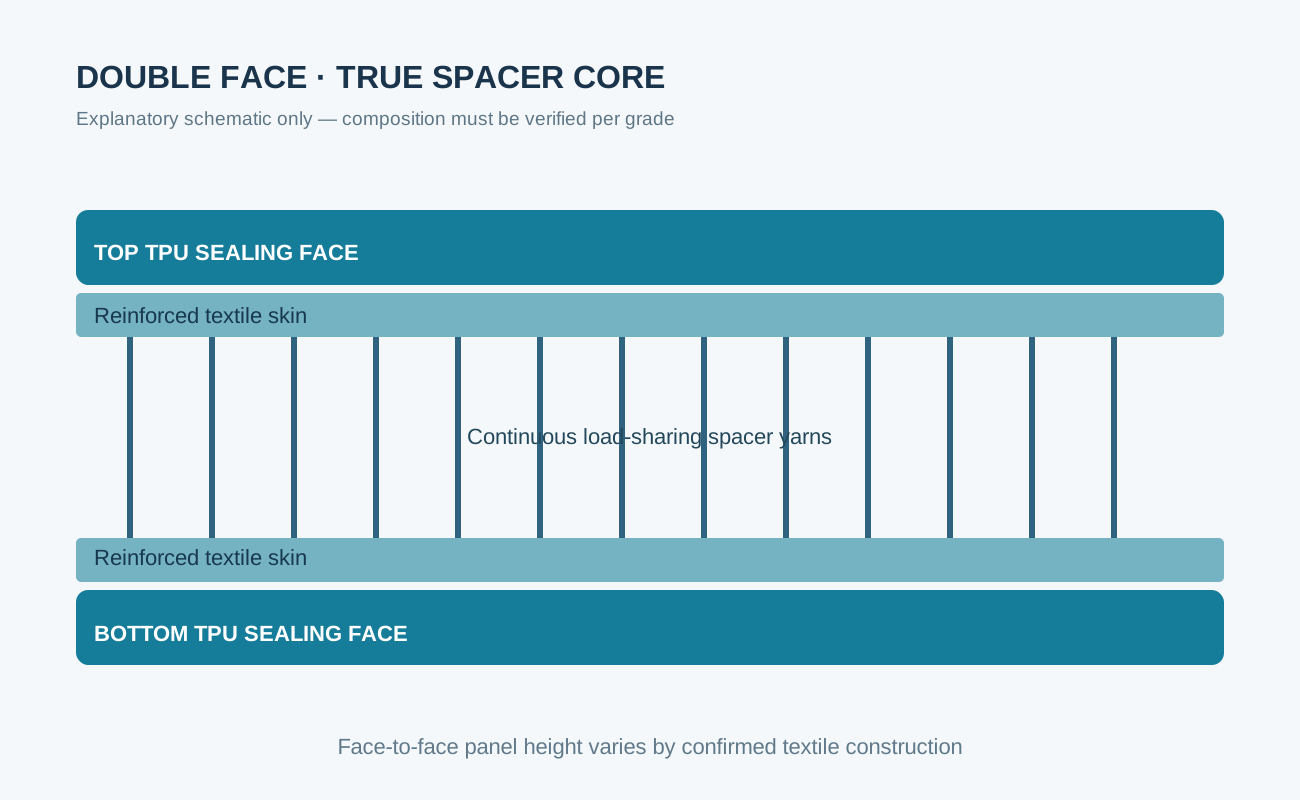
Two faces do not mean two ordinary coated sheets
The defining component is a continuous internal spacer-yarn structure. Two pieces of conventional TPU-coated cloth, even if laminated on both sides, do not become DWF without the connecting yarn system and proper sidewall conversion.
Clarify what “double-sided” means
On this page it means a TPU sealing surface on each outside face of the double wall panel. It does not automatically mean that both sides of every individual woven skin are coated, nor does it confirm a particular coating thickness or polymer formulation. Add a cross-section drawing to the approved specification.
For a general TPU spacer textile overview, compare the existing TPU drop stitch fabric page and the double wall fabric family.
What Does “PVC-Free DWF” Actually Cover?
A PVC-free DWF brief means the specified supplied construction is to contain no intentionally added polyvinyl chloride. Ordering TPU surface layers alone does not prove that every binder, intermediate film, sidewall strip or other included component is PVC-free. Define the declaration boundary before approving the sample and purchase order.
01 — Face chemistry
Document TPU type and whether each face is coated or film laminated. Confirm that neither face uses a hidden PVC sealing layer or PVC topcoat.
02 — Bonding stack
Ask for the exact grade's construction statement covering adhesives, tie layers, primers and intermediate films where they are part of the supplied roll. Polymer identity may require supplier documentation or testing.
03 — Converted components
Define whether “PVC-free” extends to the selected sidewall textile, weld tape, valve patches, reinforcing strips, markings and other components added by your converter. Roll compliance and complete-product compliance are different claims.
Do not treat “PVC-free” as automatic proof of recyclability, a specific environmental impact, plasticizer-free status, or compliance with a particular regulatory scheme. Request separate evidence for any such claim. For ordinary double-side coated nylon without an internal spacer structure, see double-sided TPU-coated nylon fabric.
Build the Roll Specification Around the Finished Marine Panel
The fields below are the decisions to freeze for a custom project—not a list of published DERFLEX stock grades, standard tolerances or proven pressure values. Material identity is confirmed through a signed construction specification and approved sample.
| Specification field | Buyer input | Acceptance focus |
|---|---|---|
| Spacer architecture | True continuous drop stitch / double wall construction; yarn distribution and intended panel geometry | Flatness, nominal height and variation after inflation |
| Panel height | Nominal mm plus tolerance and drawing; submit special heights for feasibility review | Project-specific height measurement and finished profile |
| Base textile | Polyester or nylon face yarn, construction, specified denier and internal yarn details | Identifiable yarn roles, strength in required directions |
| Two TPU faces | Outer-face TPU on top and bottom; coating versus lamination; face thickness targets | Coverage, bond strength, weld consistency and dimensional stability |
| Polymer & disclosure | Polyether / polyester TPU direction; documented PVC-free construction scope | Grade identification, formulation documents and requested declaration |
| Marine exposure | Saltwater contact, wet storage, solar exposure, abrasion, temperature and cleaning routine | Conditioned adhesion, aging, flex and surface results |
| Joining route | Hot-air, heat sealing or RF/HF trials as appropriate to grade and equipment | Cooled seam strength, leak test, repair compatibility |
| Roll program | Usable width, roll length, edge trim, quantity, color and destination | Nesting yield, traceability, packaging and repeat supply plan |
Denier does not equal pressure capacity. Surface-film thickness is not the same quantity as inflated drop-stitch height. Any numerical acceptance requirement must identify the exact test, orientation, units and sample condition.
Where Two-Face TPU DWF May Fit Marine Structures
A flat inflatable panel can be practical wherever compact storage and a comparatively firm inflated surface are needed. Each application has different exposure, load and seam requirements; these are design candidates, not claims of DERFLEX-supplied or certified completed marine products.
Inflatable tender and dinghy air decks
Assess abrasion at deck supports, pressure cycling, floor geometry, attachment welds and the load path into the boat hull. Include a full-size air-deck test.
Inflatable kayak floor inserts
Consider folding frequency, contact with sand and stones, seam orientation, cockpit fitting and packed size; a softer surface may require localized protection.
Portable floating marine panels
Assess buoyancy, panel bending under concentrated loads, contact surfaces and attachment points. A roll material is not a certified floating dock, gangway or rescue platform.
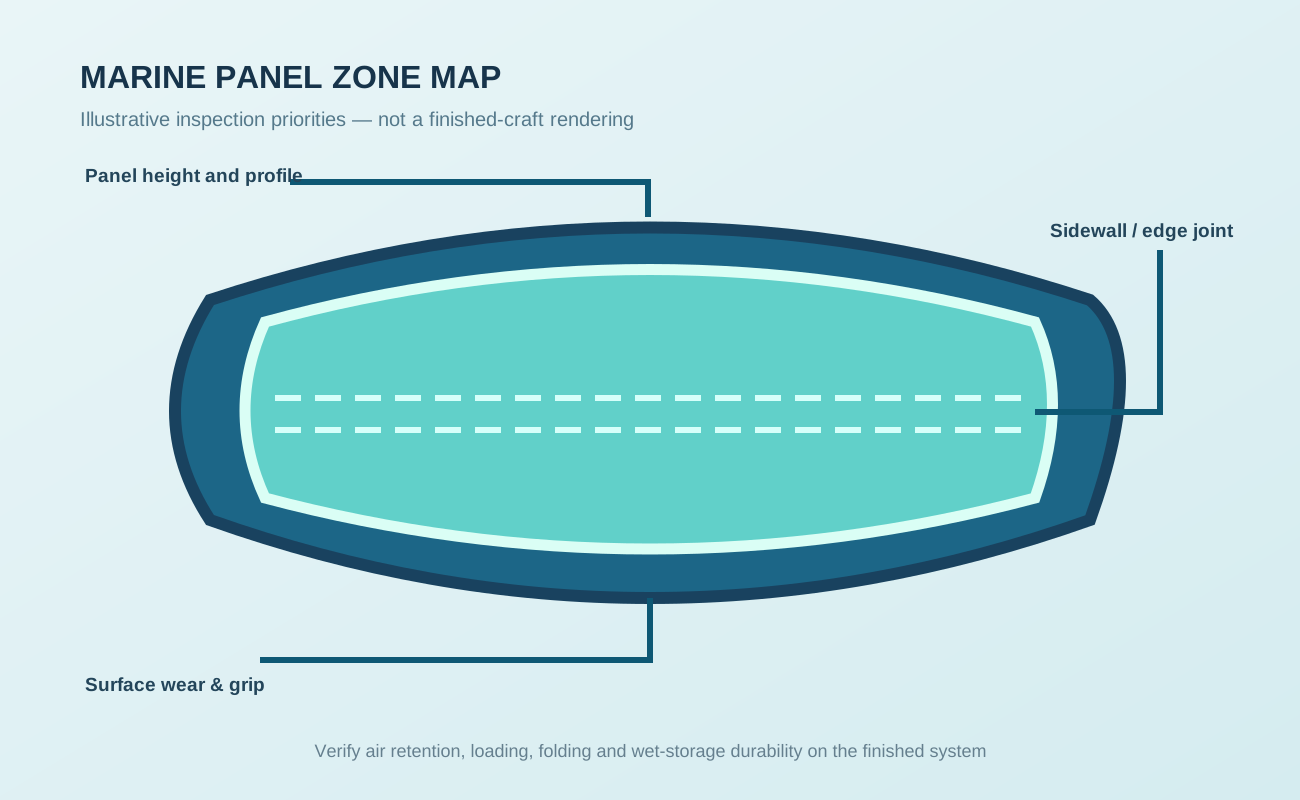
For conventional cylindrical marine air chambers and packraft panels, start with TPU inflatable boat fabric rather than assuming drop stitch is necessary.
Double-Sided TPU vs One-Sided TPU vs PVC DWF
A fair comparison begins with a matching spacer height, textile strength class, seam design and finished-product test method. Polymer names alone cannot establish that one grade is lighter, stronger, safer or more durable.
| Buyer decision | Double-sided TPU DWF | Single-face TPU direction | PVC double wall fabric |
|---|---|---|---|
| Two exterior welding faces | Both specified as TPU sealing surfaces | One TPU-facing route may need alternate joint design | PVC joining surfaces in the approved construction |
| PVC-free brief | Possible only after full construction declaration | Also requires full construction declaration | Does not meet a PVC-free specification |
| Wet aging | Review TPU grade, adhesion and assembled system | Review face orientation and edge protection | Review PVC formulation and seam system |
| Fabrication route | Qualify welding on both faces and sidewall stack | Confirm acceptable facing for each interface | Qualify established PVC joining process |
| Best decision basis | Prototype results + documented two-face specification | Same-system trials against weight and cost | Measured conversion yield and finished assembly tests |
See the alternative PVC drop stitch fabric for comparison, or TPU-coated fabric manufacturing for roll-goods construction without a drop stitch core.
Do Not Sign Off the Roll Before Welding the Edge
Pressure leakage often begins at a converted interface rather than the center of the roll. A two-face TPU design can give fabricators useful joining surfaces, but the actual process window depends on TPU chemistry, lamination stack, seam overlap, heating, cooling and production equipment.
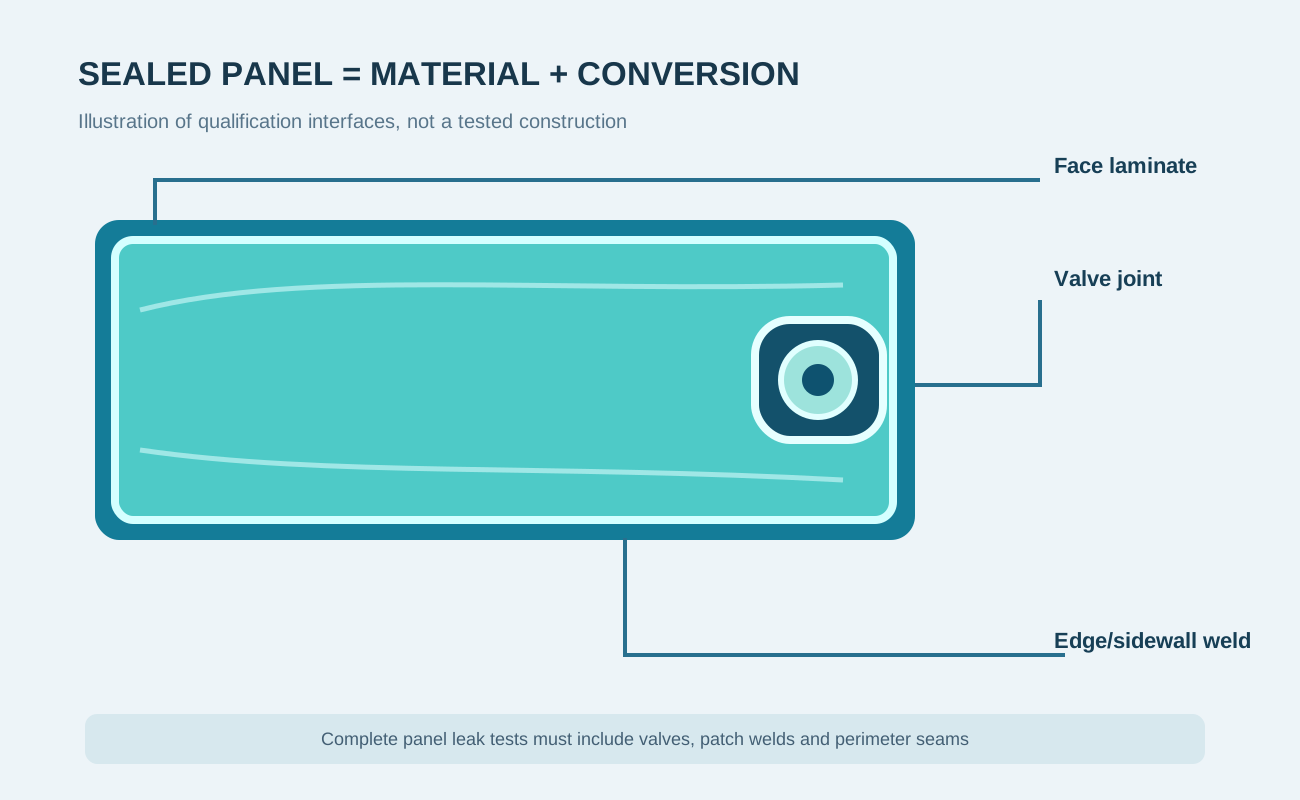
Four interfaces to prototype
- Face-to-sidewall: test continuity, peeling and leak response around the entire perimeter.
- Valve base: qualify patch thickness, welding surface and pressure cycling.
- Local reinforcing patch: confirm bond integrity and abrasion behavior at attachment or wear zones.
- Repair patch: validate any proposed workshop or field repair method on aged and freshly fabricated material.
Use actual factory equipment; judge cooled seams and the whole prototype, not only an attractive fresh weld. Compare fabric with compatible TPU-coated fabrics when selecting sidewall or reinforcement materials.
How to Qualify Airtightness for Marine Use
Agree the test method before samples are produced. An approved material coupon does not prove a marine chamber can maintain pressure during loading, transport, storage or temperature changes.
| Evidence checkpoint | Minimum record to request | What it can reveal |
|---|---|---|
| Incoming roll audit | Usable width, nominal height, basis weight and surface visual record | Grade mix-ups, uneven faces and cutting loss |
| Layer adhesion | Face-specific peel results, conditioning, failure mode and units | Bond degradation during wet folding or storage |
| Textile mechanics | Warp/weft tensile and tear where applicable, plus sample conditioning | Unbalanced textile performance |
| Weld coupons | Actual machine settings, cooled peel or tension behavior, leakage inspection | Surface mismatch or narrow process window |
| Full chamber pressure retention | Pressure, temperature, duration, allowable decay and calibrated instrumentation | Leak paths at edge joints, valve and patches |
| Environmental aging | Wet storage, saltwater cleaning conditions, hydrolysis exposure, folding and abrasion as relevant | Premature degradation under realistic marine service |
| PVC-free traceability | Signed grade identification, construction declaration and excluded component list | Unverified material-label claims across supply tiers |
From PVC-Free Brief to Approved OEM Roll Supply
The purchasing process should preserve the distinction between material development, conversion trials and finished-craft certification. A clear sequence reduces ambiguity before the repeat-order material specification is frozen.
- 01Define the requirementShare intended marine product, drawing, spacer height and PVC-free boundaries.
- 02Review a sampleCompare both TPU faces, material makeup, dimensions and manufacturing feel.
- 03Build test panelsQualify welded edge and valve areas on production equipment, then test air retention.
- 04Freeze the roll specAgree acceptance methods, grade ID, tolerance, order quantity and records.
Before you order: what changes the quote?
Face TPU consumption, yarn/spacer structure, usable width, coating/lamination method, color, development sampling, test scope, roll packing, quantity and delivery terms can all affect project cost. No public price, standard MOQ, lead time or warranty is claimed here. Ask for quotation lines that separate raw DWF, test costs and any optional converting work.
For broader marine TPU choices and chemistry, review TPU fabric. When requesting two-face TPU DWF specifically, attach an existing panel cross-section or a sample photo if available.
Material, Seam and Marine Design References
The images here are technical drawings created to explain purchasing decisions. They are not samples, factory photographs, project cases or performance evidence. Authentic production images should replace or complement them after material approval.
Frequently Asked Questions
What is double-sided TPU drop stitch fabric?
It is a double wall textile with upper and lower reinforced faces joined by internal spacer yarns, with TPU sealing layers specified on both exterior faces. Unlike ordinary double-coated flat fabric, its spacer yarns are designed to hold a controlled panel height when inflated.
Does TPU drop stitch automatically mean the material is PVC-free?
No. PVC-free must be confirmed for the complete supplied construction, including coating or film, bonding layers and specified ancillary components. Request a written bill of materials or supplier declaration for the exact grade; the term TPU alone is not proof.
Can double-sided TPU DWF be used for inflatable boat floors?
It can be evaluated for inflatable air decks and other flat marine panels. Suitability depends on verified spacer geometry, face adhesion, edge and valve joining, abrasion exposure and pressure-retention tests on a representative finished assembly.
Is polyether TPU better for marine use than polyester TPU?
Polyether TPU is commonly considered when wet storage and hydrolysis resistance are priorities. The choice is still grade-specific: compare the actual formulations and their adhesion, wet aging, abrasion and welding results before approval.
What inflation pressure is safe for this material?
There is no universal safe pressure figure for a TPU DWF roll. The operating and proof pressure must be defined from a complete chamber design and verified with controlled pressure, temperature, duration and leakage tests.
What should I send for an OEM PVC-free DWF quotation?
Provide the product drawing, panel height and usable dimensions, textile preference, two-face TPU requirement, PVC-free declaration scope, joining equipment, target operating conditions, quantity, roll format and required acceptance tests.
Define the Material Before You Define the Pressure Rating.
Send your marine inflatable application, panel drawing, spacer height, face TPU requirement, PVC-free declaration scope, proposed joining process and order estimate. Request a material feasibility discussion and a sample-validation plan tailored to the completed structure.
Custom material inquiry only. Final supplied construction, availability and acceptance values are subject to technical approval.