


Industrial Acoustic Curtains — PVC Noise Barrier Curtain Fabric
DERFLEX supplies PVC-coated curtain material and custom-fabrication directions for industrial acoustic curtains used around machinery, production cells, workshop dividers, generators, compressors and temporary noise-control zones. The curtain structure can be developed around barrier mass, absorptive layers, weather exposure, access needs, mounting method and required test documentation.
- PVC-coated polyester face
- Custom weight & width
- Welded / reinforced edges
- Track, grommet & overlap design
- FR options by requirement

Industrial acoustic curtains are flexible, modular barriers used to reduce airborne noise around industrial sources. A practical system normally combines a durable curtain face with a dense sound-blocking layer and, where needed, an absorptive layer facing the noise source. Acoustic performance depends on the complete assembly, surface density, coverage, seams, overlaps, openings and installation—not on PVC fabric alone.
What Is an Industrial Acoustic Curtain?
An industrial acoustic curtain—also searched as an industrial sound curtain, noise control curtain, sound barrier curtain or “soundproof” curtain—is a flexible partition or enclosure used to control noise without constructing a permanent wall. It can be fixed, removable or retractable depending on the access pattern and supporting frame.
The outer material must survive pulling, hanging, cleaning, abrasion and environmental exposure. This is why reinforced PVC coated polyester fabric is commonly used as the weatherproof, washable and weldable face of an industrial curtain system.
Four Parts That Decide Acoustic Curtain Performance
Buyers often focus on GSM first. For noise-control work, the curtain system is more important than a single material number.
PVC Noise Barrier Curtain Fabric Specification Guide
DERFLEX’s existing PVC sound-barrier material listing provides the following material-level range. Use it as a starting point for curtain-face and barrier-sheet selection; final acoustic assembly values should be confirmed after the noise source, geometry and target performance are defined.
| Item | DERFLEX Material Direction | Why It Matters for an Acoustic Curtain |
|---|---|---|
| Product direction | PVC sound barrier sheet / PVC coated polyester curtain fabric | Provides a reinforced, flexible and cleanable skin for panels, dividers and enclosures. |
| Base fabric | 500D × 500D, 1000D × 1000D or customized | Controls tensile stability, tear resistance and long-term hanging behavior. |
| Fabric density | 9 × 9, 18 × 18, 20 × 20 or customized | Affects reinforcement structure and mechanical performance. |
| Total material weight | 450–1600 gsm range shown on DERFLEX’s current sound-barrier material page | Heavier face/barrier materials can add mass, but GSM alone does not predict installed dB reduction. |
| Surface treatment | Acrylic, PVDF or project-specific finish | Helps match outdoor exposure, cleanability and surface durability requirements. |
| Temperature direction | -30°C to +70°C listed for the current material range | Useful when curtains are installed near loading areas, outdoor equipment or seasonal environments. |
| Flame-retardant direction | B1, B2, NFPA 701 options listed; confirm exact grade and document during quotation | Fire requirement must match the selected material and the project’s actual jurisdiction or specification. |
| Roll / panel size | Roll width below 5 m is listed; finished panels can be fabricated to project dimensions | Panel width, seam position and hanging point layout influence installation, handling and acoustic leakage. |
| Color | RAL / Pantone matching direction | Supports safety zoning, branding and visual management in factories and project sites. |
Material ranges above are based on DERFLEX’s current PVC Sound-Proof Tarpaulin Material listing. Final values, certifications and acoustic performance must be confirmed against the selected grade, complete panel build, test method and purchase specification.
Barrier vs. Absorption: Which Acoustic Curtain Do You Need?
Block Sound Transmission
Prioritize a dense barrier layer, continuous coverage, sealed overlaps and minimal gaps. This direction is used when the main problem is noise passing from one work zone into another.
Reduce Echo Near the Source
Add a sound-absorptive face toward the noisy machine or process. Absorption can reduce reflected sound inside the enclosure, but it is not the same as blocking transmission through the curtain.
Need Both
Use a composite panel direction that combines barrier mass and absorption. The final layer order should reflect which side faces the source, whether the panel is exposed to weather and how it will be opened or moved.
Metric note: STC or Rw is used to describe sound transmission through an assembly, while NRC is used to describe sound absorption. A high NRC does not automatically mean a curtain blocks sound well, and a dense barrier may block transmission while doing little to absorb reverberation on the source side.
Choose the Curtain Build by Use Environment
| Application | Recommended Design Direction | Key Details to Confirm |
|---|---|---|
| Machine enclosure | Barrier + source-facing absorption where reverberation is high | Machine frequency, heat, ventilation, service doors, floor gap and panel overlap. |
| Factory zone divider | Barrier curtain or composite divider on fixed or sliding track | Opening width, track load, forklift access, overlap, visibility windows and fire requirement. |
| Compressor / blower room | Higher-mass barrier direction with controlled ventilation openings | Low-frequency content, airflow, heat discharge, maintenance access and tested assembly data. |
| Temporary maintenance work | Portable modular panels with reinforced grommets or frame attachment | Setup frequency, foldability, panel size, transport weight and quick-connect hardware. |
| Outdoor construction / utility work | Weather-protected PVC face with reinforced perimeter and protected internal layers | UV, rain, wind load, drainage, anchoring, local fire rule and outdoor test evidence. |
| Retractable acoustic partition | Track-hung flexible panels with planned folds and overlap | Track radius, stack-back space, panel weight, access cycle, floor seal and side return. |
Industrial Acoustic Curtain Fabrication Notes
Do Not Put Load on Bare Eyelets
Large panels need reinforced hems, webbing, patches or load-spreading details around grommets and track hangers. Curtain weight and repeated movement can concentrate stress at the top edge.
Control the Gaps
Side returns, panel overlaps, floor contact and access-door closures matter. A heavy curtain with large open gaps can underperform a lighter but better-sealed design.
Separate Heat and Acoustic Decisions
Compressors, generators and process equipment may require ventilation or heat clearance. Do not improve sealing in a way that creates an unsafe thermal condition.
Design for Access
Track openings, hook-and-loop flaps, zipper doors, overlapping walk-throughs or removable panels should be placed around the actual maintenance sequence.
Keep Absorbers Protected
Where an absorptive core is used, the facing should protect it from oil mist, splash, dust or outdoor moisture without blocking the acoustic function required on the source side.
Ask for Assembly-Level Evidence
If the tender or project requires a numeric acoustic rating, define the test method and complete panel build. Do not treat a face-fabric data sheet as proof of whole-system sound reduction.
Material, Curtain & Manufacturing References
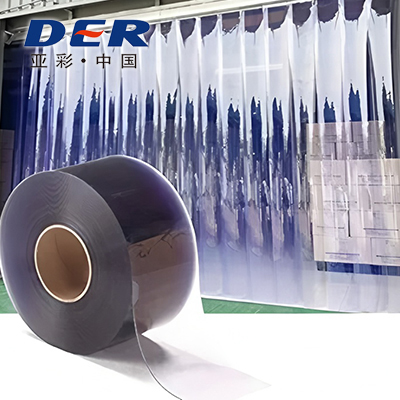
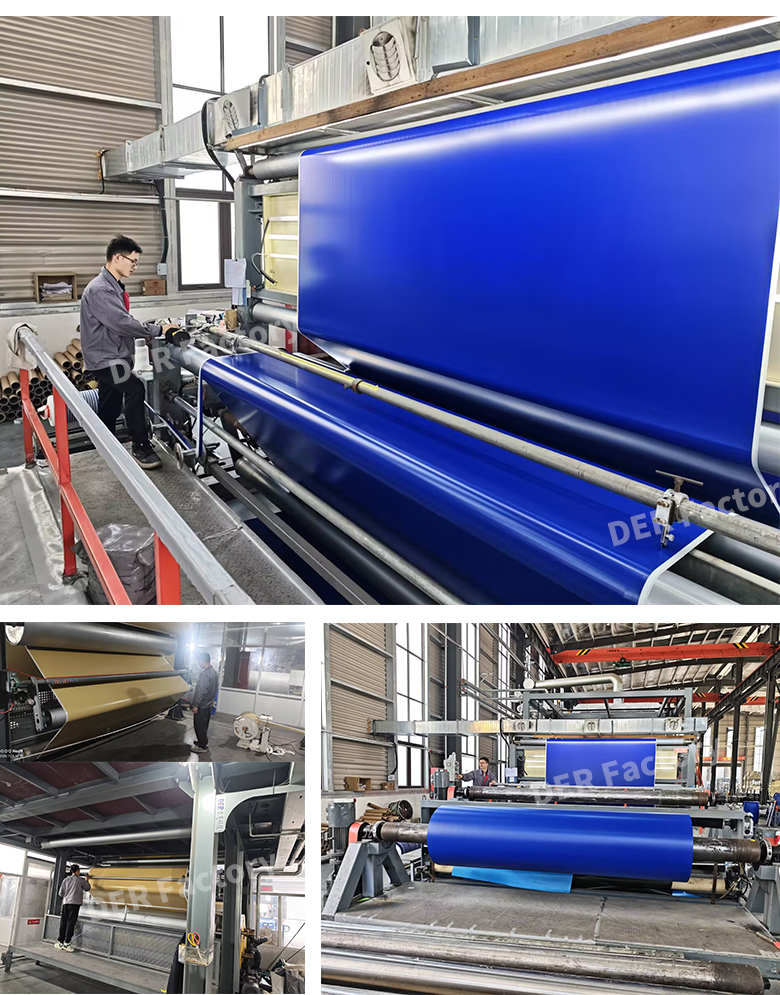
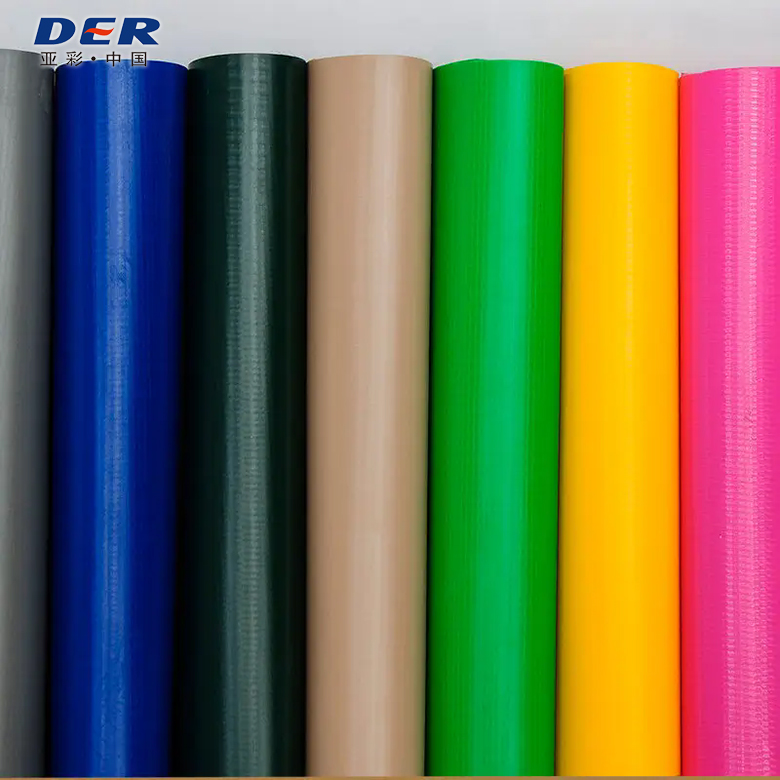
The images below are hosted on derflex.com and can support product, material-structure, application and manufacturing context for this page.


Where Industrial Noise Barrier Curtains Are Used
Machinery & Production Cells
Flexible acoustic enclosures around presses, grinders, cutting lines, packaging equipment and other sources where maintenance access makes a permanent wall inconvenient.
Generators, Compressors & Blowers
Barrier panels can create partial or complete enclosures when airflow, heat management and service access are engineered together with noise control.
Factory & Warehouse Dividers
Track-mounted industrial sound curtains can divide large spaces and reduce direct noise transmission between production, inspection, packing or assembly zones.
Temporary Construction Noise Control
Weather-resistant modular curtains are useful where barriers must be moved, reused or installed around changing work fronts.
Maintenance & Shutdown Work
Portable panels can isolate temporary grinding, welding, repair or maintenance activity without permanent construction.
OEM Acoustic Curtain Programs
Fabricators and industrial curtain brands can source PVC coated roll goods, custom colors, project-matched face materials and repeat production specifications.
What to Send Before Requesting an Acoustic Curtain Quote
Better input produces a more useful material and panel recommendation. Send the acoustic problem and installation geometry, not only curtain width and height.
- Noise source: machine, compressor, blower, generator, process line or temporary work.
- Current sound level and target level, plus frequency data if an acoustic survey is available.
- Indoor / outdoor use, rain, UV, oil mist, dust, humidity and cleaning conditions.
- Opening dimensions, ceiling height, side-return space and floor condition.
- Fixed, removable, sliding-track, retractable or portable mounting method.
- Access doors, viewing windows, ventilation openings and maintenance clearances.
- Required fire standard or tender specification, including requested documentation.
- Quantity, color, logo/printing, packing, delivery destination and repeat-order plan.
Five Common Acoustic Curtain Buying Mistakes
1. Buying by GSM Alone
Weight does not describe how well the complete curtain blocks or absorbs sound. Layer structure and installation are equally important.
2. Calling Any PVC Curtain “Soundproof”
PVC industrial curtains can reduce direct sound transmission, but “soundproof” implies a complete result that depends on the whole enclosure and test conditions.
3. Ignoring Low-Frequency Noise
Fans, compressors and large motors can be difficult to control. Frequency information helps determine whether a higher-mass or multi-layer design is needed.
4. Leaving Unplanned Openings
Door gaps, ceiling gaps, pipe penetrations and ventilation openings can become dominant sound paths if they are not included in the design.
5. Specifying a Rating Without a Test Method
STC, Rw, insertion loss and field dB reduction are not interchangeable. State the required metric and test condition in the quotation package.
6. Forgetting Handling Weight
Heavier acoustic panels increase track load, installation effort and stack-back volume. Structural support must be checked before installation.
Why Work With DERFLEX for PVC Acoustic Curtain Material?
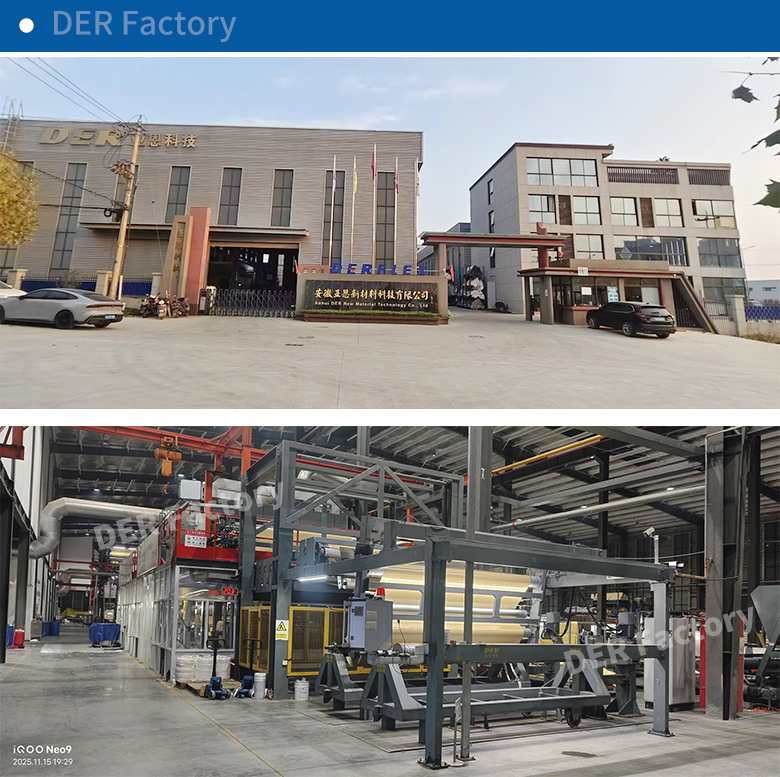
DERFLEX already manufactures PVC coated polyester fabrics and industrial curtain materials, and its existing product range includes sound-barrier sheet material, heavy-duty PVC curtain fabric and custom industrial curtain directions. This gives fabricators and project buyers one material platform for coating, roll supply, color, surface, welding and reinforcement discussions.
For an acoustic project, DERFLEX can help define the PVC-facing material, weight, base fabric, surface finish, panel fabrication details and project documentation requirements. The acoustic target should then be tied to the full curtain build and installation method.
Continue the Industrial Curtain Selection Path
Frequently Asked Questions
Do industrial acoustic curtains really reduce machine noise?
Yes, when the curtain is designed as a complete noise-control system. The result depends on barrier mass, absorptive layers, coverage, panel joints, side returns, floor and ceiling gaps, openings and the frequency of the source. A universal dB reduction should not be promised without a defined assembly and test condition.
Is PVC curtain fabric itself soundproof?
No flexible PVC curtain fabric should be treated as completely soundproof by itself. Heavy PVC-coated material can provide mass, durability and a useful barrier surface, but higher-performing acoustic curtains often combine it with a dense barrier core and/or an absorptive layer.
What is the difference between STC, Rw and NRC?
STC and Rw describe sound transmission performance through an assembly using different rating systems. NRC describes sound absorption at a surface. A curtain can have good absorption without strong blocking performance, or good blocking performance with limited absorption, so the project metric should be specified clearly.
Can acoustic curtains be used outdoors?
They can be designed for outdoor use, but the assembly needs weather-resistant exterior facing, protected internal layers, reinforced hanging points, wind-load consideration, drainage and suitable anchoring. UV, rain and local fire requirements should be included in the quotation specification.
What is the difference between an acoustic curtain and a normal industrial divider curtain?
A normal divider curtain is primarily selected for zoning, dust, drafts, visibility, splash or temperature separation. An acoustic curtain adds a noise-control objective and therefore needs additional consideration of mass, absorption, seals, coverage and tested acoustic performance.
Can DERFLEX supply custom sizes, grommets and reinforced edges?
DERFLEX’s industrial curtain and coated-fabric programs support project-based size, material, color, surface and fabrication discussions. Reinforced hems, grommets, webbing, welded seams and other finishing details should be confirmed on the project drawing and approved specification.
What information is needed to quote an industrial acoustic curtain?
Send the noise source, current and target sound levels if available, opening dimensions, indoor/outdoor environment, mounting method, access openings, ventilation needs, fire requirement, preferred material direction, quantity, color, packing and destination.
Should I buy a heavier curtain for better noise reduction?
Not automatically. Higher mass can help sound blocking, but the correct solution also depends on frequency, absorptive layers, panel seals, mounting, access openings and support capacity. The curtain should be specified as an assembly rather than by GSM alone.
Send the Noise Problem, Not Just the Curtain Size
Share the machine or process, sound-level information, dimensions, access pattern, environment, fire requirement and target installation method. DERFLEX can then recommend a suitable PVC curtain material and fabrication direction for your industrial acoustic curtain project.
Product descriptions and material ranges are for project discussion. Final acoustic performance, certifications, dimensions, construction and documents depend on the confirmed material grade, complete curtain assembly, test method, installation and purchase agreement.