


Landfill Daily Cover Tarps — Reusable Alternative Daily Cover
Reusable landfill tarp panels engineered for repeated deployment over municipal solid waste working faces, with project-defined fabric, reinforced seams, webbing, attachment points, pockets and OEM dimensions.
Quick answer: A reusable landfill daily cover tarp is an alternative daily cover (ADC) panel that is placed over the active working face at the end of the operating day and removed before the next waste-placement cycle. In the United States, the tarp is not automatically “EPA approved”; use as ADC normally requires approval under the applicable state permitting program.
What Is a Reusable Alternative Daily Cover Tarp?
A reusable alternative daily cover tarp is a heavy-duty cover panel used instead of placing a full layer of soil over the landfill working face every day. The tarp is deployed after daily waste placement, anchored or ballasted as required, and retrieved before operations resume.
Its job is operational and regulatory: help control vectors, fire exposure, odors, blowing litter and scavenging while avoiding unnecessary consumption of landfill airspace. The exact tarp construction is not universal; it must suit the site’s permit conditions, wind exposure, working-face geometry, deployment method and waste profile.
Can a Reusable Tarp Replace Six Inches of Soil as Landfill Daily Cover?
Potentially, yes—but only when the alternative cover is approved for the facility. Under U.S. federal rules, municipal solid waste landfills generally cover waste with six inches of earthen material at the end of each operating day. An alternative material or thickness may be approved by the director of an approved state program when the operator demonstrates equivalent control of disease vectors, fires, odors, blowing litter and scavenging without threatening human health or the environment.
Regulatory reference: 40 CFR § 258.21 — Cover material requirements. State requirements can be more specific.
Why Landfills Use Reusable Daily Cover Tarps
Reusable tarps are selected when operators want a recoverable cover that can be deployed repeatedly without permanently consuming the same volume as a daily soil layer. The real value depends on site conditions, labor, equipment, wind, working-face preparation and the approved operating plan.
Preserve Airspace
A retrieved cover does not remain as a daily soil layer inside the waste mass, helping protect valuable disposal volume where ADC use is approved.
Reduce Daily Soil Handling
Reusable cover systems can reduce the need to excavate, move, spread and later disturb soil solely for routine daily coverage.
Repeatable Deployment
Panels can be designed around the site’s tarper, dozer, compactor, loader, spreader bar or other deployment procedure.
Custom Restraint Layout
Webbing, D-rings, reinforced corners, cable or chain pockets and perimeter details can be developed around wind exposure and handling equipment.
What Makes a Landfill Daily Cover Tarp Reusable?
A reusable landfill cover is not defined by fabric weight alone. Reuse depends on the interaction of the base textile, surface construction, seam layout, reinforcement, attachment details and daily handling method.
- Structural fabric: should tolerate repeated pulling, folding, rolling and localized tension without rapid tear propagation.
- Surface: may be coated where water shedding, cleanability and closed-surface behavior are priorities.
- Seams: should be oriented and reinforced so pulling loads do not concentrate at one narrow joint.
- Perimeter: typically needs heavier reinforcement than the center field of the tarp.
- Attachment points: D-rings, loops, pockets, grommets or custom hardware interfaces should be backed with load-spreading reinforcement.
| Design Element | Project Options | Why It Matters |
|---|---|---|
| Cover Material | Project-defined heavy-duty coated textile / reusable tarp structure | Must match handling, abrasion, weather and permit requirements. |
| Fabric Weight | Selected after duty-cycle review; no universal GSM | Heavier is not automatically better if it becomes difficult to deploy or retrieve. |
| Panel Size | Custom finished dimensions | Should match working-face coverage and equipment capacity. |
| Seams | Welded and/or reinforced construction depending on material | Seam orientation affects load transfer and field durability. |
| Perimeter | Webbing, rope/cord edge, reinforced hem or engineered border | Edges experience repeated pulling and restraint loads. |
| Attachment | D-rings, loops, grommets, webbing tabs, pockets | Connects tarp to deployment and anchoring method. |
| Weighted Edge | Cable/chain pocket or site-defined ballast concept | Useful where the cover system relies on perimeter mass; engineering must be confirmed. |
| Color / Marking | Custom color, panel ID, orientation marks, logo | Can improve field identification and replacement control. |
Match the Reusable ADC Tarp to the Working Face
| Operating Condition | Starting Design Direction | Engineering Priority | Risk to Avoid |
|---|---|---|---|
| Small or controlled working face | Manageable panel size; moderate-duty reusable construction | Handling weight, simple attachment and fast retrieval | Oversized panels that require unnecessary manpower or equipment |
| Large equipment-deployed face | Machine-compatible panel geometry with reinforced pull zones | Load-path webbing, seam placement, pockets and spreader interface | Concentrating the entire pull load at corners or isolated grommets |
| Wind-exposed landfill | Reinforced perimeter plus site-designed restraint/ballast system | Edge stability, weighted zones, overlap and deployment timing | Assuming a heavier fabric alone solves wind uplift |
| Wet climate / rainfall concern | Closed or coated surface where approved and operationally appropriate | Water shedding, drainage path, ponding avoidance, cleanability | Using a low spot as a water trap or leaving loose folds that collect water |
| Sharp or irregular waste | More robust construction and disciplined face preparation | Puncture resistance, abrasion zones, smoother compacted surface | Dragging the tarp across exposed metal, glass or protruding debris |
| High-frequency daily reuse | Reinforced repeated-flex design with repairable details | Fold lines, retrieval method, edge wear, field inspection | Ignoring small tears until they propagate into major failure |
Selection matrix is a procurement framework, not an engineering approval. Wind, slopes, equipment and permit conditions must be evaluated for each site.
Engineering Notes for Deployment, Retrieval and Service Life
Competitor pages often stop at “strong fabric.” Landfill service life is equally controlled by how the tarp is moved, where loads enter the panel and what the working face looks like before deployment.
Compact the Working Face
Reduce protrusions and sharp points before coverage. A heavy tarp can still be punctured by exposed metal, glass, rebar or angular debris.
Pull Through Reinforced Zones
Use spreader bars, pockets, webbing or other designed load paths rather than pulling the field fabric from a few weak points.
Secure for Wind & Slope
Follow the operating plan for ballast, cable, soil, tires, sandbags or other approved restraint methods. Do not improvise tie-down forces.
Inspect Before Reuse
Check corners, attachment points, hems, seams and abrasion zones. Repair small damage before it becomes a large tear during the next cycle.
Reusable Tarp vs Soil vs Disposable Cover Systems
There is no single best alternative daily cover for every landfill. Selection is a site decision that combines regulatory approval, working-face size, weather, labor, equipment, airspace value and odor-control objectives.
| Daily Cover Method | Main Advantage | Main Trade-Off | Best-Fit Situation |
|---|---|---|---|
| Reusable tarp / geosynthetic panel | Retrieved for repeat use; minimizes permanent daily cover volume | Requires deployment/retrieval procedure, wind management and maintenance | Sites that can repeatedly handle panels and want recoverable ADC |
| Six-inch soil cover | Established baseline method under 40 CFR 258.21 | Consumes airspace and requires excavation, hauling, spreading and equipment time | Sites with available soil and operational preference for earth cover |
| Disposable geosynthetic film | No daily retrieval step | Single-use material remains in the waste mass; performance and gas/leachate considerations are site specific | Sites approved for non-reusable film systems |
| Foam / slurry / other ADC | Can conform to irregular working faces | Requires dedicated material/equipment and site-approved performance | Operations configured for spray-applied or other approved systems |
Landfill Daily Cover Tarp Specification Framework
Because no universal landfill tarp specification fits every ADC approval or tarper system, DERFLEX recommends defining the operational geometry first and the material second.
| Specification Item | DERFLEX Supply Direction | What Buyer Should Confirm |
|---|---|---|
| Product Type | Reusable landfill daily cover tarp / ADC cover panel | Approved cover method and operating plan |
| Material | Heavy-duty coated textile structure selected by project | Required permeability/closed-surface behavior, abrasion, flexibility, regulatory acceptance |
| Finished Size | Custom | Working-face width/length, overlap and deployment equipment |
| Panel Configuration | Single panel or multi-panel program | Maximum handling width, equipment reach, storage and replacement plan |
| Seam Construction | Project-matched welding/reinforcement | Pull direction, seam loading, field repair method |
| Perimeter Reinforcement | Webbing, reinforced hem, rope/cable/chain pocket options | Wind, ballast, deployment and retrieval load |
| Hardware Interfaces | D-rings, loops, grommets, straps, pockets | Actual tarper or equipment connection geometry |
| Surface / Color | Project-defined | Cleanability, heat exposure, identification and visibility |
| Logo / Marking | Optional | Panel IDs, orientation arrows, fleet or operator branding |
| Packaging | Folded, rolled or project packaging | Container loading, site storage and first-use deployment procedure |
DERFLEX Material, Waste-Handling & Manufacturing Visuals
These are real DERFLEX-hosted images used as material and manufacturing references. They do not claim to show a landfill ADC installation unless the caption says so.
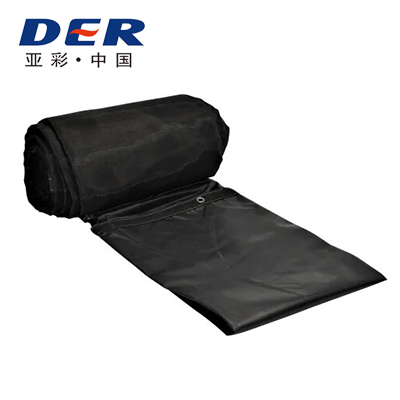
Alt: DERFLEX reinforced industrial tarp panel and attachment detail for reusable landfill cover design reference.
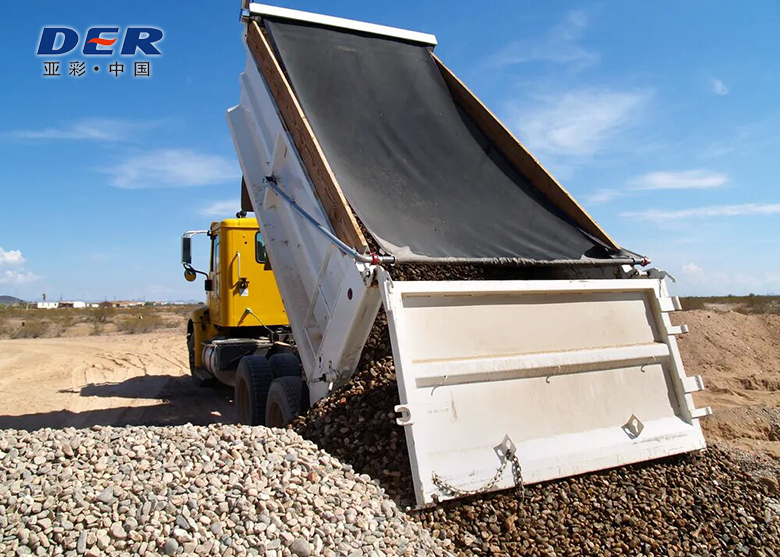
Alt: DERFLEX waste handling tarp application reference for landfill and municipal waste management buyers.
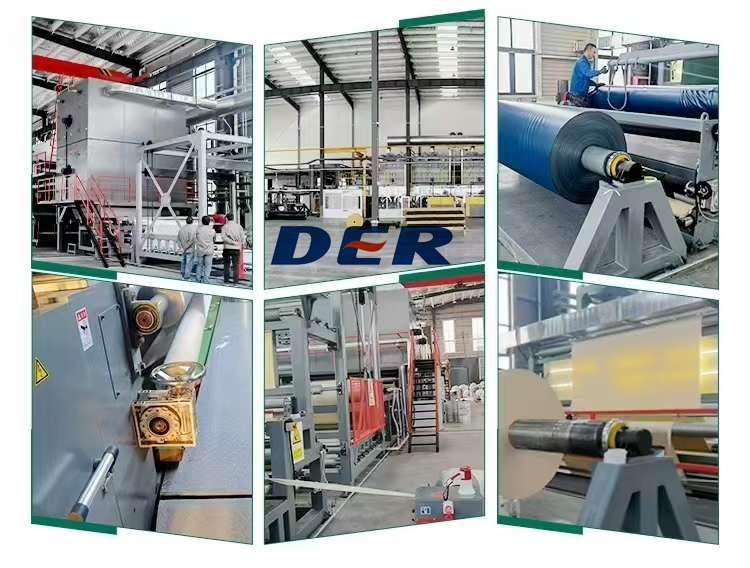
Alt: DERFLEX tarpaulin factory and coated textile manufacturing capability for custom landfill tarp projects.
Common Mistakes When Buying Reusable Landfill Covers
Buying by GSM Only
A heavier tarp can still fail if corners, seams and attachment points are poorly reinforced. Weight must be evaluated with construction and handling.
Ignoring the Deployment Machine
The same fabric can behave very differently when pulled by a dozer, spreader bar, automated tarper or manual crew. Connection geometry should be supplied with the RFQ.
Assuming “Waterproof” Means Approved ADC
Water barrier performance is only one property. Regulatory acceptance is based on the applicable cover requirements and site approval process.
Under-Specifying Wind Restraint
Wind performance is a system issue involving panel size, perimeter design, ballast, overlap, slope and deployment timing—not just fabric strength.
Dragging Across Unprepared Waste
Sharp debris can puncture even robust cover materials. Working-face preparation and pull path strongly influence tarp life.
No Repair & Replacement Plan
Reusable panels should be inspected, repaired and tracked. Panel IDs and standardized dimensions can simplify maintenance and repeat ordering.
Why Work with DERFLEX on a Landfill Tarp Program?
Coated Textile Know-How
DERFLEX manufactures PVC-coated polyester fabrics and heavy-duty tarp materials for industrial outdoor use, supporting application-based material matching.
Custom Reinforcement
Panel dimensions, seams, webbing, hems, pockets and attachment details can be developed from equipment and field requirements.
Repeat Supply Programs
Standardized panel IDs, colors, packaging and replacement specifications can support distributors, equipment suppliers and multi-site operators.
Project Communication
DERFLEX can work from drawings, old-cover measurements, photos and procurement specifications instead of forcing buyers into a generic stock size.
What to Send for a Landfill Daily Cover Tarp Quote
Sending the operating details first is the fastest way to avoid a generic quotation and get a panel design that fits the real site.
- Landfill type and waste stream
- Country / state / regulatory jurisdiction
- Approved or proposed ADC method
- Working-face length and width
- Desired finished tarp size
- Number of panels required
- Deployment equipment or tarper model
- Pull direction and attachment locations
- D-ring / grommet / loop layout
- Webbing or reinforced-border requirements
- Cable / chain / weighted-edge pocket details
- Wind and slope exposure
- Cold / heat / rain exposure
- Photos of current tarp failures
- Old tarp sample or drawing if available
- Quantity, packaging and destination port
“We need reusable ADC panels for a municipal solid waste landfill. Current panel size is ___ × ___. The tarp is deployed by ___. Main failure points are ___. Required edge construction is ___. We need ___ panels for delivery to ___.”
If the current tarp performs well, send photos plus measurements. If it fails early, send close-up photos of the failure zones so DERFLEX can review where reinforcement should change.
Frequently Asked Questions About Landfill Daily Cover Tarps
What is alternative daily cover at a landfill?
Alternative daily cover, or ADC, is a material or method used instead of the standard daily layer of earthen cover at a municipal solid waste landfill. Reusable geosynthetic tarp panels are one ADC category: they are placed over the working face after operations and removed before the next waste-placement cycle.
Can landfill tarps replace daily soil cover?
They can where the responsible regulator has approved the tarp or cover method for the facility. In the U.S., 40 CFR § 258.21 allows alternative materials and alternative thicknesses when the applicable approval authority accepts that they control disease vectors, fires, odors, blowing litter and scavenging without threatening human health or the environment.
What material is used for landfill daily cover tarps?
Reusable ADC systems use different geosynthetic or heavy-duty tarp constructions. The correct material depends on the permit, deployment equipment, required permeability or closed-surface behavior, wind, abrasion, puncture exposure and expected reuse cycle. DERFLEX can discuss heavy-duty coated textile options for project-specific panels.
How are reusable landfill tarps held down?
Methods vary by system and site. Common concepts include reinforced perimeter webbing, weighted cable or chain pockets, D-rings, loops, ballast soil, tires, sandbags or other approved restraint methods. The correct restraint system should be established by the landfill operating plan and equipment design.
How long does a reusable landfill tarp last?
There is no honest universal lifespan. Service life depends on working-face preparation, sharp debris, panel size, pull method, wind, UV exposure, abrasion, fold patterns, repairs and how frequently the tarp is cycled. Inspection and early repair usually matter as much as nominal fabric weight.
Are landfill daily cover tarps waterproof?
Some coated tarp constructions can provide a closed, water-shedding surface. That does not eliminate the need for drainage planning, slope control and ponding prevention. A closed-surface tarp should also be evaluated against the site’s approved ADC requirements and gas/leachate management considerations.
What information is needed for a custom ADC tarp?
Send finished dimensions, working-face size, deployment and retrieval method, tarper/equipment details, attachment geometry, wind and slope conditions, reinforcement requirements, current failure photos, quantity and destination. A drawing or old cover sample is especially useful.
Can DERFLEX make replacement tarps for an existing landfill tarp system?
DERFLEX can review replacement-cover projects based on an old tarp, measured finished dimensions, drawings, photos and attachment details. The goal is to reproduce the system geometry while improving reinforcement only where the buyer’s field evidence supports a change.
Build a Reusable Landfill Daily Cover Around Your Actual Tarp System
Send DERFLEX the working-face size, existing panel dimensions, deployment equipment, reinforcement layout and operating conditions. We can review material, seam, webbing, pocket and attachment options for a custom landfill daily cover tarp program.
- Custom finished panels
- OEM replacement programs
- Reinforced perimeter and pull zones
- Project-defined coated textile options