Architectural Top Surface
PVDF or lacquered surface direction can support dirt resistance, cleanability, UV exposure management and long-term appearance.



A project-oriented PVC/PVDF coated polyester membrane developed to reduce capillary moisture migration through exposed yarn zones while maintaining the tensile strength, weldability, weather protection and clean architectural appearance required by roofs, canopies and tensioned structures.
Low-wick performance is one part of the membrane specification. Final selection should also consider structural loads, surface system, flame-retardant requirement, climate, fabrication method, seam design, translucency and local building requirements.
In a PVC coated polyester membrane, the outer coating is designed to keep water away from the structural textile. The more difficult condition appears where the woven reinforcement becomes locally exposed—at cut edges, fabricated openings, punctures, clamp interfaces, abrasion damage or other discontinuities in the coating.
Polyester multifilament yarn contains microscopic spaces between filaments. If water enters these pathways, capillary action can move moisture away from the original entry point. Over time, this can contribute to visible staining, localized contamination, loss of uniform translucency and unnecessary stress on the fabric system.
A low-wick tensile membrane uses an anti-capillary treatment strategy in the textile reinforcement so the yarn has less tendency to transport liquid internally. The objective is not to replace sound detailing or waterproof fabrication; it is to add another layer of protection where the membrane is most exposed to moisture-entry risk.
For architectural use, low-wick function works best as part of a complete membrane system rather than as an isolated marketing label.
PVDF or lacquered surface direction can support dirt resistance, cleanability, UV exposure management and long-term appearance.
The PVC coating provides waterproofing, flexibility, color and the thermoplastic surface required for common welding processes.
Controlled adhesion between coating and reinforcement helps the composite act consistently during cutting, welding and tensioning.
High-tenacity PES reinforcement can be treated to reduce capillary liquid transport through yarn bundles at exposed zones.
Back coating or surface finish completes the composite and can be selected for welding, appearance and maintenance needs.
The purchasing value is strongest where exposed edges and persistent humidity create long-term maintenance or appearance concerns.
Helps limit the distance moisture can migrate through exposed reinforcement, especially around edges and localized coating damage.
Lower internal moisture migration can help reduce the risk of visible discolored tracks developing away from an entry point.
Relevant for projects exposed to frequent rainfall, high humidity, condensation cycles or persistent outdoor moisture.
Keeping liquid out of the textile core supports the overall goal of preserving the coated composite and its dimensional behavior.
For light-colored or translucent membranes, moisture-related staining can be more visible. Low-wick treatment supports appearance control.
When combined with verified welding, proper detailing and QC, low-wick material adds a practical control point to the project specification.
A useful RFQ should describe the complete performance envelope. Final values are project-dependent and should be confirmed against the approved technical data sheet and required testing.
| Product Direction | Low-wick tensile membrane / anti-wicking PVC-PVDF architectural membrane fabric. |
|---|---|
| Reinforcement | High-tenacity polyester woven base fabric; yarn size, density and weave selected according to structural strength direction. |
| Low-Wick Requirement | Anti-capillary treatment for polyester reinforcement. Buyer should define the agreed laboratory or edge-immersion evaluation method, exposure time and acceptance criterion. |
| Coating System | PVC architectural coating with optional lacquer / PVDF surface treatment according to outdoor exposure and maintenance target. |
| Typical Weight Direction | Approx. 650–1500 gsm for PVC/PVDF architectural membrane options; exact construction depends on strength, span, load design and finish. |
| Width Direction | Common project widths can include 2.5 m, 3.0 m and 3.2 m. Other widths should be confirmed against the selected product and production route. |
| Surface Options | PVDF, lacquered, matte, glossy, anti-dirt, anti-mildew, translucent, opaque or project-specific finish direction. |
| Fabrication | Hot-air welding, high-frequency welding, cutting, patterning, edge reinforcement, cable pockets and clamp detailing after compatibility confirmation. |
| Fire Performance | Project-specific flame-retardant direction may be discussed. Required standard and acceptance level should be stated in the RFQ rather than assumed. |
| Color & Light | White, off-white, grey and custom architectural colors; translucency or opacity should be defined by project intent and approved sample. |
| Quality Controls | Fabric weight, width, appearance, roll consistency, coating adhesion, tensile / tear direction, welding behavior and agreed low-wick evaluation. |
| Supply Form | Roll goods for membrane fabricators, tensile structure contractors, distributors, OEM buyers and project procurement teams. |
Product and project imagery from DERFLEX helps buyers connect the roll material with its real tensile-structure use.
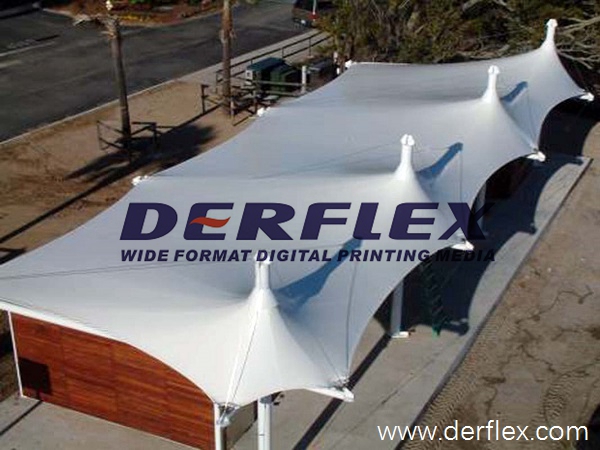
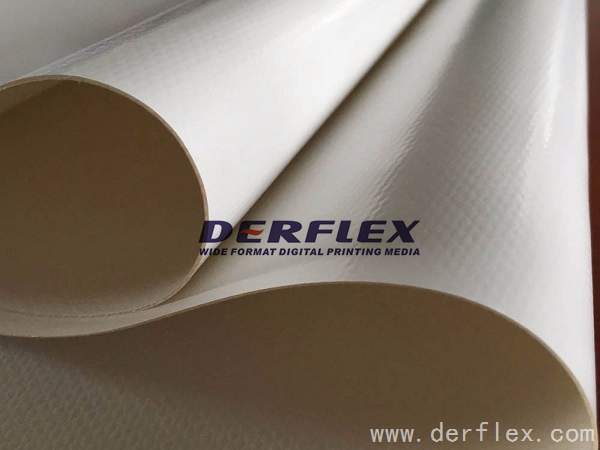
Anti-wicking treatment is particularly relevant where the membrane will see long outdoor exposure, cut-edge fabrication, repeated wetting or high visual-quality expectations.
Large roof panels contain many welded seams, edge details and connection zones. Low-wick reinforcement can be specified as part of the long-term moisture-control strategy.
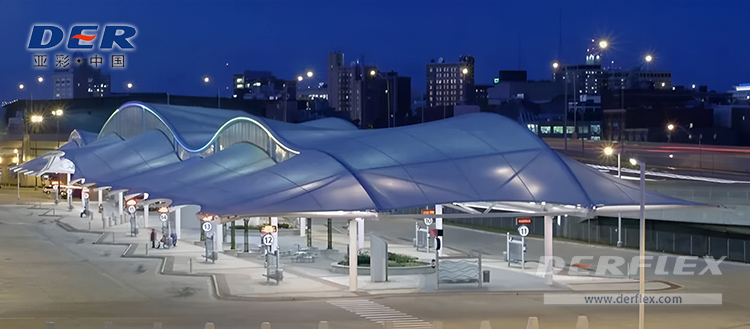
Transit structures face rain, pollution and continuous public visibility. PVDF surface options and low-wick base fabric address different parts of that exposure.
Open-sided structures encounter wind-driven rain and exposed perimeter detailing, making edge protection and weld quality important selection factors.
Clean white appearance, diffuse daylight and low maintenance are often priorities where the membrane forms part of the building’s visual identity.
Organic tensile forms can create numerous panel edges, cable pockets and perimeter terminations. A low-wick specification adds protection at these vulnerable interfaces.
Industrial membrane roofs can benefit from project-matched strength, waterproofing, weldability and moisture-migration control without relying on a single property alone.
The membrane is a composite system. Material treatment, panel welding, exposed-edge management and installation all influence how moisture behaves in service.
Map rainfall, humidity, UV, pollution, coastal exposure, cleaning access and drainage conditions.
Choose yarn, density and fabric architecture based on structural design rather than GSM alone.
Agree how capillary resistance will be evaluated and how results will be accepted before bulk production.
Check hot-air or HF process settings on the actual coating / topcoat configuration used for the project.
Use appropriate hems, welds, clamps, reinforcement and detailing to minimize unnecessary yarn exposure.
Review surface, color, width, rolls, test documents and agreed functional checks against the approved sample.
A useful supplier comparison separates measurable project controls from broad claims. Ask for the information that affects cutting, welding, installation and long-term appearance.
DERFLEX focuses on the coated textile side of tensile architecture: reinforcement, coating structure, roll consistency, surface selection, sample confirmation and export-ready material supply.
Discuss roll width, cutting efficiency, welding process, seam appearance and batch consistency before production.
Match material direction to span, climate, visual finish, maintenance plan, FR requirement and project schedule.
Develop repeatable product grades with defined surface, weight, color, packaging and documentation requirements.
Review custom labels, roll packing, color control, specification records and repeat-order consistency for branded supply.
Six closely related internal pages help project teams move from low-wick requirements into broader tensile membrane selection.
Practical answers for architects, membrane fabricators, contractors, distributors and project procurement teams.
A low-wick tensile membrane is a coated structural textile—commonly PVC/PVDF coated polyester—whose reinforcement is treated to reduce capillary movement of liquid through the yarn. This is particularly relevant at cut edges, penetrations and locally exposed textile zones.
No. Waterproofing is mainly provided by the continuous coating and properly fabricated seams. Low-wick treatment addresses moisture movement inside exposed yarn pathways. A project-grade membrane should manage both surface water protection and internal capillary migration.
Welded panels are normally waterproof when correctly made, but fabrication can create perimeter edges, holes, reinforcement interfaces and other details where yarn exposure is possible. Low-wick treatment provides additional resistance to moisture migration if water reaches those textile pathways.
DERFLEX can discuss anti-wicking / low-wick treatment together with PVC/PVDF coating, custom weight, color, width, surface finish and project-oriented membrane requirements. The exact construction and test criteria should be confirmed during sample and specification review.
The buyer and supplier should agree on a repeatable test method, such as a defined edge-immersion or capillary migration procedure, including exposure liquid, duration, sample preparation and maximum acceptable migration distance. Avoid relying on the phrase “anti-wicking” without a defined acceptance method.
Provide the structure type, approximate span, target weight or strength, color, width, surface finish, flame-retardant requirement, low-wick test expectation, welding method, quantity, destination climate and any project-specific documentation requirements.
Send DERFLEX your application, span, target strength or GSM, low-wick requirement, color, surface finish, FR standard, preferred width, welding method and order quantity. The team can review a suitable PVC/PVDF architectural membrane direction for sampling and quotation.
Technical ranges on this page are selection guidance, not structural design values. Final membrane specification should be confirmed through project engineering, approved samples, applicable test reports and local building requirements.