
Map the moisture source
Identify whether the main challenge is direct rain, humid air, wet ground, warm equipment, damp agricultural material or condensation caused by day-and-night temperature changes.



A custom outdoor tarp should do more than block rain. In humid climates, it also needs a surface that can be cleaned, a structure that avoids water traps, and a specification matched to sunlight, wind, repeated handling and storage practice.
DERFLEX supplies PVC coated polyester roll goods, welded panels and finished covers for equipment, agriculture, cargo, construction and outdoor storage programs. Anti-mildew treatment, UV stabilization, surface finish, reinforcement and fabrication details can be discussed according to the actual exposure route.
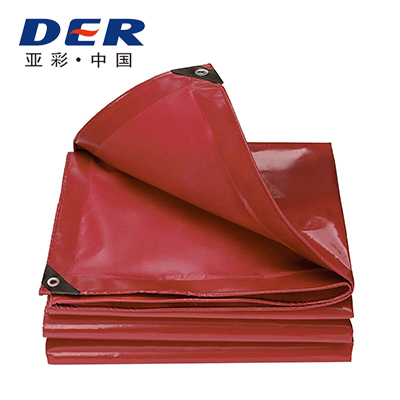
Mildew risk is not created by one factor. A tarp may keep rain from passing through the fabric and still develop staining or odor when moisture remains underneath, when dirt accumulates on the surface, or when the cover is folded before it has dried. This is why a mildew resistant outdoor tarp should be specified as a complete cover system rather than treated as a single coating claim.
The exposed side must tolerate sunlight, rainfall, wind-driven debris and repeated cleaning. The protected side may face warm equipment, damp crops, soil vapor, temperature swings or condensation. Seams, hems, pockets and tie-down zones can become local collection points if the finished cover is not shaped and installed correctly.
For commercial buyers, the practical goal is to reduce conditions that support surface growth while preserving the primary job of the tarp: protecting the asset, staying secure outdoors and remaining serviceable through repeated use.
Persistent moisture, a nutrient source such as dust or plant residue, and enough time in a low-airflow zone. Material treatment can help, but geometry and care remain important.
Rain, dew, condensation, wet cargo, ground vapor and wash-down water can all create different moisture paths.
Soil, pollen, feed dust, leaves, oils and organic residues can remain on an otherwise synthetic tarp surface.
Loose folds, flat roof areas, inward-facing seams and deep hems can slow drying and collect dirt.
A rolled or folded cover can hold moisture for days, especially when packed tightly after rain or cleaning.
The most useful specification is built around the environment, the protected asset and the handling cycle—not around a single marketing label.
Identify whether the main challenge is direct rain, humid air, wet ground, warm equipment, damp agricultural material or condensation caused by day-and-night temperature changes.
PVC coated polyester is useful when waterproofing, washability and weldability are priorities. PE can suit economical temporary coverage, while treated canvas may be considered when breathability is more important than full waterproofing.
Roof pitch, fitted corners, panel orientation and tension affect how quickly water leaves the cover. A flat, loose tarp is more likely to form pockets that retain water and collect debris.
Heat-welded seams can create a continuous waterproof surface. Reinforced hems, webbing, grommets and attachment spacing should be matched to the expected wind load and installation method.
Some assets require a sealed barrier; others benefit from planned ventilation, stand-off spacing or open lower edges. The choice depends on what is being covered and how moisture enters the system.
A smooth, easy-clean surface reduces maintenance effort, but the tarp still needs periodic washing, complete drying and storage away from standing water, sharp objects and chemical contamination.
Mold-resistant outdoor covers are sold in several material families. The better choice depends on how long the tarp will stay outside, whether full waterproofing is required, how often it is handled, and whether the protected item needs air exchange.
A strong route for buyers needing a waterproof, washable and weldable cover with custom reinforcement and repeat-order specifications.
Polyethylene tarps are lightweight and naturally non-absorbent, making them practical for temporary outdoor use and large-area economy programs.
Canvas can help release moisture vapor and reduce condensation around selected assets, but it is commonly water-repellent rather than fully waterproof.
The table below gives a practical starting point for buyers. Final material weight, coating system and finished-cover design should be confirmed through project discussion and sampling.
| Outdoor condition | Recommended focus | Possible material direction | Important caution |
|---|---|---|---|
| Hot, humid and rainy | Waterproof surface, UV stability, washability, drainage and anti-mildew option | PVC coated polyester or UV-treated PE, selected by duty cycle | A sealed cover can hold condensation underneath; plan airflow where the asset allows it. |
| Agricultural residue exposure | Easy-clean finish, strong edges, practical color, frequent handling and drying access | PVC tarp for reusable programs; PE for seasonal economy coverage | Hay dust, grain particles, leaves and soil should be removed before storage. |
| Machinery and equipment | Abrasion resistance, fitted geometry, access panels, tie-down layout and heat control | PVC finished cover or treated canvas depending on condensation sensitivity | Do not place a cover over hot equipment or sharp protrusions without spacing and reinforcement. |
| Truck, cargo and logistics | Tear strength, weld integrity, edge reinforcement, UV resistance and repeated folding | Medium- to heavy-duty PVC coated polyester | Flapping and loose tension can damage coating and expose seams to repeated stress. |
| Temporary jobsite protection | Handling speed, weather window, tie points, visibility and replacement cost | PE for temporary work; PVC for repeated or heavy-duty use | Wind load and attachment spacing may be more critical than material thickness alone. |
| Marine-adjacent or salt-air area | Washability, UV resistance, corrosion-aware hardware and secure edge structure | PVC coated polyester with project-matched surface and fittings | Salt deposits and biological residue should be washed off rather than left on the tarp. |
DERFLEX can discuss material rolls for converters as well as custom finished tarps for project and private-label programs.
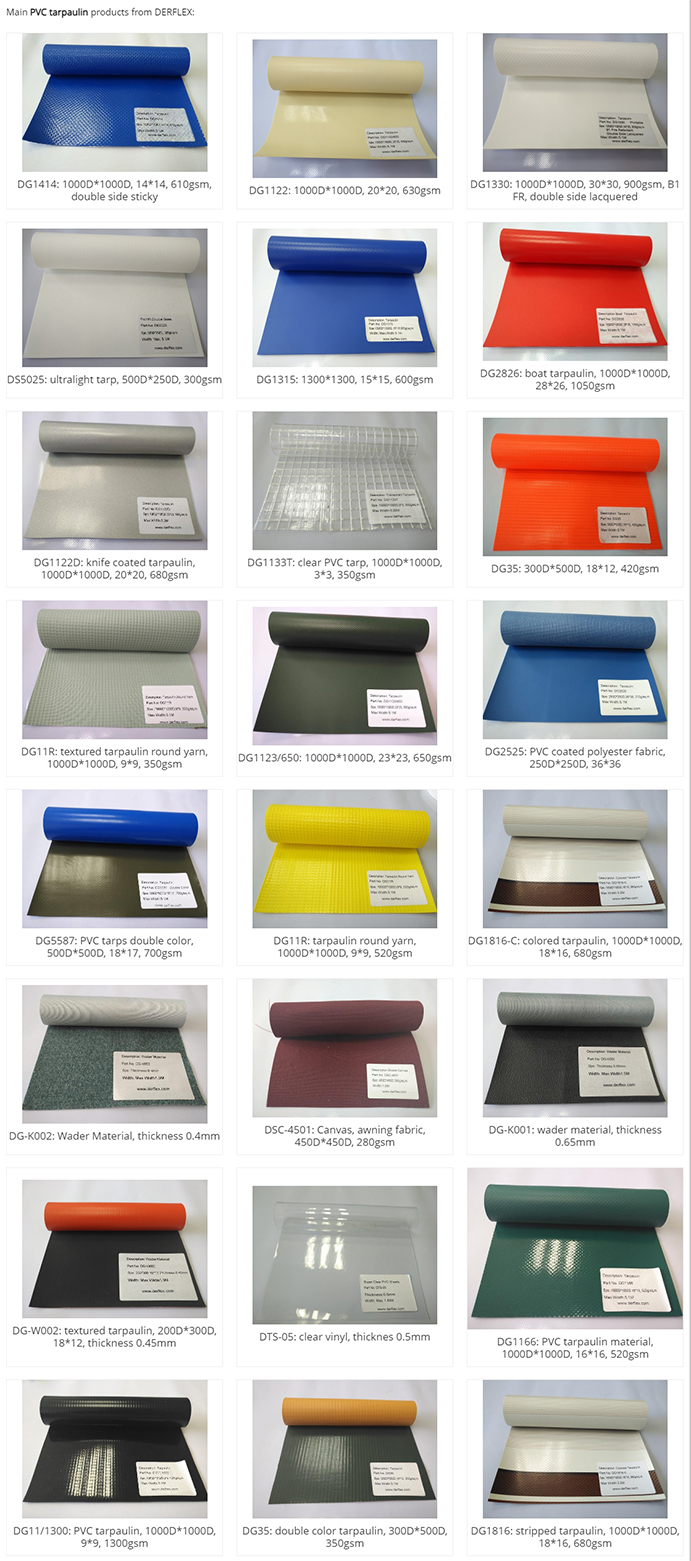
The same anti-mildew tarp specification should not be used for every market. Each application has a different mix of moisture, wind, abrasion, contamination and handling frequency.
Fitted or rectangular covers for generators, machinery, tanks, tools and seasonal equipment exposed to rain, dew and airborne dirt.
Crop, hay, grain, feed, machinery and temporary storage covers where organic residue and humid weather require frequent cleaning and drying.
Reusable transportation tarps that need waterproof seams, strong edges, controlled weight and flexibility for repeated installation.
Covers for timber, insulation, steel, tools and unfinished work where secure tie-downs and rapid drainage matter during temporary outdoor storage.
Custom panels for temporary roofs, side walls, camps, market structures and work shelters requiring weather protection and cleanable surfaces.
Short- or medium-term covers for goods stored near open docks, semi-enclosed yards or coastal facilities with frequent condensation cycles.
, A clearer inquiry allows the material, fabrication route and price level to be matched more efficiently.
Describe the asset, its shape, surface temperature, sharp edges, contamination risk and whether it releases heat or moisture.
Separate temporary storm protection from seasonal use, multi-year reusable programs and permanent tensioned cover structures.
Rainfall, ground vapor, crop moisture, condensation, wash-down and coastal humidity require different control details.
Provide the tie-down method, expected wind exposure, grommet spacing, webbing needs, attachment hardware and required access points.
Confirm roll material, cut panels or finished covers, plus estimated quantity, packaging, branding, repeat-order plan and target market.
The ranges below are typical discussion directions for PVC tarpaulin products. Final values depend on the yarn structure, coating formula, width, processing method and project requirements.
A heavier tarp is not automatically the right tarp. Excess weight can make handling difficult, while an underspecified fabric may fail at the edges, seams or tie points before the main panel is damaged.
All specification ranges and optional treatments should be confirmed during quotation, sampling and production review. Performance depends on the complete material and finished-cover design.
Anti-mildew wording should be connected to a confirmed material route and acceptance plan. A practical pre-production review can prevent disagreements about finish, dimensions, seams and intended use.
DERFLEX supports professional buyers who need more than a standard retail tarp. The project can begin with roll-material selection and continue through panel planning, welding, edge reinforcement, hardware, packaging and repeat-order coordination.
This approach is useful for importers, distributors, tarp fabricators, equipment manufacturers, agricultural suppliers and private-label brands that need consistent specifications across multiple sizes or markets.
These six related pages help buyers compare the base material, waterproofing, UV exposure and customization route.
Review mildew risk, cleaning, storage and material considerations for humid environments.
Outdoor product Outdoor TarpaulinExplore waterproof PVC tarpaulin for construction, storage, agriculture and shelter use.
Base material PVC TarpCompare heavy-duty coated polyester options for long-term and reusable protection.
Rain protection Waterproof TarpsReview waterproof cover structures, seam design and heavy-duty tarp directions.
Sunlight exposure UV Resistant TarpsPlan sunlight resistance together with heat, color stability and outdoor durability.
OEM finished cover Custom Tarp ManufacturerDevelop custom dimensions, reinforcements, hardware, printing and private-label packaging.
Practical answers for importers, distributors, equipment buyers, fabricators and agricultural cover programs.
It is an outdoor cover whose material, surface and finished construction are selected to reduce susceptibility to mildew under defined conditions. The term does not mean that growth is impossible. Dirt, plant residue, pooled water, condensation and wet storage can still create favorable conditions on the surface.
PVC coated polyester is usually the stronger route when full waterproofing, washability, welded seams and custom fabrication are required. Treated canvas can be useful when breathability is the main priority, but it generally requires more drying and maintenance and may be water-repellent rather than fully waterproof.
Yes. A sealed cover can trap warm, moist air when temperatures change. Depending on the asset, the design may need slope, stand-off spacing, planned vents, open lower edges or periodic airing. The correct approach depends on whether the protected item can tolerate airflow and direct humidity.
Remove dirt and organic residue, wash with a compatible mild cleaner, rinse, and allow both sides to dry completely. Fold or roll the tarp only after it is dry, then store it in a ventilated area away from standing water, sharp edges and contamination.
DERFLEX can discuss custom PVC coated polyester material and finished covers, including weight, width, color, surface finish, anti-mildew direction, UV stabilization, seams, hems, eyelets, webbing, access panels, printing and packaging. Feasibility and performance requirements should be confirmed during quotation and sampling.
Provide the application, climate, outdoor exposure period, finished size or roll width, target material weight if known, fastening method, required color, optional treatments, annual quantity, supply format and whether OEM packaging or branding is needed.
Send DERFLEX your application, dimensions, climate, fastening method, expected service cycle and order quantity. The team can discuss a suitable material and finished-cover direction for your B2B program.