


Polyether TPU vs Polyester TPU
The practical difference is not appearance—it is how the TPU soft-segment chemistry responds to water, humidity, abrasion, oils, low temperature and long-term service conditions.
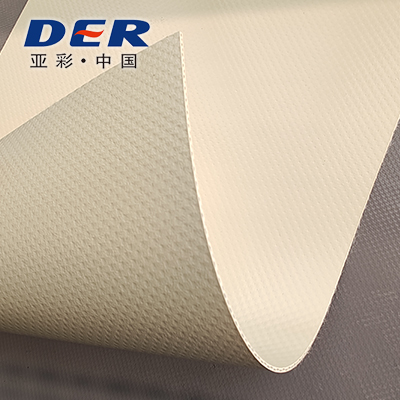
DERFLEX TPU coated textile sample. The visible surface alone cannot tell you whether the TPU chemistry is polyether- or polyester-based; the grade must be specified and documented.
Which TPU Type Should You Start With?
Start from the exposure profile, not from a generic claim that one TPU is “better.” For many OEM projects, the right first choice becomes clear once water/humidity and abrasion/oil priorities are separated.
Start with Polyether TPU when…
- The product has repeated or long-duration water contact.
- High humidity or hydrolysis is a design concern.
- Cold-weather flexibility and repeated flexing are important.
- Marine, inflatable, medical-air or water-holding service is involved.
- Microbial resistance in wet service is relevant.
Start with Polyester TPU when…
- Abrasion and surface wear are dominant stresses.
- Higher mechanical performance is a major selection target.
- Oil, grease or selected solvent exposure must be evaluated.
- The product operates mainly in dry industrial conditions.
- Lamination strength and surface durability are key design priorities.
Important: these are material-family directions, not a substitute for grade-specific technical data. Additives, hardness, hard-segment chemistry, film thickness, reinforcement and processing can materially change performance.
Polyether TPU vs Polyester TPU Performance Matrix
The table is intentionally directional rather than numerical because commercially available TPU grades vary widely. Use it to choose the correct chemistry family for sampling, then validate the exact grade.
| Decision Factor | Polyether TPU | Polyester TPU | Buyer / Engineering Note |
|---|---|---|---|
| Hydrolysis resistance | Generally stronger direction | More exposure-sensitive unless grade is specifically stabilized | For hot/wet, humid or immersed service, hydrolysis testing should be part of approval. |
| Water & humidity exposure | Common first choice | Needs careful long-term review | Do not confuse initial waterproofness with long-term polymer resistance to moisture. |
| Low-temperature flexibility | Often stronger direction | Grade-dependent; many grades remain flexible but require confirmation | Ask for cold-flex data at your actual service temperature, not a generic “cold resistant” claim. |
| Microbial resistance in wet service | Often stronger direction | Generally less favored in continuously humid conditions | Relevant for damp hoses, marine systems and products stored wet. |
| Abrasion / wear | Very good in suitable grades | Often stronger direction | Abrasion mode matters: sliding wear, flexing wear and particulate impact are not the same test. |
| Mechanical strength | Strong, grade-specific | Often higher direction | Do not evaluate TPU chemistry alone when a textile reinforcement carries most of the tensile load. |
| Oil / grease resistance | Usable in selected grades; compatibility must be tested | Common first direction for oil-related exposure | Fuel blends, aromatic hydrocarbons and additives can behave differently from lubricating oils. |
| Chemical resistance | Depends strongly on chemical family and formulation | Often favorable for selected oils/solvents | Request immersion or exposure data for the exact chemical and temperature. |
| Heat / hot-wet service | Often preferred when heat is combined with moisture | Can perform well in dry heat; hot/wet exposure needs special attention | “Heat resistance” should never be selected separately from humidity and service duration. |
| HF/RF / hot-air welding | Possible with suitable grades and structures | Possible with suitable grades and structures | Weldability depends on grade, thickness, surface, additives, coating side and machine settings. |
| UV / non-yellowing | Not determined by polyether vs polyester alone | Ask separately about aromatic vs aliphatic TPU and UV-stabilization strategy. | |
| Medical / food-contact suitability | Chemistry family alone does not establish compliance | Specify the required regulation, extractables/leachables or biocompatibility requirement and approve a compliant grade. | |
| Price | No universal winner | Price changes with grade, hardness, additives, thickness, width, volume and compliance package. | |
Three Different “Polyester / Polyether / Aliphatic” Decisions Are Often Mixed Together
A strong TPU specification separates polymer chemistry, optical/weathering chemistry and textile reinforcement. These decisions solve different engineering problems.
Polyether vs Polyester TPU
This usually describes the soft-segment / polyol chemistry. It strongly influences hydrolysis, water/humidity behavior, low-temperature flexibility, abrasion and oil/chemical direction.
Aromatic vs Aliphatic TPU
This is a different classification. It matters especially for UV color stability, transparency and yellowing behavior. A buyer who needs a clear outdoor film should ask this question separately.
Nylon vs Polyester Base Fabric
In TPU coated textiles, “polyester” may refer to the reinforcement—not the TPU chemistry. The same polyester woven base can be coated with polyether TPU or polyester TPU depending on the exposure profile.
For reinforced roll goods, review TPU coated polyester fabric separately from the choice between polyether- and polyester-based TPU chemistry.
Match TPU Chemistry to the Failure Mode You Are Trying to Prevent
Inflatable Boats & Packrafts
Repeated water exposure, folding, cold conditions and welded seams usually make polyether TPU a strong starting direction.
Start: Polyether TPUWater Bladders & Flexible Water Tanks
Hydrolysis and water-contact durability are major concerns. Validate film/coating continuity and finished-seam performance.
Start: Polyether TPUMedical Air Cushions
Hydrolysis, cleanability, flexibility and air retention matter, but compliance must be based on a qualified exact grade—not chemistry name alone.
Often: Polyether TPUIndustrial Wear Covers
If the product is mainly dry and exposed to sliding, rubbing or mechanical wear, polyester TPU is often the first family to compare.
Start: Polyester TPUOil Bladders & Fuel-Related Systems
Polyester TPU is commonly evaluated for oil resistance, but exact fuels, additives, temperature, contact duration and seam design require compatibility testing.
Evaluate: Polyester TPUClear Outdoor Windows / Film
Water resistance matters, but UV and yellowing often depend more on aliphatic vs aromatic chemistry and stabilization. Do not decide on ether/ester alone.
Two-axis selectionFor airtight roll-goods applications, see TPU inflatable fabric. For transparent film structures, see clear TPU film roll.
A 6-Step Way to Choose Polyether or Polyester TPU
1–3: Define the Environment
- Water and humidity: Is the product immersed, washed, stored wet or used in tropical humidity?
- Abrasion and mechanical wear: Is sliding contact or repeated rubbing the dominant failure mode?
- Oil and chemicals: Which exact liquid, concentration, contact time and temperature are involved?
4–6: Define the Product System
- Temperature and flexing: What is the lowest service temperature and how often will the product fold?
- Construction: Film only, coated textile, laminated textile, one-side or double-side TPU?
- Processing: HF/RF welding, hot-air welding, heat sealing, lamination or another joining process?
DERFLEX supplies TPU coated fabric and related roll-goods platforms where chemistry, reinforcement, coating side, width, thickness, finish and joining method can be discussed together.
What the Simple Comparison Charts Usually Miss
Mistake 1: Selecting only by hardness
Two TPU grades at the same Shore hardness can use different soft-segment chemistry and behave very differently in moisture, abrasion or oil exposure.
Mistake 2: Treating “waterproof” as “hydrolysis resistant”
A non-porous film can initially block water while its polymer chemistry may still be vulnerable to long-term hot/wet degradation. These are different performance questions.
Mistake 3: Assuming all oils are equivalent
Lubricating oil, hydraulic fluid, diesel, gasoline, biofuel blends and aromatic hydrocarbons can produce different swelling or degradation behavior. Use the exact medium for compatibility testing.
Mistake 4: Ignoring the textile substrate
In TPU coated fabric, the textile can carry most tensile and tear loads. Base denier, weave, nylon/polyester reinforcement and coating adhesion must be specified separately from TPU chemistry.
Mistake 5: Using an RF welding setting from another grade
Welding windows change with chemistry, coating thickness, additives, surface finish and equipment. Production-representative trials should confirm seam strength and process repeatability.
Mistake 6: Assuming UV performance from ether/ester chemistry
Outdoor yellowing and long-term optical stability are strongly influenced by aromatic vs aliphatic chemistry and stabilizers. Ask for those details independently.
DERFLEX TPU Image Pack
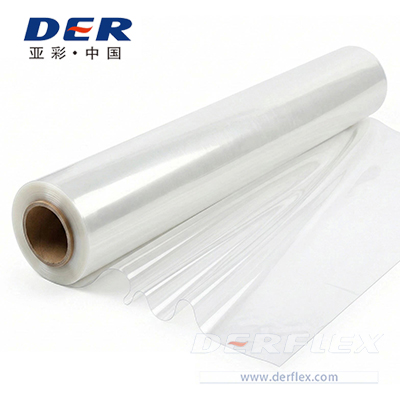
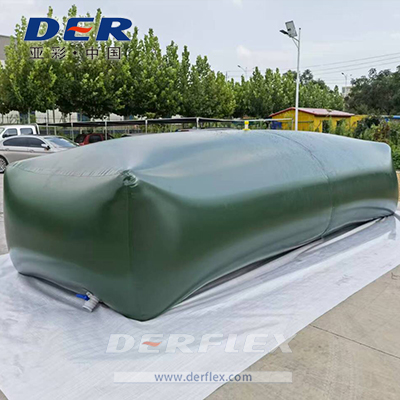
These are real DERFLEX-hosted images that can support the page in Google Images while keeping the visual context connected to TPU roll goods, film and liquid-holding applications.
The Same TPU Chemistry Can Behave Differently in Different Constructions
A polyether or polyester TPU film is not automatically equivalent to a reinforced TPU textile. In coated fabrics, polymer choice works together with the base fabric, coating/lamination method, adhesion, thickness and seam geometry.
| Construction | Main Variables | What to Validate |
|---|---|---|
| TPU Film | Ether/ester chemistry, aromatic/aliphatic type, hardness, thickness, surface, additives | Tensile/elongation, puncture, hydrolysis, oil/chemical compatibility, weld or lamination behavior, blocking, clarity if applicable |
| TPU Coated Fabric | All film/coating variables plus base textile, denier, weave, coating side, adhesion | Tensile/tear, coating peel, seam strength, airtightness/waterproofness, fold cycle, abrasion, roll consistency |
| TPU Laminated Fabric | Film grade, adhesive or bonding route, substrate, lamination temperature/pressure | Bond durability, delamination risk, weldability, flexibility, environmental aging and finished-product seam behavior |
For broader material architecture, review DERFLEX TPU fabric. If your project is specifically oil-related, use the oil resistant TPU coated fabric guide and define the exact liquid before requesting a sample.
Information to Send Before Asking for a TPU Recommendation
The most useful quotation starts with the finished product and exposure profile. “Need TPU fabric” is not enough to select polyether or polyester chemistry reliably.
Application & Environment
- Finished product and product dimensions
- Air, water, oil, fuel, chemical or dry-contact service
- Continuous / intermittent exposure and expected duration
- Operating and storage temperature
- Indoor, outdoor, marine, tropical or cold-weather conditions
- Cleaning agents, disinfectants, saltwater or other secondary exposure
Material & Processing
- Film, coated fabric or laminated fabric
- Polyester or nylon base textile if reinforced
- Target thickness / GSM / denier if already defined
- Single-side or double-side TPU
- HF/RF, hot-air or heat-seal processing
- Width, color, finish, roll length, quantity and destination
Build the TPU Topic Cluster Around Real Material Decisions
Polyether TPU vs Polyester TPU FAQ
Which is better: polyether TPU or polyester TPU?
Neither is universally better. Polyether TPU is commonly favored for hydrolysis resistance, water/humidity exposure and low-temperature flexibility. Polyester TPU is commonly favored for abrasion, mechanical strength and many oil/grease exposure directions. The exact TPU grade should be matched to the real service medium, temperature, duration and manufacturing process.
Is polyether TPU more waterproof than polyester TPU?
“Waterproof” and “hydrolysis resistant” are different properties. Both can be made as non-porous water-barrier films or coatings. Polyether TPU is generally more resistant to long-term hydrolytic attack in wet or humid environments, which is why it is often selected for repeated water contact.
Is polyester TPU better for oil resistance?
Polyester TPU is often the first family evaluated for oils, greases and selected solvents, but oil resistance is grade- and medium-specific. Diesel, hydraulic oil, gasoline, aromatic fuels and additives should not be treated as equivalent. Compatibility testing with the exact liquid is recommended.
Which TPU is better for inflatables?
Polyether TPU is commonly preferred for outdoor and water-contact inflatables because hydrolysis resistance and cold flexibility are important. Final performance also depends on the textile reinforcement, coating side, seam design, welding parameters and air-pressure requirement.
Does polyester fabric mean polyester TPU?
No. In “TPU coated polyester fabric,” polyester usually describes the textile substrate. The TPU coating on that polyester textile may itself be polyether-based or polyester-based. These two decisions should be specified separately.
Which TPU has better UV resistance?
Polyether versus polyester does not answer UV/yellowing performance by itself. Aromatic versus aliphatic TPU chemistry and the UV-stabilizer package are major variables. Clear or color-critical outdoor products should specify these separately.
Can both polyether and polyester TPU be RF welded?
Suitable grades of both families can be used in RF/HF or heat-welded constructions. The production window depends on exact formulation, additives, hardness, thickness, surface finish, reinforcement and equipment. A production-representative welding trial should be approved before bulk conversion.
Which TPU is cheaper?
There is no reliable universal price rule. Cost depends on TPU grade, hardness, additives, aliphatic/aromatic chemistry, compliance, thickness, width, reinforcement, order volume and market conditions. Compare total application fit and service risk rather than resin-family price alone.
Need Help Choosing Polyether or Polyester TPU?
Send DERFLEX the finished product, contact medium, temperature, TPU format, base textile, thickness/GSM, width, welding method, required tests, quantity and destination. The goal is to select a practical material direction for sampling and finished-product validation—not to force every project into one TPU family.
Request a TPU Material Review