Cutting & nesting
Confirm usable width, edge stability, lay-flat behavior, grain direction and whether the material will be cut in single or multiple plies.




Coated material development · roll supply
DERFLEX supplies polyurethane leather roll material for manufacturers and importers who need more than a color match. Define the usable width, winding direction, backing, roll length, joins, identification and packing so the material arrives ready for controlled production.
A swatch answers visual questions. A production roll answers operational ones. If its usable width does not match the nesting plan, the factory buys avoidable offcut. If face direction is unclear, rewinding may be required. If joints, start/end allowance or core size are not defined, the quoted price per meter does not reveal the real converting cost.
This page therefore treats PU leather as roll stock rather than a decorative sample. Buyers who need broader material and surface options can also review DERFLEX polyurethane leather manufacturing capabilities.
State whether the dimension is total coated width or minimum usable width. A small difference at both edges can affect repeated panel nesting, strip cutting and yield.
Confirm nominal length, measurement method, short-roll policy and whether the first and last portions are included in usable quantity.
Embossed or two-tone surfaces may show a visual direction. Record roll direction on the approved sample and nesting plan to reduce shade or grain reversal in assembled products.
Core inside diameter, outside roll diameter, roll weight, face orientation and protective wrapping should suit the buyer’s racks, unwind stand and handling limits.
The surface may look similar, but the substrate changes composition, labeling, stretch, edge behavior, cost and the market statement a finished-product brand can make.
A polyurethane surface system is applied, transferred or laminated onto knitted, woven, nonwoven or microfiber-based support. This is normally a synthetic roll construction and is commonly converted by cutting, sewing, quilting, wrapping or lamination.
Typical commercial description: “PU synthetic leather” or “polyurethane-coated textile,” subject to the confirmed composition.
A polyurethane finish is carried on natural split leather. It should not be grouped automatically with fully synthetic PU rolls. The substrate declaration and applicable labeling rules need separate review.
Do not infer “genuine,” “vegan,” “100% PU” or “fully synthetic” from the surface name. Confirm the complete bill of material.
Two polyurethane leather roll quotations can show the same length while delivering different usable areas. Edge condition, directional grain, defect allowance, joint positions and panel geometry influence the number of components cut from each roll.
For bulk purchasing context, visit DERFLEX’s PU leather wholesale roll supplier page.
The same leather-look surface can behave differently when fed, tensioned, folded, punctured or bonded. Tell DERFLEX how the roll enters the production line.
Confirm usable width, edge stability, lay-flat behavior, grain direction and whether the material will be cut in single or multiple plies.
Review backing stretch, needle marks, seam appearance, feeding behavior and the risk of distortion around curves or repeated stitch lines.
Discuss softness, recovery, conformability, surface whitening at folds and the balance between stretch and dimensional control.
State the foam, board, adhesive and process conditions. Bonding compatibility should be confirmed on the intended layer stack.
Check how additional heat, pressure or punching affects the surface, backing, edge definition and visual consistency.
Define roll tension, core, face orientation, target slit width and edge quality for converters supplying narrower production rolls.
The table below is an RFQ framework. It intentionally avoids universal “standard” values because an upholstery roll, a wrapped-panel roll and a small-goods roll may need different constructions.
| Order field | What to state | Why it affects production |
|---|---|---|
| Composition | PU surface route plus knitted, woven, nonwoven, microfiber or explicitly declared alternative base. | Controls labeling, stretch, edge behavior, body, weight and processing route. |
| Surface master | Approved color, grain, embossing depth, gloss, touch and directional appearance. | Creates a physical reference for approval and repeat-order comparison. |
| Thickness & weight | Target, tolerance and measurement method relevant to the selected construction. | Influences sewing, folding, drape, bulk, panel fit and freight planning. |
| Usable width | Minimum acceptable coated width after excluding unusable edges, if applicable. | Directly affects marker nesting, strip yield and consistent component placement. |
| Roll length | Nominal or minimum length, measurement method, short-roll rule and start/end allowance. | Supports inventory, production scheduling and accurate area reconciliation. |
| Core & winding | Core inside diameter, face-in/face-out, direction mark, roll tension and diameter or weight limit. | Helps the roll fit storage racks, unwind equipment and surface-protection requirements. |
| Defects & joins | Permitted quantity or grading rule, marking method, joint policy and minimum usable section length. | Allows the cutting team to plan around interruptions and calculate accepted yield. |
| Verification | Test methods and acceptance values for the actual market and application. | A named method and pass criterion are clearer than unqualified words such as “durable” or “waterproof.” |
| Identification | Article code, color/lot code, roll number, quantity, production reference and barcode if needed. | Supports traceability, warehouse control and repeat-order communication. |
| Packing | Protective film, outer wrap, end protection, pallet/carton route, shipping marks and document list. | Reduces avoidable pressure marks, moisture exposure and identification errors in transit. |
Final specification, tolerances, minimum order quantity, lead time, test scope and documentation depend on the agreed construction and commercial order. Confirm them on the quotation, approved sample and purchase contract.
A color chip is useful, but it does not document winding, usable width, backing behavior or roll presentation. A practical approval pack connects the visual master to the factory’s receiving and cutting rules.
Assign article, color and grain codes. Record whether the face is directional and attach clear photos of the face, back and roll label.
Check total width, minimum usable width, thickness and appearance at agreed cross-roll positions rather than relying on one center reading.
Cut and convert representative components using the intended needle, adhesive, foam, heat, pressure or forming conditions.
Agree how color, gloss, embossing and normal roll marks are judged, including observation conditions and the approved master reference.
Confirm core, winding face, direction label, roll protection, identification and any permitted joint or defect-marking practice.
Keep a signed master, test record and first-production roll data so repeat orders can refer to the same acceptance basis.
A short incoming check helps separate transport or roll-condition issues from later cutting and assembly problems. Quarantine a questionable roll until purchasing and production agree how to proceed.
Inspection frequency and acceptance rules should reflect the product risk, order history and contract. Where a regulated or customer-specific application is involved, use the relevant documented test plan.
Link every observation to the roll number and batch reference. Photograph exceptions before removing labels or discarding packing.
Applications are grouped here by what happens to the roll, helping product developers communicate the processing load as well as the visual goal.
Seating panels, cushions, headboards and interior surfaces where width utilization, seam behavior, hand feel and backing stretch need to work together. Explore upholstery PU leather.
Door panels, armrests, consoles and decorative components requiring controlled forming, bonding and grain direction. Review automotive PU leather.
Cases, bags, wallets, belts and accessories where fine nesting, fold appearance, edge finish and flexible handling influence the accepted yield.
Wall, retail, hospitality and furniture panels that use adhesive or foam layers and need the surface to remain visually controlled after bonding.
Seat and padded-panel assemblies in which needle density, foam, backing and tension can change the finished appearance.
Master rolls, slit rolls or private-label supply for regional material programs. Compare the broader synthetic leather fabric family when several surface systems are being evaluated.
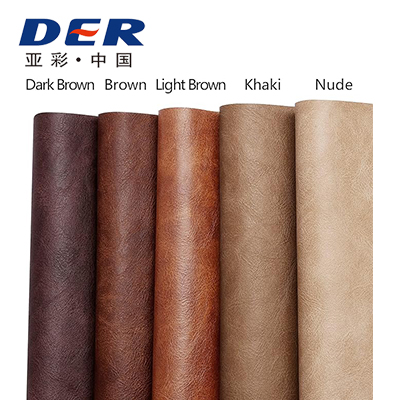
DERFLEX brings coated-material development, surface design, backing selection and export-oriented roll coordination into one discussion. The objective is to create a specification that can move from sampling to receiving, conversion and reorder without depending on an ambiguous trade name.
Support can include color and grain direction, construction review, trial sampling, project-specific test coordination, roll identification and packing discussion. Availability and final terms depend on the chosen structure, order quantity, destination requirements and approved quotation.
Clear answers for converters, furniture producers, vehicle-interior suppliers, bag factories, importers and distributors.
A polyurethane leather roll is a continuous roll good whose visible surface uses a polyurethane-based coating, film or resin system. Most industrial PU synthetic leather rolls use a textile, nonwoven or microfiber backing, but the phrase can also describe split leather with a polyurethane finish. The complete composition should be confirmed in the purchase specification.
Not necessarily. Textile-backed PU synthetic leather contains no natural hide, while PU-coated split leather includes an animal-derived split base. Ask the supplier to state the substrate and coating construction in writing before deciding product labeling or consumer-facing claims.
Confirm the final application, usable width, target roll length, core size, face-in or face-out winding, backing, thickness direction, color and grain reference, permitted joins, defect-marking method, packing, quantity and requested test methods. These details make quotations more comparable and help the production team plan handling.
Roll width and length can be discussed according to the selected construction, production route, cutting layout, order volume and packing limits. Final dimensions and tolerances should be written into the approved order specification; they should not be assumed from a catalog image.
Keep the roll label, confirm packaging and core condition, measure usable width and thickness at agreed positions, compare color and grain with the approved master, unwind enough material to review winding and surface condition, and record any defect or join positions before cutting. Use the sampling frequency and acceptance rules agreed for the order.
The PU surface may provide a useful water-resistance direction, but finished-product performance also depends on the coating system, backing, cut edges, seams, perforations, cleaning chemicals and exposure conditions. Use an agreed test method for the intended application rather than relying on the material name alone.
Send DERFLEX the finished-product application, reference sample or image, cutting width, surface direction, backing, approximate thickness, target roll format, quantity, destination and test requests. The team can review a suitable material and sampling direction for your project.
Request A Quote