Name the oil or fuel
Provide the petroleum product, blend and available technical or safety data. Crude oil, diesel, lubricating oil and industrial mixtures should not be treated as one interchangeable test liquid.



Oil boom fabric for manufacturers who need to control the coating, the welded seam and the finished barrier—not just the fabric weight.
DERFLEX supplies PVC coated polyester material for oil containment boom shells and skirts. Define your oil-contact conditions, panel layout, welding process and storage cycle so the roll specification matches the product you manufacture. Discuss custom color, weight, width and packing requirements before sampling.
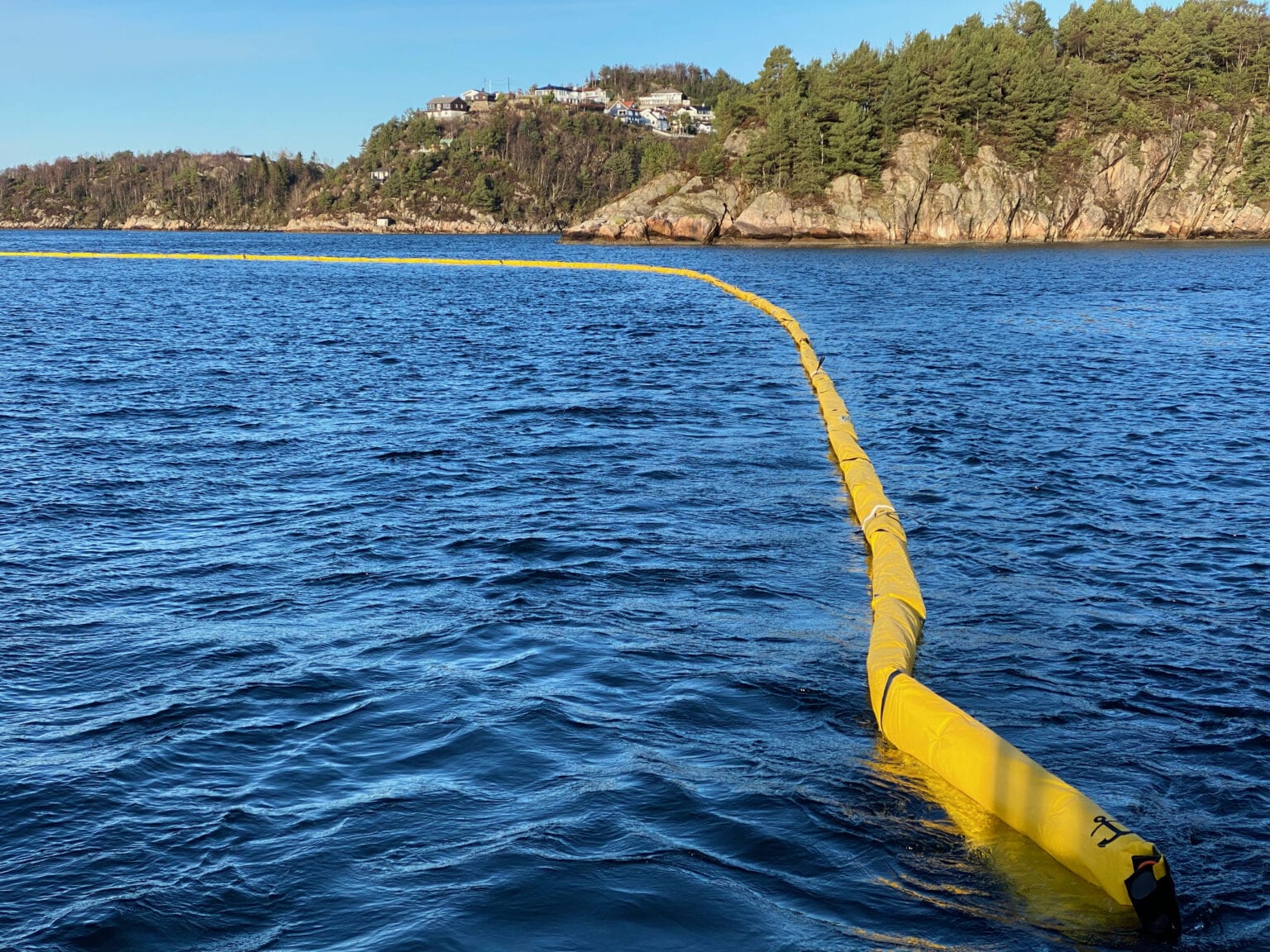
PVC coated oil boom fabric is a reinforced textile used to form the flexible shell or submerged skirt of an oil containment boom. Woven polyester provides reinforcement; the PVC coating forms the barrier surface and supports compatible welding processes. Oil-contact suitability belongs to the specific formulation and construction.
It is a non-absorbent barrier material. It helps a correctly designed boom contain or divert floating oil while recovery equipment removes it. The fabric itself does not provide flotation, absorb the spill or establish a finished boom's operating limits.
Explore the wider DERFLEX PVC coated fabric range when comparing industrial coating and reinforcement options.
Use the finished oil spill boom selection page to discuss geometry, flotation and system configuration. This page focuses on fabric roll procurement.
Record the material structure and the acceptance criteria together. A GSM value alone cannot describe an oil-resistant, weldable boom fabric.
| Parameter | Material direction | What to confirm |
|---|---|---|
| Construction | PVC coated woven polyester; barrier coating on the required surfaces. | Coating sides, substrate, exposed edges and the panel's oil-facing surface. |
| Published reference grades | 1000D × 1000D, 20 × 20 weave; 610 or 650 g/m². | Current availability, weave-count units, tolerances and grade-specific test data. These are sample starting points. |
| Weight & thickness | Selected for the application; final values confirmed in the quotation. | Total GSM, total thickness, coating distribution and allowed variation. GSM does not convert directly into thickness. |
| Tensile & tear strength | Requirements agreed for both warp and weft. | Test method, specimen width, units and condition before comparing results. |
| Oil & fuel contact | Formulation selected for the declared liquid and exposure. | Liquid identity or blend, temperature, duration, immersion/contact cycle and cleaning agents. |
| Welding & finish | HF/RF or hot-air processing subject to seam trials; surface options reviewed by grade. | Weld-facing side, lacquer compatibility, overlap geometry and measured seam performance. |
| Outdoor & storage exposure | UV and anti-wicking options can be discussed for the selected construction. | Exposure period, folding/reel handling, storage temperature and retained performance after conditioning. |
| Color | Yellow, orange or an agreed custom color, subject to material confirmation. | Physical color reference, batch tolerance and outdoor color-retention requirements. |
| Roll supply | Width, length, core and packing confirmed by project. | Usable width, panel yield, maximum roll handling mass, splice policy and export protection. |
DERFLEX's published material references are described in its oil boom fabric introduction. They do not establish a universal offshore rating, fuel approval or service-life guarantee.
Start with the most demanding realistic contact and handling condition, then work back to the coating, reinforcement and qualification plan.
| Application or design | Material priority | Approval evidence to request |
|---|---|---|
| Foam-filled harbor boom | Handling and abrasion resistance around float sleeves; tear resistance at local reinforcement. | Seam trial, sleeve/ballast-pocket sample and exposure-conditioned adhesion and tear results. |
| Inflatable response boom | Coating continuity, weldability, folding flexibility and air retention. | Representative welded chamber, pressure/leak checks and folding checks at the intended temperature. |
| Terminal or refinery barrier | Resistance to the declared petroleum product, repeated cleaning and outdoor exposure. | Exposure testing with specified liquid and cleaner, followed by fabric and seam evaluation. |
| River or intake protection | Tear/abrasion resistance near debris and attachment zones; coating integrity at cut edges. | Reinforcement sample and whole-system review for current, debris, anchoring and water-level changes. |
| Repeated reel deployment | Flexibility, resistance to blocking and predictable roll/reel handling. | Representative winding and unfolding trials; inspect creases, coating separation and weld transitions. |
For an inland barrier, review river boom application requirements alongside the fabric selection. A stronger fabric does not compensate for unsuitable boom geometry or anchoring.
Intermittent oil contact, continuous immersion and repeated solvent cleaning are different duties. Ask for the evidence relevant to your duty rather than assuming a general PVC fabric covers all three.
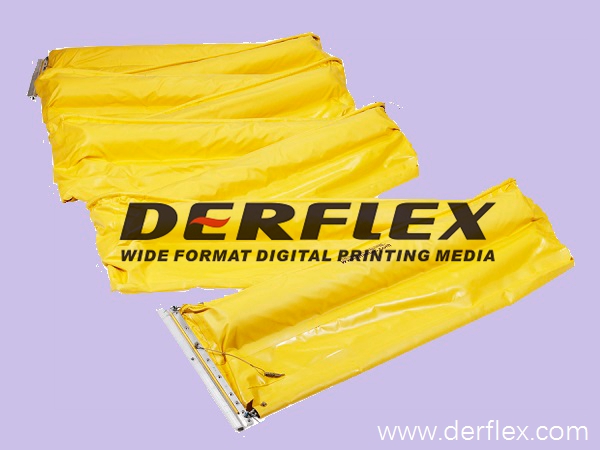
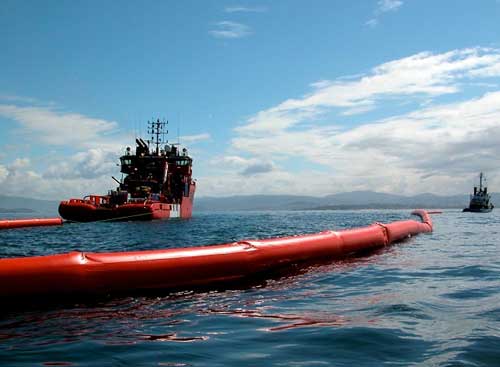
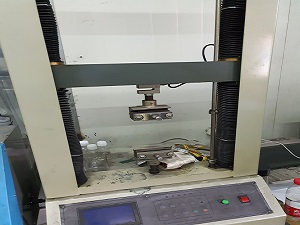
A useful oil boom fabric requirement describes the liquid, contact conditions and acceptable change after testing.
Provide the petroleum product, blend and available technical or safety data. Crude oil, diesel, lubricating oil and industrial mixtures should not be treated as one interchangeable test liquid.
State temperature, expected exposure duration, splash versus immersion and reuse frequency. Include detergents or other cleaners used during recovery and maintenance.
Agree how to evaluate changes in mass, dimensions, surface tack, flexibility, coating adhesion and seam performance. Compare exposed specimens with an unexposed control.
PVC is a candidate where a fabricator already uses compatible welding processes and wants to balance material cost with manufacturing yield. TPU is another coating route to evaluate where the design calls for a different flexibility, abrasion or exposure profile.
Compare equivalent test conditions and finished seam performance. See TPU coated fabric for oil spill booms for the alternative material route.
“Coated fabric and representative welded joints shall be evaluated with the specified liquid at the agreed temperature and duration. Report the method, conditioning, observed changes and retained performance against the agreed acceptance limits.”
This is a procurement wording example, not a DERFLEX test report or a certification statement.
Trial the proposed grade on your HF/RF or hot-air equipment. Surface finishes, coating thickness, contamination and tooling can change the process window. Record settings and evaluate cooled seams before accepting them.
Confirm how towing, mooring and connector loads pass through cables, webbing or other tension members. Test reinforcement transitions and pockets rather than assuming the shell fabric alone carries every load.
Review cut-edge exposure, anti-wicking requirements and seam continuity. Stitching introduces holes; an airtight chamber or barrier seam needs a qualified sealing construction. Inspect ballast pockets for wear points.
Include seam overlaps, sleeve folds, reinforcement and edge trim in the panel pitch. Specify fabric orientation on the drawing and obtain warp/weft results before deciding which direction carries the important loads.
Two panels with a 0.70 m cutting pitch and 0.05 m total edge allowance need at least 1.45 m usable width. This excludes any additional allowance your cutting method requires.
Planning example only; these dimensions are not a stocked roll specification.
Higher GSM and longer rolls affect lifting, unwinding and freight. Confirm your handling limit before requesting a standard packing format.
650 g/m² × 1.50 m × 100 m ÷ 1,000 = 97.5 kg of fabric. The core, protective wrapping and pallet increase shipping mass.
Calculation example only; it does not establish availability or a finished boom's weight.
Agree the evidence and acceptance limits before sampling. The buyer's fabric approval should be distinct from the finished boom's operational qualification.
Record mass, thickness, usable width, appearance, tensile and tear results in both directions, coating adhesion and barrier continuity. Identify the material, lot and test method on each report.
Grab and strip tensile tests are different measurements. Results expressed with different specimen widths or methods are not directly interchangeable.
Evaluate the declared liquid exposure, temperature, folding, abrasion or weathering duties. Check retained performance and representative joints after conditioning, rather than relying only on new material values.
Include a seam, pocket or reinforcement detail representative of the part most likely to govern your design.
Fabricate a representative pilot section. Confirm deployment handling and, for inflatable designs, air retention. Then agree sampling, tolerances, roll labels, splice limits and the release documents for repeat orders.
Keep an approved swatch, seam coupon and drawing revision so subsequent rolls can be compared with the same reference.
Standards define methods, not automatic approval. ASTM D751 contains test methods for coated fabrics. ASTM F715 addresses laboratory performance testing for coated fabrics used in spill-control barriers and temporary storage devices. Agree the applicable edition and test scope with your project team.
Review DERFLEX's quality-control approach and request the documentation needed for your selected grade. Mentioning a standard here does not mean every fabric has passed it.
Containment depends on freeboard, draft, flotation, tension members, connections, moorings and deployment conditions. Ordinary PVC boom fabric is also not a specification for an in-situ burning boom. Qualify the complete system for its intended duty.
DERFLEX's coated-fabric manufacturing platform includes PVC materials, coating and lamination capabilities, and OEM customization. For an oil boom program, discuss reinforcement, coating construction, color, roll format and application-specific performance before selecting a sample.
The useful outcome is an agreed material specification tied to your panel design and fabrication process. Ask which test reports, sample lengths, packing options and repeat-order controls can be supplied for that exact program.
General material workflow. The selected oil boom grade and processing route are confirmed during specification review.
Base weave, coating formulation, weight, usable width, surface finish, testing scope, order size and packing all affect the quote. Compare delivered cost per usable panel as well as price per square metre.
Reinforced PVC coated fabric is one option for boom shells and skirts; TPU and selected rubber-coated textiles are also used. The grade must suit the liquid exposure, deployment conditions, seam process and storage cycle. Fabric supplies the barrier and reinforcement, while flotation and ballast are separate parts of the finished boom.
No. Suitability depends on the coating formulation and the specific crude oil, diesel, lubricant, fuel blend or cleaning agent. Agree exposure duration and temperature, then assess fabric and welded samples for changes in mass, dimensions, flexibility, coating adhesion and seam integrity. A waterproof result alone does not establish fuel compatibility.
Choose GSM together with base-fabric strength, coating construction, tear resistance and handling requirements. DERFLEX has published 610 and 650 g/m² reference constructions with 1000D × 1000D yarn and a 20 × 20 weave. These are sample discussion points, not universal boom ratings. Specify the test method and acceptance limits for your design.
A grade may be considered for both, but approval requirements differ. Inflatable chambers need validated air retention and welded joints at the design pressure. Foam-filled sleeves still need durable seams, abrasion resistance and suitable liquid-contact performance. Qualify each finished construction separately.
Neither coating family is automatically better for every boom. Compare approved grades using the same oil-contact, flex, abrasion, cold-temperature and weld tests, then compare usable width, fabrication yield and delivered cost. A premium label or a higher GSM cannot replace application testing.
Yes. Send the boom drawing or panel dimensions, target liquid, contact conditions, welding method, fabric requirements, order quantity and destination. Ask for a trial length suitable for your welding equipment as well as a reference swatch. DERFLEX will confirm sample availability, custom options, MOQ, pricing and lead time for the selected specification.
Technical references for buyers. These explain test scope and containment principles; they are not certificates for a DERFLEX product.
NOAA · Spill containment methods ↗ASTM · D751 coated-fabric test methods ↗ASTM · F715 spill-control fabric test scope ↗For contract testing, confirm the current applicable edition with the laboratory; the D751 link above is an explanatory historical edition.
Send a drawing or cut pattern together with the exposure and manufacturing requirements. If you have an existing fabric, include a reference sample and the performance you want to match or improve.
Email: sales@derflex.com
Sample availability, MOQ and production lead time are confirmed against your selected grade and order.
Create a starting note to copy into your inquiry.
This helper prepares text in your browser. Use the quote page or email to send your inquiry.