



Material engineering / Buyer comparison
PVC Coated vs PVC Laminated Tarpaulin: Complete Buyer Comparison
Two manufacturing routes, two material architectures—and many possible quality levels. Compare the true differences in PVC application, bond structure, flexibility, welding and procurement risk so you can choose the right construction for covers, side curtains, tents and OEM fabrication.
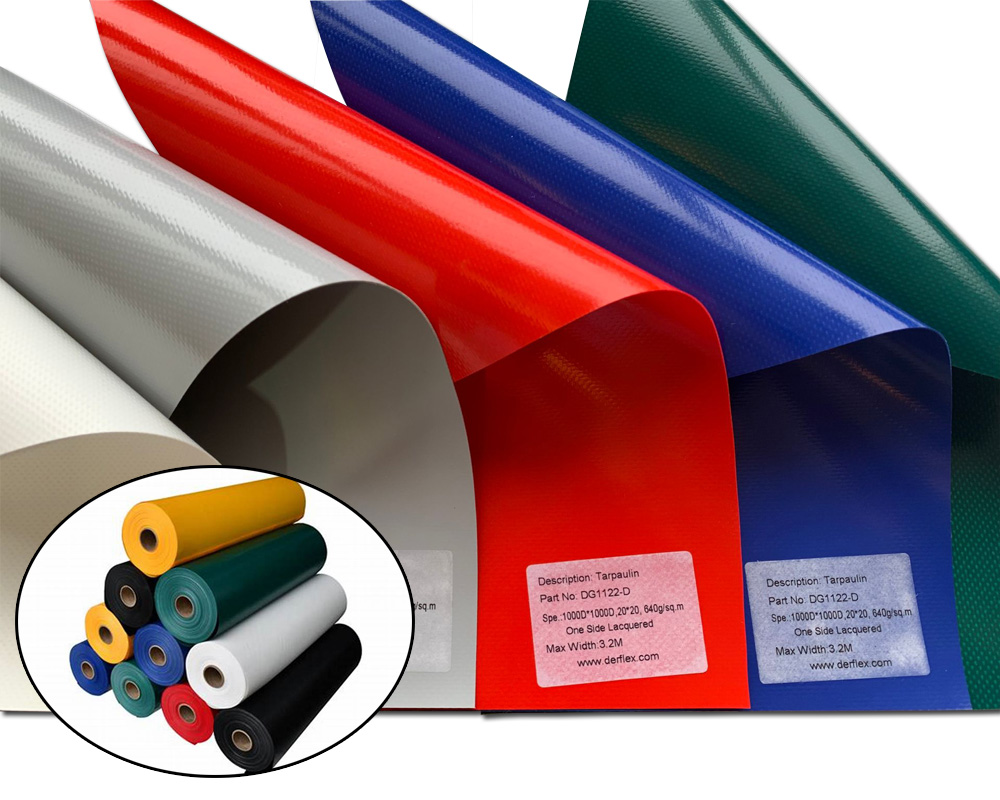
Choose the manufacturing route around duty cycle, fabrication and verified performance.
PVC coated tarpaulin generally receives a formulated PVC coating directly onto a polyester textile before heat fusion. PVC laminated tarpaulin generally combines pre-formed PVC film with the textile through controlled bonding under heat and pressure. Both can form waterproof and weldable fabric constructions.
Directly coated grades are often evaluated first for demanding outdoor flexing, repeated handling and abrasion programs. Laminated grades can suit carefully specified light- to medium-duty covers, promotional material, shelter walls and cost-controlled production. A sound laminate can outperform a poorly controlled coating; select by sample and test values, not the label.
How Coated and Laminated PVC Tarpaulins Are Built
The base polyester reinforcement can look similar. The way PVC is brought into the composite is the decisive process difference.
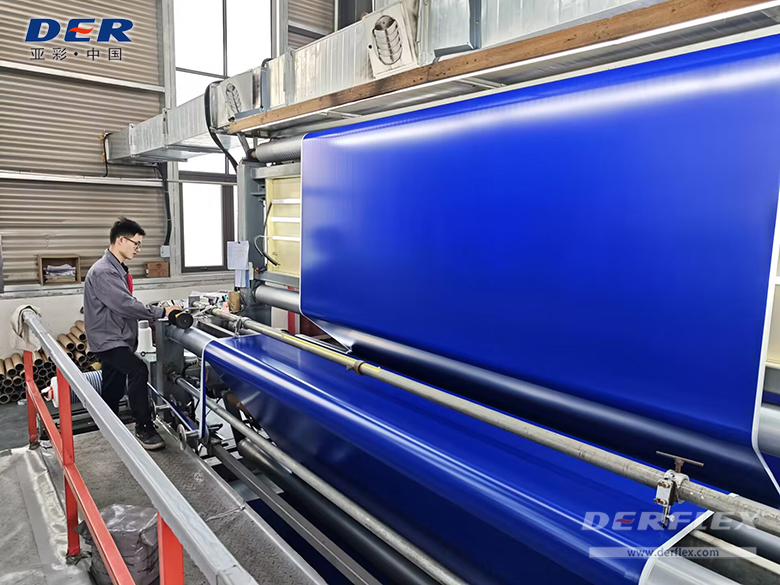
Direct knife coating: liquid PVC plastisol or an appropriate coating compound is metered onto the moving base fabric and gelled or fused during controlled heating. The process can wet and surround the yarn structure, depending on coating design and processing. Layer add-on, tension, heat history and finish all affect the final roll.
Film lamination: PVC films are prepared separately and joined to a knitted or woven reinforcement. The manufacturer must control film quality, bond compatibility, temperature, pressure and dimensional stability. The bonded interface deserves testing because it is part of the load and flex system.
These are representative structures, not a claim that every coated grade has five layers or that every laminate has an identical adhesive. Primer, topcoat, single-sided treatment, woven versus knitted scrim and specialty finishes are grade-specific.
Conceptual PVC coating
PVC compound is applied and fused on the textile during the coating process. Actual layer count depends on the grade.
Conceptual PVC lamination
One or more films are combined with a textile reinforcement through a controlled lamination route.
Conceptual construction diagram; not a microscope image, production drawing or performance certificate.
PVC Coated vs Laminated Tarpaulin at a Glance
Use this matrix to build a shortlist. These are common engineering directions rather than unconditional product claims.
There is no universal rule that a coated tarp is stronger than a laminated tarp at the same GSM. The polyester yarn, density, textile geometry and coating share may differ significantly. Even two nominal 650 GSM fabrics may have different tensile, tear, adhesion, flex and weld behavior.
| Decision factor | PVC coated route | PVC laminated route | What to verify |
|---|---|---|---|
| PVC introduction | Compound applied and fused on fabric | Pre-formed film bonded to fabric | Actual construction and bonding route |
| Typical sourcing direction | Frequently considered for higher-wear and repeat-use duty | Often considered for economical light/medium-duty and selected print uses | Both routes have many quality tiers |
| Flexing and cold fold | Potentially tailored with coating formulation and adhesion control | Depends heavily on film and bond formulation | Cold-flex and repeated folding after conditioning |
| Abrasion and scuff | Coating thickness and finish can be tuned for exposed service | Film thickness and finish must match wear level | Real contact surface and abrasion method |
| Coating / film bond | Fusion, coating-to-scrim behavior | Film-to-scrim interface and possible delamination | ISO 2411 or another agreed method |
| Welding / conversion | Thermoplastic surfaces may suit selected hot-air or HF welding | Likewise possible with compatible films and bonding | Trial weld, seam strength and appearance |
| Finish / printing | Available matte, gloss and surface treatments by grade | Film offers multiple surface and printing directions | Ink / lacquer / cleaning compatibility |
| Total cost | Potentially higher processing or material cost in certain grades | Often efficient when performance scope suits process | Cost per service cycle, not price per kilogram |
Compare representative grades at equal test conditions. The construction names do not define intrinsic tensile strength, UV lifespan, fire classification or warranty.
Which Route Fits Trucks, Tents, Covers and OEM Products?
Match the material to how the finished item is handled, attached, cleaned and exposed—not just to the initial selling price.
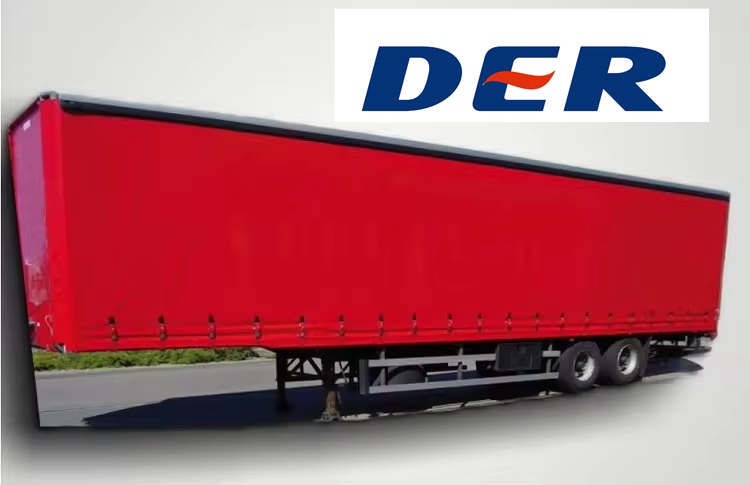
For a truck-curtain program, ask how many opening/closing cycles are expected, whether the surface rubs against hardware and how cold the fabric becomes during service. For a fixed shelter, roof tension, weather exposure, drainage and fire requirements may outweigh folding convenience. For printable OEM products, finish and dimensional stability can be as important as base strength.
A material choice remains incomplete until the converter has checked panel geometry, welding or sewing process, hem construction, contact patches and fastening layout. Strong roll goods can still fail where loads concentrate at a small metal fitting.
Truck side curtains and repeated rolling
Start by evaluating a coated grade where tension, vibration, sliding abrasion and many folding cycles are key; compare a laminate only after equivalent duty testing.
Seasonal shelters and promotional sidewalls
A suitable laminate may deliver the required waterproof surface and finish at controlled cost when handling cycles and structural loads are moderate.
Equipment covers and fabricated tarp bags
Either route may work; sharp corners, seam placement, contact abrasion and edge loads can dominate failure regardless of coating name.
Architectural and safety-critical fabric
Do not extrapolate from standard tarp grades. Require application-specific engineering data, approvals and applicable standards.
Adhesion, UV and Weld Checks that Separate a Price Quote from a Specification
The most consequential differences often become visible after folding, cleaning, weathering and conversion—not on the showroom swatch.
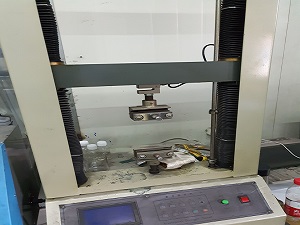
Bond integrity: request a relevant coating adhesion test such as ISO 2411:2024 and disclose the actual failure mode. Some failure patterns indicate interface separation; others occur inside the coating or textile and should not be simplified into a single “good/bad” photograph.
Mechanical behavior: compare tensile and tear results in both fabric directions under identical methods. The laminated or coated label does not tell you what denier and scrim density are inside the product.
Weather and aging: agree accelerated exposure and any post-aging tests based on destination climate. A UV hour claim without lamp, moisture cycle, temperature and pass criterion is difficult to interpret.
Welding: use the actual production equipment and seam geometry for trial conversion. Check early bond appearance, peel or seam strength as appropriate, crease recovery and material distortion. Do not copy a generic welding temperature between grades or equipment.
Compare Cost per Use, Not Only Price per Square Meter
The cheapest roll can be expensive after conversion scrap, seam rework, returns and short replacement cycles.
Ask each supplier to quote on the same usable width, nominal GSM and tolerance, finish, color, packing, roll length and inspection requirements. A wider roll can reduce seams on a finished cover; conversely, if the pattern does not nest efficiently, excess width creates waste. The proposed material should also be evaluated against actual fabrication yield.
For fleet programs, include cleaning time, repeated handling, ease of panel replacement and color consistency across replenishment orders. For export projects, include net material mass, packing efficiency, quality-document requirements and shipping terms. Do not compare a low-cost laminated 500D construction with a heavy coated 1000D or 1300D construction and attribute the full price difference solely to “lamination versus coating.”
| Quotation input | Why it changes cost or risk |
|---|---|
| Finished width and cutting utilization | Controls waste, seam count and labor |
| Polyester yarn and weave | Changes mechanical capacity independent of PVC route |
| PVC / film formulation and finish | Changes handling, UV direction and exposed-surface behavior |
| Welding, hems and hardware | Can dominate labor and failure risk for finished covers |
| Sample approval and batch control | Reduces nonconforming production and repeat-order mismatch |
Six Checks Before a Bulk Coated or Laminated Tarp Order
Treat the sample as a controlled specification, not just a color reference.
- Define the use case, exposure, expected handling cycle and service conditions.
- Record PVC processing route, base textile, warp × weft yarn construction and surface finish.
- Check nominal GSM, material thickness where needed, roll width and tolerances as separate fields.
- Compare tensile, tear, adhesion, weathering and waterproof data with a consistent test protocol.
- Make a representative finished panel to approve weld, edge, fastener and print behavior.
- Freeze the approved sample, technical sheet, inspection frequency and packaging description for repeat orders.
DERFLEX can review PVC coated and laminated roll-material directions and discuss relevant conversion requirements. Finished covers, custom fittings or complete assemblies should be identified explicitly in the RFQ rather than assumed included with a fabric-roll price.
Frequently Asked Questions
Short, evidence-led answers for specification review and supplier discussions.
What is the main difference between PVC coated and PVC laminated tarpaulin?
Is PVC coated tarpaulin always stronger than laminated material?
Which type is better for frequently opened truck side curtains?
Can laminated PVC tarpaulin be welded?
Does a heavier PVC coated tarp necessarily last longer?
What should I request before bulk purchasing either type?
Standards and Source Notes
Consult the official standard and the method version named in the purchase specification; standard titles do not establish the acceptance threshold.