News
Company News

PVC Flexible Duct Hose Manufacturer | DERFLEX Industrial Ducting

Update:2026/8/20 17:53:22 Views:
Industrial coated textiles · finished flexible duct fabrication
Blower Duct · Exhaust Hose · OEM Flexible Airflow Products

PVC Flexible Duct Hose

PVC-coated flexible duct hose configured for portable blowers, industrial air supply, exhaust, fume routing and temporary ventilation—built around pressure direction, fan interface and installation route.

DERFLEX focuses on flexible ventilation hose made from PVC-coated technical textile, with optional spiral reinforcement, welded fabrication, custom cuffs and project-defined lengths. Final pressure, temperature, flame and antistatic values are confirmed against the approved construction and requested test method.

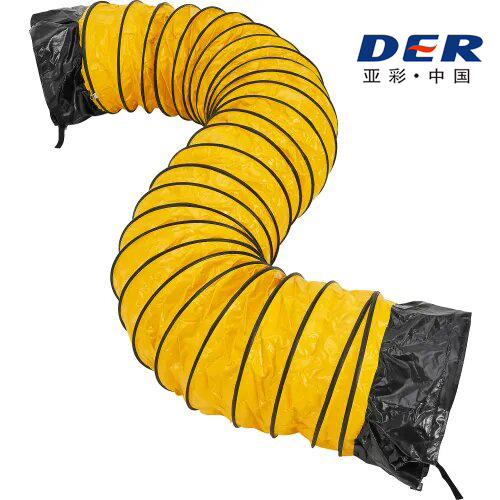
DERFLEX yellow PVC flexible duct hose with spiral reinforcement
Pressure-specificLayflat or shape-retaining structure
Project-sizedDiameter, length and end cuffs
Fabricated assemblyBody, helix, seam and fittings
OEM-readyColor, marking and packing options
Clarify the product before comparing quotes

“PVC flexible duct hose” can describe different hose architectures

Search results often mix blower ducting, smooth-bore material-transfer hose and collapsible ventilation duct. They can all contain PVC, but they are not interchangeable. Defining the construction first reduces the risk of selecting a hose that matches only by diameter.

01

PVC-Coated Fabric Duct Hose

A flexible technical-textile body with PVC coating, typically combined with a spring-steel helix or support rings when the bore must retain shape. Common for portable ventilation, blower hose, exhaust and temporary industrial air routing.

02

Rigid-PVC Helix Transfer Hose

A soft PVC wall reinforced by a rigid external PVC helix, often with a relatively smooth bore. This construction is widely used for smaller-diameter air, dust and light material transfer. It is a different product family from coated-fabric blower duct.

03

Layflat Positive-Pressure Duct

A collapsible PVC-coated fabric tube that opens when a blower pushes air through it. Its packing volume can be low, but an unsupported layflat tube is generally not selected for suction because negative pressure can pull the airway closed.

DERFLEX product focus on this page: industrial PVC-coated fabric flexible duct hose for air movement. If your project uses suction/extraction, frequent bends or reversible fan duty, the quote should state a shape-retaining reinforcement design rather than assuming a plain layflat hose.
The first engineering split

Choose the hose by pressure direction, not by color or diameter alone

A flexible air duct experiences different structural loads depending on whether the fan pushes air into the hose or pulls air through it. The same nominal size may therefore require a different wall, reinforcement or cuff system.

Positive pressure

Fresh-Air Supply

Forcing air from a blower toward the work zone can allow a lighter collapsible design when the hose does not need to stay open without internal pressure.

  • Portable blower fresh-air delivery
  • Temporary cooling or drying routes
  • Long sections where compact storage matters
Negative pressure

Exhaust & Extraction

When the fan draws air through the hose, the bore normally needs wire, ring or another shape-supporting structure to reduce the risk of collapse.

  • Fume and odor extraction
  • Localized exhaust and process maintenance
  • Routes with bends or vertical drops
Multi-use / OEM

Reversible or Equipment-Connection Hose

Rental fleets, fan brands and maintenance teams may prefer one reinforced format for more than one setup. The fan cuff, wire pitch, handling details and packing method should be specified together.

  • Portable ventilation kits
  • Fan inlet/outlet connection sections
  • Repeated deployment and storage
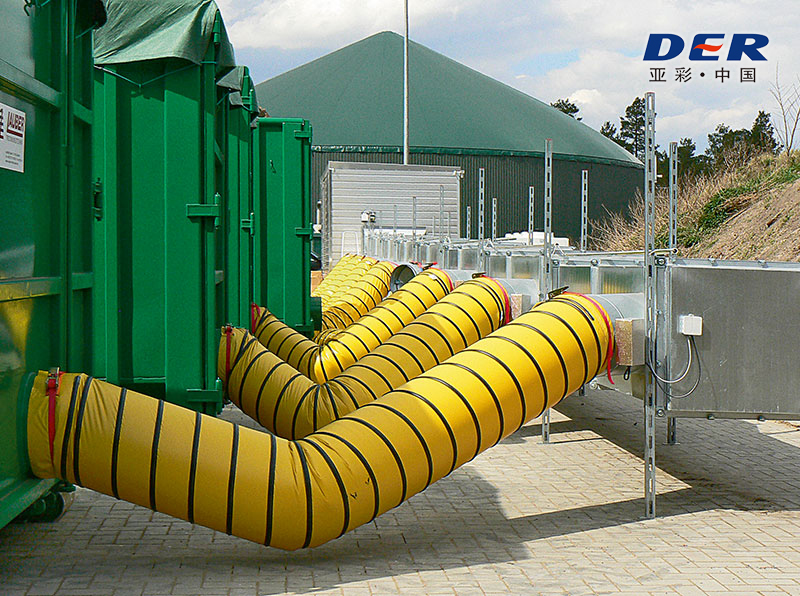
PVC flexible industrial duct hose installed for industrial ventilation
Finished-product construction

The hose works as an assembly

Performance is shaped by more than the PVC coating. The base textile, reinforcement, seam, cuff and wear details should be reviewed as one flexible air-conveyance product.

1

PVC-Coated Polyester Body

Polyester technical textile supplies the load-bearing reinforcement; PVC coating forms the flexible air barrier and supports welding and surface protection requirements.

2

Spiral Wire or Ring Support

Used where the hose needs shape retention under suction, around bends or during repeated equipment connection. Final wire size and pitch depend on diameter and duty.

3

Welded Seam & Reinforcement

Hot-air or high-frequency welding may be used according to the material and construction. Seam width and reinforcement should be matched to the intended pressure and handling load.

4

End Cuff & Fan Interface

Drawstring cuffs, clamp cuffs, belts, rings, zippers or project-specific adapters can be developed around the actual fan outlet and joining method.

5

Wear, Suspension & Identification Details

External wear strips, handling straps, hanging points, printed identification and storage bags can be added where the installation and supply program require them.

RFQ planning framework

PVC flexible duct hose specifications to confirm before production

The table below is a purchasing framework rather than a universal datasheet. Final dimensions, pressure capability, temperature range and safety-related properties should appear on the approved quotation, drawing, sample or technical document for the selected construction.

Specification itemDERFLEX configuration approachWhy it matters
Product formatPVC-coated polyester flexible ventilation hose; collapsible or spiral/ring reinforced by duty.Separates blower ducting from rigid-PVC helix material-transfer hose.
Airflow dutyPositive-pressure supply, negative-pressure extraction, or separately reviewed reversible use.Determines whether shape-retaining reinforcement is required.
DiameterCustom to fan outlet, airflow plan and access constraints. Common industrial and portable-blower diameters can be reviewed.A nominal fan size is not always the same as the measured outlet diameter or cuff geometry.
Section lengthProject-defined; 5 m and 10 m are common industrial references, with other lengths available for review.Affects handling weight, packed volume, joint count and system resistance.
Body materialPVC-coated polyester technical textile selected around flexibility, tensile/tear needs, abrasion exposure and required test pathway.Heavier is not automatically better; bend flexibility and repeated deployment also matter.
ReinforcementLayflat body, support rings or helical wire depending on pressure mode and bend requirement.Negative pressure and tight routing can collapse an unsupported hose.
End connectionsDrawstring cuff, clamp cuff, belt, ring, zipper or custom interface.Controls fan compatibility, installation time, leakage and repeat-order interchangeability.
Surface & colorHigh-visibility or project colors; printing/identification can be discussed for OEM and distributor programs.Useful for site identification, inventory control and private-label supply.
TemperatureConfirmed for the selected material and finished construction rather than stated as one value for every PVC hose.PVC formulation, reinforcement and continuous/intermittent exposure can change the acceptable range.
Flame / antistatic optionDeveloped against the named test method, target value and finished construction when required.“Flame retardant” and “antistatic” are separate properties and should not be treated as a blanket hazardous-area approval.
Inspection / documentsDimensions, visual workmanship, seam, cuff, reinforcement, marking and agreed project tests can be included in the inspection plan.Creates a repeatable basis for approvals and future orders.

Engineering note: fan free-air CFM is not the same as delivered airflow at the end of a duct run. Diameter, length, bends, leakage, inlet/outlet conditions and system resistance influence actual airflow. Final ventilation design should be checked by the responsible engineer or safety professional for the installation.

Performance questions buyers should ask

What matters after you have chosen the basic hose type?

Two hoses can look similar in a product photo yet behave differently after they are connected to a fan, dragged through a work area or packed and redeployed repeatedly.

Airway Stability

For suction, ask how the hose maintains its internal bore. Helical support spacing, diameter and material stiffness influence collapse resistance and bend behavior.

Bend Radius & Flex Fatigue

A tight route can flatten the hose or load the reinforcement. If the hose is repeatedly bent and compressed, include the expected routing and deployment cycle in the RFQ.

External Abrasion

Dragging over concrete, steel edges or rough ground can damage a flexible wall. Wear strips, reinforced cuffs or localized protection can be considered at predictable contact points.

Seam & Joint Leakage

Long runs can lose useful airflow through poor seams and connections. Define how sections join, how cuffs seal and what inspection evidence is needed for the approved design.

Chemical & Moisture Exposure

PVC coatings generally offer useful moisture resistance, but chemical suitability depends on the actual substance, concentration, temperature and exposure time. Provide the process environment for review.

Storage & Transport Volume

Compressibility can materially affect rental fleets, service vehicles and export packing. Balance packed size against reinforcement, hose weight and the need for shape retention.

Industrial use cases

Where PVC flexible duct hose is commonly specified

The correct hose construction depends on the actual fan, hazard assessment and operating environment. These are common industrial roles for flexible PVC-coated ventilation ducting.

Portable Blower Ventilation

Flexible air delivery or extraction for maintenance, shutdown work, drying and temporary ventilation kits.

Confined-Space Air Routing

Ducting for tanks, manholes, utility vaults and process vessels as one component of the site's ventilation and entry program.

Factory & Workshop Exhaust

Temporary or equipment-connected routes for heat, odor, fumes and general air movement where flexible routing is useful.

Construction & Dehumidification

Blower and drying systems where duct sections are moved between rooms, floors or project phases.

Shipyard & Process Maintenance

Flexible connections around compartments, machinery, coating work and maintenance zones with restricted access.

Mine & Tunnel Connections

Short reinforced sections, fan interfaces or project ducting where the route, pressure direction and written safety requirements are defined before production.

Material and architecture comparison

PVC flexible duct hose vs other flexible ducting choices

The most suitable material depends on temperature, abrasion, pressure mode, chemical exposure and whether the hose is moving only air or also carrying solids.

Flexible duct typeTypical strengthsTypical limitations / checksCommon buying use
PVC-coated fabric duct hoseFlexible, weldable, moisture resistant, custom diameter/cuff options, suitable for compact fabricated duct assemblies.Temperature and chemical limits depend on formulation; suction normally needs structural support.Portable blowers, exhaust, temporary industrial ventilation, large flexible connections.
Rigid-PVC helix smooth-bore hoseGood flow path, crush resistance from external helix, useful in smaller diameters.Less compact than layflat fabric; product construction and pressure/vacuum ratings vary by size.Dust, air and light material handling; machine extraction; industrial vacuum connections.
PU flexible duct hoseOften selected where abrasion resistance is a stronger priority, especially with particles or chips.Cost and formulation vary; not automatically necessary for clean-air ventilation.Wood chips, abrasive dust, material handling and industrial extraction.
Layflat PVC ductLow packed volume and straightforward deployment under positive pressure.Unsupported construction is not normally used for suction; sharp bends can affect airflow.Fresh-air forcing in tunnels, mines, construction and temporary ventilation routes.
From inquiry to repeat order

A practical customization path for PVC flexible duct hose

Instead of starting with a generic catalogue code, DERFLEX can organize the hose around the fan interface, airflow mode and repeat-order requirements.

STEP 01

Measure the Interface

Send fan make/model, outlet outside diameter, usable clamping length and photos.

STEP 02

Define the Air Route

State supply or suction, total length, bends, vertical drops and access restrictions.

STEP 03

Select Architecture

Choose layflat, ring-supported or spiral wire-reinforced structure by pressure duty.

STEP 04

Lock Details

Confirm cuffs, seam, wear protection, color, marking, packing and required tests.

STEP 05

Build the Order Record

Use approved dimensions, sample/drawing and inspection points for repeat supply.

Why DERFLEX

Coated-textile knowledge connected to finished duct fabrication

DERFLEX's value for a custom flexible duct program is the ability to discuss the PVC-coated textile together with the finished hose details instead of treating the wall material, reinforcement and fittings as unrelated purchases.

Built around the approved specification

For industrial duct hose, repeatability can matter as much as initial performance. DERFLEX can coordinate material selection, welding, reinforcement, fan cuffs, identification and packing into one approved construction record for project, distributor or OEM supply.

Material + fabricationPVC-coated textile, seam, reinforcement and interface reviewed together.
Pressure-specific designPositive-pressure and suction structures are not treated as interchangeable.
Custom interfacesCuffs, rings, zippers, belts and fan adapters can be developed from actual dimensions.
OEM supply detailsColor, printed identification, section length and packing can be reviewed for repeat programs.
Requirement-based testingSafety-related claims are tied to named test methods and the approved construction.
Export-oriented communicationRFQ data, drawings, samples and inspection items can be organized for cross-border procurement.

Buyer questions

PVC flexible duct hose FAQ

Short answers to the questions that most directly affect hose selection, fan compatibility and custom manufacturing.

What is a PVC flexible duct hose?

A PVC flexible duct hose is a bendable air-conveyance hose made from PVC or PVC-coated material. In industrial ventilation, one common format is PVC-coated polyester fabric formed into a flexible tube and supported by spring-steel wire or rings when the duct must retain its shape. It is used for air supply, exhaust, fumes and temporary ventilation depending on the construction.

Is PVC flexible duct hose suitable for suction or negative pressure?

It can be, but the hose normally needs a shape-retaining structure such as helical wire or support rings. A plain unsupported layflat duct can collapse when the fan pulls air through it. The required reinforcement should be confirmed from diameter, route and available negative static pressure.

How do I match a flexible duct hose to an 8-inch, 12-inch or 16-inch blower?

Use the nominal blower size only as a starting point. Measure the actual outlet outside diameter, usable clamping length and flange or guard geometry, then specify the cuff or clamp method. Sending a fan model, photo and measurements reduces interface risk.

Can DERFLEX customize the diameter, length and end cuffs?

Yes. DERFLEX can review custom diameter, section length, spiral or ring reinforcement, drawstring or clamp cuffs, zippers, rings, belts, identification and packing for project, distributor and OEM programs. Final availability is confirmed on the quotation.

Can the hose be flame retardant or antistatic?

Optional flame-retardant and antistatic constructions can be discussed when the buyer provides the required test method and target value. These are separate properties, and neither should be interpreted as a stand-alone hazardous-location approval for the complete fan and duct system.

What information helps DERFLEX quote a PVC flexible duct hose accurately?

Send the application, fan model and outlet dimensions, airflow direction, hose diameter, total route length, bends, preferred section length, connection method, temperature/chemical exposure, required test method, quant, ity, packing and delivery destination. Photos or an existing hose sample are useful for replacement projects.

Specify the fan interface first.

Send DERFLEX the blower model, measured outlet diameter, airflow direction and route. The team can then review PVC flexible duct hose architecture, reinforcement, cuffs, length, marking and project-defined test requirements on the same technical basis.

Request A Quote
Consulting Services
+86-021-54361792 / 54361798
Email
sales@derflex.com