News
Industry News

Refugee Shelter Tarpaulin Manufacturer | Custom Relief Tarps | DERFLEX

Update:2026/8/25 17:32:20 Views:
Relief Shelter Materials · OEM / Tender Supply

Refugee Shelter Tarpaulin for Rapid Shelter, Field Protection & Bulk Relief Programs

DERFLEX supplies specification-led refugee shelter tarpaulin for relief suppliers, shelter-kit assemblers, distributors, contractors and institutional procurement programs. Material, reinforcement, fixing layout, printing and packing can be developed around the buyer’s current technical specification and deployment plan.

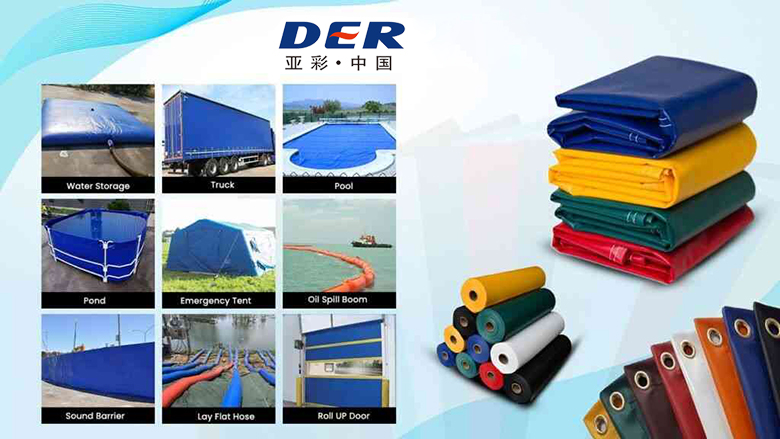
DERFLEX tarpaulin material and emergency tent application display
DERFLEX tarpaulin material reference. Final refugee shelter tarp construction should be confirmed against the buyer’s application, current tender, approved sample and agreed test requirements.
PE + PVCDifferent material routes for rapid issue or reusable programs
Custom FinishSize, hems, bands, eyelets, printing and labels by project
Bulk PackingFold, bale, carton, roll, pallet or kit-oriented packing
Spec ReviewTender and drawing review before sampling or production
Field-first procurement

A Refugee Shelter Tarpaulin Is Part of a Deployment System

In emergency shelter work, a tarp is not evaluated only by whether the surface sheds rain. The same sheet may need to move through warehouse storage, container transport, last-mile distribution, manual carrying, fast installation and repeated tension at edges or fixing points. That makes packed weight, reinforcement, privacy, identification, repairability and unit handling part of the product decision.

Public humanitarian catalogues commonly use reinforced woven plastic sheeting for temporary shelter. Typical reference formats include pre-cut family-shelter sheets and long rolls for community or site-level use. Those public references are useful benchmarks, but a procurement team should always work from the current project specification rather than assuming that one historic “NGO standard” applies to every tender.

As a refugee shelter tarpaulin manufacturer, DERFLEX can discuss lightweight PE laminated structures for high-volume distribution, reinforced humanitarian sheeting manufactured around buyer-supplied requirements, and heavier PVC coated polyester for programs where welded fabrication, repeated handling or extended field use is important.

Compliance note: DERFLEX does not treat references such as “UNHCR standard,” “Red Cross standard” or “NGO approved” as automatic product certification. Please send the latest tender revision, drawing, test method, tolerances, marking rules and inspection criteria for review.
Material selection

Choose the Tarp Route by Mission, Not by GSM Alone

The lightest sheet can reduce freight and field handling, while a heavier coated construction may support reuse and stronger fabrication. The correct choice depends on the full response model.

01

Rapid-Issue PE Shelter Sheet

For high-volume relief distribution where compact packing, manageable unit weight and fast deployment are priorities.

  • Woven PE / HDPE base with laminated surfaces
  • Folded sheet or roll supply
  • Perimeter reinforcement and fixing options
  • Custom organization marks and identification
02

Specification-Led Humanitarian Tarpaulin

For buyer-controlled tenders where dimensions, reinforcement bands, holes, color, strength, UV exposure and packing are defined in technical documents.

  • Current specification reviewed before sampling
  • Reinforcement bands or zones by drawing
  • Print position and color approval
  • Batch, SKU and packing traceability options
03

Heavy Duty PVC Refugee Shelter Tarpaulin

For reusable or contractor-led programs where welded panels, abrasion resistance and stronger edge design may outweigh lower packed weight.

  • PVC coated polyester construction
  • Typical project discussions around 450–900 gsm
  • Heat-welded seams and reinforced hems
  • Eyelets, webbing, straps and custom interfaces

Humanitarian Procurement Benchmarks Buyers Commonly Encounter

Reference only. These are common patterns found in public humanitarian shelter catalogues; your current tender or technical dossier takes precedence.

4 × 6 mA widely used family-shelter sheet size in public relief catalogues.
4 × 60 mA commonly listed roll format for community shelter and flexible site use.
Reinforced BandsUsed to distribute fixing loads and reduce stress concentration around attachment points.
White / OpaqueOften selected to balance solar reflection, identification and privacy; exact color is project-defined.
Specification framework

Refugee Shelter Tarpaulin Specification Options

Use the table as an RFQ framework. Final values should be confirmed against the current application, technical specification, test protocol and approved sample.

ItemConfigurable directionWhy it matters in shelter deployment
MaterialWoven PE / laminated HDPE, reinforced humanitarian sheeting, or PVC coated polyesterControls packed weight, flexibility, fabrication method, repair approach and intended use cycle.
Finished size4 × 5 m, 4 × 6 m, project sizes, custom panels or roll supplyFinished dimensions should match shelter geometry, kit BOM, coverage plan and packing target.
Weight / thicknessProject-defined for PE; heavier PVC routes commonly discussed around 450–900 gsmHigher mass can improve robustness but increases transport, lifting and storage burden.
ReinforcementWoven bands, double-layer hems, webbing, rope-in-hem, corner patchesMost installation loads concentrate along edges, corners and tie-down paths.
Fixing pointsPre-punched reinforced bands, eyelets, loops, straps or drawing-defined interfacesFixing layout should coordinate with rope, poles, frames and tensioning method.
Water protectionWater-resistant / waterproof laminated or coated surfaces; welded seams for suitable PVC structuresActual shelter water performance also depends on overlap, roof slope, seams, drainage, penetrations and installation.
UV / climateUV-stabilized and cold-flexible formulations can be discussed according to exposure targetClimate and intended service duration affect polymer aging, strength retention and flexibility.
Color / opacityWhite, white/black, blue, green, grey or custom program colors subject to MOQColor and opacity can affect heat gain, visibility, privacy and program identification.
Flame performanceProject-specific flame-retardant formulation where an exact test method and class are supplied“Flame retardant” is not “fireproof”; acceptance must reference a named standard and test result.
PrintingLogos, instructions, orientation marks, warnings, batch code, SKU or barcodeClear markings support distribution, inventory control, installation and traceability.
PackingIndividual fold, bale, carton, roll, pallet or shelter-kit configurationPacking affects freight density, warehouse handling and last-mile distribution speed.
Field applications

One Tarpaulin Program, Multiple Emergency-Shelter Functions

Application diversity is useful, but each mission should define its own reinforcement, packing and exposure requirements.

?

Temporary Household Shelter

Roof and wall coverage for shelters assembled with locally sourced poles, timber, modular framing or kit components.

?

Emergency Roof Protection

Temporary weather barrier for damaged buildings while permanent repair materials or labor are being arranged.

?

Privacy & Partitioning

Flexible visual screening for reception points, sleeping areas, clinics, WASH zones and field support spaces.

?

Ground Sheet & Dry Staging

Temporary separation from wet, dusty or contaminated ground for shelter floors, sorting areas and relief-stock staging.

?

Medical & Support Zones

Weather cover and partitioning around temporary medical, registration, logistics and service areas.

?

Relief Supply Protection

Temporary coverage for cartons, tools, pumps, generators, water-system components and weather-sensitive inventory.

Engineering focus

Specify the Failure Mode Before Specifying the Tarp

A refugee shelter tarpaulin supplier can reduce avoidable field problems when the RFQ describes how and where the product is likely to fail.

Load Paths at Edges & Fixing Points

Eyelets alone do not create a strong fixing system. The surrounding band, hem, webbing or patch must spread load into the sheet.

  • Define fixing-point spacing and hole size.
  • Show high-load corners or ridge areas on drawings.
  • Coordinate ropes, straps or frames with the reinforcement design.

UV, Temperature & Exposure Period

Short-term rapid-issue material and longer-use shelter sheeting do not need the same polymer package or construction.

  • State destination climate and storage conditions.
  • Define expected outdoor duration and reuse cycle.
  • Use the agreed UV or temperature test method where required.

Seams, Overlaps & Rain Management

A waterproof sheet can still leak at seams or around poorly planned penetrations. Shelter geometry and drainage matter.

  • Confirm whether material is one-piece, joined or welded.
  • Review seam orientation against roof slope and runoff.
  • Approve welded PVC samples where panel joining is required.

Last-Mile Handling & Unit Packing

A very durable tarp can still be difficult to distribute if each unit is too heavy, bulky or poorly labeled for the field workflow.

  • Set folded dimensions and unit weight targets.
  • Confirm bale/carton/pallet limits before production.
  • Plan destination codes, batch labels and multilingual instructions early.
Custom manufacturing

From Custom Refugee Shelter Tarpaulin Sample to Repeat Bulk Supply

DERFLEX supports custom refugee shelter tarpaulin programs that need more than a stock-size sheet: technical review, reinforcement detail, controlled marking and export-ready packing can be coordinated before bulk production.

Requirement Review

Application, current spec, size, quantity, destination, delivery target and intended service cycle.

Material Match

PE, reinforced sheeting or PVC coated polyester selected around handling, climate and reuse needs.

Detail Approval

Reinforcement, fixing points, color, printing, labels and folding method confirmed.

Sample & QC Plan

Material sample or first article reviewed against agreed dimensions, workmanship and test requirements.

Bulk & Repeat Control

Approved reference, packing logic and production record retained for consistent repeat orders where agreed.

RFQ Checklist for Faster Quotation

A complete inquiry helps a refugee shelter tarpaulin manufacturer compare the right material route and reduce hidden assumptions. For refugee shelter tarpaulin wholesale programs, include packing and container requirements as early as possible.

Send Your RFQ
Product: Refugee Shelter Tarpaulin 
Application: ______________________ 
Reference Specification / Drawing: ______________________ 
Finished Size: ______________________ 
Quantity: ______________________ 
Material / GSM / Thickness: ______________________ 
Color / Opacity: ______________________ 
Reinforcement Layout: ______________________ 
Fixing Points / Eyelets / Holes: ______________________ 
UV / FR / Test Requirement: ______________________ 
Logo / Instruction / Batch Mark: ______________________ 
Unit Packing / Bale / Carton: ______________________ 
Pallet / Container Requirement: ______________________ 
Destination: ______________________ 
Required Delivery Window: ______________________
FAQ

Questions from Refugee Shelter Tarp Buyers

What material is commonly used for refugee shelter tarpaulin?

Reinforced woven polyethylene sheeting is commonly used where low packed weight, rapid distribution and simple field installation are important. PVC coated polyester can be considered for heavier-duty or reusable programs. The current tender, climate, service period, fixing system and logistics plan should determine the final material.

Can DERFLEX make a custom refugee shelter tarpaulin for an NGO or government tender?

DERFLEX can review buyer-supplied technical specifications, drawings and tender requirements and discuss a corresponding material, reinforcement, printing and packing plan. Final compliance depends on the approved product, test results, inspection method and purchasing authority’s acceptance criteria.

What sizes are available for refugee shelter tarpaulin wholesale orders?

Common humanitarian references include 4 × 5 m and 4 × 6 m sheets, while long rolls such as 4 × 60 m are also used in public relief catalogues. DERFLEX can also discuss custom finished sizes and roll supply according to the project.

Is heavy duty refugee shelter tarpaulin always better?

No. A heavier tarp may offer stronger handling and reinforcement options, but it also increases packed weight, freight volume and field lifting requirements. Rapid household distribution may favor a lighter PE structure, while repeated-use contractor or infrastructure programs may favor PVC coated polyester.

Can waterproof refugee shelter tarpaulin include reinforced bands and pre-punched holes?

Yes, reinforcement bands, holes, eyelets, webbing, hems, corner patches and other fixing details can be discussed. Their location and strength should follow the current project drawing or agreed sample, because attachment loads depend on the shelter frame and installation method.

What should I send a refugee shelter tarpaulin supplier for a bulk quotation?

Send the application, current specification or reference sample, finished size, quantity, material target, color, reinforcement and fixing layout, UV or flame-test requirements, print artwork, packing method, destination and required delivery window.

Build the Shelter Tarp Specification Before Bulk Production

Send DERFLEX your tender document, drawing, finished size, quantity, reinforcement layout, print requirement and packing target. We can review a practical PE or PVC material route for sampling and quotation.

Product ranges, performance values, standards, lead times and compliance documentation are subject to project confirmation. Shelter structural safety depends on the complete shelter system, including frame, anchoring, connections, installation and site conditions.

Consulting Services
+86-021-54361792 / 54361798
Email
sales@derflex.com