
Material Control
Base-fabric construction, PVC coating or lamination route, weight, width, color and surface finish can be discussed around the intended use rather than treated as fixed retail attributes.



DERFLEX supports distributors, tarp converters, fleet operators, contractors, agricultural buyers and OEM brands that need a tarp company able to manage material selection, fabrication details and repeat production—not only sell a standard sheet from stock.
Choose the supply format that fits your operation: PVC coated tarp fabric rolls for local conversion, cut panels for downstream fabrication, or finished tarps with project-specific welding, hems, reinforcement, hardware, color, labeling and packaging. Final specifications are confirmed against the actual application and order requirements.
A professional tarp company connects the cover’s real working conditions to material structure, fabrication, quality checks and a repeatable supply specification.
For a small one-time purchase, a stocked tarp retailer may be enough. Commercial procurement becomes different when the cover has to fit equipment, survive repeated tie-down cycles, match a fleet or product line, meet a project requirement, or be reordered months later with the same dimensions and finishing details.
In those situations, the tarp company becomes part material supplier, part fabricator and part specification manager. DERFLEX works from the application backward: what is being covered, where the tarp rubs, how it is tensioned, whether airflow is needed, how long it stays outdoors, what climate it sees, and how the customer plans to install or resell it.
Product variety is useful, but B2B buyers also need to understand who controls the material, who converts it, how the finished details are checked, and whether the same specification can be repeated.
Base-fabric construction, PVC coating or lamination route, weight, width, color and surface finish can be discussed around the intended use rather than treated as fixed retail attributes.
Finished performance depends on seam layout, hems, webbing, grommets, D-rings, straps and reinforcement. These details should be drawn or documented before bulk production.
Weight, width, appearance, physical performance and fabrication checkpoints can be incorporated into the inspection plan according to the commercial specification.
For distributors, fleets and OEM brands, value comes from being able to reorder an approved structure with controlled dimensions, colors, hardware patterns and packaging.
These DERFLEX website images show three different sourcing directions: tarpaulin material selection, transport cover use and large outdoor protection. The exact construction, weight and finishing should be confirmed for the intended application.
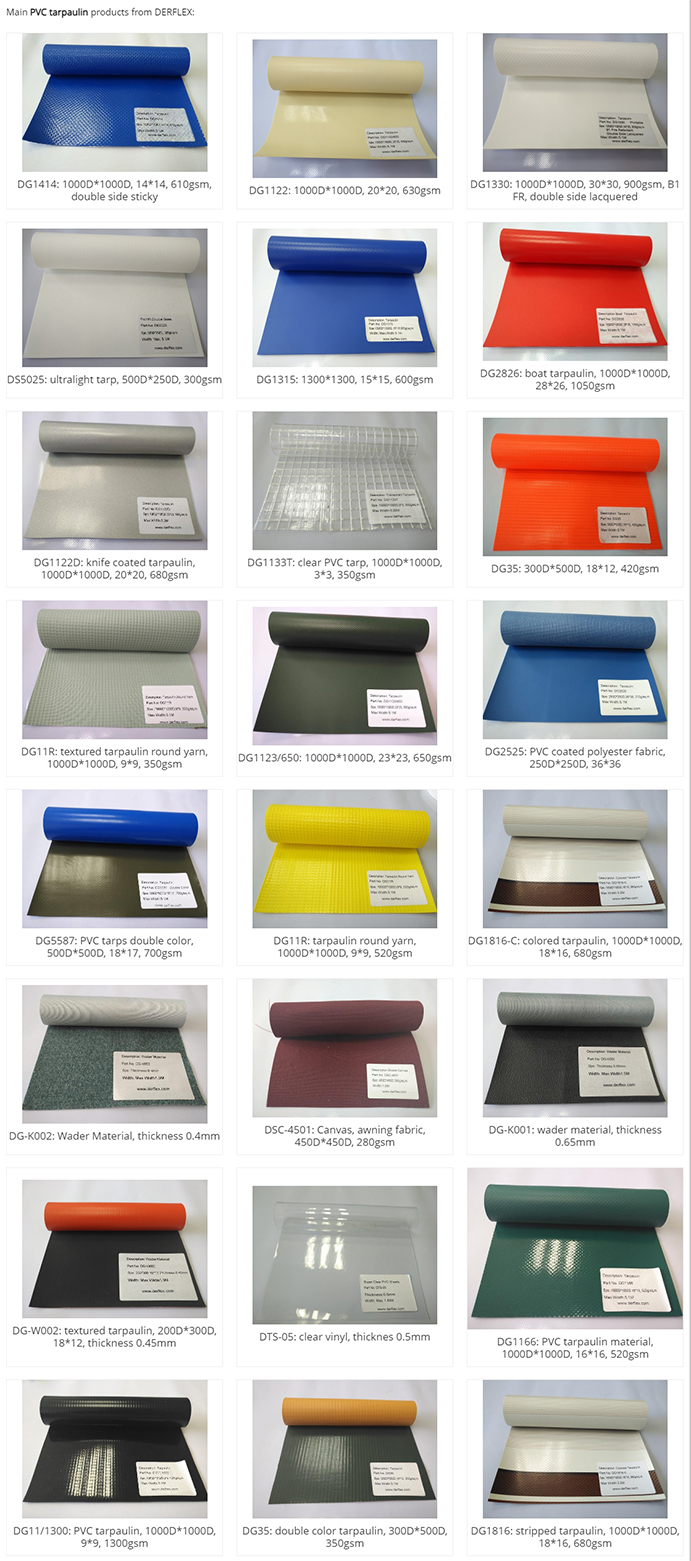
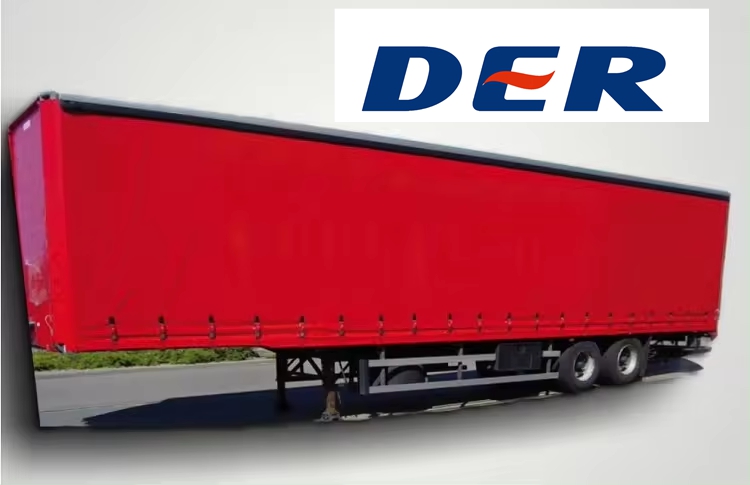
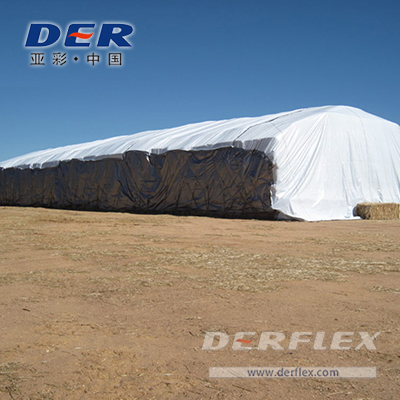
Different tarp applications fail in different ways. The selection below groups common B2B programs by the stresses they face so buyers can discuss useful specifications instead of relying only on marketing grade names.
Waterproof coated or laminated polyester constructions for covers that need rain protection, weldability and reusable outdoor performance.
Flatbed, trailer, lumber, steel, dump and general cargo covers where wind, tie-down stress, abrasion and repeated handling influence the design.
Ventilated covers for waste, landscaping, shade and airflow-sensitive loads. Mesh is selected by openness, strength and containment need rather than waterproofing.
Temporary weather protection, site enclosure, scaffold screening, material covers and containment applications that may need FR, reinforced fastening or custom panel sizes.
Hay, feed, crop, machinery and storage covers where sunlight, seasonal exposure, large area, tie-down layout and handling frequency affect material choice.
Made-to-measure protection for machinery, tanks, warehouse zones, equipment and unusual shapes using drawings, templates or dimension schedules.
The right format depends on where conversion happens and how much control the buyer wants to retain locally.
For tarp shops, converters and distributors with local cutting, welding or sewing capability. Confirm width, roll length, weight, finish, color and packing before production.
For buyers who want pre-cut or pre-welded components while keeping final assembly, hardware installation or installation work in their own facility or market.
For project buyers, private-label programs and commercial users needing completed hems, seams, reinforcement, hardware, labels and export packaging according to the approved specification.
There is no single specification that is correct for every tarp. The ranges below are discussion points for common DERFLEX tarp routes and should be validated against the final application, fabrication method and order requirements.
| Specification Point | Typical DERFLEX Discussion Direction | Why the Buyer Should Care |
|---|---|---|
| Material construction | PVC coated polyester, selected PVC laminated constructions, vinyl coated polyester and mesh directions. | The coating route and base fabric influence waterproofing, strength, weldability, flexibility, cost and service profile. |
| Fabric weight | Approx. 350–1200gsm across relevant tarp material routes; common heavy-duty truck and industrial programs often discuss higher portions of this range. | More weight can improve robustness, but it also changes handling, foldability, shipping weight and cost. |
| Base fabric | Polyester reinforcement structures can be reviewed by yarn denier and weave construction, including common 500D–2000D directions where relevant. | Tensile and tear behavior comes from the reinforcement structure as well as the coating. |
| Width & roll format | Custom widths can be discussed; selected PVC tarpaulin routes are shown on DERFLEX pages up to approximately 5.10m. | Wider material can reduce seam count, but final width must match production route, handling and freight constraints. |
| Surface & color | Matte, gloss or application-specific finishes; custom colors subject to sample approval and production requirements. | Surface affects appearance, cleaning, friction, printability and how color is perceived in use. |
| Functional options | UV resistance, flame-retardant directions, anti-mildew, cold-flexible, anti-static or other treatments can be discussed where applicable. | Specify the target test method or market requirement instead of using a broad performance label without an acceptance criterion. |
| Seams & joints | Hot-air welding, selected HF welding routes, stitching or combined fabrication depending on material and cover design. | A waterproof fabric does not automatically make a waterproof finished cover; seam design and process control matter. |
| Edges & hardware | Reinforced hems, webbing, rope hem, grommets, D-rings, straps, pockets, buckles and localized patches. | Many field failures start at stress concentrations rather than in the middle of the fabric. |
| Dimensions & tolerances | Finished size, cut size, seam allowances and acceptable dimensional tolerance should be confirmed in the drawing or order specification. | Commercial covers must fit the real installation; nominal dimensions alone can create avoidable disputes. |
| Branding & packing | Logo, labels, private-label packing, carton or bale direction, palletization and export marks can be discussed. | Important for distributors, OEM brands and multi-SKU programs that need consistent market presentation. |
Note: ranges are for specification discussion, not a promise that every combination is available. Final capability, MOQ, lead time, testing and tolerances should be confirmed in the quotation and approved sample documentation.
Two tarps with the same nominal weight can behave very differently if one is exposed to high wind and repeated tie-downs while the other is a stationary equipment cover.
Prioritize tear resistance, tie-down zones, wind exposure, abrasion points, seam integrity and practical handling weight. Hardware layout should follow the vehicle and load, not a generic spacing rule.
Confirm whether the tarp is primarily for rain protection, debris containment, scaffold sheeting, floor coverage or enclosure. FR requirements and fastening density should be identified before material approval.
UV exposure, large cover dimensions, wind uplift, seasonal reuse, ground contact and tie-down access often matter more than choosing the heaviest available tarp.
Solid waterproof tarps can create unnecessary wind load where airflow is desirable. Mesh openness, edge reinforcement and containment performance should be balanced around the hauled material.
Focus on repeatable specifications, color control, SKU logic, packaging, labels, barcode requirements, documentation and how future reorders will be matched to the approved sample.
Use drawings, photos, templates or dimension schedules to locate corners, access points, protrusions, tension points, openings and attachment hardware before fabrication.
Each model can be useful. The right choice depends on order size, urgency, customization, local fabrication capability and how important repeatable specifications are to your business.
A supplier comparison becomes more useful when every bidder answers the same technical and commercial questions. This reduces the risk of comparing quotations that look similar but are based on different constructions or finishing assumptions.
Confirm whether the company manufactures or specifies the coated fabric, or simply purchases finished tarps from another source.
Record material type, yarn construction, weight, width, coating or lamination route and key treatment requirements—not only a trade name such as “super heavy duty.”
State whether dimensions refer to cut size or finished size and agree on tolerances after hems, welds and reinforcement are completed.
Specify grommet positions, D-rings, webbing, straps, pockets, corners and abrasion zones according to how the tarp is tied, rolled, folded or moved.
For custom programs, use an approved sample, drawing or specification sheet as the reference for bulk color, dimensions and fabrication details.
If FR, UV, REACH, RoHS, cold flexibility or another requirement is important, identify the relevant standard, report scope and acceptance point before production.
Bulk tarps can be damaged or become difficult to distribute if folding, labels, bale/carton construction and pallet requirements are treated as an afterthought.
Ask how the supplier will identify the approved construction and reproduce it later. Repeat business depends on controlled specifications rather than memory.
The exact process depends on the product and order, but a structured workflow helps remove ambiguity before large-volume production.
Share application, climate, dimensions, handling method, quantity and destination market.
Discuss PVC structure, weight, width, color, finish and relevant functional treatments.
Confirm seam route, edges, webbing, hardware, pockets, openings, labels and packaging.
Approve the practical reference for appearance, dimensions and custom finishing before bulk production.
Follow material and fabrication checkpoints that match the agreed order specification.
Use the approved specification as the commercial reference for replacement or recurring orders.
Quality control is more useful when it checks the features that could cause field failure or commercial disagreement. The inspection plan can be adapted to the material and product.
Build a repeatable line with controlled specifications, colors, packaging and SKU logic.
Source roll goods or panels compatible with local welding, sewing and custom finishing operations.
Standardize truck, trailer and cargo covers across replacement cycles and mixed vehicle requirements.
Specify site covers, temporary enclosures, equipment protection and project-specific fabricated panels.
Coordinate product design, branding, labels and packaging with a commercial manufacturing workflow.
A price without a clear specification can hide important differences. Give each supplier the same information so material, fabrication and commercial assumptions are visible before you compare cost.
Use these six related pages to go deeper into manufacturing, material, transport, mesh, wholesale and construction requirements.
Short answers for procurement teams comparing tarp manufacturers, suppliers and custom fabrication options.
A tarp company may supply finished tarps, tarp fabric rolls, custom covers, mesh tarps, truck tarps, industrial covers and related fabrication. The exact scope varies. For commercial sourcing, ask whether the company controls the coated material, performs or manages fabrication, and can document specifications for repeat orders.
Not always. A manufacturer produces the material, finished tarp or both, while a supplier may distribute products made by another factory. Both models can work; buyers should understand who controls the material construction, finishing process and quality documentation when customization or repeatability matters.
DERFLEX can discuss custom finished dimensions, roll widths, colors, welded or sewn details, reinforced hems, webbing, grommets, D-rings, straps, pockets, labels and packaging. Feasibility, tolerance, MOQ and lead time should be confirmed for the specific design before ordering.
PVC coated polyester is commonly selected for reusable heavy-duty outdoor tarps because it can combine waterproof coating, mechanical reinforcement, UV-resistant formulations, abrasion resistance and weldability. The correct weight and construction depend on the load, climate, handling frequency and fabrication design.
Yes, DERFLEX can support different supply models depending on the program, including coated tarp fabric rolls, panels or components and finished custom tarps. Tarp converters may prefer roll goods, while project buyers, distributors and OEM brands may prefer more completed fabrication.
Make sure every quote uses the same material construction, GSM or oz basis, dimensions, tolerance, seam method, reinforcement, hardware, functional requirements, packaging, quantity and Incoterm or delivery basis. A lower price can reflect a different specification rather than a true like-for-like saving.
Send the application, finished dimensions or drawing, preferred material or target weight, color, exposure conditions, reinforcement areas, hardware layout, quantity, branding, packing requirements, destination and any test or compliance requirements. Photos or an existing sample can also help clarify the design.
Send DERFLEX the application, dimensions, material direction, finishing details, quantity and destination. The next step is to clarify the practical structure and quotation basis for your tarp fabric, custom cover or repeat B2B supply program.