| Material |
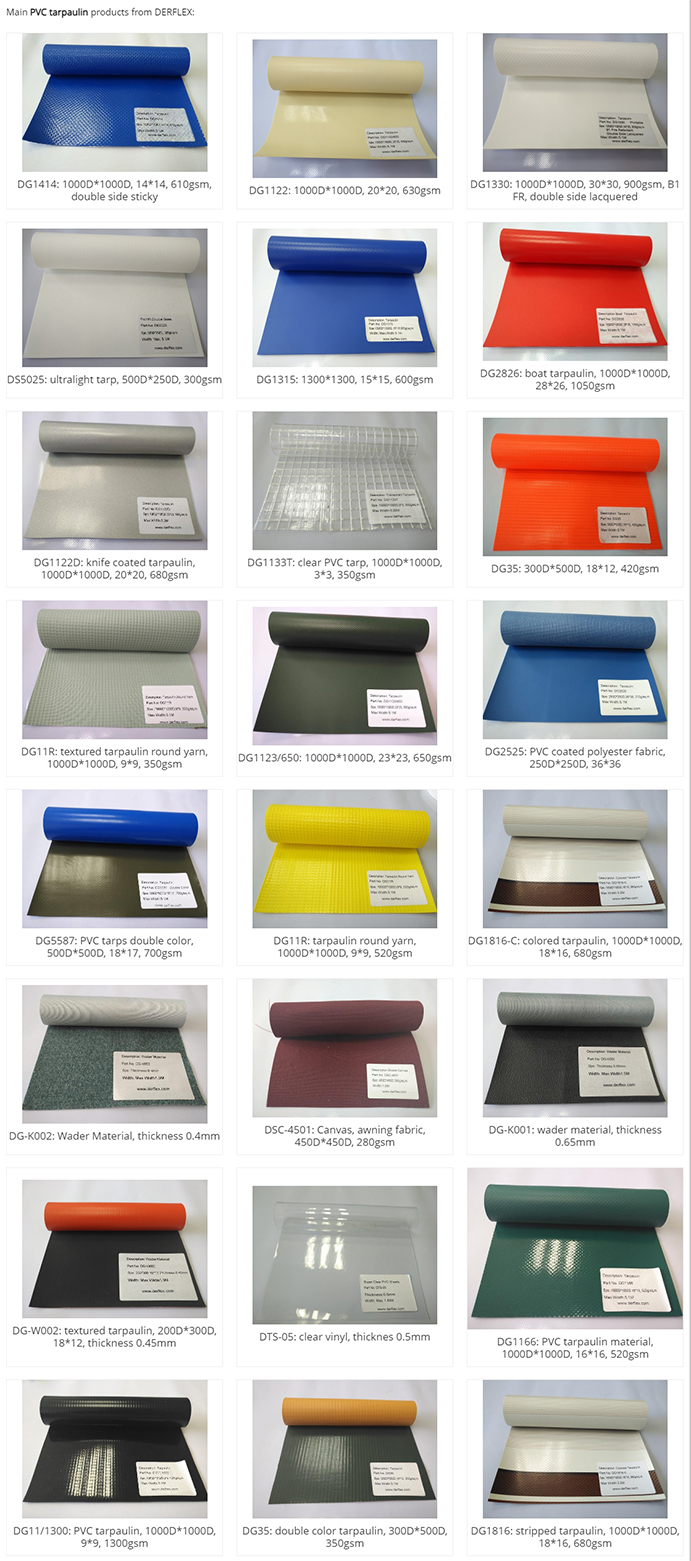
PVC coated or laminated polyester |
Coating method, surface lacquer, special formula |
Choose by exposure, fabrication method and target life cycle |
| Fabric Weight |
Approximately 350–1200 gsm |
Lighter or heavier structures by project |
Higher GSM does not replace correct base fabric and reinforcement design |
| Base Fabric |
500D, 1000D or reinforced constructions |
Yarn density, weave and tensile direction |
Match to cover span, wind, tie-down and handling load |
| Thickness |
Approx. 0.30–1.00 mm |
Adjusted with coating weight and textile structure |
Review flexibility, abrasion, folding and welding needs |
| Width / Panel Size |
Standard roll widths and welded wide panels |
Cut size, finish size, shaped panels and patterns |
Reduce unnecessary seams while respecting handling and shipping limits |
| Surface & Color |
Glossy, matte or embossed; common industrial colors |
Custom color matching and logo printing for volume orders |
Consider heat absorption, visibility, branding and cleaning |
| Seam Method |
Heat welded, HF welded, sewn or combined |
Overlap width, sealing tape and reinforced seams |
Choose by water resistance, geometry, production and repair method |
| Edge Reinforcement |
Folded hem, rope edge, webbing or multilayer patches |
Corner pads, wear strips, pockets and tension bands |
Concentrate strength where field loads enter the cover |
| Hardware |
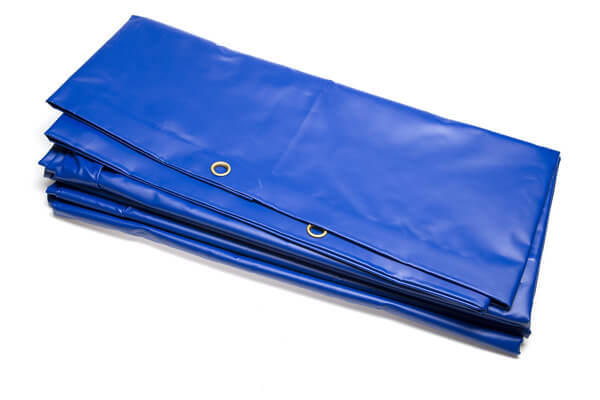
Metal grommets, D-rings, buckles, straps and hooks |
Material, spacing, orientation and corrosion-resistant options |
Layout must follow the actual frame, cargo and tie-down method |
| Packaging |
Folded bale, polybag, carton, pallet or roll packing |
Label, barcode, insert, private label and mixed-size sets |
Plan for warehouse handling, resale channel and shipping efficiency |