


Air freight · Pallet cover specification
Tarp Covers for Air Cargo Pallets: Fit, Weight and Reinforcement
Specify a cover around the loaded pallet, its handling cycle and the weight you can accept. Air cargo pallet tarp covers provide an outer weather barrier during cargo staging and ground movement. A reusable PVC design can be developed with fitted panels, welded seams, wear patches and identification features.
DERFLEX offers custom pallet-cover materials and fabrication options. Send the load profile, intended ground or onboard use, finished-weight target and operator requirements so the proposed construction can be reviewed before bulk production.
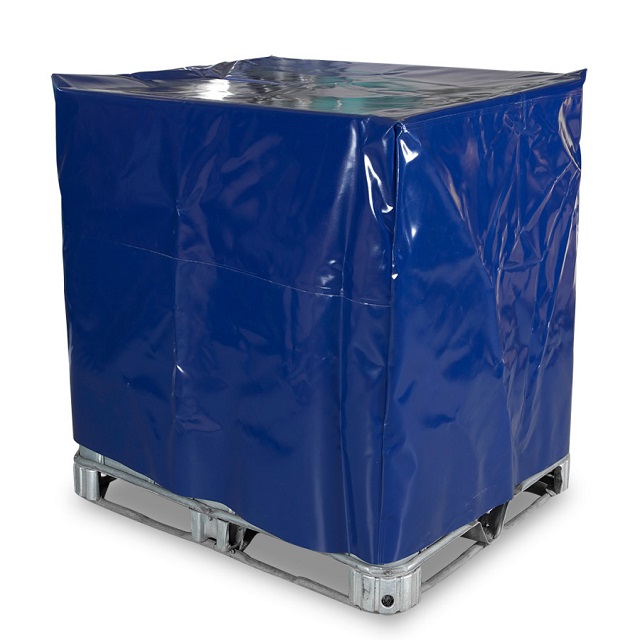
Start with the cover's job
What is an air cargo pallet tarp cover?
An air cargo pallet tarp cover is a flexible hood or sheet that shields palletized cargo from weather and handling contamination. Specify it by the actual loaded shape, finished dry weight, seam layout and wear zones. A protective tarp does not replace the approved pallet net or cargo-restraint system.
Protect the cargo surface
A ground-use cover addresses rain, dust and exposure while freight waits for its next handling stage. Fit, water-shedding geometry and closures affect the whole cover's performance.
Keep the approved system
The pallet and compatible net perform the ULD restraint function. Decorative cover straps and eyelets have no assumed cargo-restraint rating. Follow the operator's build-up procedure.[2]
Specify separate requirements
Fire containment and temperature control require purpose-built systems. Ordinary PVC weather covers and general flame-retardant fabric grades do not establish either capability.
Define the operating boundary first. For any cover intended to travel onboard, obtain the airline's written acceptance criteria and required evidence. This guide does not claim aircraft approval for DERFLEX's general pallet covers.
For warehouse and shipping cover formats, see the reusable pallet cover range. For broader material and cover families, explore the DERFLEX tarp range.
01 / Fit
Measure the loaded contour, not only the pallet base
A pallet code identifies a base format; it does not describe the full cargo shape. A rectangular hood may suit a ground-storage load, while an aircraft loading envelope can require a sloping shoulder or a different profile. Use the operator's contour drawing for the intended position.
| Example pallet code | Nominal base | Metric conversion, rounded | Still needed for the cover |
|---|---|---|---|
| PMC / PMP | 96 × 125 in | 2,438 × 3,175 mm | Loaded height, contour, net arrangement and hem position |
| PAG / PAP | 88 × 125 in | 2,235 × 3,175 mm | Loaded width, shoulder profile and closure orientation |
| PLB | 60.4 × 125 in | 1,534 × 3,175 mm | Operator drawing and intended handling configuration |
Nominal inch dimensions and example codes are listed by Nippon Cargo Airlines.[3] Metric values above are calculated at 25.4 mm per inch. Actual pallet and load measurements control the order.
A useful measuring sequence
- Record maximum loaded L × W × H. Include cartons, edge protection and any protruding packaging. State whether the measurement includes the net.
- Document the profile. Supply front, side and plan views. Mark sloped shoulders, recesses and the required cover opening.
- Agree the fitting allowance. For a rectangular load, an allowance of C per side gives inside length L + 2C and width W + 2C. C is a project value, not a universal aviation clearance.
- Set the hem termination. Identify the intended side drop and keep the skirt clear of the handling interface. Mark access to fittings, labels and inspection points.
- Check a full-size prototype. Trial it with the intended load and handling arrangement. Record any loose folds, snag points or excessive stretching.
Measuring concept only. A five-sided rectangular hood has a top and four side panels. A contoured aircraft load requires its own pattern and clearance review.
Use the custom tarp options to discuss fitted shapes, access panels and a repeatable approved sample.
02 / Weight
Calculate the cover, then weigh the finished sample
GSM is the mass of one square metre of fabric. It is not the finished cover weight. Overlaps, hems, extra layers, webbing, closures and pockets all add mass. Compare complete dry covers with the same geometry.
Estimated mass (kg) = A × (1 + allowance / 100) × GSM / 1,000 + extra component mass. The allowance estimates retained seam and hem material. Cutting waste that is discarded does not belong in the finished mass. For a flat sheet, use its complete finished length × width instead.
| Illustrative fabric weight | Fabric-only estimated mass | Mass difference versus 450 gsm |
|---|---|---|
| 450 gsm | 12.49 kg | — |
| 550 gsm | 15.27 kg | +2.78 kg |
| 650 gsm | 18.04 kg | +5.55 kg |
| 750 gsm | 20.82 kg | +8.33 kg |
| 900 gsm | 24.98 kg | +12.49 kg |
Calculated surface area: 25.70225 m²; with the illustrative allowance: 27.75843 m². These are design calculations, not DERFLEX finished product specifications. Reinforcement, hardware and accessories are excluded from the table.
Cover weight estimator
For a rectangular five-sided hood only. Input panel dimensions after the fitting allowance. A sloped or irregular cover needs a panel-by-panel calculation.
The default 8% and 1.20 kg are adjustable assumptions, not standard production allowances. The result is for preliminary comparison. Verify it against the actual sample.
Separate a purchase estimate from load acceptance. If an accepted cover is carried onboard, include its actual mass in the operator's weight-accounting process. A calculated cover weight is not a substitute for weighing the built ULD.[1]
Material decisions
Choose a construction that matches the reuse cycle
Specify the required job before selecting a fabric grade. Low weight, repeated handling and weather protection can pull the design in different directions. The useful comparison is complete construction plus measured performance.
| Operating need | Direction to discuss | What decides the choice |
|---|---|---|
| Short-duration protection with tight mass limits | Light protective film or a lighter reinforced structure | Handling damage, seam integrity, cover retention and operator material acceptance |
| Reusable fitted covers with routine installation | 450–550 gsm PVC-coated polyester as trial points | Actual dry mass, flex behaviour, abrasion and fitting time |
| Rough packaging or repeated contact at edges | A lighter body with mapped patches, or a 650–750 gsm trial | Where wear occurs; whether targeted reinforcement saves mass |
| Heavy ground-storage exposure with less sensitivity to mass | Heavier constructions, including a 900 gsm trial where justified | Handling effort, storage volume and demonstrated durability |
| Temperature-sensitive freight | A qualified thermal-cover or temperature-control system | Lane conditions, permitted excursions and validation data; ordinary PVC is not insulation |
These GSM values fall within DERFLEX's published cargo-cover material range.[4] The suggested trial points are a preliminary selection framework, not airline specifications or verified performance ratings. Review PVC tarpaulin material constructions before fixing the bill of materials.
Strength needs more than a GSM value
Ask for tensile and tear results in both fabric directions, with the test method and units. Also compare seam strength, coating adhesion, fold durability and the reinforced attachment assembly. More coating mass alone does not prove a stronger finished cover.
Waterproof fabric is only the beginning
Rain can enter through unprotected access openings, needle holes, damaged seams and poorly arranged overlaps. An open-bottom hood also has no sealed floor. Match a whole-cover water test to the actual service conditions.
03 / Reinforcement
Add material where the cover actually wears
Use photos and a handling trial to create a wear map. Strengthen corners, closure ends and rubbing zones first. Then assess whether a heavier body is still needed. Cover fittings must suit the permitted attachment arrangement.
| Cover zone | Likely failure | Design response to evaluate | Prototype check |
|---|---|---|---|
| Top corners and package edges | Local rubbing, puncture or creasing | External patches and cargo-side edge protection; match patch geometry to the contact zone | Look for concentrated wear after repeated installation |
| Lower hem | Dragging, snagging or torn fittings | A controlled side drop; reinforced hem and webbing where justified | Check clearance and retention through the handling cycle |
| Closure ends | Peel stress, torn stitch lines or leaking access seams | Spread closure-end loads into adjacent fabric; add a rain flap if required | Open, close and flex the finished assembly |
| Eyelet or strap zones | Hardware pulls through a small fabric area | Compatible patching and webbing; confirm whether exposed metal hardware is permitted | Test the assembled attachment to an agreed acceptance value |
| Contact with net or fittings | Chafing, trapped fabric or inspection obstruction | Reposition seams and wear patches; make the approved interface visible and accessible | Trial with the intended net and equipment arrangement |
A small patch has a measurable weight cost
An extra 0.80 m² of 650 gsm fabric adds approximately 0.52 kg before stitching or welding materials. In the worked example, changing the whole body from 450 to 650 gsm adds about 5.55 kg. Local reinforcement can be worth testing when wear is confined to a few zones; it still needs assembly validation.
Specify seams as part of the design
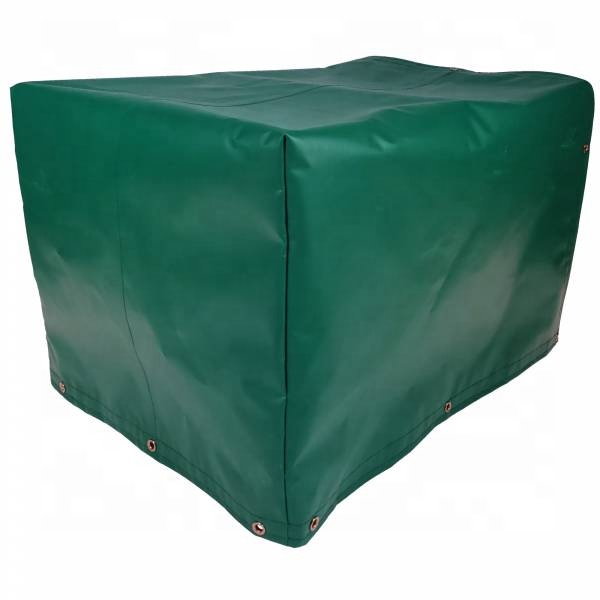
For compatible PVC-coated fabric, hot-air, hot-wedge or HF welding may be considered. Stitching can suit selected closures or webbing, with water-entry treatment where needed. Agree the seam method, retained overlap, access construction and inspectable acceptance criteria. Review the PVC coated tarp fabrication options.
Write a comparable RFQ
Keep the cover drawing and bill of materials together
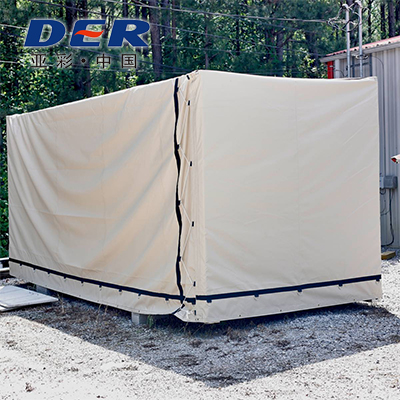
A usable procurement specification states exactly what suppliers should quote and what the sample must demonstrate. Treat missing material grades, tolerances and acceptance criteria as open items to resolve before production.
- Application and operating boundary
- Ground staging, transfer or storage; state any requested onboard use separately with operator requirements.
- Loaded profile and fit
- Maximum L × W × H, pallet code, contour drawing, fitting allowance, hem drop and cover orientation.
- Material construction
- Coated polyester or another agreed structure; grade, nominal GSM, finish and approved color reference.
- Finished dry weight
- State a target and agreed tolerance. Include patches, closures, labels and every attached component.
- Seams and openings
- Panel layout, seam method, retained overlaps, closure location and water-protection details.
- Reinforcement and hardware
- Patch drawing, webbing layout, attachment arrangement and agreed hardware restrictions.
- Identification
- Cover size, front/back orientation, asset ID, company logo and document-pocket position where required.
- Acceptance and order information
- Sample trial, dimensional tolerance, selected tests, quantity, packing, destination and required delivery date.
DERFLEX's general cargo tarpaulin cover materials include custom colors, printed identification and reinforced finishing. Cover-specific availability, MOQ, sample arrangements and lead time require a quotation. No airline approval, thermal rating or certified restraint capability is assumed.
Before the bulk order
Validate the sample at the handover points
Define the sample acceptance record before comparing quotations. The checks below are a development checklist. Test methods, thresholds and any aviation evidence must be agreed for the actual project.
| Check | What to record | What it resolves |
|---|---|---|
| Drawing and dimensions | Inside panel measurements, seam positions, closure location and hem drop | Whether the supplied cover matches the signed drawing |
| Complete dry mass | Actual finished mass including all permanent components | Whether the cover meets the purchase weight target |
| Repeated fitting and folding | Agreed cycle count, installation method, material temperature and observed damage | Whether the proposed construction tolerates its intended handling |
| Water exposure | Agreed exposure conditions and leakage at seams, flaps and openings | Whether whole-cover protection meets the ground-use requirement |
| Wear and attachment assemblies | Contact points, seam behaviour, patch edges and permitted attachment test results | Whether the local reinforcement strategy works |
| Handling-interface trial | Cover retention, clearance, access to labels and fittings, snag or interference points | Whether the cover fits the intended operating arrangement |
Make the packing repeatable
Agree folded or rolled presentation, the fold direction and the size identifier visible on each packed cover. Keep a reference sample and drawing revision together. Record dry mass and folded dimensions for return transport and storage planning.
Plan inspection and retirement
Inspect exposed seams, worn corners, loose patches and damaged fittings before reuse. Clean and dry the cover before storage. Define which damage can be repaired and who may approve return to service.
At cargo handover: remove standing water, snow and loose debris. Confirm the cover arrangement follows the operator's instructions and allows required inspections. IATA identifies moisture and loading-system interference as risks from improper ULD protection wrapping.[1]
Questions buyers ask
Air cargo pallet cover FAQ
What size tarp cover fits a PMC air cargo pallet?
A PMC base is nominally 96 × 125 inches, but the cover must fit the actual loaded width, length, height and profile. Confirm whether it sits over or within the operator's permitted net arrangement, then approve the fitting allowance and hem drop. The base dimensions alone do not define the finished cover.
How much does an air cargo pallet tarp cover weigh?
Calculate the fabric area multiplied by GSM, then add retained seam and hem material, reinforcement and accessories. A rectangular 3.175 × 2.438 × 1.600 m five-sided hood at 550 gsm has an illustrative fabric mass of 15.27 kg with an 8% allowance. The actual finished sample must be weighed.
Is PVC tarpaulin suitable for reusable air cargo pallet covers?
PVC-coated polyester is a candidate for reusable ground-use weather covers because it supports fitted fabrication and reinforced finishing. Compare finished weight, handling, seam quality and the project's material requirements. Any onboard use requires the operator's acceptance and the specified evidence.
Can the tarp cover replace an aircraft cargo net?
No. This guide concerns outer protection. Cargo restraint must use the compatible approved system and the operator's procedures; general cover eyelets or straps have no assumed restraint rating.
Is a flame-retardant tarp the same as a fire containment cover?
No. A general fabric flame-retardancy result does not establish the performance of a complete fire containment system. Specify and obtain the required evidence for that separate application. No fire containment approval is claimed for the general covers discussed here.
Where should a reusable pallet tarp be reinforced?
Start with the actual wear map: top corners, package edges, lower hems, closure ends and permitted attachment points. Trial the cover with the intended handling arrangement. Compare the added patch mass with a heavier body rather than assuming reinforcement is needed everywhere.
Custom cover development / DERFLEX
Send the load profile. Define the cover together.
Request a material and construction proposal for your pallet protection program. A dimensioned drawing and a clear weight target make the first quotation more useful.
- Loaded dimensions, pallet code and profile drawing
- Ground-use location or any requested onboard requirement
- Reuse cycle, wear map and finished dry-weight target
- Quantity, packing preference and destination
- Required acceptance tests and operator evidence
DERFLEX's published pallet-cover options support a discussion of fitted shapes, seam methods, reinforcements, access features and identification. Final availability and production terms are confirmed in the quotation.
Request a custom pallet cover quoteContact: sales@derflex.com
Prepare a short RFQ brief
Create and copy the specification below, then paste it into the DERFLEX request form. This tool drafts your text locally.