Folded vs Rolled Tarp Packaging: Creases, Freight and Handling
A tarp can meet its material specification and still arrive in an inconvenient package. For importers, distributors and converters, folded vs rolled tarp packaging affects visible creases, shipment volume, hardware protection and receiving work. DERFLEX can discuss roll goods, finished covers, protective wrapping and OEM labels around your order. Start with the product’s next step: shelf storage, fabrication or installation.
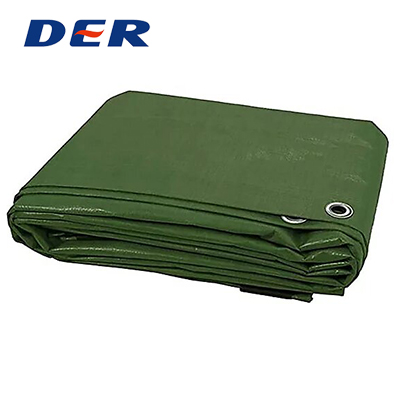
Finished tarp referenceDERFLEX’s folded tarp photo shows the reinforced edge and eyelet. It does not establish the final export carton size or packing specification.
01 / Format comparison
What changes when a tarp is folded or rolled?
Folding creates a shorter bundle with concentrated bends. Rolling replaces many sharp bends with a curved wrap, but requires control of roll length, winding tension and support.
Decision factor
Folded tarp packaging
Rolled tarp packaging
Typical buying format
Finished sheets and fabricated covers, individually bagged or grouped in cartons or bales.
Fabric rolls for cutting and welding; selected finished panels rolled for handling or appearance.
Crease exposure
Repeated fold lines can remain visible. Compression increases contact at stacked hems and hardware.
Fewer sharp bends when rolled without preliminary folds. Tight winding can still cause impressions or distortion.
Package geometry
Often shorter and easier to match to cartons. Trapped air and bulky reinforcement can reduce the expected benefit.
Length may follow fabric width or an approved panel orientation. Check the wrapped diameter and protective ends.
Freight comparison
Use outside carton or bale dimensions and gross weight, including any pallet.
Use outside packed length and diameter or crate dimensions. Confirm long-package and handling charges.
Warehouse receiving
Convenient for piece-counting and individual SKU picking. Cartons still need an agreed stack limit.
Requires suitable storage support and equipment for the actual roll weight and length.
First use
Unfold on a clean area; locate the marked starting edge and separate straps or accessories.
Unroll in a controlled area or feed into the converter’s equipment. Restrain rolls against unintended movement.
Packing protection
Separate hardware from coated surfaces; protect corners and printed areas from compression.
Protect edges and roll ends; agree on core, winding orientation and outer wrapping.
A roll of fabric and a rolled finished tarp are different products. Fabric roll goods still require conversion. A finished tarp may contain welded hems, pockets or D-rings that change the packing diameter and local pressure. Define the supply format first.
Are tarp creases cosmetic marks or material damage?
A fold line alone is not proof of a defective tarp. Separate appearance from cracking, punctures, coating separation and opened seams.
Coated fabric bends as a composite: the coating, woven base and reinforced edge do not have identical thickness or stiffness. A tight fold concentrates bending in a narrow zone. Long storage, compression and handling temperature can influence the mark left after unpacking.
For PVC tarps and heavy vinyl covers, review the actual construction rather than setting a universal “safe fold radius.” A PVC coated polyester tarpaulin with thick hems or patches can pack differently from a plain sheet at the same GSM.
Three conditions worth distinguishing
Visible fold line: an appearance issue to compare with an agreed reference after conditioning.
Hardware impression: localized pressure from eyelets, D-rings, buckles or stacked reinforcement; inspect the contact point.
Functional damage: a crack, hole, separation or seam opening requiring evaluation against the purchase specification.
Hardware changes the packing problemKeep rings and reinforced edges from pressing directly into adjacent coated layers. Use the actual hardware layout when approving a packing sample.
Do not assume heating is an acceptable crease remedy. Unpack on a clean surface and allow supplier-approved conditioning. An iron, heat gun, solvent or excessive tension can create new damage. Ask for written handling guidance when appearance is critical.
For cold receiving or winter deployment, use the low-temperature flexibility guide to define the temperature at which the tarp must move, fold or unroll.
03 / Buyer selection
Choose packing around the next operation
The useful question is what happens immediately after delivery. Appearance-sensitive installation, carton distribution and automated converting need different packing controls.
Distributor / finished covers
Start with a folded trial pack
Compare carton fit, piece count, SKU labels and opening time. Keep metal hardware separated and specify how the user finds the starting edge. Compactness must survive the real tarp’s hems and reinforcement.
Converter / roll feedstock
Start with a supported roll
Match core dimensions, roll width, maximum gross weight, unwind direction and surface orientation to the workshop. Avoid reducing freight length in a way that creates an unacceptable fold across the usable fabric.
Appearance-sensitive panels
Test the received surface
For printed or transparent panels, consider rolled supply where practical. Agree on contact protection and surface orientation with the material or print supplier; do not assume one winding direction fits every construction.
Constraint
Packing direction to investigate
Approval question
Package must fit a short shelf or carton
Folded packing, or a controlled fold-and-roll arrangement.
Are the remaining folds acceptable after storage and unpacking?
Few visible marks permitted
Rolled packing with an agreed core, wrapping and pressure control.
Does the trial pack meet the agreed appearance reference?
Large cover with bulky fittings
Trial both layouts; isolate hardware and stagger buildup where feasible.
Which layout protects the coating and stays manageable on receipt?
No equipment for long heavy rolls
Smaller units or a compatible palletized layout.
Can the destination unload and store every packed unit safely?
Fold-and-roll is a third option. One longitudinal fold followed by rolling may shorten the package while avoiding several cross-folds. It still creates a fold line. Approve it on the complete cover, especially where the line crosses seams, print or clear panels.
04 / Freight & package geometry
Does folding actually reduce freight?
It may reduce shipment volume, but the saving depends on measured outer dimensions, gross weight and the transport service’s rules.
For dimensional-weight services, compare actual gross weight with the carrier’s dimensional result. For ocean freight, ask the forwarder for the rating basis, minimums and a loading plan. A smaller bundle does not automatically create a lower invoice.
Illustrative values for one finished tarp per package. Replace them with measured dimensions and scale weights. For a cylindrical roll, enter its packed diameter as both width and height; the calculator uses its rectangular bounding dimensions.
Folded package
Volume / package
0.0875 m³
Total order volume
8.75 m³
Dimensional weight / package
17.50 kg
Higher of gross / dimensional
33.00 kg
Rolled package
Volume / package
0.1440 m³
Total order volume
14.40 m³
Dimensional weight / package
28.80 kg
Higher of gross / dimensional
35.00 kg
In this example, folded packing uses 39.2% less package volume. This is a volume comparison, not a freight saving quote.
Base-fabric estimate: 31.20 kg per tarp, before reinforcement, fittings and packing.
Dimensions are rounded up to whole centimeters for the dimensional-weight calculation. The comparison excludes carrier weight rounding, minimum charges, oversized-package fees, pallets, loading voids and handling costs. The divisor of 5,000 follows the cited FedEx example; confirm the service-specific divisor before use.
For a container order, combine this comparison with the tarpaulin container-loading guide. Package volume alone does not verify payload or physical fit.
Compare the same deliverable. Use identical tarp construction, quantity and finishing in both proposals. Include core, carton, bag, straps and pallet weight. Ask for quotes to the same destination under the same delivery basis.
05 / Packing specification
Turn “export packing” into a repeatable specification
A packing instruction should identify the layout, protection and measurable limits. “Folded” or “rolled” alone leaves too many choices to the packing team.
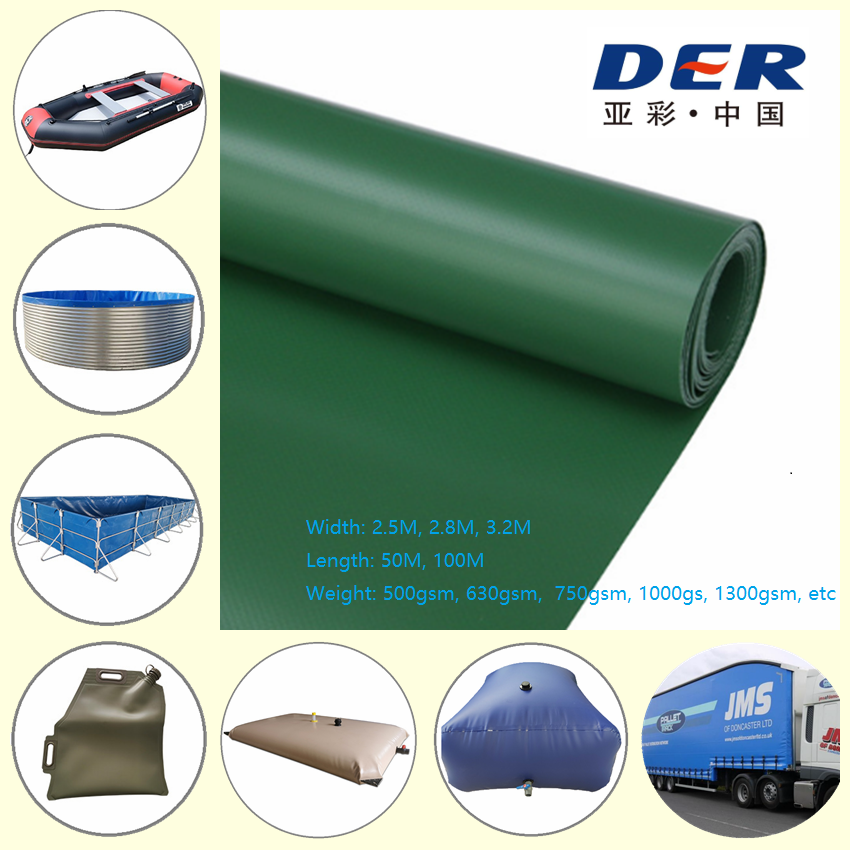
Roll material referenceFor roll goods, agree on core suitability, finished roll dimensions, wrapping and maximum unit weight with the receiving workshop.
Details to agree before production
Product format: fabric roll, cut panel or finished tarp; units per package.
Layout: fold sequence or winding direction, starting edge and allowed fold zones.
Protection: hardware separation, edge protection, interleaving where approved, and clean wrapping.
Limits: outside packed dimensions, gross weight, core details and carton or pallet requirements.
Traceability: SKU, size, color, lot reference, count, gross weight and packing revision.
Receiving: unloading equipment, storage orientation and agreed stacking conditions.
Where should folds go?
Avoid concentrating bulky hems, welded joins and hardware at the same fold junction when the layout allows it. Mark any appearance-sensitive area on the packing drawing. There is no single fold pattern suitable for every custom tarp.
Build the complete sample
Use representative coating, hems, fittings and labels. A plain swatch cannot demonstrate a finished cover’s packing thickness.
Record both proposals
Photograph the layout, protective layers and closed package. Measure outside dimensions and weigh each unit.
Recreate relevant storage
Agree on storage duration, compression and conditioning that represent the route and warehouse. Document the procedure before comparing results.
Unpack and approve
Check appearance, functional condition and unpacking effort. Link the approved sample and packing revision to the purchase order.
This trial-pack workflow is a proposed buyer approval procedure, not a claim that DERFLEX has already completed a specific transport test for your order.
06 / Receipt & acceptance
Inspect the package before judging the crease
Record transit condition first, then unpack under agreed conditions. Separate packaging damage, surface appearance and actual tarp failure in the receiving report.
Check
Evidence to collect
Decision to agree
Outer condition
Crushed corners, broken wrap, wet cartons, displaced straps, exposed roll ends and package photos.
Which units need separate inspection before they enter stock?
Identity & count
SKU, lot, size, units per package and packing-list match.
Does the shipment match the approved order and packing revision?
Surface appearance
Fold lines, contact marks or print transfer after the agreed conditioning period; comparable photos.
Is the condition within the signed appearance reference?
Functional condition
Cracks, holes, coating separation, seam openings and hardware damage; location and package ID.
Which agreed inspection or test establishes acceptance for the affected feature?
Use & handling
Actual unpacking sequence, equipment compatibility and access to the starting edge.
Does the package meet the receiving operation’s requirements?
Agree on inspection lighting, conditioning, timing, reference photos and any test method before shipment. No universal crease limit or recovery period is implied here.
07 / Storage & repeat orders
Protect the tarp after unpacking
Keep the material clean, dry and supported. Packing quality can be lost if the cover is dragged, stored wet or compressed around exposed fittings.
Store folded tarps without forcing metal parts into the coating. Support rolls in a way that prevents edge damage and uncontrolled movement. Confirm the supplier’s storage and stack limits rather than borrowing a limit from another material.
Before repacking a used cover, remove grit, inspect seams and hardware, and dry the layers completely. The tarp cleaning and storage guide covers the maintenance steps in more detail.
Avoid these procurement shortcuts
Comparing a fabric roll quote with a finished-tarp quote.
Assuming lower cubic volume means lower freight on every route.
Approving packing without the actual rings, hems and patches.
Calling a visible fold line a leak without checking the material.
Changing carton size or winding direction between repeat orders without approval.
Copy into your inquiry
Ask for a measured packing proposal
Edit this brief before copying. No information is submitted by this tool.
Folded packing is often practical for finished covers that need compact cartons and easy SKU handling. Rolled packing is usually preferable for converter feedstock or surfaces where sharp folds are undesirable. Choose using the actual construction, packed dimensions and receiving method.
Do fold marks mean a PVC tarp is defective?
A visible fold mark alone does not prove coating damage. Inspect for cracking, holes, separation, seam opening and hardware impressions after unpacking under agreed conditions. Appearance limits and functional acceptance should be specified separately.
Does rolled packaging always cost more to ship?
No. Compare gross weight, outside dimensions, pallet use and the carrier’s rating rules. Long rolls can trigger handling restrictions, but a compact roll can also outperform a poorly sized folded carton. Obtain comparable freight quotes for both approved packing plans.
Can a finished tarp be folded once and then rolled?
Yes, a fold-and-roll layout can reduce package length while limiting additional cross-folds. The remaining fold still needs evaluation, especially at printed areas, seams, clear panels and reinforcement. Approve the actual trial pack.
How can buyers reduce creases without damaging the tarp?
Unpack on a clean surface, allow the material to condition within its supplier-approved handling range and relax it without forced stretching. Do not assume an iron, heat gun or solvent is suitable. Persistent marks or suspected damage should be reviewed against the approved sample and acceptance criteria.
What packaging details should be included in a bulk tarp RFQ?
Include product format, finished size or roll width and length, material and GSM, quantity, packing preference, package size and gross-weight limits, hardware protection, labels, pallet requirements, destination and unloading equipment. Request a trial pack with measured dimensions and packing photos.
Plan the package with the product
Request a tarp specification that arrives ready for your next step
DERFLEX supplies PVC tarpaulin materials and supports custom finished-tarp and OEM packing discussions. Share your cover design, quantity, appearance requirements and destination constraints so the material and packing proposal can be reviewed together.