



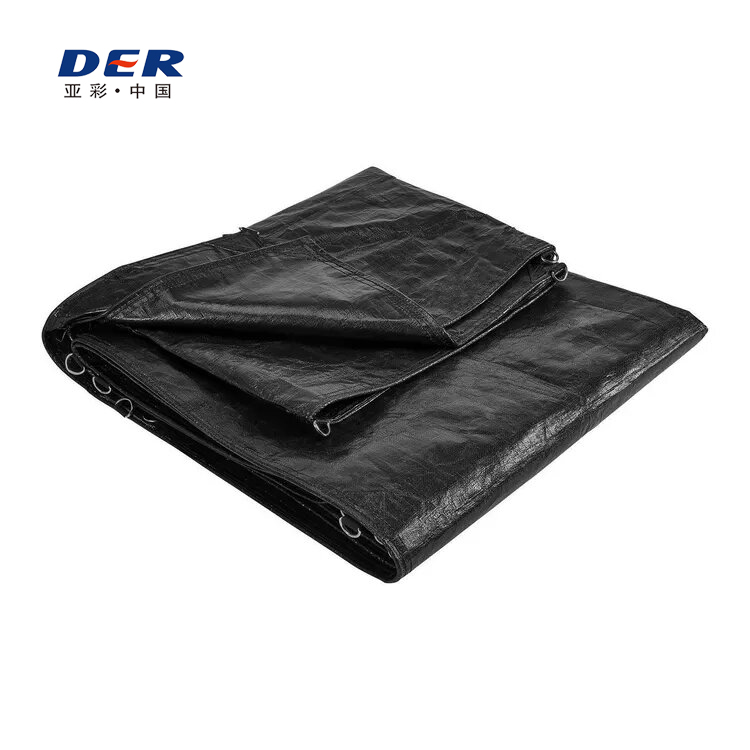
The direct answer
40 oz is a useful benchmark. It is not a universal maximum.
A heavy PVC-coated polyester tarp is a practical choice for a solid waterproof cover with substantial reinforcement. 40 oz per square yard equals approximately 1,356 grams per square meter. That is heavier than 18 oz or 22 oz vinyl, but it does not establish a worldwide “strongest tarp” ranking.
Start with the DERFLEX 40 oz industrial tarp specification direction for severe-duty sourcing. If the project needs additional material mass, compare an approved heavier construction against the actual failure risk and handling system.
Separate two questions: “Which tarp contains the most material?” and “Which finished cover will perform better on my equipment?” GSM answers the first. Material and fabrication evidence are needed for the second.
Compare on the same basis
18 oz, 22 oz, 40 oz and heavier custom tarp constructions
Use areal weight to compare mass. Then compare material properties and finished construction using the same methods and conditions. These are sourcing starting points, not certified performance grades.
| Material reference | Approx. GSM | When to evaluate it | Confirm before purchase |
|---|---|---|---|
| 18 oz/yd² | 610 g/m² | A repeat-use cover where manageable weight and folding are important. | Suitability for the actual abrasion, exposure and attachment demands. |
| 22 oz/yd² | 746 g/m² | A heavier alternative to 18 oz when extra material mass is worth the handling trade-off. | Base fabric and test data, not just the 22 oz label. |
| 40 oz/yd² | 1,356 g/m² | Severe-duty solid covers with a clear reason for the added mass. | Finished weight, support, seam layout and installation method. |
| 2,000 gsm custom direction | 2,000 g/m² ≈ 59.0 oz/yd² | A higher-weight project direction requiring technical and fabrication review. | Actual quoted construction, sample approval and practical handling. |
1 oz/yd² ≈ 33.906 g/m². This compares nominal material mass, not tensile strength, tear strength or service life. It is not a stock-availability list.
The 22 oz vinyl tarp range is worth evaluating when frequent handling matters. DERFLEX’s published super-heavy-duty range provides the context for the 900–2,000 gsm direction; confirm the exact construction in the quotation.
40 oz and 40 mil mean different things
Oz/yd² and GSM measure mass per area. Mil and millimeters measure thickness: 1 mil = 0.0254 mm, so 40 mil = 1.016 mm. A coating-heavy sheet and a stronger-scrim sheet can have similar weight yet different behavior. Specify both weight and thickness when both matter.
Before you order
Calculate the weight your crew will actually move.
A 20 × 30 ft sheet of 40 oz/yd² fabric weighs approximately 166.7 lb / 75.6 kg before reinforcement and hardware. The same area at 22 oz is about 91.7 lb / 41.6 kg. That difference affects removal, folding, storage and freight.
Use the calculator for a rectangular main sheet. Finished covers add material in seam overlaps, hems, flaps, patches and attachments. Shaped covers need a developed fabric-area calculation.
Metric units: area (m²) × GSM ÷ 1,000 = kg
Ask for finished unit weight, packed weight and package dimensions. These estimates do not rate a tarp’s lifting capacity, support capacity or safe working load.
Illustrative material estimate. Confirm final cover weight with the supplier.
Application decision table
Buy around the job’s dominant failure risk.
Ask where the current cover fails and how operators handle it. The answer may point to more material, different reinforcement, better fit or a different cover type.
| Working situation | Direction to evaluate | Approve before ordering |
|---|---|---|
| Frequently removed fleet cover | Compare manageable vinyl weights with reinforcement at cargo contact points. | Can operators lift, fold and secure the cover using the intended procedure? |
| Heavy equipment stored outdoors | Compare 40 oz or heavier custom fabric where contact and exposure justify it. | Does the cover fit protrusions, shed water and protect rubbing zones? |
| Large seasonal storage cover | Balance material weight with panel size, anchoring and a removal plan. | Will access, packing and handling remain practical at full size? |
| Wear beside a rail or corner | Review padding, contact geometry and local patches before a whole-sheet weight upgrade. | Has the cause of wear been removed or controlled? |
| Roller or powered tarp system | Match material, hems and attachments to the system manufacturer’s requirements. | Are roll diameter, drive capacity and edge thickness compatible? |
| Debris cover needing airflow | Review mesh construction for the containment requirement. | Is a solid waterproof sheet necessary for the operating need? |
Temporary sheet covers and engineered roofs, enclosures or lifting devices have different requirements. Fabric weight does not establish a structural rating.
Inspect the whole cover
Six checks that make a heavy-duty tarp specification useful
Review the PVC-coated polyester material options together with the finished drawing. Each check belongs in the approval package, especially for bulk and repeat-order programs.
Base fabric
Record yarn construction and fabric direction. Compare tensile and tear results in both directions using the same method, units and specimen conditions.
Coating and surface
Confirm weight, thickness tolerance, coating adhesion and exposure requirements. Chemical compatibility needs the actual substance, concentration, temperature and contact duration.
Seam construction
Record panel layout, joining method and seam width. Evaluate a fabricated seam sample when waterproofing, repeated folding or seam loading matters.
Perimeter reinforcement
Define hem build-up, webbing or rope edge and corner reinforcement. The drawing should show how force enters the cover through its perimeter.
Attachment system
Specify fittings and exact locations. Confirm the combined fabric, patch and hardware assembly, not the metal fitting alone.
Fit and handling
Approve dimensions, access flaps, abrasion protection and packing. Check the folded or rolled sample before locking the production design.
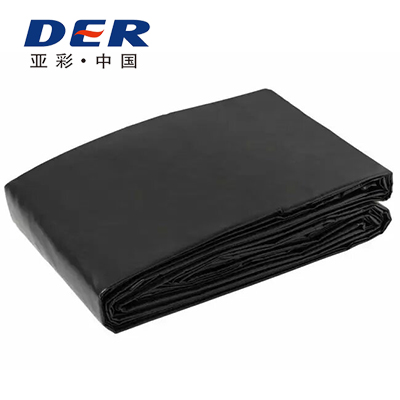
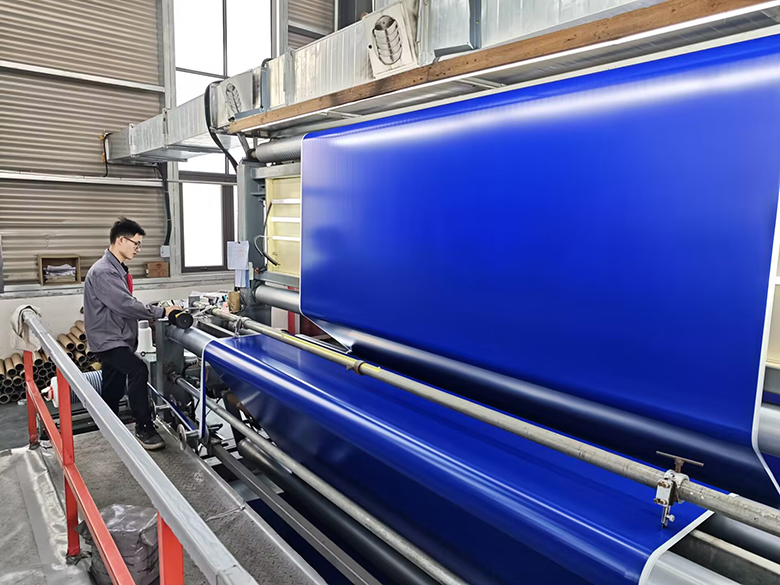
Avoid expensive specification errors
Four buying mistakes a higher GSM will not fix
Ordering nominal instead of finished size
A stock or cut size may allow for hems. Put finished dimensions, tolerances and critical attachment-to-attachment distances on the drawing.
Comparing results from different tests
Ask for the method, direction, units, conditioning and sample identification. Two values are not comparable merely because both are labeled “tear strength.”
Copying a standard grommet interval
Choose locations from actual fixing points and load paths. Extra holes alone do not prove that a fabric-and-edge assembly has greater capacity.
Buying a rating without evidence
UV, flame-retardant and cold-handling requirements need specific acceptance criteria. Request documentation for the quoted material rather than assuming every color and weight performs identically.
From a search to a specification
What DERFLEX should confirm in your quotation
DERFLEX discusses custom material and fabrication requirements for industrial sourcing. Use the custom PVC tarp manufacturing options to define the finished details relevant to your project.
| Material and mass | PVC-coated polyester; target GSM or oz/yd², tolerance and reference sample. |
| Supply format | Roll material, fabricated panels or finished tarp, according to project feasibility. |
| Dimensions and color | Finished drawing, tolerance, panel layout, color reference and surface finish. |
| Reinforcement and hardware | Hems, patches, webbing, D-rings, grommets, pockets or straps as needed; confirm placement and construction. |
| Exposure and testing | Operating temperatures, outdoor exposure, contact surfaces, folding frequency and any required test method. |
| Branding and packaging | Logo or label, folded or rolled packing, unit identification, packed dimensions and weight. |
| Commercial terms | Quantity, MOQ, samples, price, production timing and destination-specific shipping terms: confirm in the quotation. |
No fixed MOQ, delivery promise, test result or service-life claim is implied. Approve the quoted specification and sample.
Make the enquiry specific
Send a useful brief. Get a comparable offer.
“I need your strongest tarp” leaves the supplier to guess. A clear brief lets weight, fabrication and price be evaluated on the same basis across offers.
Include these seven details
- Use: what the cover protects and how it is installed.
- Finished geometry: dimensions, shape, access areas and drawing.
- Material target: weight, reference sample or the problem to solve.
- Exposure: conditions, contact surfaces and handling frequency.
- Construction: seams, reinforcement and fixing-point layout.
- Order: quantity, destination and packing preference.
- Acceptance: test evidence and sample approval.
Approve a prototype for an unusual cover
For a large, shaped or frequently handled cover, evaluate fit, mass, fastening, folding and packed size before committing to the repeat-order specification.
Edit these fields and include the brief in your quote request or email.
Prefer email? Send your drawing and brief to sales@derflex.com. This page does not submit the brief automatically.
Common buyer questions
Heavy-duty tarp buying FAQs
What is the most heavy-duty tarp you can buy?
For demanding waterproof industrial covers, reinforced PVC/vinyl-coated polyester is a practical starting point. A 40 oz/yd² vinyl tarp is a widely listed severe-duty option. DERFLEX publishes a super-heavy-duty direction up to 2,000 gsm, approximately 59 oz/yd², subject to project review. No single weight proves that a tarp is the strongest for every application.
Can you buy a tarp heavier than 40 oz?
Heavier custom constructions are a sourcing option. DERFLEX publishes a 900–2,000 gsm super-heavy-duty direction; its upper end exceeds 40 oz/yd². Confirm the exact base fabric, coating, fabrication, approved sample and quotation. The published range is not a ready-to-ship stock list.
Is a 40 oz tarp the same as a 40 mil tarp?
No. Ounces per square yard measure mass per area; mils measure thickness. A 40 oz/yd² tarp is approximately 1,356 gsm. A 40 mil sheet is 1.016 mm thick. You cannot convert one into the other without knowing the complete material construction.
How much does a 20 × 30 ft 40 oz tarp weigh?
The rectangular main sheet is approximately 166.7 lb, or 75.6 kg: 20 × 30 × 40 ÷ 144. This excludes extra material in hems, overlapping seams, patches, webbing and hardware. Confirm finished unit weight and packed weight before arranging handling or freight.
Should I choose a 22 oz or a 40 oz vinyl tarp?
Compare 22 oz when frequent lifting, folding or rolling makes handling important. Evaluate 40 oz when the duty profile justifies extra material mass and the support and handling system can accommodate it. Compare tested fabric properties and finished details; a heavier sheet alone does not establish better performance.
Does buying the heaviest tarp solve tearing and water leaks?
First identify where failure starts. Edge pull-out, rubbing at a sharp contact point, a damaged seam or water pooling requires a suitable design response. Specify local reinforcement, fit, seams and attachment layout alongside the material.
What should I send DERFLEX for a custom heavy-duty tarp quotation?
Send the application, finished dimensions or drawing, material weight or reference sample, exposure conditions, fastening layout, seam and reinforcement requirements, quantity and destination. Include required test evidence, packing preferences and sample approval needs. Confirm MOQ, production timing and price for the actual specification.