Blocks rain through the sheet
A continuous PVC coating provides the water barrier. Punctures, damaged coating and inadequately sealed seams still need attention.



Protect outdoor rack inventory without making every pick a full cover removal. A fitted rack tarp needs room for the loaded frame, a practical opening for daily access and a supported top that directs rain beyond the goods.
DERFLEX supports custom PVC coated polyester tarpaulin, drawing-based covers, reinforced edges, welded panels, straps and closure options. Send your rack dimensions and loading photos to review the fabric, panel layout and fixing details together.
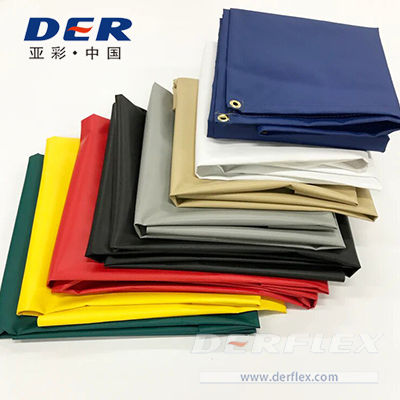
A suitable outdoor storage rack cover combines a waterproof fabric, a measured finished fit, reinforced attachments and an opening that can be secured after use. Rain protection also needs positive runoff: a flat, unsupported tarp can collect water even when the fabric itself is waterproof.
Measure the largest occupied outline of the rack, including projecting inventory, base plates and the proposed roof support. Record rack dimensions separately from cover allowances so the finished cover size is agreed rather than assumed.
For drawing-led patterns and finishing options, review DERFLEX custom tarp manufacturing.
| Dimension | What to put on the drawing |
|---|---|
| Loaded rack envelope | Measured outside width × depth × supported height; label the unit. |
| Finished cover size | Agreed internal fit or agreed external panel dimensions; identify which convention is used. |
| Fit allowance | Clearance for installation, frame variation and closures. No universal allowance suits every rack. |
| Hem position | Distance above the floor, splash exposure and clearance from wheels or ground obstacles. |
| Opening clearance | Clear space for the largest bin, carton or pallet, with the panel secured open. |
For cantilever racks, include the ends of the arms and the full stored-product projection. A rectangular shelf-cover pattern may not fit an irregular load envelope.
Use a front panel for routine picking and separate bay panels for long rack rows. Keep the weather-shedding top in place wherever practical, and provide a positive way to secure the opened panel outside the working area.
| Cover arrangement | Suitable working pattern | Detail to confirm |
|---|---|---|
| Removable fitted cover | Infrequent access to one compact rack | Handling space, cover weight and a dry place to store it during access. |
| Front panel that rolls up | Repeated manual picking from several shelves | Retention straps, grip points and a roll position that clears the top shelf. |
| Side zippers with a protective flap | A defined opening with a continuous closure line | Flap overlap, slider access and protection from abrasion. An ordinary zipper is not a watertight seal. |
| Overlapping curtain panels | Frequent access with fewer long zipper runs | Overlap direction, lower restraint and how the panels close after each pick. |
| Separate covers by bay | Long rows with different picking schedules | Weather overlap at bay joints, shared posts and independently replaceable panels. |
Position closures where staff can reach them from the ground. Check access while the cover is fitted to a loaded rack, not just while the panel lies flat. A heavier curtain may require smaller sections or a different handling arrangement.
Provide the required clear opening and secure all fabric, straps and closures away from forks, wheels and mast travel. Close the panel after handling; an open curtain cannot maintain rain protection at that bay.
Define opening and closure locations within the made-to-measure tarpaulin specification, rather than adding them after the cover size is fixed.
Give the top a supported slope or crown, maintain the intended profile and carry the drip edge outside the inventory envelope. Fabric waterproofing alone does not remove a sagging pocket or prevent rain entering through an exposed opening.
A tarp changes the exposed surface area of an open rack. The rack supplier or project engineer should review support, anchorage and wind effects. Fabric GSM does not establish a wind or snow load rating.
A continuous PVC coating provides the water barrier. Punctures, damaged coating and inadequately sealed seams still need attention.
The support profile and fitted tension determine whether rain leaves the cover or remains in a pocket.
Closure flaps, side overlaps and hem position manage routes where rain can bypass the main sheet.
Review waterproof tarp material and seam options together with the support and closure design.
PVC coated polyester is a practical option when the cover needs a waterproof sheet, welded panels and reinforced fixing details. Match the grade to handling frequency, abrasion, sunlight and temperature; greater weight alone does not establish better finished-cover performance.
| Storage condition | Specification direction | Why it matters |
|---|---|---|
| Small rack; frequent manual opening | Compare manageable-weight PVC grades and smaller access panels. | Handling effort can determine whether the cover is consistently closed. |
| Repeated corner contact or rough frames | Review base-fabric strength, local wear patches and smooth contact protection. | A thick coating does not remove sharp edges or eliminate rubbing. |
| Continuous sun exposure | Request an outdoor formulation and grade-specific weathering evidence. | Color and GSM do not provide a verified UV lifetime. |
| Humid or temperature-cycling storage | Plan sheltered ventilation and a storage routine for dry goods. | PVC coated fabric is not inherently breathable; condensation can form inside. |
| Cold-weather opening and folding | Confirm low-temperature flexibility for the proposed fabric and closures. | A cover that performs at ambient temperature may handle differently when cold. |
| Long multi-bay storage rows | Consider replaceable bay panels, a seam map and planned overlaps. | Local access and repairs can be easier than handling one large enclosure. |
The polyester base fabric supplies reinforcement; the PVC coating provides the sheet barrier and a surface suitable for compatible welding. Coating adhesion, tear behavior and flex resistance matter alongside mass per square meter.
Compare the available PVC tarpaulin constructions before fixing a cover grade.
DERFLEX lists approximately 300–1,200 gsm custom tarpaulin options. A rack project should select its actual grade by sample and drawing review. Specify GSM and thickness separately; coating and textile construction prevent a universal conversion between them.
Review heavy duty tarp options when repeated handling or local wear requires a more robust construction.
| Item | DERFLEX supply / review scope | Buyer input |
|---|---|---|
| Fabric | PVC coated polyester; grade, finish and color subject to confirmation | Outdoor exposure, handling schedule, preferred GSM and thickness |
| Cover dimensions | Custom drawing-based panels and finished sizes | Loaded envelope, top profile, tolerances and hem position |
| Seams and hems | Compatible heat welding; reinforced hems and webbing options | Seam locations, overlap requirements and attachment layout |
| Access and hardware | Straps, buckles, eyelets, D-rings, pockets, zippers and closure options | Opening width, access frequency, rack contact points and restraint method |
| Outdoor performance | UV, cold-resistance and other formulation options for review | Climate and any specific test or documentation requirement |
| OEM / bulk supply | Custom colors, printed markings, labels and packaging options | Quantity, destination, bay identification and repeat-order plan |
| MOQ, sample and lead time | Confirmed with DERFLEX for the required specification | Drawing complexity, material grade, order volume and delivery schedule |
These are customization capabilities, not a stock rack-cover datasheet. Performance data and delivery terms are confirmed for the actual order.
For a simple rectangular cover with a flat top and four full sides, nominal fabric area is width × depth + 2 × height × (width + depth). Multiply area by GSM and divide by 1,000 to estimate the fabric mass in kilograms.
The estimate helps compare handling effort. It excludes seams, overlaps, hems, roof pitch, reinforcements and hardware, and is not a cutting plan or quotation.
650 gsm is an example input, not a specified DERFLEX rack-cover grade. A draining roof needs its actual geometry included in the final drawing.
Five-panel area
Estimated fabric mass
Finished weight increases with seams, flaps, reinforcement and hardware.
A hypothetical 50 mm water layer across a 2.4 × 0.9 m area contains about 108 liters of water and weighs approximately 108 kg. Actual ponding shape and depth vary. This arithmetic demonstrates why runoff matters; it does not establish a safe load for a cover or rack.
Plan corner protection, closure reinforcement and attachments around the actual rack contact points. A strong sheet can still fail where a strap, eyelet or seam transfers force into a small area.
Remove or shield burrs and projecting brackets with the rack supplier's approval. Add compatible wear patches where contact cannot be avoided, and keep rough goods from pressing into the cover.
Review seam positions on the top and around openings. Weld compatible waterproof panels; evaluate stitched hardware areas and seal details where rain exposure makes them relevant.
Use reinforced fixing zones aligned with approved rack attachment points. Specify strap length, buckle access and eyelet placement from the drawing, rather than copying generic spacing.
These details also apply to industrial protective tarp applications, especially covers installed and removed repeatedly.
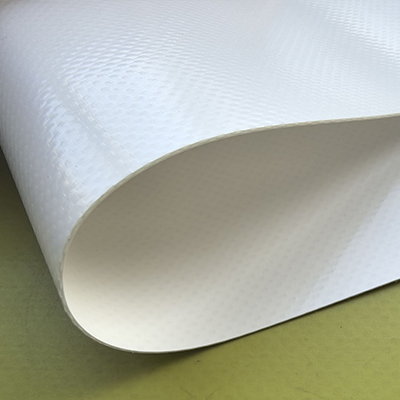
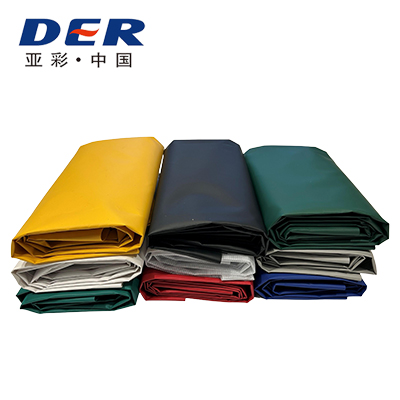
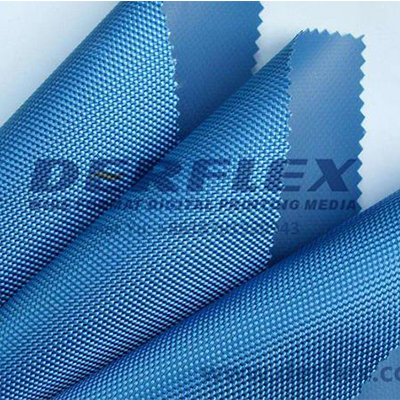
Fit and operate a representative cover on the actual loaded rack. Review the fabric, finished dimensions, water-shedding details and access sequence before approving repeat production.
A workshop water-flow check can reveal drainage defects. It is not a certification of performance in storms or snow.
| Observed problem | Check first |
|---|---|
| Water on top | Support profile, sagging span, trapped folds or a blocked discharge edge. |
| Wet goods; sheet intact | Openings, seams, hems, wind-driven rain, floor splash and condensation. |
| Corner wear | Sharp frame contact, protruding inventory, flapping and missing wear protection. |
| Closure hard to operate | Fit allowance, misalignment, loading changes and excessive tension. |
| Cover left open | Panel weight, reach, retention position and the number of actions per pick. |
DERFLEX's published custom tarp capabilities include material grades, drawing-based dimensions, welding, reinforced finishing, hardware, printing and packaging. Coordinating these decisions gives the fabricator, buyer and rack operator one agreed specification for the cover.
Ask for a quotation based on the actual drawing. MOQ, sample arrangements, test documentation, production timing and shipping are confirmed for the project rather than assumed from a generic product description.
It can provide temporary protection if it is securely fitted to an appropriate support and has a clear runoff path. A flat sheet draped over an open frame often leaves excess folds, exposed ends or inconvenient access. A fitted cover or a top with separate curtains can make repeated use more practical.
Provide the measured loaded rack dimensions first, then agree the fit allowance and finished cover size with the manufacturer. Allowance depends on the frame shape, material, closures and installation method. Do not add unrecorded clearance that the fabricator may add again.
The fabric can be waterproof while an ordinary zipper still admits water. A protective storm flap, suitable seam details and the direction of exposure affect the finished result. Specify rain protection at the closure and inspect it on the approved sample.
A waterproof PVC sheet does not eliminate condensation. Store dry goods, consider sheltered ventilation openings and avoid leaving damp contents enclosed. Ventilation needs to be planned without creating a direct rain-entry path; it does not make the coated sheet breathable.
No. Pooling depends on support and drainage geometry. Wind and snow resistance depend on the entire rack, support, attachment and cover arrangement. Thickness or GSM alone cannot establish a safe load rating.
Send loaded width, depth and height with units; front and side photos; the support profile; desired access arrangement; attachment locations; exposure and climate; fabric preferences; quantity; and delivery destination. Include your drawing revision and any required test documentation.
Start with a dimensioned sketch and photos of the rack under normal loading. DERFLEX can review material and fabrication options for custom outdoor rack covers, replacement curtains and OEM cover programs.
Include the target quantity and destination to discuss the commercial terms alongside the technical details.
Application: Outdoor storage rack cover
Loaded rack W × D × H + units:
Rack type / number of bays:
Top support / runoff direction:
Access panel / clear opening:
Fixing points / hem clearance:
Climate / sun / temperature:
Fabric grade / color / reports:
Quantity / destination / schedule:
Attachments: drawing + loaded-rack photos