Heavy Rain & Standing Water
Design focus: continuous waterproof coating, correctly welded seams, adequate overlap, drainage slope and avoidance of unsupported pockets where water can collect.



DERFLEX develops heavy-duty PVC coated polyester tarps for severe rain, strong wind, snow, freezing conditions, high UV exposure and repeated outdoor handling. The material, seams, reinforcement and anchoring layout are specified together so the finished cover is suited to its real operating environment.
Available as roll goods, cut panels, semi-finished sections or custom finished tarpaulins for importers, distributors, contractors, fleets, agricultural buyers and OEM brands.
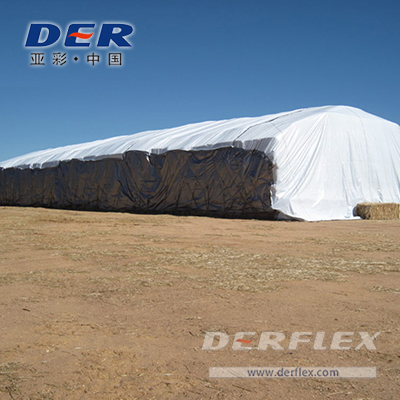
A thick fabric can still fail when water pools, seams open, corners tear or tie-down points concentrate wind load. Reliable protection starts with a complete design review.
A tarp for extreme weather should be selected as an engineered protective system rather than a generic sheet. Rain protection depends on coating and seam construction. Wind resistance depends on tensile strength, reinforcement and how loads are transferred to the anchor points. Snow performance depends on support, pitch and drainage—not simply on fabric thickness. Sun and heat require a suitable outdoor formulation, while freezing conditions require flexibility that is maintained at the expected operating temperature.
A cover used for seasonal farm storage may need a different balance of weight, handling and UV resistance than a truck tarp moving at highway speed, a construction enclosure subjected to gusts, or an emergency roof cover installed after a storm. DERFLEX uses the application, climate, service period, installation method and repeat-handling requirements to define a practical material and fabrication direction.
Extreme conditions are usually combined: wind drives rain into seams, sunlight ages the coating, cold reduces flexibility, and repeated handling increases edge stress. The specification should address the full exposure profile.
Design focus: continuous waterproof coating, correctly welded seams, adequate overlap, drainage slope and avoidance of unsupported pockets where water can collect.
Design focus: high-strength base fabric, reinforced perimeter, appropriate anchor spacing, webbing or D-rings, rounded stress transitions and reduced loose fabric.
Design focus: cold-flex material, supported installation, steep drainage where possible, smooth surfaces for easier shedding and routine removal of accumulated loads.
Design focus: UV-stabilized PVC formulation, suitable pigment system, optional lacquered surface and color selection matched to heat absorption and appearance requirements.
Design focus: plasticizer and coating system selected for the target low temperature, with sample validation where frequent folding or deployment is expected.
Design focus: coating weight, surface finish, reinforced contact zones and optional resistance directions for oil, mildew or specific chemicals, subject to final testing needs.
These ranges are procurement starting points, not universal ratings. Final weight, scrim, coating and reinforcement should be confirmed after the use environment is reviewed.
For repeat outdoor covers where workers still need manageable folding and installation.
For stronger wind exposure, repeated handling, transport use and long outdoor duty cycles.
For large spans, high mechanical stress, mining, port, emergency or specialized industrial applications.
Use this table to prepare an inquiry. DERFLEX can help translate the operating conditions into material, fabrication and packaging requirements.
| Material Structure | PVC coated high-tenacity polyester; balanced or heavy-duty scrim selected according to tensile, tear and dimensional requirements. |
|---|---|
| Indicative Weight Range | Approximately 500–1200 gsm for common custom programs; lighter or specialized structures can be discussed when handling, portability or cost has priority. |
| Coating & Surface | Glossy, matte, embossed or lacquered options; coating weight and surface treatment selected for outdoor aging, cleaning, friction and appearance. |
| Weather Treatments | UV-stabilized, anti-mildew, cold-flex, flame-retardant or other functional directions are available subject to formulation, order quantity and requested test method. |
| Waterproof Construction | PVC coated surface with high-frequency or hot-air welded sea, ms where appropriate; seam layout, overlap and drainage design should be confirmed for the finished cover. |
| Edge Reinforcement | Folded hem, rope-in-hem, polyester webbing, reinforced corners, replaceable wear patches and localized multi-layer construction. |
| Attachment Options | Brass, aluminum or stainless-steel eyelets; D-rings, straps, loops, buckles, handles, hook-and-loop or project-specific hardware. |
| Size & Panel Layout | Custom cut size, finished size, roll width, panel orientation and seam placement; exact finished dimensions should be stated clearly during approval. |
| Color & Branding | Standard or custom colors, logo printing, labels, barcodes, carton marks and private-label packaging subject to minimum order requirements. |
| Supply Format | Fabric rolls, cut panels, semi-finished sections, welded covers or fully finished tarps for wholesale, conversion and OEM programs. |
| Quality Approval | Material sample, color approval, seam and reinforcement review, pre-production sample or agreed inspection checklist for repeat-order consistency. |
Specification ranges are indicative and should not be interpreted as a performance guarantee for every installation. Wind, snow and structural loads depend on the full support and anchoring system. Confirm the intended conditions, test methods and safety requirements before production.
Several materials can be called “all-weather,” but their practical behavior differs. The best direction depends on service life, weight, breathability, wind load and budget.
Often selected for reusable industrial weather protection because it combines waterproof coating, strong woven reinforcement, weldability and custom finishing.
Preferred DERFLEX directionLightweight and economical for emergency, temporary or large-volume covers. Long-term abrasion, cold folding and repeated high-stress use should be reviewed carefully.
Useful for cost-sensitive programsBreathable and abrasion-tolerant for selected covers, but buyers should confirm whether the grade is water-resistant or waterproof and how it behaves when saturated.
Useful when ventilation mattersReduces wind pressure and supports airflow, shade or debris containment. It is not the right choice when a continuous rain barrier is required.
Useful for wind relief and containmentDERFLEX supports both material supply and finished tarp programs for buyers who need repeatable specifications across industrial, infrastructure, transport and outdoor markets.
Scaffolding covers, material protection, temporary roof barriers, work-zone partitions and weather screens for exposed jobsites.
Welded cargo tarps, roll tarps, flatbed covers and transport protection where wind movement, abrasion and repeated handling matter.
Hay, feed, grain, fertilizer, timber and seasonal equipment covers requiring rain protection and long outdoor exposure.
Temporary shelter, storm-damage roof coverage, relief distribution and rapid-deployment protection with clear packing and size identification.
Machinery, stockpile, conveyor, tank and maintenance covers with reinforcement around access points and high-contact zones.
Containerized goods, dockside equipment, boats and exposed assets where moisture, UV, salt-laden air and fastening security must be considered.
“Heavy duty” is not a complete specification. Giving the following information allows the material and reinforcement to be matched more closely to the intended use.
A structured approval process helps reduce misunderstandings about weight, color, finished size, seam design and reinforcement before bulk production begins.
Define climate, service period, handling, installation and failure risks.
Select scrim, coating, weight, finish and functional treatments.
Confirm color, hand feel, welding, edge structure and key dimensions.
Use agreed specifications, process records and inspection points.
Prepare labeling, folding, cartons, palletization and export documents.
Retail tarps are convenient for immediate small-quantity use. B2B programs often require consistent materials, finished-size control, reinforced details, private labeling and stable repeat orders.
Material weight, coating, scrim and finishing are reviewed against the end-use conditions instead of selected by color alone.
Supply can be arranged for converters, fabricators, importers or buyers requiring fully completed tarpaulins.
Hems, webbing, patches, D-rings, eyelets and access features can be positioned around actual stress and use points.
Approved samples, specification sheets, labeling and packing details support more consistent follow-up production.
These six related pages help procurement teams evaluate waterproofing, UV exposure, duty level and installation needs before confirming an extreme-weather tarp.
Clear answers for distributors, contractors, fleet operators, emergency buyers and OEM brands comparing severe-weather tarp options.
For reusable industrial exposure, PVC coated polyester is often a practical direction because it combines waterproof coating, woven reinforcement, weldable seams and customizable UV or cold-flex formulations. The finished tarp should also include reinforcement and attachment details matched to the installation.
Weight alone does not determine performance. Many commercial projects start around 600–750 gsm, while more demanding transport, construction or industrial covers may use approximately 800–1000 gsm or heavier. Wind load, tarp size, scrim strength, edge reinforcement and anchor spacing should be reviewed together.
A tarp can provide a weather barrier, but it should not be treated as a self-supporting snow structure. Snow and ice loads depend on the frame, support spacing, slope and maintenance. The installation should promote drainage and shedding, and accumulated snow should be removed safely before excessive load develops.
Welded seams are commonly selected for PVC coated tarps because they can create a continuous bonded joint without needle holes. Seam strength still depends on overlap, welding parameters, panel layout and production control. Stitched construction may be used for selected details with appropriate sealing or reinforcement.
DERFLEX can discuss custom sizes, colors, PVC weights, reinforced edges, eyelets, webbing, D-rings, straps, labels and packaging for storm response, temporary roofing, shelters and industrial protection. Final feasibility depends on the design, quantity and requested delivery plan.
Send the application, finished dimensions, quantity, expected climate, service duration, installation method, preferred material weight, color, reinforcement layout, packaging and any required test or compliance documents. Photos or an existing sample can also improve specification matching.
Send DERFLEX the application, climate, dimensions, quantity and installation method. Our team can propose a practical PVC coated fabric and finished-cover direction for sampling and quotation.