PVC / Vinyl Coated Polyester
Strong waterproof barrier, reinforced textile structure, weldability and custom formulation. DERFLEX commonly lists approximately -30°C to +70°C for many standard grades, with colder formulations available separately.



There is no single temperature rating for every tarp. Material chemistry, coating formulation, direct contact, exposure time, UV load, folding temperature and the finished seam-and-hardware system all influence the practical working range.
DERFLEX currently lists a typical outdoor direction of -30°C to +70°C (-22°F to 158°F) for many PVC-coated tarp grades, with separate cold-resistant formulations for lower-temperature projects. Direct hot-surface contact and hot asphalt require application-specific heat-capable materials rather than an ordinary weather tarp.
A tarp does not have one universal temperature limit. For DERFLEX heavy-duty PVC tarpaulin, a common specification direction is approximately -30°C to +70°C (-22°F to 158°F). For colder climates, DERFLEX lists specially formulated cold-resistant PVC tarp options at -40°C, -50°C and -60°C. If a cover will touch hot asphalt, exhaust components, welding sparks or another hot surface, do not use the normal PVC range as the design limit—specify a verified heat-capable material for the actual contact temperature and exposure time.
Procurement teams often ask for “a tarp for -30°C” or “a heat-resistant tarp for 80°C.” That is a useful start, but it is not enough to confirm suitability. A tarp stored flat in cold air sees a different stress than a tarp folded, rolled or tensioned at the same temperature. Likewise, a cover exposed to hot summer air is different from one touching a hot pipe or asphalt load.
A practical temperature specification should separate ambient temperature, material surface temperature, direct-contact temperature, continuous exposure, short peak exposure and thermal cycling. The weakest component may be the coating, seam, thread, webbing, adhesive or hardware interface rather than the center of the sheet.
| Temperature / Exposure | Recommended Starting Direction | What to Confirm | Main Procurement Risk |
|---|---|---|---|
| Down to about -30°C / -22°F | Standard or heavy-duty PVC-coated polyester grade within its stated service range. | Cold-flex requirement, folding/rolling cycle, UV level, tensile/tear target and finished reinforcement. | Assuming every PVC tarp remains equally flexible at the low end of the range. |
| -40°C to -60°C / -40°F to -76°F | Special cold-resistant PVC tarp formulation selected for the actual minimum temperature. | Minimum use temperature, cold-folding behavior, crack resistance, seam and hardware performance. | Using a normal outdoor PVC grade because it is “heavy duty.” |
| Moderate hot/cold outdoor service | PVC tarp selected within the approved material range; DERFLEX commonly lists -30°C to +70°C for many grades. | UV exposure, color, ventilation, rain, wind, abrasion and thermal cycling. | Confusing air temperature with actual tarp-surface temperature under strong sun. |
| Above +70°C / 158°F or unknown high heat | Do not automatically extend the standard PVC rating. Review a specialty heat-resistant textile or application-specific tarp construction. | Continuous vs peak temperature, radiant distance, hot-surface contact, flame/spark risk and finished assembly. | Softening, coating degradation, sticking or premature failure from under-specified heat exposure. |
| Direct contact with hot asphalt | Application-specific asphalt tarp with verified contact-temperature capability. | Maximum asphalt-contact temperature, haul time, sag/contact possibility, tarp system and reinforcement. | Assuming ordinary vinyl truck tarp is safe because it is waterproof or flame retardant. |
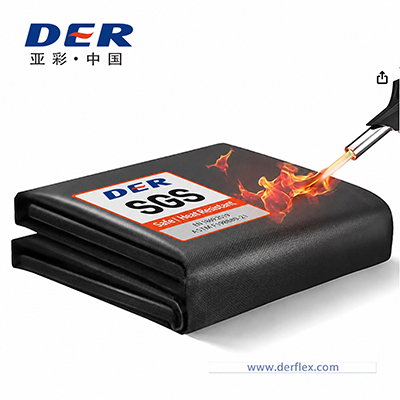
| Welding / hot-work / very high heat | Specialty coated fiberglass or hot-work barrier system, not an ordinary weather tarp. | Continuous heat, peak heat, sparks, molten spatter, direct flame, layer position, seams and test requirements. | Using a weather tarp where a purpose-built high-temperature textile is required. |
These are selection directions, not universal guarantees. The exact material must be confirmed against the ordered grade, finished construction and real operating condition.
Cold-weather tarp performance is strongly influenced by the polymer formulation and how the tarp is handled. As temperature falls, a PVC coating can become stiffer. Folding, rolling, tensioning or striking the material while it is stiff creates concentrated stress at creases, welded seams, grommets and reinforced edges.
For common industrial outdoor programs, review DERFLEX heavy-duty PVC tarps. For severe winter environments below the normal grade range, use the dedicated cold-resistant tarp route and confirm the required low-temperature formulation before sampling.
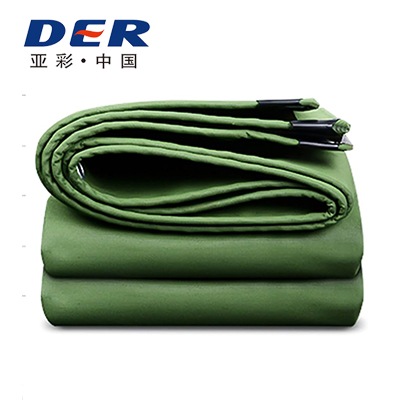
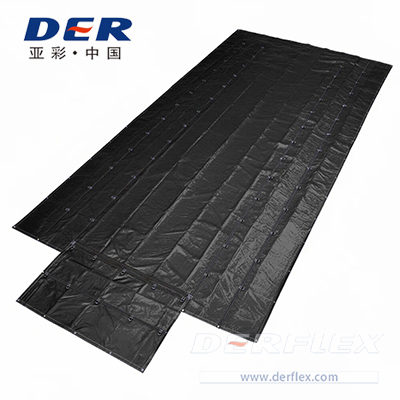
For outdoor covers in hot climates, the tarp must handle a combination of air temperature, UV radiation, solar heating, wind, rain and repeated expansion and contraction. Material color and ventilation can influence surface heating, but neither replaces an approved temperature range.
Direct contact with a hot process surface is a different category. A standard PVC or vinyl tarp should not be assumed suitable for contact with hot asphalt, exhaust components, steam lines or welding work simply because it is described as flame retardant or heavy duty.
Material family narrows the choice, but the exact grade still controls the temperature performance. For a broader structural comparison, see DERFLEX's PVC vs PE tarp guide.
Strong waterproof barrier, reinforced textile structure, weldability and custom formulation. DERFLEX commonly lists approximately -30°C to +70°C for many standard grades, with colder formulations available separately.
Useful where low weight and economy matter. Temperature performance varies significantly by resin, lamination, thickness and grade, so do not transfer a rating from one poly tarp to another.
Useful when breathability and condensation control matter. Water treatment, wet/freeze cycles, drying behavior and weight gain should be considered separately from temperature alone.
Open structure reduces wind pressure and allows airflow, but it is not a full rain barrier. Temperature selection still depends on the coating polymer and the actual truck or containment system.
Uses a project-selected formulation intended to retain flexibility at lower temperatures than standard outdoor PVC. DERFLEX lists -40°C, -50°C and -60°C options on its cold-resistant tarp range.
Used when ordinary thermoplastic tarp materials are no longer appropriate. Silicone-coated fiberglass is one example; finished temperature capability depends on coating, layer position, exposure time and the complete assembly.
For the standard PVC material platform, review DERFLEX PVC tarpaulin specifications and confirm the selected grade before bulk production.
| Application | Temperature Priority | Starting Material Direction | Buyer Should Specify |
|---|---|---|---|
| Winter truck / trailer cover | Low-temperature flexibility during rolling, folding and tie-down | Cold-resistant PVC-coated polyester when the route falls below standard-grade range | Minimum ambient, deployment temperature, daily cycles, snow/ice, grommet and seam layout |
| Construction winter enclosure | Cold flexibility plus wind, waterproofing and repeated installation | Heavy-duty or cold-resistant PVC; insulated systems if heat retention is a real requirement | Lowest temperature, enclosure geometry, wind exposure, fastening and heating arrangement |
| Desert / high-sun equipment cover | UV, surface heating and thermal cycling | UV-stabilized PVC grade within approved temperature range | Peak ambient, sun exposure, color, ventilation, contact with hot machinery and expected service cycle |
| Hot asphalt truck tarp | Possible direct hot-load contact and heat retention | Application-specific asphalt tarp | Contact temperature, haul time, contact probability, truck system, pocket layout and reinforcement |
| Welding / hot-work barrier | Sparks, radiant heat, hot particles and possibly flame | Purpose-built high-temperature coated fiberglass or welding barrier system | Hazard type, continuous/peak heat, orientation, spatter, layer position, seams and required test route |
| General year-round outdoor storage | Seasonal hot/cold cycling with rain and UV | Standard heavy-duty PVC if the actual exposure stays within the selected grade range | Climate extremes, handling method, UV level, waterproof seam design, wind and abrasion zones |
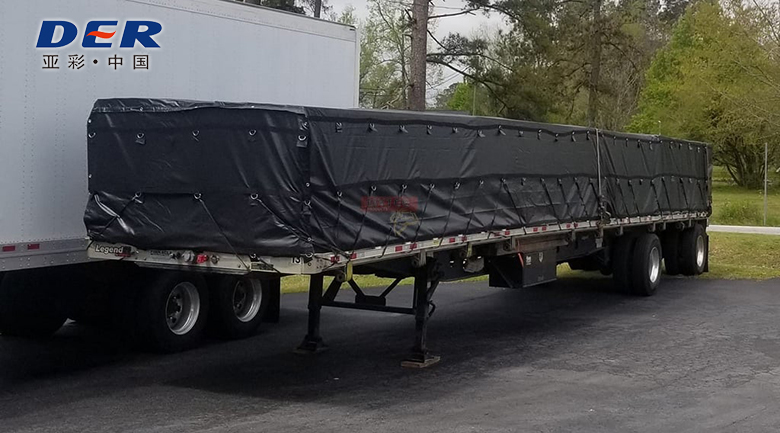
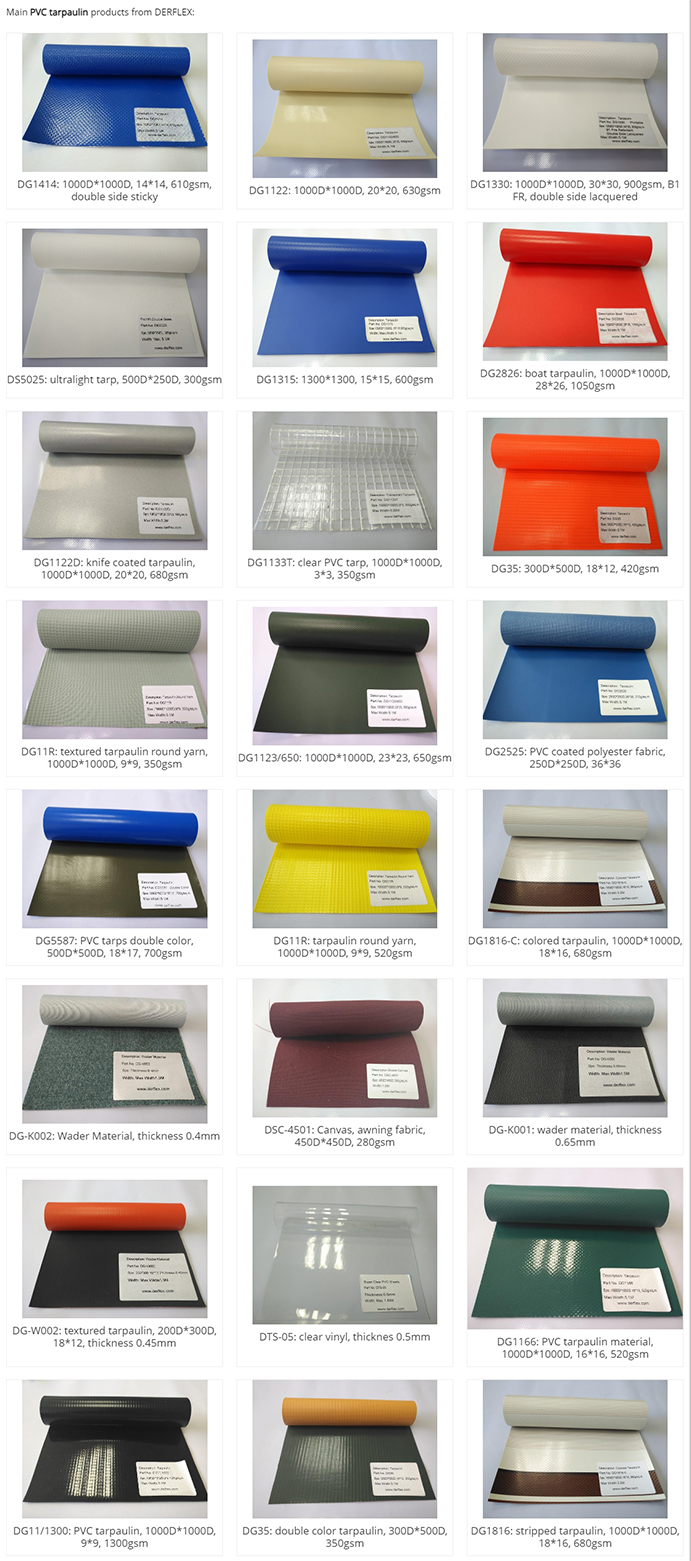
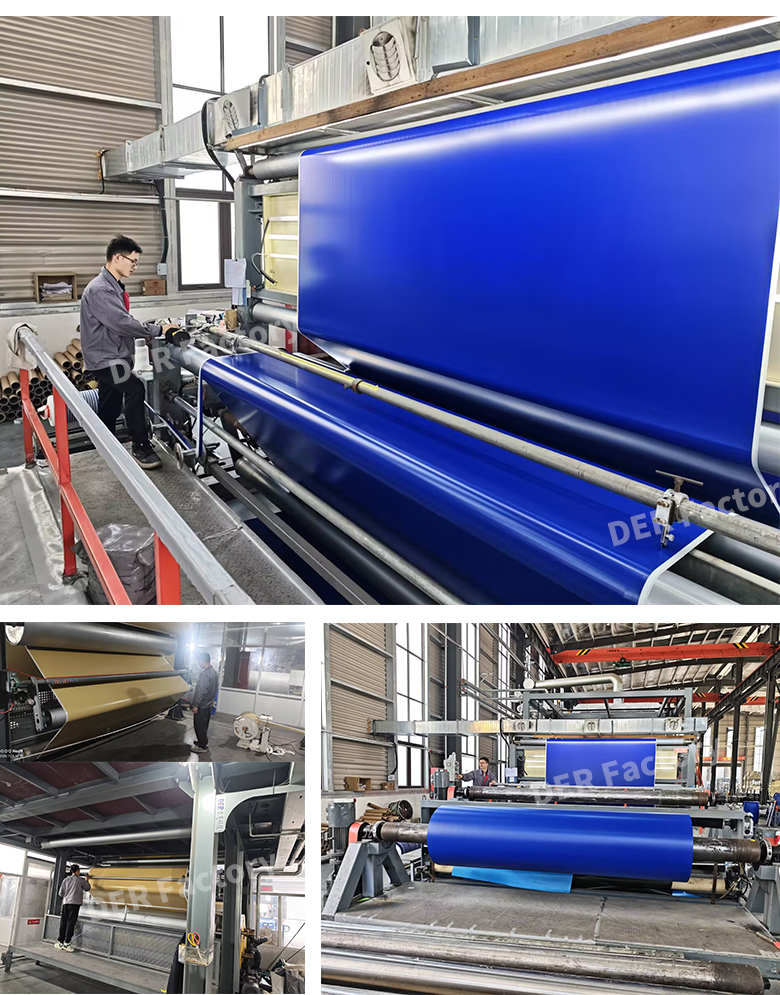
The following images are hosted on DERFLEX.com and are arranged for material, application, cold-weather, high-temperature and manufacturing context.
Lowest and highest ambient temperature; lowest folding/rolling temperature; direct-contact temperature; peak duration; cycle frequency; radiant heat or sparks.
Truck, equipment, storage, construction, asphalt, winter enclosure or industrial hot-work use; finished dimensions; contact points; drainage and ventilation.
Preferred PVC/PE/specialty route, target GSM or thickness if known, waterproofing, UV, cold resistance, FR requirement and expected durability.
Roll goods or finished tarp, welding or sewing, hems, webbing, grommets, D-rings, pockets, straps, reinforcement and logo printing.
Destination market, required customer specification, test method or report. Do not request a generic “certificate” without naming the requirement.
Quantity, sample need, repeat-order plan, packaging, private label, destination and target delivery schedule.
There is no universal PVC tarp rating. DERFLEX currently lists approximately -30°C to +70°C (-22°F to 158°F) as a typical outdoor direction for many PVC tarpaulin grades. The final range depends on the coating formulation, base fabric, finishing and application. Extreme-cold or direct high-heat use requires a separately selected grade.
They can. A polymer coating that becomes stiff in low temperature is more vulnerable to cracking at folds, roll points, seams and hardware zones. For severe winter use, specify cold-flex or cold-crack performance for the actual minimum temperature and handling method.
For heavy-duty waterproof industrial use, a cold-resistant PVC-coated polyester tarp is a practical direction when the grade is formulated and confirmed for the required minimum temperature. The buyer should also review wind, snow, folding, reinforcement and seam design.
A standard vinyl tarp can be suitable for hot outdoor climates when the actual exposure stays within the approved grade range and the UV formulation, color, ventilation and installation are appropriate. Do not treat ambient hot weather as equivalent to direct contact with a hot process surface.
Do not assume a general-purpose PVC or vinyl tarp is suitable for direct hot-asphalt contact. The correct asphalt tarp must be selected using the maximum contact temperature, exposure time, haul cycle and tarp-system geometry.
No. Flame-retardant performance describes how a material behaves in a specified flame test. Temperature resistance describes how the material performs during heat exposure. A tarp can have an FR treatment without being suitable for direct high-temperature contact.
Color can influence solar heat absorption and visible appearance, but it should not be used as a substitute for a verified temperature and UV specification. Climate, ventilation, coating formulation and actual surface temperature remain more important selection inputs.
Provide the minimum and maximum ambient temperatures, folding or rolling temperature, maximum direct-contact temperature if any, peak duration and frequency, application, UV exposure, material preference, finished size, fabrication details, quantity and destination market.
Send DERFLEX the actual hot/cold exposure, application, handling cycle and finished-cover requirements. The material can then be discussed around a realistic temperature envelope instead of a generic tarp label.
Send Your Tarp Temperature RFQ