News
Company News

Tarpaulin Factory Audit Checklist for Importers | DERFLEX

Update:2026/9/14 16:26:42 Views:
Importer Supplier Qualification Guide

Tarpaulin Factory Audit Checklist for Importers

Verify the factory behind the quotation before you commit to a bulk PVC tarpaulin order. This field-ready checklist connects company identity, production ownership, specification transfer, testing, traceability, export packing and shipment release.

Built for importers, distributors, OEM brands and procurement teams buying tarpaulin rolls or finished covers from overseas manufacturers.

Quick answer

What should importers check when auditing a tarpaulin factory? Verify the legal entity and real production site, map which operations are in-house or outsourced, confirm that the approved tarp specification controls raw materials and production, witness relevant QC tests, challenge batch traceability, and review packing, labels, container loading and shipment-release records. A factory audit checks capability; a pre-shipment inspection checks a specific finished lot.

Why importers need a different audit

A good sample is not the same as a dependable import program

Tarpaulin purchasing risk is created at several points: supplier identity, material definition, production transfer, test evidence, finishing, packing and international shipment. An importer audit should connect all of them.

01

Verify who actually makes the product

A sales office, trading company, coating mill and finished-tarp fabricator can all sell “factory direct.” Your audit should identify the legal entity, production address, owned processes and approved subcontractors rather than relying on a marketing label.

02

Verify the specification can survive mass production

An approved swatch does not control GSM, base fabric, coating route, roll width, weld settings, grommet layout or packing by itself. Convert the approved reference into measurable criteria before the first bulk run. The DERFLEX tarpaulin technical specification guide explains the fields buyers should freeze before production.

03

Verify export readiness, not only factory cleanliness

For importers, quality must survive folding, storage, container loading, ocean transit and receiving. Review packing protection, roll or carton identity, shipping marks, quantity reconciliation, moisture controls where relevant, and the documents needed for destination clearance.

Supplier qualification framework

The 6-Gate Tarpaulin Factory Audit for Importers

Use each gate as a release decision. A strong average score should not hide a critical failure such as a false legal identity, undisclosed production route, failed traceability or refusal to permit reasonable inspection.

Gate 1 · Identity

Legal entity & real manufacturing site

Match business registration, manufacturing address, invoice entity, payment entity and export entity. Record any difference and the commercial relationship between them.

Gate 2 · Capability

Production ownership & equipment fit

Map base cloth, coating/lamination, printing, cutting, welding, sewing, eyeleting and packing. Mark each process as in-house, subcontracted or not applicable to the ordered product.

Gate 3 · Transfer

Specification & sample control

Confirm the quotation, approved sample, TDS, drawing, color standard and production traveler use one current product code or revision. Avoid verbal “same as sample” approvals.

Gate 4 · Evidence

QC, testing & batch traceability

Witness checks relevant to the order and trace a random roll or finished tarp back to raw material, production date, line/shift, inspection result and release record.

Gate 5 · Export

Packing, labeling & container readiness

Review fold or roll method, moisture protection, edge protection, carton/bundle marks, barcode or SKU control, pallet plan, container loading and quantity reconciliation.

Gate 6 · Continuity

CAPA, change control & repeat orders

Check how the factory handles claims, nonconforming product, formulation or supplier changes, equipment breakdowns and repeat-order records. The goal is controlled continuity, not a one-time perfect visit.

Tarp-specific evidence

Technical checks generic factory-audit templates often miss

A tarpaulin factory audit should test the material and fabrication controls that affect real cover performance. The exact methods and acceptance limits must come from your purchase specification.

Audit point What to verify on site Evidence to request Importer risk if missed
Material construction PVC coated or laminated route; polyester base fabric; product code; approved color and surface. Current TDS, approved sample, batch traveler, raw-material identity. Supplier substitutes a visually similar but mechanically different construction.
GSM / thickness / width Sampling method, measurement equipment, tolerances, roll-to-roll consistency. Raw readings, calibrated device status, batch records. Yield loss, inconsistent handling, lower coating quantity or fit problems.
Tensile & tear performance Warp/MD and weft/CD direction, specimen conditioning, method used, result review. Test method, current calibration, raw data linked to the batch. Material fails around tie-down, sharp cargo or high-stress zones.
Coating adhesion How peel/adhesion is tested, sample preparation and failure mode. Order-specific requirement and recent batch result. Delamination during welding, folding, weather exposure or abrasion.
Waterproofing Roll material check plus finished seam/leak logic where the product requires waterproof fabrication. Defined test method and acceptance rule. A waterproof material is turned into a leaking finished tarp by poor seams or penetrations.
Welded / sewn seams Overlap, heat/pressure/speed window, seam sample, stitch type and reinforcement where applicable. Approved construction drawing, first-piece record, seam verification. Seam opening, leakage or stress concentration after repeated use.
Grommets & reinforcement Material, diameter, spacing, washer/eyelet fit, hem width, webbing, corner patches and load zones. Drawing, hardware BOM, first-piece check and dimensional record. Pull-out, tearing around attachment zones or mismatch with customer installation.
Color / finish / special functions Color standard, gloss/embossing, UV/FR/cold or other project requirements only where specified. Approved reference and product-specific reports where contractually required. Repeat-order shade drift or unsupported performance claims.
Roll / finished dimensions Roll length, width, finished-size definition, measurement condition and tolerance. Individual readings and inspection record. Short rolls, poor conversion yield or finished covers that do not fit.
Packaging & marks Roll core, wrapping, fold method, bag/carton/bundle, SKU label, shipping mark, pallet and container plan. Packing specification, sample pack, packing list and loading record. Transit damage, receiving errors, customs/document mismatch or retail rework.
Use the test matrix as an audit-planning tool, not as a universal acceptance standard. Final test methods, tolerances, sampling and minimum values should be written into the purchase specification for the actual tarp application.
Evidence rule

Ask for a claim, the current method, and a recent record

This simple three-part rule helps importers separate polished presentations from controls that are actually used in production.

“We control the color.”

Ask to see the approved color standard and the current checking method, then request a recent batch record showing how the result was accepted or corrected.

“We test every batch.”

Ask which properties are tested, by which method and sampling frequency, then select a random batch and retrieve the raw results and equipment status.

“We are the manufacturer.”

Ask for the legal production site and process map, then physically follow a live order through the equipment and identify any outsourced operations.

Field worksheet

Printable Tarpaulin Factory Audit Checklist

Mark each item as verified only when the supporting evidence has been seen. Record document references, photographs, sample IDs and open actions separately.

Importer Factory Qualification · PVC Tarpaulin

For new supplier approval, second-source qualification, annual review or major product change.

1. Company identity and audit scope

Prove who you are contracting with and which physical site is responsible for the quoted product.

2. Production route and capacity fit

Confirm that the site can make the quoted construction at the required width, finish and volume.

3. Specification, sample and document control

Ensure the product approved by purchasing is the product described on the production floor.

4. Raw materials and in-process control

Look for lot identity, release status and reaction plans when results move outside control limits.

5. Laboratory testing and calibration

Witness at least one test relevant to the order and connect the result to the acceptance requirement.

6. Finished tarp fabrication and workmanship

For fabricated covers, audit the load-bearing details—not only the PVC sheet.

7. Traceability and corrective action

Choose a finished roll or tarp at random and reconstruct its history without advance preparation.

8. Export packing, labels and shipment readiness

Protect the product and preserve identity all the way to the importer's receiving team.

9. Commercial continuity and importer controls

Finish the audit by testing the supply relationship, not only today's production floor.

On-site sequence

Run the audit in the same direction as the material flow

Do not spend the visit only in a meeting room. A useful route starts with scope and records, follows material through production, witnesses verification and ends at packing and shipment release.

Opening & scope

Confirm entities, products, order type, outsourced stages and evidence expected.

Order file

Select one live order and compare quotation, PO, TDS, drawing, sample and production revision.

Factory walk

Follow incoming material, coating/lamination, fabrication, QC, quarantine, warehouse and packing.

Test & trace

Witness a relevant measurement and trace one random finished item backward and forward.

Findings & action

Classify critical/major/minor gaps, owner, evidence needed, due date and re-verification method.

Three different controls

Factory audit vs sample approval vs pre-shipment inspection

These tools answer different questions. Strong import programs use the right one at the right stage rather than asking one inspection to do everything.

ControlMain questionBest timingTypical evidenceWhat it cannot prove alone
Factory auditCan this supplier reliably make and control the product?Before strategic approval, major first order, second source or major process change.Legal records, process map, equipment, QC system, test capability, traceability, CAPA, export process.That every unit in a future shipment conforms.
Sa, mple approvalIs this material/construction acceptable as the reference?Before bulk production and after important design/material changes.Labeled sample, TDS, drawing, color standard, functional checks.That the factory can repeat the sample over every batch.
Pre-shipment inspectionDoes this finished production lot meet the current purchase requirements?After the lot is sufficiently complete and accessible, before release/loading.Lot identity, dimensions, workmanship, defects, packing, labels, onsite checks and photos.The supplier's long-term process capability or business continuity.

For a deeper shipment-release workflow, use the DERFLEX tarp samples, MOQ, pricing, lead time and inspection guide. Importers building private-label programs can also review the OEM tarp supplier guide for global buyers.

Warning signs

Red flags that should stay visible in the approval decision

Do not allow a high total score to average away one issue that can invalidate the sourcing decision.

Hidden production sourceThe sales entity cannot explain where coating, lamination or finished fabrication actually occurs.
Prepared samples onlyThe auditor cannot randomly select a roll, work order, inspection record or warehouse item.
Generic test reportsReports have no reliable link to the quoted product code, construction, color or current formulation.
Broken traceabilityA finished roll or tarp cannot be connected to material lots, production history and final release.
Uncontrolled changesMaterial supplier, formula, process route or subcontractor can change without formal review.
Verbal specificationsOperators rely on memory, chat messages or sales descriptions rather than controlled current instructions.
Mixed quarantine and good stockRejected or pending material can re-enter production without a controlled disposition.
Inspection resistanceThe factory refuses reasonable third-party audit, sample selection or pre-shipment inspection terms for a significant order.
Decision tool

Example importer approval scorecard

Use weighting to organize evidence, then apply non-negotiable blockers separately. Adapt the model to the application, country requirements, order value and consequence of tarp failure.

Legal entity, site and process transparency15 pts
Production capability and equipment fit15 pts
Specification, sample and change control20 pts
Quality, testing and traceability evidence20 pts
Finished-tarp fabrication and workmanship control10 pts
Export packing, labeling and shipment readiness10 pts
CAPA, continuity and repeat-order discipline10 pts
DERFLEX manufacturing visibility

Use real factory evidence to discuss the production route

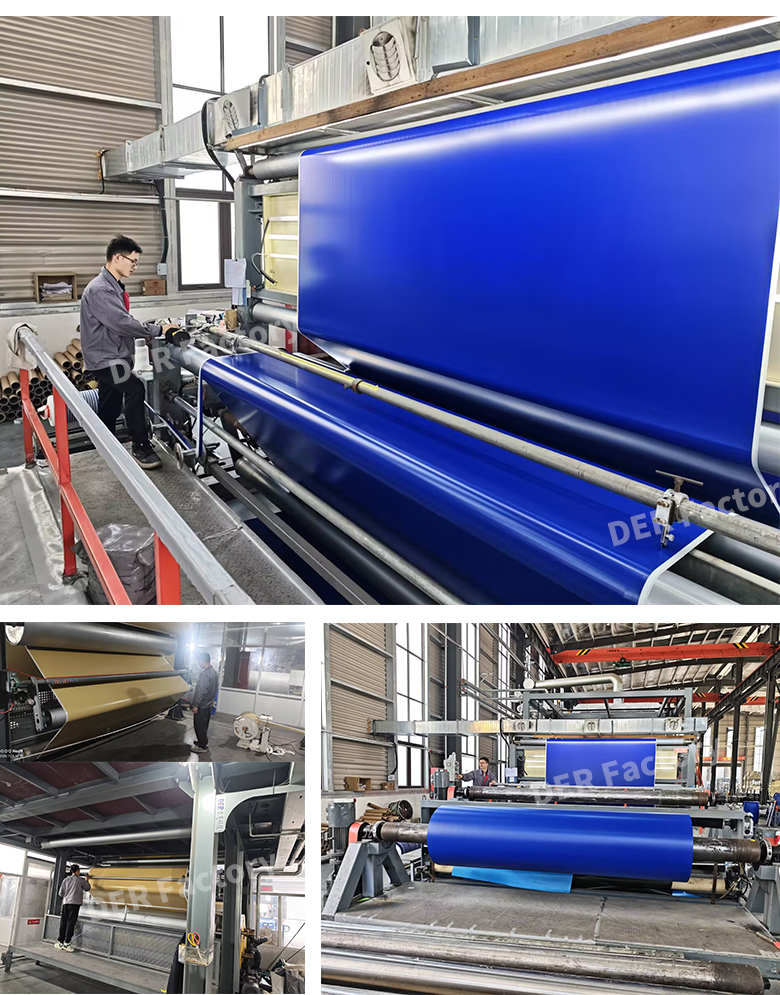
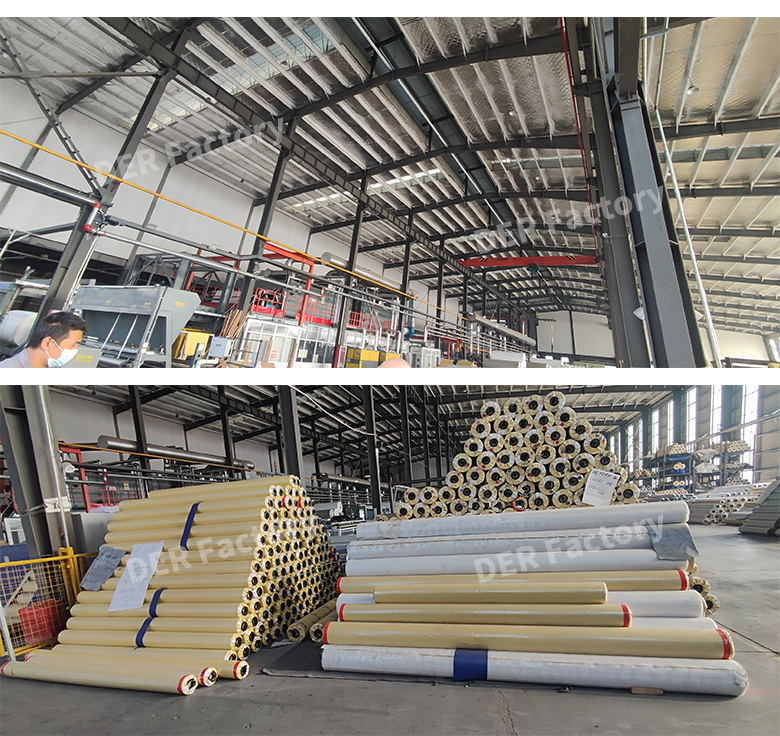
Product and factory photos should support the audit conversation, not replace it. The useful question is whether the photographed equipment, material flow and loading process match the exact construction and order you plan to buy.

DERFLEX PVC coated tarpaulin production equipment and blue coated fabric roll
Coated-fabric production evidenceReview the actual route used for the quoted tarpaulin: material feed, coating/lamination stage, winding, line controls and batch identification.
DERFLEX tarpaulin factory roll material storage and production area
Material flow & warehouse controlCheck roll identity, release status, storage protection and separation of different products or batches.
DERFLEX tarpaulin quality checks roll handling and export container loading
QC, handling & export loadingConnect inspection records to packing identity and the physical shipment that leaves the factory.
60,000㎡published production area
20+ yearscoated-material manufacturing experience
120+countries & regions served
QC workflowincoming · process · lab · final release

Before requesting a DERFLEX quotation

Send the intended use, roll goods or finished tarp format, material construction, target GSM/thickness, width or finished dimensions, color/finish, reinforcement and hardware, required test methods, quantity, packaging and destination.

Review DERFLEX PVC tarpaulin manufacturing options and the published quality control workflow before defining your audit scope.

Control sample-to-bulk transfer

Request a labeled material or construction sample that can be tied to the quotation and technical specification. Approve measurable characteristics and define what requires buyer approval before any later change.

The tarpaulin sample request guide can be used as the sample-approval stage before a controlled first production order.

Importer RFQ checklist

What to send before asking a tarp factory to quote

A factory audit works better when the product is already defined. A vague RFQ creates a vague audit because there is no controlled requirement to test against.

Material & performance brief

  • Application and service environment
  • PVC coated / laminated direction and base fabric if defined
  • Target GSM, thickness, width or finished size
  • Color, surface and printing requirement
  • Tensile, tear, adhesion, waterproofing or other critical properties
  • UV, cold, flame-retardant or other project-specific functions where required

Commercial & shipment brief

  • Roll goods, cut panels or fabricated finished tarps
  • Seam, hem, webbing, grommet, D-ring and reinforcement details
  • Logo, label, barcode and private-label requirements
  • Order quantity and replenishment expectation
  • Packing, palletization, destination port/country and receiving constraints
  • Sample, inspection, test-report and shipment-release requirements
Buyer questions

Tarpaulin factory audit FAQ

Direct answers for importers, distributors, OEM brands, procurement managers and quality teams.

What is the most important part of a tarpaulin factory audit?

The most important part is connecting the factory's claims to objective evidence for the exact product you plan to buy. Confirm the production route, current specification, test method, batch record, traceability and shipment controls rather than relying on a certificate or prepared sample alone.

How can an importer verify whether a tarp supplier is a real manufacturer?

Verify the legal production address, identify which processes are performed there, inspect equipment relevant to the quoted product, follow a live order through the factory and disclose any outsourced stages. A supplier can be useful without owning every process, but the sourcing route should be transparent and controlled.

Is a factory audit the same as a pre-shipment inspection?

No. A factory audit evaluates the supplier's capability and systems: identity, process control, equipment, quality management, testing, traceability and continuity. A pre-shipment inspection checks a defined finished lot against the purchase requirements before release. Importers may use both because they control different risks.

Which tarpaulin tests should be witnessed during the audit?

Witness tests that matter to the purchase specification. Common examples can include GSM, thickness, width, tensile strength, tear resistance, coating adhesion and finished dimensions. Seam, weld, waterproofing, color or other checks may be relevant depending on the product. The audit should verify both the method and the link between the result and the ordered batch.

Is an ISO certificate enough to approve a tarpaulin factory?

No. A management-system certificate can support supplier evaluation, but it does not prove that your exact tarp construction, production route, test data, traceability and packing meet the purchase requirements. Verify the certificate's entity and scope, then audit the operational evidence that affects your order.

Can a remote video audit replace an on-site factory audit?

A live remote audit can be useful for preliminary supplier screening, document review and targeted process verification. It is less effective for independently selecting records, observing storage and segregation, confirming equipment condition or following material flow without supplier control of the camera. Higher-risk or strategic programs may justify on-site or third-party verification.

When should an importer re-audit a tarpaulin supplier?

Consider re-audit after a major quality problem, legal-entity or site change, critical material/process change, repeated delivery or traceability failures, a new high-risk product program, or as part of periodic strategic supplier review. The frequency should follow product risk, order value, supplier history and your own procurement policy.

What should I send DERFLEX before discussing a factory audit or bulk tarp program?

Send the intended application, material construction, target GSM/thickness, width or finished dimensions, color/finish, reinforcement and hardware, required test methods or acceptance limits, quantity, packaging, destination and any third-party inspection or documentation requirements.

Send DERFLEX your audit checklist and tarp specification

For an importer qualification project, define the product and evidence requirements before the commercial order is finalized. DERFLEX can discuss material selection, sample control, order-specific inspection points, batch identification, export packing and documentation for PVC tarpaulin programs.

  • Application + material construction
  • GSM / thickness + width / finished size
  • Required tests and acceptance limits
  • Fabrication, labels, packaging and destination
  • Order quantity + audit / PSI expectations
Request a Project Review
This page is a procurement framework, not a certification decision or legal/compliance opinion. Adapt the checklist to the product, destination market, customer specification, contract, applicable regulations and consequence of failure.
Consulting Services
+86-021-54361792 / 54361798
Email
sales@derflex.com