Low movement, moderate sun
Static storage with good slope, protected edges and limited handling.
- Focus on UV stability and waterproofing.
- Keep the cover off sharp corners.
- Inspect before seasonal reuse.



A heavy duty tarp can remain outdoors for months or for many years, but the label “heavy duty” does not define service life. Material chemistry, UV load, wind movement, abrasion, drainage, edge design and maintenance decide which part of the cover fails first.
Quick answer: for continuous outdoor exposure, heavy-duty UV-treated PE is often planned around 1–3 years, UV-stabilized PVC-coated polyester around 3–5 years, and enhanced heavy PVC systems around 5–8+ years in suitable conditions. These are planning ranges—not warranties. Severe sun, flapping, sharp contact, poor tension or standing water can shorten any range substantially.
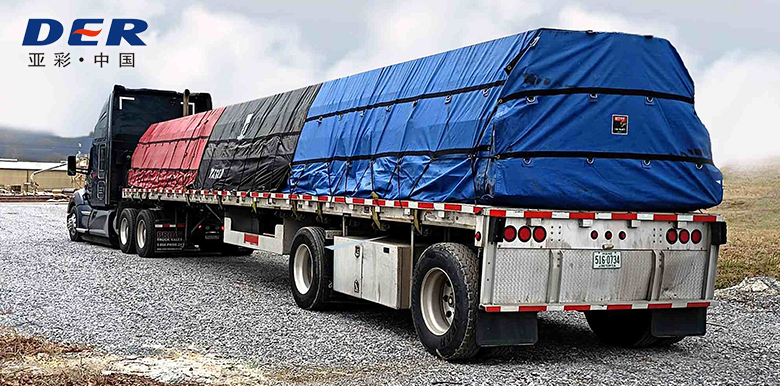
Two tarps with the same GSM can age very differently. The useful question is not “How thick is it?” but “What combination of material, reinforcement and installation will survive this exact duty cycle?”
| Tarp construction | Indicative continuous outdoor range | Where it makes sense | What usually ends life first | Buyer verification |
|---|---|---|---|---|
| Heavy-duty UV-treated PE | Often about 1–3 years | Seasonal agriculture, general outdoor storage, temporary construction protection and price-sensitive programs. | UV embrittlement, fold-line fatigue, grommet pull-out, wind flap and abrasion at hard edges. | Confirm woven structure, UV treatment, finished thickness/GSM, reinforced corners and real attachment layout. |
| UV-stabilized PVC-coated polyester | Often about 3–5 years | Reusable truck covers, machinery covers, industrial storage, construction, agriculture and fabricated custom tarps. | Surface wear, repeated flexing, local abrasion, poor drainage, seam/hardware stress and excessive tension. | Confirm base cloth, coating route, tensile/tear direction, UV formulation, weld quality and reinforcement map. |
| Enhanced heavy PVC / protective top-finish system | Often about 5–8+ years | Managed long-term covers, demanding industrial storage and equipment protection where replacement disruption is costly. | Extreme climate, chemical exposure, unsupported spans, hardware corrosion, chronic flapping or neglected local damage. | Match climate, color, coating/top finish, contact points, seam design, edge load and maintenance plan to the target interval. |
The ranges above are sourcing and lifecycle-planning references, not guaranteed DERFLEX product lifetimes. Actual performance can fall below or exceed a range depending on formulation, environment, fabrication, installation and care.
A heavy cover that sits quietly in shade is not experiencing the same aging cycle as a truck tarp, desert stockpile cover or coastal equipment cover. Treat “outdoors” as a combination of UV, motion, contact and water geometry.
Static storage with good slope, protected edges and limited handling.
Outdoor machinery, stock or agricultural assets that stay covered through changing seasons.
Truck, trailer, construction or fleet use where the tarp is tensioned, folded and moved repeatedly.
Desert, mining, coastal, fertilizer, industrial yard or large-cover environments with several concurrent risks.
A tarp usually reaches the end of useful service because one local failure begins a chain reaction. Find that first weak link and the replacement interval becomes easier to improve.
UV, heat, rain, salt, dust or chemicals begin aging the surface.
Loose fit, vibration or wind creates repeated flexing and abrasion.
A scuff, crease, seam edge, eyelet or corner becomes the stress concentrator.
Other ties and panels carry more force, accelerating secondary damage.
Leakage, tear growth, hardware pull-out or loss of fit makes the cover unreliable.
Repeated snapping and billowing can fatigue hems, grommets and seams faster than sunlight alone. A heavier loose tarp can still fail early because the load path remains wrong. Use DERFLEX's tarp flapping and wind-control guide to diagnose fit, wind entry and unsupported spans.
Standing water deepens sag and increases load on the cover and its anchors. Extra local tension may only overload one grommet. Create a ridge, crown, slope or shorter supported span using the principles in the tarp water-pooling guide.
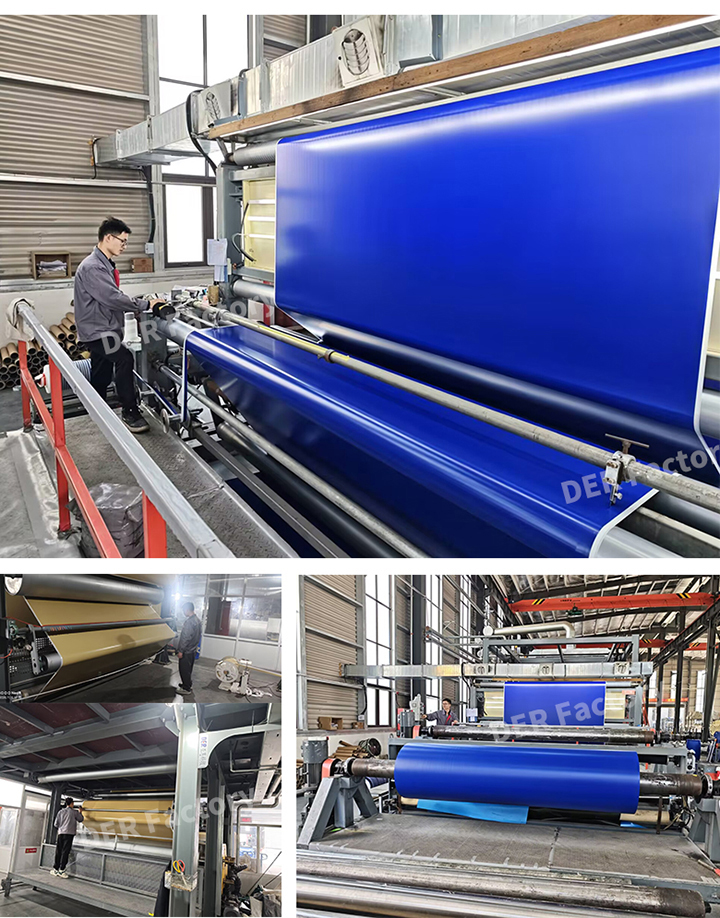
The useful life of a PVC tarp is influenced by the reinforcing textile, coating formulation, coating/lamination consistency, surface finish and downstream fabrication. For repeat B2B programs, a stable approved construction is more valuable than buying each shipment by color or a broad “heavy duty” label.
DERFLEX currently publishes heavy-duty PVC tarp options in the 450–900 gsm range, with custom structures available. The final grade should be matched to exposure, handling and fabrication rather than selected from GSM alone.
| Specification field | Published DERFLEX direction | Why it affects outdoor life | What to add to the RFQ |
|---|---|---|---|
| Material | PVC-coated polyester fabric | The textile carries load; the PVC system contributes weather protection, waterproofing, abrasion behavior and weldability. | State continuous or seasonal exposure and the dominant failure risks. |
| Weight | 450–900 gsm; custom heavy-duty structures available | Higher mass can support stronger constructions, but GSM alone does not define UV life, tear resistance or finished-cover durability. | Provide tarp size, span, handling frequency and target service interval. |
| Thickness | Approx. 0.35–0.85 mm depending on construction | Thickness helps with wear and puncture resistance, but base cloth, coating adhesion and reinforcement remain critical. | Do not specify thickness without material and strength requirements. |
| Base fabric | 1000D × 1000D / 18×18, 20×20 or custom options | Yarn and weave structure influence tensile, tear and dimensional behavior under tie-down loads. | Describe wind, attachment spacing, repeated folding and expected pulling direction. |
| Temperature direction | Many standard PVC tarp grades are published around -30°C to +70°C; project-specific formulas may differ | Cold flexing and heat aging can change cracking, stiffness, coating and handling behavior. | Give actual minimum/maximum service temperature and whether the tarp is folded when cold. |
| Finished processing | Heat welding, sewing, hems, rope edges, reinforced corners, grommets, webbing and printing options | The main sheet can remain intact while an edge, seam or fixing point fails first. | Send a drawing showing seam routes, edge loads, hardware and anchor positions. |
For fleet, agriculture, construction and industrial buyers, the meaningful comparison is cost per protected year plus the cost of labor, downtime, damaged goods and unplanned replacement.
Compare candidate tarps using the same use case and expected duty cycle.
Annualized cover cost ≈ (purchase + fabrication + installation + expected repair/replacement disruption) ÷ useful service interval
Do not insert an optimistic “years outdoors” claim unless the material, climate, installation and maintenance assumptions are defined.
A tarp can look faded and still protect the load; another can look acceptable while a hidden seam, coating or edge failure is already compromising the job. Inspect the load-bearing and water-shedding system.
| What you see | Likely meaning | Repair may be reasonable when… | Replacement is the safer direction when… |
|---|---|---|---|
| Small isolated puncture or cut | Local mechanical damage | The surrounding material remains flexible and strong, and a compatible patch can restore the area. | Multiple punctures are spreading, or the surrounding coating has become brittle. |
| One worn contact point | Abrasion against steel, timber, cargo or equipment | The wear source can be padded or redesigned and a local wear patch can be added. | The same abrasion exists across many load points or has damaged the reinforcing fabric. |
| Elongated grommet or torn corner | Concentrated tie-down load, flapping or misaligned pull | The main fabric is sound and the edge can be rebuilt with reinforcement. | Several attachment zones are tearing or the whole hem is losing integrity. |
| Surface crazing, stiffness or cracking | Advanced weathering, UV/heat aging or incompatible exposure | Damage is superficial and testing/inspection confirms the structure remains usable. | Cracks open under flexing, waterproofing is compromised or the coating separates. |
| Recurring seam leakage | Joint damage, poor seam process or repeated stress | A localized seam can be reworked with a compatible process. | Several seams are failing, panel material is aged, or repair cannot restore a reliable joint. |
| Persistent sag and water pockets | Fit/support geometry, stretch, anchor movement or cover deformation | Support, tension and drainage can be corrected without overloading hardware. | The cover no longer holds its required shape or reinforcement is already distorted. |
Large images are kept at full readable width so material samples and application details remain clear on desktop and mobile.
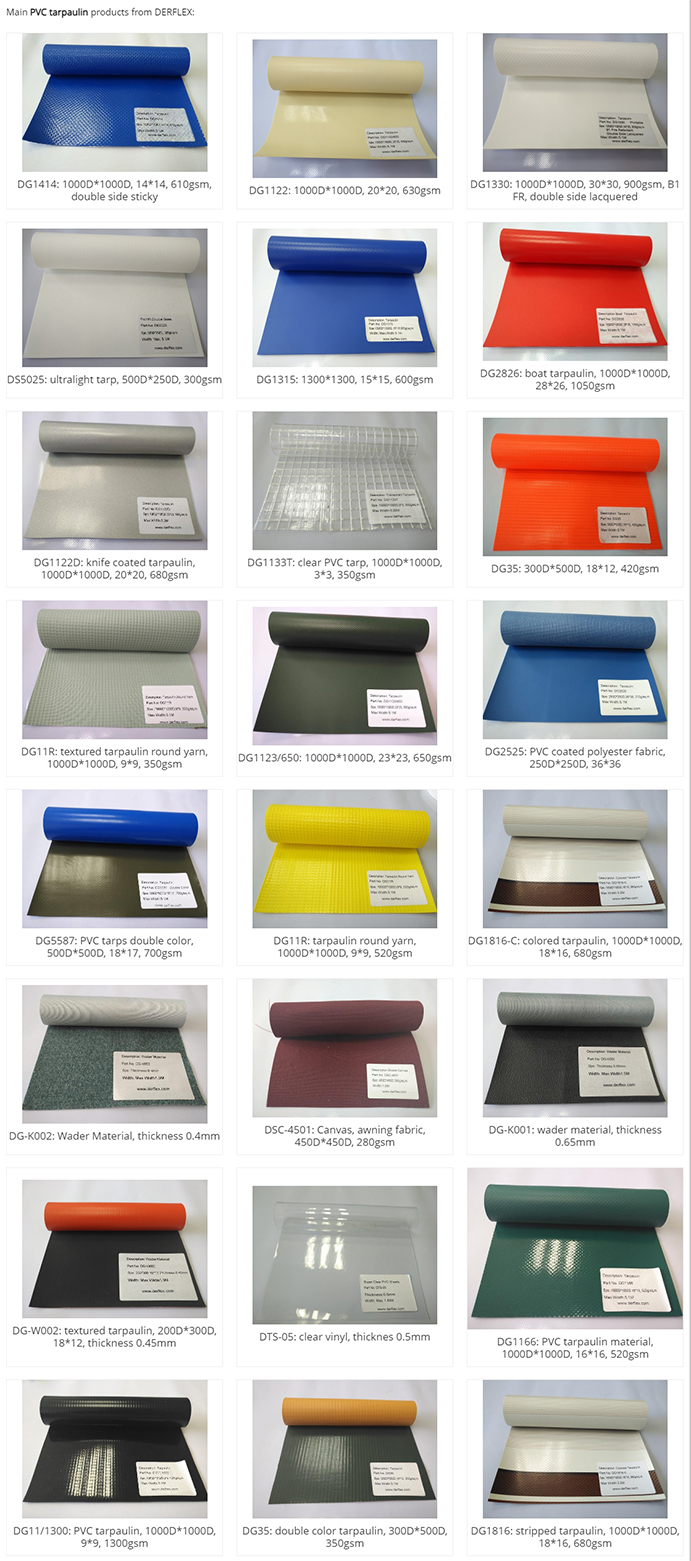
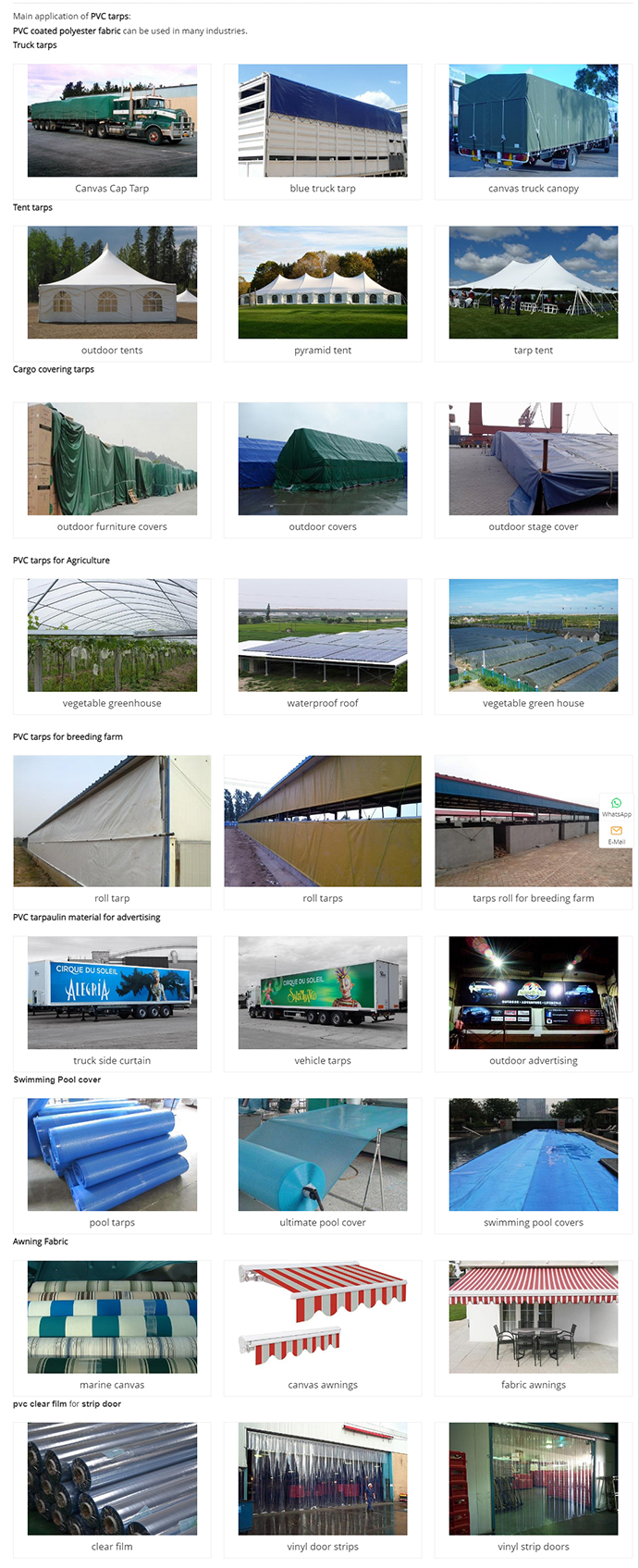
A useful quotation starts with the environment and failure risk. This lets DERFLEX recommend a material and finished-cover direction that can be sampled and approved against the real job.
These pages address adjacent decisions without replacing the continuous-outdoor-lifespan focus of this guide.
Short, direct answers for material selection, maintenance and replacement decisions.
There is no universal number. As a sourcing reference, heavy-duty UV-treated PE is often planned around 1–3 years, UV-stabilized PVC-coated polyester around 3–5 years, and enhanced heavy PVC systems around 5–8+ years under suitable conditions. Real life depends on UV, wind, abrasion, drainage, fabrication and maintenance, so these ranges should not be treated as warranties.
Yes, PVC-coated polyester is commonly selected for year-round reusable covers because it can combine weather resistance, waterproofing, strength, weldability and abrasion resistance. The exact grade still needs to match climate, temperature, movement and contact points.
No. Thickness can improve puncture and wear resistance, but outdoor life also depends on base fabric, coating quality, UV formulation, seam design, reinforcement, fit and attachment loads. A well-designed lighter cover can outlast a heavier tarp that flaps or rubs against sharp edges.
Chronic flapping, abrasion over hard edges, concentrated grommet loads, standing water, severe UV/heat and repeated folding at the same line are common life-shortening mechanisms. In many real installations, mechanical damage ends service life before the center sheet is fully weather-aged.
Neither should be judged alone. GSM describes area weight; it does not directly rate UV life. For long-term exposure, compare the material construction, UV package, surface system, textile strength and finished-cover design together.
Repair is most practical when damage is local and the surrounding material remains flexible and strong. Replacement becomes more appropriate when cracking, seam failure, coating separation, edge tearing or attachment-zone damage is widespread, or when the tarp can no longer maintain reliable waterproofing and fit.
Send the application, finished dimensions, continuous or seasonal exposure, climate, wind and abrasion risks, handling frequency, support shape, attachment map, target material/GSM if known, target service interval, quantity, branding, packaging, destination and any required test method or sample approval.
DERFLEX can discuss PVC-coated polyester weight, coating direction, color, welding, reinforced hems, grommets, webbing, D-rings, custom dimensions, printing and packaging for outdoor tarp programs.
DERFLEX technical guide · Reviewed 15 September 2026 · Planning ranges are application-dependent and are not product warranties.