Light Commercial / General Cover
Best when low handling weight, large-area coverage and cost control matter more than severe abrasion reserve.
≈ 13.3 oz/yd²


450gsm, 650gsm and 900gsm PVC tarps solve different procurement problems. 450gsm prioritizes lower area weight and easier handling; 650gsm is the balanced industrial workhorse for many reusable covers; 900gsm is the demanding-service direction when abrasion, repeated tension and replacement risk justify extra mass. The best specification is not automatically the heaviest one—it is the lightest complete construction that reliably survives the real duty cycle.
Best when low handling weight, large-area coverage and cost control matter more than severe abrasion reserve.
≈ 13.3 oz/yd²A strong starting point for reusable truck covers, equipment protection, fabricated panels and many OEM tarp programs.
≈ 19.2 oz/yd²Use when repeated rubbing, road cycles, heavy tension, rough contact or expensive replacement downtime justify more material mass.
≈ 26.5 oz/yd²Choose 450gsm for lower-stress covers, temporary construction or agricultural protection, warehouse and machinery rain covers, and applications where the tarp must stay easy to fold and move.
Choose 650gsm when you need a practical balance of durability, weldability, flexibility, handling and cost for general industrial, truck, trailer, shelter and outdoor protection.
Choose 900gsm when the tarp faces frequent transport cycles, repeated tensioning, abrasion against cargo or frames, long outdoor exposure, or a high cost of failure. Do not assume 900gsm is proportionally stronger: tensile, tear, adhesion and service life still depend on yarn, weave, coating, seams and reinforcement.
Use GSM to compare area weight and handling impact, then confirm the full textile and coating construction before approving a bulk order.
| Buyer Factor | 450gsm PVC Tarp | 650gsm PVC Tarp | 900gsm PVC Tarp |
|---|---|---|---|
| Nominal area weight | 450 g/m² | 650 g/m² | 900 g/m² |
| Approx. oz/yd² | ≈ 13.3 oz | ≈ 19.2 oz | ≈ 26.5 oz |
| Practical position | General-purpose / lower-stress commercial PVC | Balanced industrial and transport grade | Heavy industrial / demanding transport direction |
| Manual handling | Easiest of the three to fold, lift and deploy | Manageable balance for many reusable cover systems | Heaviest; large covers can become labor-intensive |
| Abrasion reserve | Best for moderate contact when the finished design is properly reinforced | Good all-round reserve for repeated industrial use | Best direction of the three when surface wear is a real failure mode |
| Fabrication | Useful where easy folding and economical conversion are priorities | Strong balance for hot-air / HF welding, hems and fabricated panels | Fabrication settings and handling equipment should account for added material mass |
| Typical application direction | Warehouse covers, machinery rain covers, temporary construction or agricultural protection | Truck covers, trailer covers, tents, shelters, equipment covers, fabricated industrial panels | Long-haul transport, higher-wear truck/trailer systems, heavy industrial curtains, demanding covers |
| Cost direction | Lower material mass can support lower initial material and freight burden | Often the best balance of material cost, durability and handling | Higher material mass should be justified by duty cycle, downtime risk or wear |
| What still must be verified | Base-fabric denier and weave, tensile and tear values, coating adhesion, thickness, PVC formula, UV/cold/FR requirements, weldability, seam design, edge reinforcement, hardware loads and approved sample/TDS. | ||
Important: GSM is mass per unit area. It does not by itself define thickness, tensile strength, tear strength, coating adhesion, UV life or flame-retardant performance.
The decision should begin with duty cycle, failure mode and handling—not with the assumption that more GSM is always better.
450gsm makes sense when the cover is large, frequently moved and not exposed to severe rubbing or structural loads.
650gsm is often the most practical middle position when the buyer needs reusable performance without the handling burden of a very heavy sheet.
900gsm earns its place when added material body and wear reserve solve an actual operating problem.
That difference affects lifting, folding, packing, freight, storage volume and daily crew handling before any hems, webbing, grommets or hardware are added.
A large tarp can become much heavier than the material sample suggests. Use this calculator for raw fabric mass only.
Approx. 53.6 lb of raw material. Easier to manage when the cover is regularly deployed or removed.
Approx. 77.4 lb of raw material. A meaningful but often manageable industrial weight before hardware.
Approx. 107.1 lb of raw material. Crew handling, folding and packing should be planned rather than assumed.
Formula: length × width × GSM ÷ 1000 = material-only kilograms. Finished tarp weight increases after hems, welded overlaps, ropes, webbing, patches, D-rings and grommets.
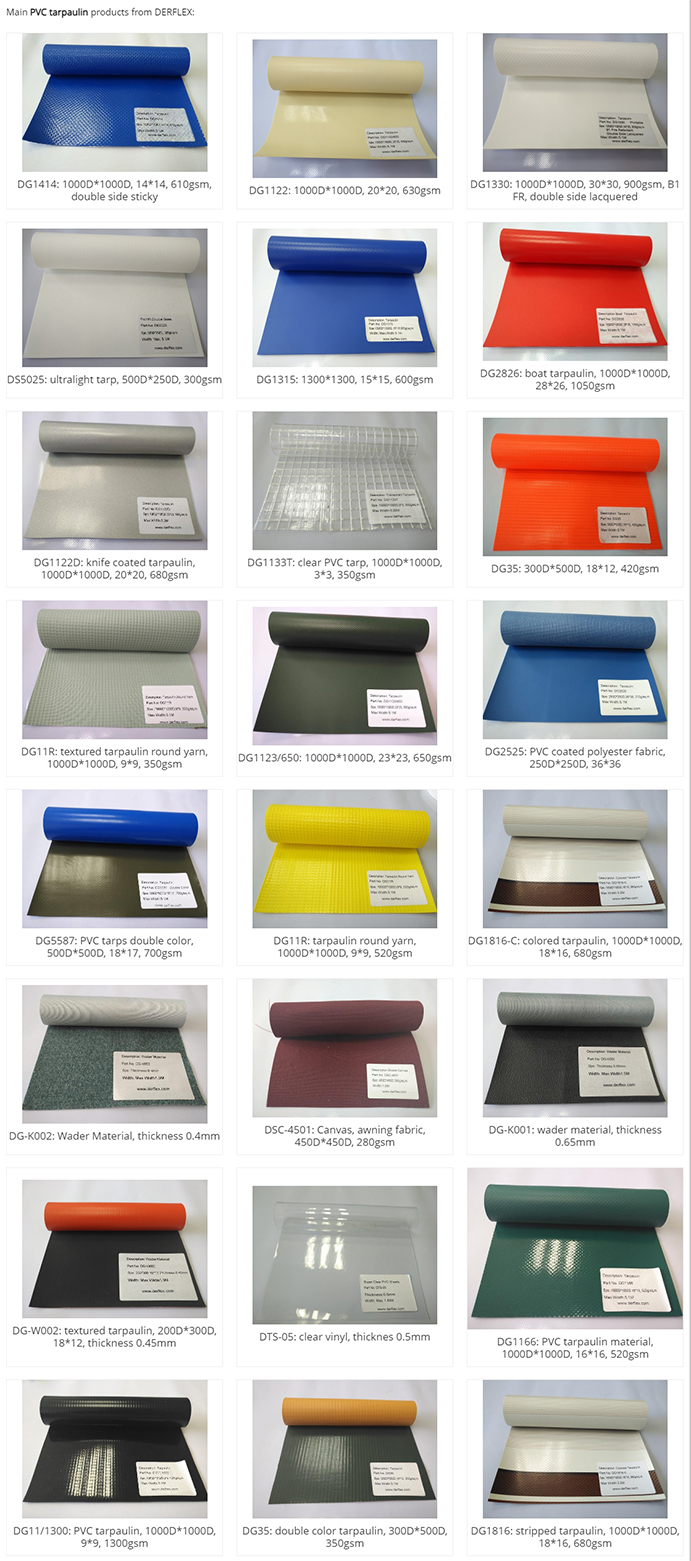
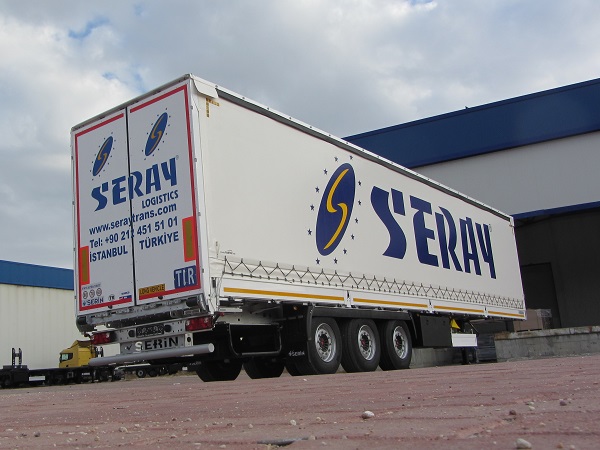
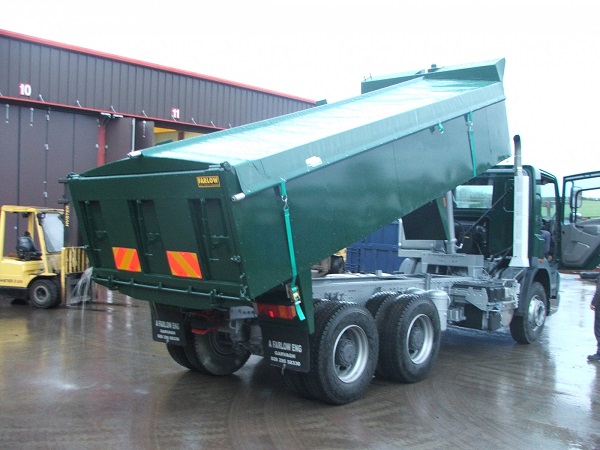
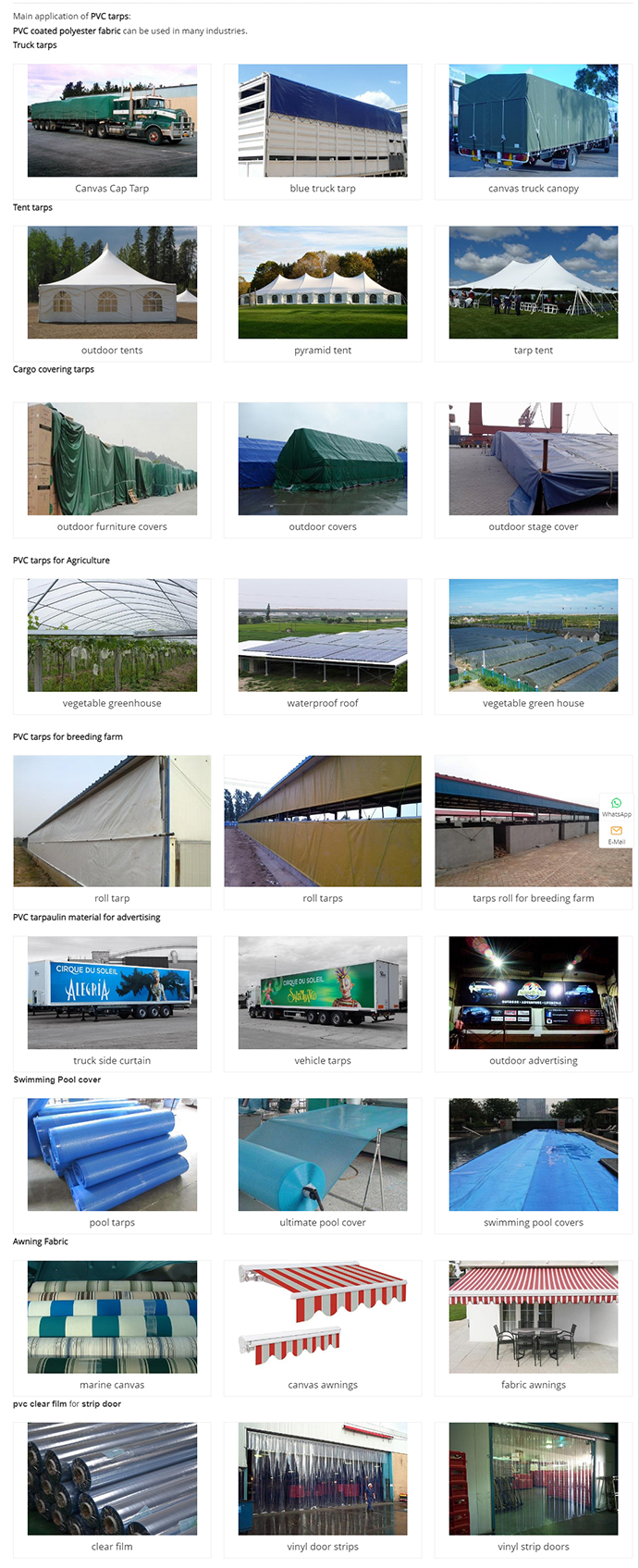
Photos help buyers verify surface appearance, color and application form—but the approved technical data sheet and sample should control the final specification.
Moving from 450gsm to 650gsm or from 650gsm to 900gsm can add body and wear reserve, but it may not address the actual failure location.
A correctly engineered 650gsm cover with better corner patches, webbing and wear pads can be a smarter purchase than upgrading the entire sheet to 900gsm when only a few locations carry the real stress.
Likewise, a 450gsm program can be viable for broad low-stress coverage if the edge design, installation and expected outdoor cycle are appropriate.
These are specification starting points, not universal grades. Sample testing and the final technical data sheet should confirm the selected construction.
| Application | 450gsm Direction | 650gsm Direction | 900gsm Direction |
|---|---|---|---|
| Truck / trailer covers | Light or lower-cycle utility direction; verify wind and tie-down loads carefully | Strong general starting point for reusable commercial covers | Best when abrasion, road cycles or heavy cargo contact justify extra mass |
| Construction weather protection | Useful for temporary lower-stress coverage | Better for repeated handling and reusable jobsite protection | Use when dragging, abrasion or severe duty is proven—not by default |
| Agriculture / storage | Good where large-area handling and seasonal use dominate | Useful for reusable outdoor covers with more handling and weather exposure | Consider for rough industrial-style handling or long-cycle programs |
| Equipment / machinery cover | Suitable for smoother equipment and modest handling cycles | Balanced choice for many industrial protection programs | Useful for sharp geometry, rubbing, repeated removal or high replacement cost |
| Curtain-side / moving panels | Usually only for lighter-duty designs after engineering review | Common balanced direction for many transport systems | Strong candidate for high-cycle and abrasive moving curtain applications |
| Tents / large welded panels | Can suit lighter structures depending on FR, wind and support design | Useful balance of body, welding and handling | Use when the structure or duty cycle truly needs the added mass |
A professional RFQ compares the complete construction, not just one number in the product title.
It is twice the area mass, not automatically twice the tensile, tear or service life. Yarn, weave, coating and reinforcement control performance.
Mass and physical thickness are different properties. Coating ratio, textile share, resin density and embossing can change thickness at the same GSM.
A small sample feels manageable. A 54 m² 900gsm sheet already weighs 48.6 kg before hems and hardware.
Tensile, tear and adhesion numbers only become useful when the test method, direction and acceptance criteria are defined.
Edge tears, grommet pull-out and sharp cargo punctures often need localized engineering rather than a uniformly heavier sheet.
Tell the supplier whether the cover is static, folded daily, tensioned at road speed, dragged on the ground, exposed to cold or used around abrasive cargo.
GSM is only the start. A repeatable bulk specification connects the approved sample to base fabric, coating, fabrication, reinforcement and acceptance criteria.
Confirm polyester denier, warp/weft construction and the mechanical targets. Two materials at the same GSM can perform very differently if their textile reinforcement is different.
Define coating route, surface finish, lacquer direction, printing need, UV exposure, cold flexibility, mildew resistance or project-specific FR requirement.
Specify welded or sewn seams, hem width, webbing, patches, D-rings, grommets, straps, pockets and the actual load paths in service.
DERFLEX has an existing 650gsm PVC coated tarpaulin product built around a 1000D × 1000D polyester structure with published construction and mechanical data. For a new program, treat that as a reference point—not proof that every 650gsm tarp uses the same weave or values.
DERFLEX offers multiple PVC tarp constructions across different weights, yarns, widths and surface requirements. The correct 450gsm or 900gsm construction depends on the application, target performance and manufacturing route. Request the current technical data sheet for the exact material being quoted.
Good quotations start with the operating case. This prevents a supplier from guessing the GSM while missing the actual failure risk.
These six verified DERFLEX pages build the topic cluster around GSM, PVC tarp construction, transport use and heavy-duty selection.
Direct answers for purchasing teams comparing PVC coated polyester tarp weights.
650gsm is commonly used as a balanced heavy-working or industrial PVC tarp grade for truck covers, trailer covers, equipment protection, shelters and fabricated panels. The final duty capability still depends on base fabric, coating, tensile/tear values, seams and reinforcement.
No. 900gsm has more material mass per square meter and can provide more body or surface wear reserve, but actual tensile strength, tear strength and service life depend on the textile reinforcement, coating, manufacturing quality and finished tarp design.
Choose 450gsm when easy handling, broad coverage and lower material mass matter, and the application does not have severe abrasion, high road-speed loads or frequent heavy tension. Temporary construction, agriculture, storage and lower-stress equipment covers are common starting directions.
By nominal area mass, 900gsm is about 38.5% heavier than 650gsm. For a 6 m × 9 m sheet, that is about 48.6 kg versus 35.1 kg before hems, webbing and hardware.
No universal conversion is reliable. GSM measures mass per area, while mil or millimeter measures physical thickness. Base-fabric share, PVC coating ratio, formulation, embossing and surface treatment can produce different thicknesses at the same GSM.
Many professional truck and trailer programs begin around the 550–900gsm range. 650gsm is a practical general-purpose starting point, while 900gsm is more appropriate when abrasion, repeated long-haul use or higher replacement risk justify the added mass. Final selection should include tear, tensile, seam, reinforcement and cold/UV requirements.
DERFLEX can discuss custom PVC tarpaulin constructions by application, including GSM, width, color, finish, roll length, welding/fabrication direction, reinforcement, logo/printing and packaging. Final available specifications should be confirmed during quotation and sample approval.
Send DERFLEX the application, finished size or roll width, duty cycle, climate, abrasion points, fabrication method, quantity and target market. We can help narrow the weight class first, then match the complete textile, coating and reinforcement specification.