News
Industry News

Tarpaulin Testing Standards | Buyer & QC Inspection Guide | DERFLEX

Update:2026/9/12 20:05:33 Views:
Buyer Engineering Guide · PVC Coated Tarpaulin QC

Tarpaulin Testing Standards: Complete Buyer & QC Guide

A reliable tarpaulin test plan connects five things: the exact product specification, a named test method, a defined sample, an acceptance limit and a release rule. Without that chain, two suppliers can show different numbers that look comparable but were produced under different methods, directions or specimen conditions.

This guide helps importers, distributors, fabricators, fleet suppliers, OEM brands and quality teams build a practical inspection plan for PVC coated tarpaulin, tarp rolls and finished covers.

30-Second Buyer Answer

What standards should be used to test a tarpaulin?

There is no single universal test that proves a tarpaulin is “good.” For PVC-coated fabrics, buyers commonly combine a tarpaulin material specification such as ISO 8095 with property-specific methods such as ISO 1421 for tensile strength, ISO 4674 for tear resistance, ISO 2286-2 for mass per unit area, ISO 2411 for coating adhesion and ISO 811 for resistance to water penetration. In North American procurement, ASTM D751 is a broad coated-fabric test framework covering multiple physical and mechanical properties.

Not every tarp needs every test. A truck cover, temporary shelter, curtain-side material and cold-weather industrial cover have different failure risks. The purchase order should therefore state the application, method, required result and whether the test applies to the flat fabric, a welded seam or the finished tarp.

Buyer rule: never compare a strength number without also comparing the test method, specimen direction, unit and acceptance status. A “higher” result from another method may not mean a stronger material in your contract.
FabricGSM, thickness, tensile, tear, adhesion, water barrier, flex / cold behavior
ProcessCoating consistency, surface, color, width, roll length, batch traceability
FabricationWeld / seam quality, hems, reinforcement, hardware placement and finish
ShipmentQuantity, labels, packaging, appearance, documents and approved reference
01

Define the Failure Risk

Wind load, tearing, abrasion, leakage, cold cracking, delamination and seam failure do not require the same test.

02

Name the Method

Write the complete standard designation and procedure where needed. Avoid vague phrases such as “industry standard test.”

03

Set the Acceptance Limit

A test method explains how to measure. Your contract still needs a minimum, maximum, tolerance or pass/fail requirement.

04

Link Evidence to the Lot

The sample, test report, approved TDS, production lot and shipment label should be traceable to the same agreed product.

Standards Decoder

Tarpaulin Test Standards Buyers Should Know

Use this matrix as a procurement map, not as a universal mandatory checklist. Final requirements should follow the end use, destination market, customer specification and the edition written into the purchase contract.

StandardWhat It CoversWhere It HelpsBuyer QC Instruction
ISO 8095:1990
Tarpaulin specification
PVC-coated fabrics suitable for making tarpaulins; includes requirements, sampling, compliance and re-testing structure.Useful as an overall PVC tarpaulin material specification reference.Confirm the contract edition and current property-test methods. Do not assume every old normative reference inside a legacy specification is automatically the method required by your PO.
ASTM D751-26
US coated-fabric framework
Broad coated-fabric test methods including dimensions/mass, breaking strength, tear, hydrostatic resistance, coating adhesion, seam strength and additional properties.North American coated-fabric and tarpaulin procurement programs.State the specific D751 procedure / property required. “ASTM D751 tested” by itself does not identify which test was performed.
ISO 1421:2016
Tensile / elongation
Tensile strength of rubber- or plastics-coated fabrics; strip test and grab test routes are defined.Pulling load, broad tension, fabric reinforcement comparison.State MD/CD or warp/weft, method, specimen condition, unit and minimum result.
ISO 4674-1:2016 / ISO 4674-2:2021
Tear resistance
Part 1 covers constant-rate tear methods; Part 2 covers ballistic pendulum tear resistance.Cut propagation, edge damage, flapping and local failure risk.Do not compare values from different tear methods directly. Keep the method with the number.
ISO 2286-2:2016
Mass per unit area
Total mass per unit area plus coating and substrate mass determination methods for coated fabrics.GSM verification and construction control.State whether the requirement is nominal, minimum or tolerance-based and define the sampling locations.
ISO 2411:2024
Coating adhesion
Coating adhesion strength of coated fabrics.Delamination risk, repeated folding, welding and coated-layer durability.Confirm specimen preparation, direction, conditioning and whether the requirement is initial or after a defined ageing step.
ISO 811:2018
Water penetration
Hydrostatic-pressure method for resistance of fabrics to water penetration.Flat-fabric waterproof / water-resistant verification.A flat-fabric result does not automatically prove a finished cover will not leak through seams, stitching, hardware or punctures.
ISO 7854:1995
Flex durability
Resistance of coated fabrics to damage by repeated flexing.Roll-up covers, folding tarps, curtains and repeatedly handled materials.Use when cyclic flexing is a real service risk; define the method and evaluation endpoint.
ISO 4646:2022
Low-temperature impact
Lowest temperature at which the coated fabric does not show fractures or coating cracks under the specified impact condition.Cold-climate truck, industrial and outdoor covers.Match the test condition to the expected service risk; one cold test does not represent every real deformation mode.
Project-specific fire / regulatory tests
Only when required
Examples may include NFPA 701 or other destination / application-specific flame frameworks, plus customer or authority requirements.Tents, temporary enclosures, events, public spaces, industrial partitions and regulated projects.Do not write only “FR.” State the complete required standard, material grade, color / construction scope, evidence and authority / project requirement.

Standards status note: editions shown above were checked against current ISO / ASTM listings in September 2026. Standards can be revised; verify the edition required by your contract, customer or authority before issuing the final PO.

Method vs Requirement

A Test Standard Does Not Set Your Purchase Limit for You

A method tells the laboratory how to measure a property. The buyer still has to decide what result is acceptable for the ordered grade, unless a product specification or project document already defines the limit.

Write Each QC Line as a Complete Sentence

A useful acceptance line can be understood without guessing which direction, method or status applies.

Tensile strength — ISO 1421:2016, agreed method, MD / CD reported separately, conditioned specimen, N/50 mm, minimum values per approved product specification.
PropertyWhat performance or dimension is being controlled?
MethodWhich standard, edition and procedure applies?
SpecimenFlat fabric, seam, weld, finished tarp or aged material?
DirectionMD/CD, warp/weft, longitudinal/transverse or another defined orientation?
AcceptanceMinimum, maximum, tolerance, visual grade or pass/fail?
EvidenceIn-house QC record, batch certificate, third-party report or witness test?
Construction Control

GSM / Mass per Unit Area

GSM helps verify whether the finished coated fabric is within the agreed mass range, but it does not prove the yarn structure, tensile strength or tear strength.

  • Measure by the agreed method and sample locations.
  • Define nominal vs tolerance or minimum.
  • Investigate unusually high or low readings, not only averages.
Mechanical

Tensile Strength

Tensile testing measures resistance to pulling load under the stated method. Coated fabrics are directional, so one value should not hide the weaker direction.

  • Report MD/CD or warp/weft separately.
  • Do not mix grab and strip results.
  • Specify whether wet / aged testing is needed.
Mechanical

Tear Resistance

Tear testing is important where a small cut can grow under wind, cargo movement, tie-down loading or repeated flexing.

  • Name tongue, trouser, pendulum or other agreed route.
  • Compare only like-for-like methods.
  • Pair fabric tear data with reinforcement design at real stress points.
Coating Bond

Coating Adhesion

Adhesion helps evaluate how strongly the PVC layer remains bonded to the textile reinforcement.

  • Useful for folding, flexing, abrasion and weld processing risk.
  • Specify initial vs aged condition if relevant.
  • Strong adhesion does not replace a finished seam / weld trial.
Barrier

Water Penetration

Hydrostatic testing evaluates a fabric specimen under pressure, but finished tarp leakage often occurs at seams, needle holes, eyelets, punctures or ponding zones.

  • Separate fabric waterproofing from assembly waterproofing.
  • Use welded seam checks for critical covers.
  • Inspect coating continuity and pinholes.
Environmental

Cold & Flex Performance

Cold impact and flexing tests are useful when the tarp will be rolled, folded or struck in low temperatures or high-cycle service.

  • Select a test that reflects the actual deformation risk.
  • Record pre-treatment and test temperature.
  • Inspect cracking, coating damage and retained function.
Fabrication

Weld / Seam Strength

A strong fabric can still fail at a poor weld, stitched seam or local overlap. The finished joint should be validated with the actual material, finish and process settings.

  • Freeze welding parameters after sample approval.
  • Check overlap width and visual bond continuity.
  • Use representative seams, not only flat material.
Finished Product

Hardware & Reinforcement

Grommets, D-rings, webbing, hems and corner patches introduce concentrated loads that flat-fabric tests cannot reproduce by themselves.

  • Inspect location and reinforcement layout.
  • Use pull or practical load checks when specified.
  • Verify sharp edges and hardware do not cut the fabric.
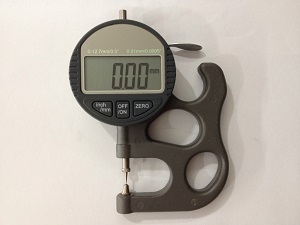
DERFLEX coated fabric thickness gauge for tarpaulin quality inspection

Thickness Inspection

Gauge method, contact pressure and measurement location should stay consistent across approved samples and production lots.

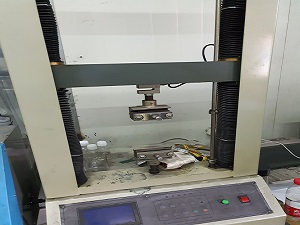
DERFLEX tensile testing equipment for PVC coated tarpaulin fabric

Mechanical Testing

Tensile and tear results only become comparable when method, specimen shape, direction and conditioning are aligned.

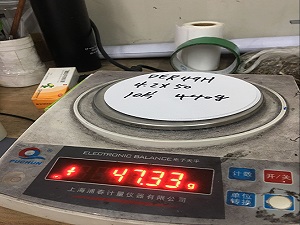
DERFLEX electronic balance used for tarpaulin GSM and mass verification

GSM Verification

Finished weight is one construction control. It should be read together with yarn, weave, coating build and mechanical data.

Critical Procurement Distinction

Fabric Test Results Do Not Automatically Approve the Finished Tarp

Most material standards evaluate a specimen. Real failures often start after cutting, welding, sewing, folding, grommeting, reinforcing and installation. For high-risk applications, release criteria should cover both levels.

Flat Fabric QC

  • GSM / mass and thickness
  • Base fabric identity / construction
  • Tensile and tear results
  • Coating adhesion
  • Water penetration resistance
  • Cold, flex, ageing or finish checks when required
  • Color, surface, pinhole and roll consistency

Finished Tarp QC

  • Finished dimensions and tolerances
  • Weld / seam quality and overlap
  • Hem, webbing and corner reinforcement
  • Grommet / D-ring location and attachment
  • Leak path review on critical assemblies
  • Logo, label and orientation
  • Packing, fold / roll method and shipment marks

For curtainsiders, temporary structures, flame-controlled projects and other regulated applications, the complete vehicle / structure / project requirement can be broader than a coated-fabric material test. Confirm the applicable system-level requirement with the customer, engineer or authority having jurisdiction.

Factory-to-Shipment Control

Eight-Step Tarpaulin QC Workflow for Bulk Orders

The most effective time to solve a quality problem is before production starts. Build the acceptance logic into the RFQ, sample and PO rather than adding tests after the shipment is already finished.

1

Define Use & Risk

Describe climate, load, wind, abrasion, handling cycle, waterproofing, cold and any safety requirement.

2

Freeze the Specification

Link product code, construction, GSM, width, color, finish, test methods, limits and fabrication details.

3

Approve a Named Sample

Label the physical sample and keep it tied to the TDS / quotation revision rather than treating it as an anonymous swatch.

4

Incoming / Pre-Production QC

Confirm base fabric and raw-material inputs against the agreed production route where appropriate.

5

Inline Process Checks

Monitor coating / lamination consistency, width, surface, color, thickness and visible defects during production.

6

Lot-Based Lab Testing

Take representative specimens and perform the agreed mechanical / physical tests with records linked to the lot.

7

Finished Product Inspection

Check dimensions, welds, seams, hems, reinforcement, hardware, printing and appearance on fabricated tarps.

8

Release & Traceability

Verify quantity, packing, labels and required test evidence before shipment; preserve the approved revision for reorder control.

Sampling & Acceptance

Do Not Use “Random Sampling” as the Entire QC Plan

A sampling rule must say what constitutes a lot, how rolls or finished tarps are selected, where specimens are taken, how many replicates are required and what happens after a failure. There is no one universal sample count or AQL that fits every tarpaulin order.

Write These Items into the Inspection Plan

  • Lot definition: same formulation, construction, color, coating run or other agreed production grouping.
  • Selection rule: samples distributed across the lot, not only the easiest roll to reach.
  • Specimen location: avoid taking every test piece from one edge or one short roll section.
  • Direction: label MD/CD or warp/weft before cutting specimens.
  • Conditioning: use the condition required by the named test method.
  • Replicates: follow the standard / contract rather than reporting one convenient specimen.
  • Retest rule: define whether failure triggers additional sampling, lot hold, sorting or rejection.
  • Third-party trigger: define which orders, tenders or disputed results require independent testing.

Why a Single “Golden Sample” Is Not Enough

An approved sample is useful for color, feel, finish and construction reference. It cannot by itself prove every production roll meets the agreed performance.

  • Coating weight can vary across time or width.
  • A material can look correct but fail tensile, tear or adhesion requirements.
  • A batch report from another construction or color may not represent the ordered grade.
  • Finished seams and reinforcement can introduce defects after the fabric itself has passed.
  • Repeat orders need revision control so an old approval is not silently applied to a changed construction.
Test Report Audit

How to Read a Tarpaulin Laboratory Report Before You Accept It

A test report can be genuine and still be irrelevant to your order. Verify that the tested specimen and requested scope actually match the product you are purchasing.

Report Check 01

Product Identity

Does the report show the product code, construction, color, weight or other identifiers needed to link it to your order?

Report Check 02

Sample Source

Was the sample supplied by the manufacturer, selected by the laboratory or witnessed by the buyer? The distinction affects how you use the evidence.

Report Check 03

Method & Edition

Does the stated standard match the one written in your PO? An older edition is not automatically invalid, but it must be contractually acceptable.

Report Check 04

Direction & Units

Are MD/CD or warp/weft clearly identified? Are units consistent with your specification, or is a conversion being assumed?

Report Check 05

Conditioning / Pre-Treatment

Initial, wet, aged, cold-conditioned and weathered specimens can produce different results. Confirm the state tested.

Report Check 06

Result vs Requirement

Separate the measured result from your purchase limit. A report showing a number is not automatically a “pass” unless a requirement is defined.

Report Check 07

Scope Match

A flame or compliance report for one thickness, color, coating formula or construction should not automatically be extended to every grade in a supplier’s range.

Report Check 08

Revision Link

If the material formulation or construction changed after the report was issued, confirm whether the evidence still applies to the current ordered grade.

Application Decision Matrix

Which Tests Matter Most for Different Tarpaulin Uses?

Prioritize the failure modes of the application. A static storage cover and a high-cycle truck tarp may use the same material family but require different acceptance emphasis.

ApplicationHigher-Priority ChecksFinished-Product / Extra ChecksBuyer Note
General outdoor storageGSM / construction, tensile, tear, water barrier, UV / outdoor requirement if contractual.Seams, drainage / ponding design, edge reinforcement, tie-down locations.Do not over-specify one strength value while ignoring how the cover is secured.
Truck / trailer coverTensile, tear, adhesion, flex / cold behavior, abrasion-related requirement where specified.Welds, hems, webbing, D-rings / grommets, local wear panels and dimensional fit.Repeated folding and road wind make local reinforcement as important as flat-fabric strength.
Curtain-side transportDirectional tensile / tear, adhesion, flexing, cold performance and application-specific transport requirements.Attachment system, straps, buckles, edge / roof interface and complete curtain construction.Confirm vehicle-system requirements separately from the fabric material test.
Tent / temporary shelterTensile, tear, water barrier, color / weather requirement and flame test if the project demands it.Weld / seam quality, panel layout, reinforcement, anchoring and project fire documentation.Never replace a named flame standard with a generic “FR” declaration.
Industrial curtain / partitionTear, flex, coating adhesion, surface / cleanability requirement and fire requirement when applicable.Track / attachment points, overlap, viewing window, edges and hardware.Test around the actual movement and installation method.
Cold-climate coverLow-temperature impact / bend or project-defined cold test, tensile / tear after relevant conditioning.Cold weld / seam behavior, folding, buckling and hardware handling.“Temperature range” marketing text should be replaced by a defined test endpoint when cold performance is critical.
Manufacturing & Inspection Support

How DERFLEX Supports Tarpaulin Quality Control Programs

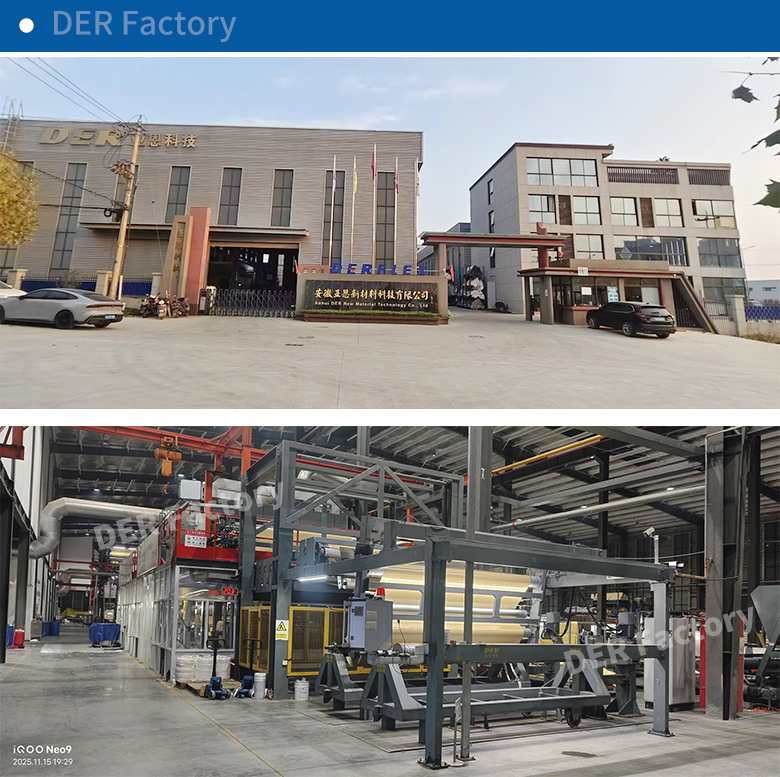
DERFLEX’s published quality-control workflow covers incoming material checks, process monitoring, batch sampling, laboratory testing, final roll inspection, packaging verification and traceability. Test routes can be aligned with order specifications and third-party requirements when needed.

DERFLEX tarpaulin coating and manufacturing factory production line

What to Send for a QC-Based Quotation

A faster technical review starts with the acceptance basis, not only the tarp size or price target.

  • Application and destination market
  • Roll goods or finished tarp dimensions
  • Material construction / target GSM / thickness
  • Required tensile, tear, adhesion or water test method
  • Cold / UV / flex / flame or other project-specific requirement
  • Weld, seam, hem, webbing and hardware drawing
  • Sampling / third-party inspection expectation
  • Quantity, packing, labels and shipment destination

Send the Test Requirement Before You Ask for the Final Price

For a like-for-like quotation, provide DERFLEX with the application, approved or target construction, test method, acceptance limit, sample / lot requirement and finished-tarp fabrication details. This reduces the risk of comparing different grades under one generic “heavy duty tarp” description.

ApplicationTarget marketGSM / thicknessBase fabricTest methodAcceptance limitFinished sizeWeld / seamReinforcementQuantityPackingDestination
Buyer Questions

Tarpaulin Testing Standards FAQ

What is the main international specification for PVC-coated tarpaulin fabric?

ISO 8095:1990 is an international specification for PVC-coated fabrics suitable for making tarpaulins and remains published. Buyers should still confirm the contract edition and the current property-specific test methods required for tensile, tear, adhesion, water resistance and other performance fields.

What standard is commonly used for tensile strength of PVC tarpaulin?

ISO 1421:2016 is a current international method for tensile strength of rubber- or plastics-coated fabrics. It includes strip and grab test routes. The purchase specification should state the method, fabric direction, unit and required minimum, rather than listing only “ISO 1421.”

What standard is used for tear strength?

ISO 4674 provides coated-fabric tear methods. ISO 4674-1:2016 covers constant-rate tear methods and ISO 4674-2:2021 covers the ballistic pendulum method. Results from different tear methods should not be ranked as though they were directly interchangeable.

What is ASTM D751 used for?

ASTM D751 is a broad family of test methods for coated fabrics and includes properties relevant to tarpaulins such as dimensions and mass, breaking strength, tear, hydrostatic resistance, coating adhesion, seam strength and other evaluations. The current ASTM listing identifies D751-26 as active. A buyer should specify the actual property / procedure required.

Does a waterproof fabric test prove the finished tarp is waterproof?

No. A flat fabric can resist water penetration while the finished cover leaks at stitching, welds, grommets, punctures or damaged areas. Critical waterproof products should combine fabric verification with suitable seam / assembly inspection.

How many rolls should be tested from a tarpaulin order?

There is no universal number that fits every order. The inspection plan should define the lot, selected rolls, specimen locations, repetitions, retest rule and any third-party requirement based on order size, risk and contract terms.

Can I compare two suppliers by the highest tensile or tear number?

Only after method, specimen geometry, direction, units, conditioning and result status are aligned. A higher figure from a different method may not represent better performance under the same purchase requirement.

What documents should a buyer request before bulk shipment?

Common controls include the current TDS / approved specification, identified sample reference, order revision, relevant batch or test evidence, inspection record, finished-product checks where applicable, packing / label confirmation and any third-party report required by the contract.

Technical note: this guide supports procurement and QC planning. It does not replace the full copyrighted text of ISO, ASTM, NFPA or other standards, nor project-specific legal / engineering requirements.

Consulting Services
+86-021-54361792 / 54361798
Email
sales@derflex.com