News
Industry News

Strongest Tarps for Industrial Use | Heavy Duty PVC Tarps | DERFLEX

Update:2026/7/9 23:41:17 Views:
Industrial-strength tarp engineering

Strongest Tarps Start with the Right Specification

A tarp is not strong simply because it is thick. Real performance comes from the complete system: high-tenacity base fabric, coating quality, tensile and tear resistance, welded seams, reinforced edges, suitable hardware and correct installation. DERFLEX develops heavy duty PVC coated polyester tarps for transport, construction, mining, agriculture, machinery protection and custom OEM programs.

PVC coated polyesterHigh-strength composite structure
Welded constructionFor larger panels and sealed seams
Custom reinforcementWebbing, patches, hems and hardware
OEM & bulk supplyRoll goods or finished tarps
Direct answer

What Are the Strongest Tarps?

For many demanding industrial and transport applications, a heavy duty vinyl tarp made from high-tenacity polyester scrim coated with PVC is a practical high-strength choice. However, there is no single tarp that is strongest for every job. The correct answer depends on whether the tarp must resist wind load, abrasion, puncture, chemical contact, heat, repeated folding, standing water or long-term UV exposure.

The strongest working solution is the tarp whose material, weight, reinforcement and fastening system are matched to the real operating conditions—not simply the product with the highest thickness number.

Tensile strengthResistance to pulling loads across the fabric.
Tear strengthResistance to an existing cut or puncture spreading.
Abrasion resistanceSurface durability against rubbing, cargo edges and handling.
Edge integrityAbility of hems, grommets and webbing to hold under tension.
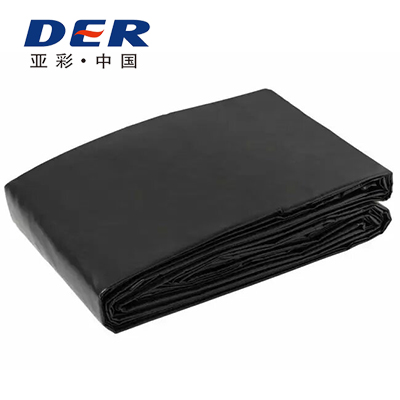
DERFLEX black super heavy duty PVC tarp product display
DERFLEX Heavy & Super-Heavy Tarp Programs Material rolls, cut panels and custom finished covers can be developed around the duty level, dimensions and fastening method of the project.
Product positioning

Industrial Tarps Built Around Load, Exposure and Service Conditions

Buyers searching for the strongest tarps are usually trying to reduce real operating risk: torn covers, pulled-out eyelets, seam leakage, surface cracking, cargo exposure or frequent replacement. DERFLEX approaches the requirement as an engineering and fabrication problem rather than a generic size-and-color purchase.

High-tenacity polyester base fabric selected for required tensile and tear performance
PVC coating options developed for waterproofing, abrasion, UV exposure and cleanability
Heat-welded or high-frequency welded seams for suitable finished tarp structures
Reinforced hems, webbing, corner patches, D-rings, rope and custom eyelet spacing
Custom color, dimensions, surface finish, printing, labeling and export packaging
Discuss Your Application
Strength is a system

Six Factors That Determine Whether a Tarp Survives Demanding Work

Thickness is useful, but it is only one part of the specification. The following factors often have a greater impact on field performance.

01

Base Fabric Architecture

The woven polyester scrim carries mechanical load. Yarn denier, weave density, fabric balance and dimensional stability influence tensile strength, tear propagation and the tarp’s ability to remain stable under repeated tension.

02

Coating Adhesion

A thick surface is not enough if the coating separates, cracks or peels. Coating formulation and adhesion to the base fabric are central to long-term waterproof and abrasion performance.

03

Seam Method

Large finished tarps often fail at joins. Proper welding parameters, overlap width and seam layout help distribute stress and support water-resistant panel construction.

04

Perimeter Reinforcement

Webbing, rope-in-hem, double-layer edges and corner patches help prevent concentrated force from tearing the edge during wind, fastening and repeated handling.

05

Hardware Layout

Eyelet material, spacing, installation quality and the relationship between grommets and webbing determine whether tie-down force is distributed or concentrated into weak points.

06

Application-Specific Finish

UV stabilizers, anti-cold formulas, flame-retardant options, anti-mildew treatment, lacquered surfaces and specialized resistance should be chosen only where the operating environment requires them. More additives do not automatically create a better tarp; correct matching does.

Material comparison

Which Tarp Material Is Strongest for Your Application?

Different materials perform well under different conditions. This comparison is intended to support specification—not to claim that one material is universally superior.

Material Strength Profile Best-Fit Applications Important Limitations Procurement Direction
PVC / Vinyl Coated Polyester
Industrial choice
High tensile and tear potential, waterproof coating, weldable, abrasion-resistant options and strong customization capability. Truck covers, construction, industrial equipment, outdoor storage, mining, agriculture, containment and OEM programs. Heavier than light PE; formulation and base fabric quality vary widely; correct handling and reinforcement remain necessary. Preferred when repeat use, weather exposure, fabrication and longer-term performance are priorities.
Reinforced PE / Poly Tarp Lightweight woven structure with useful tear resistance for its weight and economical waterproof coverage. Temporary covers, general construction, household protection, seasonal storage and budget-sensitive programs. May abrade, puncture or degrade faster in demanding repeated-use environments; repair and premium finishing options are more limited. Suitable where low weight and price are more important than heavy mechanical duty.
Canvas Durable woven textile with good breathability and a traditional handling feel. Loads requiring ventilation, selected machinery covers, workshop protection and applications where condensation control matters. Water resistance depends on treatment; can absorb moisture, become heavier and require more maintenance. Choose when breathability is a functional requirement rather than complete waterproofing.
PVC Coated Mesh Strong open-grid containment with reduced wind pressure and good airflow. Dump trucks, landscaping, waste containment, shade, fencing, privacy screens and debris control. Not a waterproof barrier; mesh openness and yarn strength must match the containment need. Choose when airflow or reduced wind load matters more than rain protection.
Duty-level selection

Choose the Right Strength Class—Not Simply the Heaviest Sheet

Over-specification adds weight and cost. Under-specification creates failure risk. A practical tarp program balances strength, handling, service conditions and total lifecycle cost.

Class 01

Commercial Heavy Duty

For regular outdoor covers, equipment protection, general transport and distributor product lines where reliable waterproofing and repeated handling are required.

Class 02

Transport Reinforced

For flatbeds, trailers, side curtains and cargo covers exposed to fastening loads, wind, road spray, abrasion and frequent opening cycles.

Class 03

Super Heavy Industrial

For mining, construction, steel, machinery, long-term storage and harsh environments where stronger scrim, coating and reinforcement may be justified.

Class 04

Specialized Performance

For projects needing defined flame-retardant, anti-static, oil-resistant, anti-cold, UV or chemical-resistance direction subject to application review and testing needs.

Applications

Where High-Strength Tarps Create the Most Value

The strongest specification is the one that protects the asset, supports safe handling and reduces avoidable downtime or replacement.

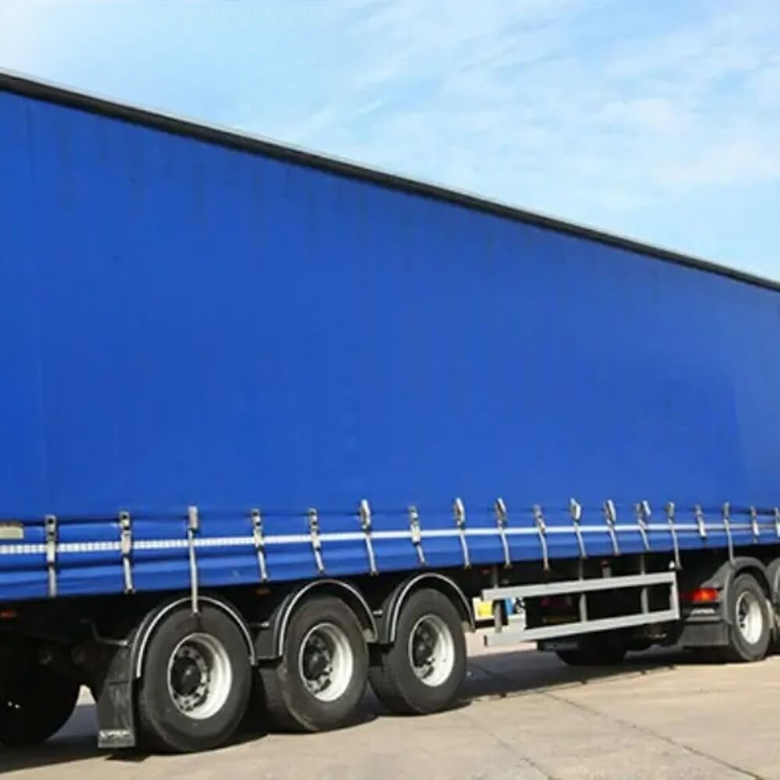
Heavy duty PVC truck tarp for logistics and cargo protection

Truck & Trailer Transport

Flatbeds, side curtains, trailer covers, dump systems and fleet-branded cargo protection.

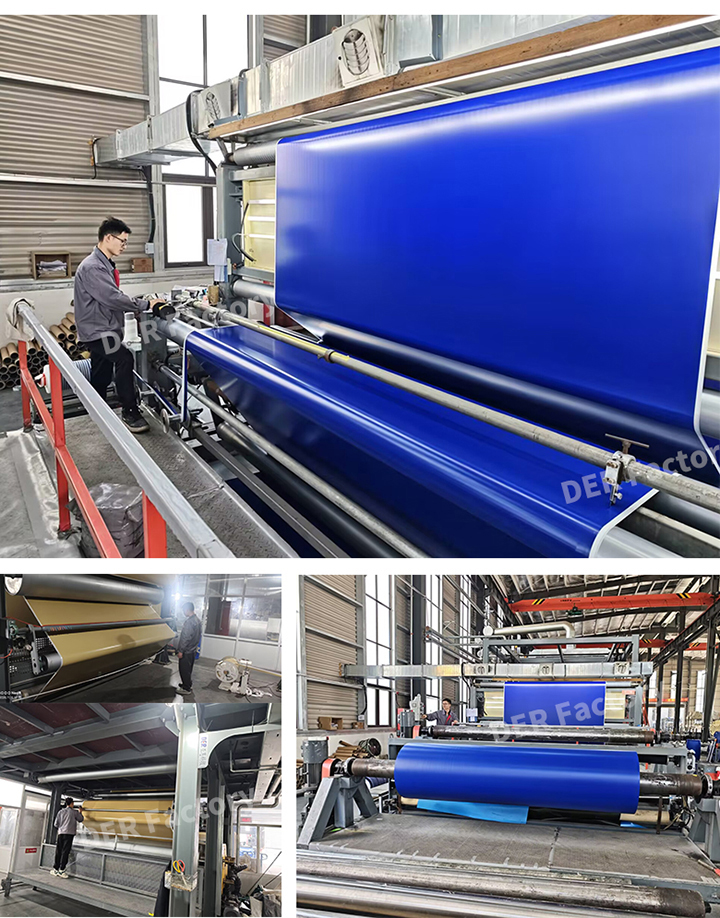
PVC coated fabric manufacturing for industrial tarp applications

Construction & Industrial Sites

Machinery covers, weather barriers, material storage, work-zone partitions and project enclosures.

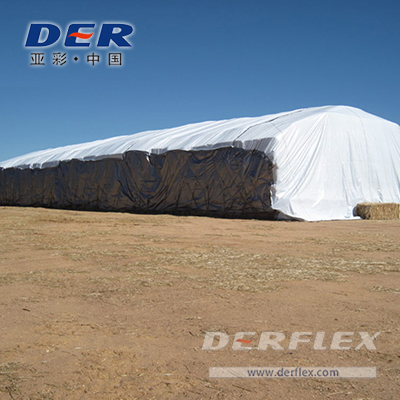
Heavy duty agricultural hay tarp cover

Agriculture & Outdoor Storage

Hay, feed, equipment, seasonal materials and bulk storage exposed to sunlight, wind and rain.

Failure analysis

Why “Heavy Duty” Tarps Still Fail

Many failures blamed on fabric thickness are actually caused by specification gaps or finishing details. DERFLEX recommends reviewing the complete load path from the tarp surface to the final anchor point.

Photos of the previous tarp, damaged areas, tie-down method, wind exposure and cargo edges can help identify the real cause before a replacement specification is selected.

1

Weak base fabric under a thick coating

Surface weight may look impressive while the internal scrim cannot carry the required tension or stop a tear from spreading.

2

Grommets installed without load distribution

Closely spaced or heavy-duty eyelets do not solve the problem if the surrounding edge lacks webbing, patches or sufficient hem structure.

3

Sharp cargo contact and uncontrolled abrasion

Even a strong tarp can wear through if it rubs against steel corners, rough machinery or moving cargo without pads or sacrificial reinforcement.

4

Incorrect tension in wind

A loose tarp can flap and fatigue; excessive point loading can tear hardware areas. Installation and anchor spacing must support the material design.

5

Wrong formula for climate or exposure

Cold flexibility, UV resistance, heat contact, oils or chemicals should be identified before production when those conditions are relevant.

DERFLEX PVC coated fabric production for heavy duty tarps
Why DERFLEX

From Coated Fabric Engineering to Finished Tarp Details

DERFLEX supports international distributors, converters, transport operators, contractors and OEM brands with PVC coated fabric and tarpaulin development. Projects can begin with roll material, cut panels, replacement covers or a fully finished custom tarp.

Instead of selecting only from standard retail sizes, buyers can define the working environment, target duty level, construction details, packaging and repeat-order requirements.

01
Material matchingBase fabric, weight, coating, surface and optional treatment selected around end use.
02
Fabrication supportWelding, hems, webbing, corner reinforcement, eyelets, D-rings, rope and custom shapes.
03
OEM developmentCustom color, printing, private label, product coding and export packaging programs.
04
B2B supply coordinationTechnical communication for samples, bulk orders, documentation and repeat production.
Custom development

How a Stronger Tarp Specification Is Built

A structured inquiry reduces sampling delays and helps the supplier focus on the real failure risks of the application.

Define the job

Application, dimensions, cargo or asset type, climate, duration and handling cycle.

Identify load risks

Wind, pulling, abrasion, puncture, folding, chemicals, heat or standing water.

Select the structure

Base fabric, finished weight, coating, surface finish and performance options.

Engineer the edges

Seams, hems, webbing, patches, hardware type, spacing and anchor method.

Confirm production

Sample, tolerance, test needs, logo, packing, quantity, shipment and repeat-order controls.

Faster quotation

What to Send DERFLEX for an Accurate Recommendation

The phrase “strongest tarp” is a useful starting point. The details below turn that request into a producible and cost-effective specification.

For Finished Tarps

  • Finished length, width, shape, tolerance and quantity
  • Use: truck, machinery, construction, mining, agriculture, storage or other
  • Expected outdoor duration, climate and wind exposure
  • Edge design, webbing, corner patches, grommet spacing, D-rings or rope
  • Color, surface, logo printing, labels, packing and destination
  • Photos or drawings of the current tarp and failure points

For Tarp Fabric Rolls

  • Target GSM or oz class, roll width, roll length and quantity
  • Base fabric or required tensile and tear performance
  • Coating direction, color, matte/gloss/lacquer surface and UV needs
  • Local fabrication process: welding, sewing, printing, cutting or eyeleting
  • Required test items, certificates or market-specific documentation
  • Container plan, pallet method, private label and repeat-order forecast
FAQ

Strongest Tarps: Frequently Asked Questions

What is generally considered the strongest tarp material?

For demanding industrial and transport use, heavy duty PVC or vinyl coated polyester is often selected because it can combine high tensile and tear performance, waterproofing, abrasion resistance, weldability and reinforcement options. The correct material still depends on the application.

Is a thicker tarp always stronger?

No. Thickness and finished weight matter, but a thick tarp can still fail if its internal scrim is weak, coating adhesion is poor, seams are undersized or tie-down points are not reinforced. Strength should be evaluated as a complete system.

Are vinyl tarps stronger than poly tarps?

Heavy duty vinyl tarps are often better suited to repeated industrial use, welding, abrasion and long-term outdoor protection. Reinforced PE tarps can be strong for their weight and economical for temp, orary or general coverage. The better choice depends on service life, handling and budget.

What makes a tarp resist tearing around grommets?

Strong base fabric, reinforced hems, webbing, corner patches, appropriate eyelet size and spacing, correct installation and even tension distribution all contribute. Hardware alone cannot compensate for a weak perimeter structure.

Which seams are suitable for waterproof heavy duty tarps?

Heat-welded or high-frequency welded seams are commonly used for suitable PVC coated fabrics because they can join large panels and support water-resistant construction. Seam width, overlap and process settings must match the material.

Can DERFLEX make custom sizes and reinforcement layouts?

Yes. DERFLEX can discuss custom dimensions, fabric weight, color, surface finish, welded or sewn construction, webbing, grommet spacing, corner patches, D-rings, rope, printing, private label and export packaging.

What information helps determine the correct tarp strength?

Share the application, finished size, exposure conditions, cargo or equipment type, anchor method, wind, abrasion and puncture risks, expected service duration, quantity and any required test standard. Photos of previous failures are especially useful.

Does DERFLEX supply both roll material and finished tarps?

DERFLEX supports PVC coated tarpaulin roll supply for converters as well as cut panels and custom finished tarp programs for distributors, fleets, contractors and OEM brands.

Start with the application

Need a Stronger Tarp Than Your Current Cover?

Send the application, size, failure photos, duty conditions, reinforcement layout, quantity and destination. DERFLEX will review the requirement and recommend a practical material and fabrication direction.

DERFLEX
DERFLEX · PVC coated fabrics, tarpaulins and custom industrial flexible material solutions.
Consulting Services
+86-021-54361792 / 54361798
Email
sales@derflex.com