Storm and Wind Damage
Temporary coverage for missing shingles, damaged panels, punctures and exposed roof deck while assessment and permanent repair are scheduled.



Custom PE and PVC temporary roof tarp solutions for storm damage, active roof replacement, unfinished construction and emergency weather protection—specified by exposure, roof geometry, fastening method and handling frequency.
Temporary roof tarps are flexible waterproof covers placed over damaged, unfinished or exposed roof areas while inspection, drying, material delivery or permanent repair is being arranged. The product is commonly used after storms, during reroofing, on open construction decks and as part of emergency response inventory.
Professional procurement should go beyond choosing a color or nominal size. Roof slope, damaged-area dimensions, overlap, drainage path, penetrations, wind exposure, fastening method and the expected repair window all influence the appropriate material and reinforcement design.
DERFLEX supports buyers who need a specification-led program rather than a mixed retail assortment. The goal is to help define a practical temporary roof tarp that can be installed, secured, inspected and removed in a controlled way.
A roof tarp is an interim weather-protection measure. It is not a substitute for inspection, structural assessment or permanent roofing work.
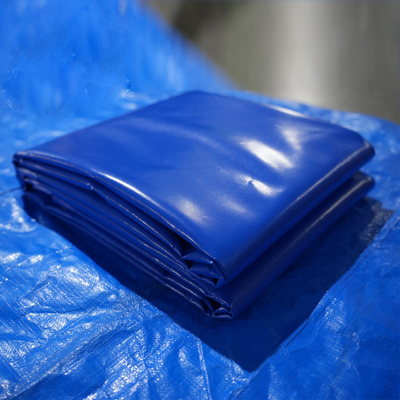
The same roof cover should not be specified for every job. These scenarios place different demands on handling, fastening, waterproofing and reuse.
Temporary coverage for missing shingles, damaged panels, punctures and exposed roof deck while assessment and permanent repair are scheduled.
Weather protection for sections opened during tear-off, decking replacement, insulation work or phased reroofing operations.
Interim covering for roof openings, partially completed structures, materials and exposed interior areas before the permanent envelope is closed.
Standardized tarp kits and bulk inventory for restoration contractors, insurance-response suppliers and regional emergency programs.
Larger-format covers for warehouses, workshops and industrial buildings where span, edge reinforcement and controlled drainage require closer planning.
More durable tarp structures intended for repeated deployment, cleaning, folding and storage across multiple maintenance projects.
A useful sourcing discussion begins with how the tarp will be used—not with a generic “heavy duty” label.
Lightweight PE woven tarp directions can simplify transport and deployment for short-duration emergency or construction protection where budget and handling speed are major factors.
Higher-grade PE or midweight PVC structures can be considered when exposure, fastening stress and inspection cycles require more controlled performance.
PVC coated polyester with welded construction, reinforced edges and planned hardware is suited to reusable contractor inventory and demanding B2B supply programs.
Final values should be confirmed after reviewing the installation method, climate, roof dimensions, required overlap, handling frequency and target order quantity.
| Specification Item | Available Direction | Procurement Consideration |
|---|---|---|
| Material platform | PE woven laminated tarpaulin or PVC coated polyester fabric | PE is lighter and more economical for temporary use; PVC offers stronger fabrication and reusable heavy-duty options. |
| Material weight | Application-matched lightweight through heavy-duty grades; 450–900 gsm PVC directions are commonly discussed for reinforced programs | Higher weight can improve durability but also increases lifting, folding and installation effort. |
| Finished dimensions | Standard rectangles, custom cut panels, large welded sheets and project size programs | Allow for damaged-area coverage, slope, ridge transition, eave extension, overlap and fastening zones. |
| Waterproof construction | Coated or laminated surface with heat-welded seam options | Material selection, seam construction, penetrations and installation details all affect water management. |
| Edge reinforcement | Folded hems, rope edges, webbing, double-layer zones, corner and stress-point patches | Reinforcement should correspond to tie-down direction, wind exposure and repeated pulling. |
| Fixing hardware | Metal eyelets, D-rings, straps, loops or project-specific attachment layouts | Spacing should be planned around the intended installation method rather than copied from a generic tarp. |
| Surface and color | Blue, white, silver, green, grey, black or custom color direction; matte or coated surfaces by material type | Color may support visibility, heat management, branding or stock identification. |
| Functional options | UV-resistant, anti-mildew, cold-flexible and flame-retardant directions available by project | State the required test method or local standard before sampling; do not rely on a general “FR” description. |
| Supply format | Roll goods, cut sheets, finished roof tarps, bulk kits and private-label packs | Select the format according to whether the buyer is a converter, distributor, contractor or emergency supply program. |
The table is an inquiry guide, not a fixed product guarantee. Final specification and test values depend on the selected material structure and confirmed order requirements.
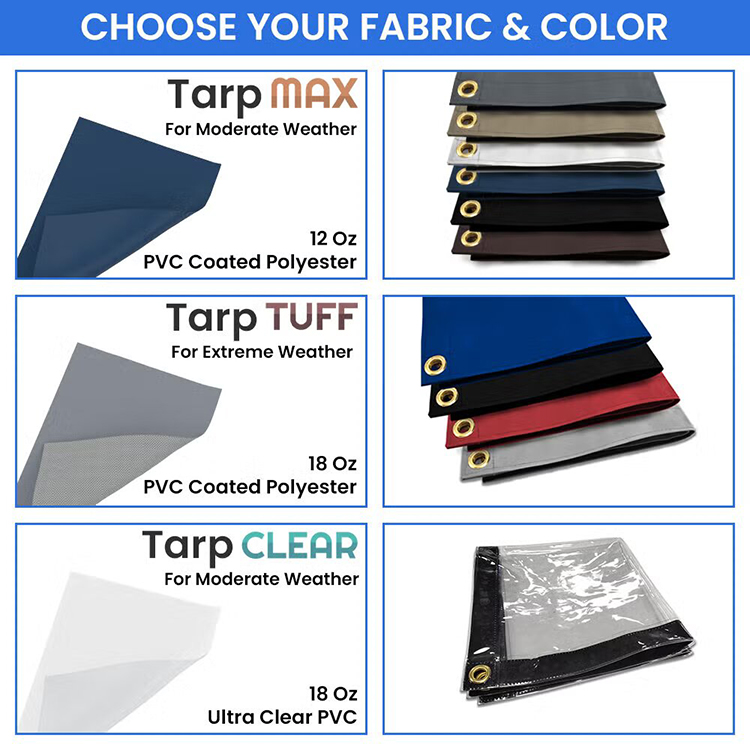
A waterproof sheet may still perform poorly if the edge construction and tie-down layout do not match the roof. DERFLEX can support finished temporary roof tarps with reinforcement designed around the planned attachment method and handling cycle.
Folded, welded or webbing-supported edges can improve load distribution around the perimeter.
Large-format covers can be joined by suitable welding methods to reduce reliance on stitched water paths.
Eyelet spacing and reinforcement can be arranged according to fixing zones and expected tension.
Extra layers can be added at corners, transitions and repeated pulling points.
DERFLEX can support a documented B2B development process for one project or a recurring distributor program.
Share roof type, exposure window, climate, damaged area and installation concept.
Compare PE and PVC directions by handling, durability, fabrication and target cost.
Confirm size, seams, hems, hardware, stress points, color and packaging.
Review usable dimensions, surface, reinforcement, welds and attachment details.
Maintain confirmed specifications, labels and packing for ongoing supply programs.
Both models have a purpose. The correct choice depends on whether the buyer needs a one-time stock size or a repeatable product and project program.
Good procurement reduces avoidable improvisation at the jobsite. Include these details in the inquiry and installation plan.
Identify slope, ridge, eaves, parapets, valleys, transitions and the full damaged area—not only the visible opening.
Plan water runoff and avoid layouts that encourage sagging, ponding or water entry at the uphill edge.
Chimneys, vents, skylights and equipment curbs require specific treatment and should not be covered without a safe detail.
Confirm whether the tarp will use battens, sandbags, straps, ropes or another approved method before defining hardware placement.
Temporary covers should be checked after wind, heavy rain or movement, with damaged fasteners and loose edges addressed promptly.
Coordinate the temporary cover with drying, inspection, material delivery and permanent repair rather than leaving it without a plan.
Installation should be handled by trained personnel using appropriate fall protection, access equipment and site procedures. Do not access a wet, unstable or structurally damaged roof. Local codes, manufacturer requirements and the responsible contractor’s method statement take priority over general product guidance.
These related pages cover the material, reinforcement and application decisions most closely connected with temporary roof protection.
Specification answers should always be confirmed against the final roof, installation method and local requirements.
PE woven tarps are commonly selected for lightweight, economical short-term coverage. PVC coated polyester is suited to heavier-duty, weldable and reusable programs where reinforced finishing and repeat handling are priorities.
Yes. Finished dimensions, welded panel layout, color, hems, grommet spacing, D-rings, webbing, corner patches and packaging can be developed around the buyer’s project or product-line requirements.
Waterproof PE and PVC material options are available. Effective weather protection also depends on seam construction, installation, overlap, drainage, roof penetrations and ongoing inspection.
Start with the expected exposure window, wind conditions, handling frequency, roof size and fixing method. Lightweight material may be practical for rapid short-term deployment, while repeated contractor use generally requires stronger material and reinforcement.
Flame-retardant material directions can be discussed for project environments that require them. The buyer should provide the exact standard and test method before sampling and quotation.
Provide the roof or use scenario, dimensions, quantity, preferred material, target weight, color, expected exposure, reinforcement, hardware layout, packaging, destination market and any required test direction.
Send DERFLEX the roof scenario, required dimensions, quantity, expected repair window, fixing concept and target market. The team can help compare PE and PVC directions and prepare a practical custom specification for sampling or bulk supply.