


Waterproof PVC surfaces, UV-stabilized options and welded seams for outdoor equipment and storage covers.
Oil & Gas Field Protection Systems
Oilfield Tarps Built Around Equipment, Exposure and Handling
DERFLEX supplies custom oilfield tarps, heavy duty PVC coated fabric and finished waterproof covers for drilling equipment, tanks, pipe storage, transport loads, maintenance areas and field-service programs.
Available as roll goods, cut panels, welded sheets or finished covers. Oil, fuel, flame-retardant, anti-static and chemical performance must be specified and verified for the actual operating condition.
550–1200 gsmCommon heavy duty PVC tarp direction; custom structures available
1.02–5.10 mSelected roll-width options depending on coating line and grade
Rolls or FinishedMaterial, welded panels, replacement skins or complete covers
OEM ReadyColor, logo, labels, packing and repeat-order specifications
What Are Oilfield Tarps?
Weather Protection
Mechanical Durability
Application-Specific Safety
Industrial protective covers for oil and gas operations
Oilfield tarps are flexible protective sheets or fitted covers used around drilling, production, maintenance, storage and transport activities. They may shield pumps, compressors, valves, pipe, containers, service equipment and temporary work zones from rain, dust, sunlight, road spray and debris. In other projects, they become ground sheets, tank-top covers, temporary partitions or replacement skins for mechanical tarp systems.
The term covers several different products. A waterproof equipment cover is not the same as a primary fuel bladder, pressure membrane or certified secondary-containment basin. DERFLEX therefore starts with the intended function and exposure rather than assuming one universal oilfield tarp specification.
For procurement teams, distributors and fabricators, this approach helps avoid two common problems: selecting a light cover that fails at tie-down points, or over-specifying a heavy material that is difficult to install, fold and transport.
Polyester reinforcement, abrasion-oriented surfaces and engineered edge details for repeated handling.
FR, anti-static, low-temperature or oil-resistant directions only when an agreed test method and end use are defined.
Material Structure
A reinforced textile core with a configurable protective surface
Most heavy duty oilfield tarps use PVC coated polyester because the structure can be adjusted across weight, yarn, coating, flexibility, finish and fabrication method.
High-tenacity polyester base fabric
The woven scrim carries tensile load, supports tear resistance and helps the cover remain dimensionally stable when pulled, tied, folded or exposed to wind movement.
Double-side PVC coating or lamination
The PVC layer creates the waterproof surface and can be formulated toward UV resistance, cold flexibility, mildew resistance, cleaning performance or selected oil-splash exposure.
Surface finish and top treatment
Matte, glossy, embossed, anti-blocking, printable or abrasion-oriented finishes can be discussed according to handling, cleaning, branding and field visibility needs.
Fabrication and reinforcement system
Welded seams, webbing, rope hems, corner patches, grommets, D-rings, straps and access panels determine how the material performs as a finished tarp.
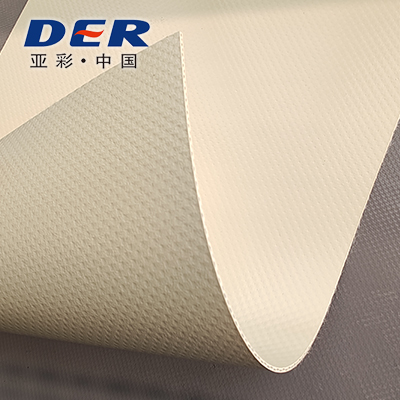
Key Performance Directions
Specify what the tarp must resist—and for how long
Performance language is meaningful only when linked to the actual cover size, installation, duty cycle, climate and test method.
Waterproof Surface
PVC coated material can provide a continuous rain barrier. Finished-cover waterproofness also depends on seam design, openings, slope, drainage and installation.
Outdoor Weathering
UV-stabilized formulations can be selected to reduce premature cracking, fading and embrittlement during extended outdoor exposure.
Repeated Handling
Heavy base fabrics and suitable surface finishes help covers tolerate folding, dragging and contact with equipment, straps and site surfaces.
Oil-Splash Direction
Selected PVC or TPU grades can be discussed for lubricants, hydraulic oil, diesel or petroleum-related exposure. Compatibility must be confirmed by liquid and contact conditions.
Tie-Down Strength
Webbing, rope hems, reinforced corners and properly spaced hardware help distribute field loads more effectively than unsupported eyelets.
FR & Anti-Static Options
Flame-retardant or anti-static directions can be developed against an agreed standard. They are not assumed for every oilfield tarp and require verification.
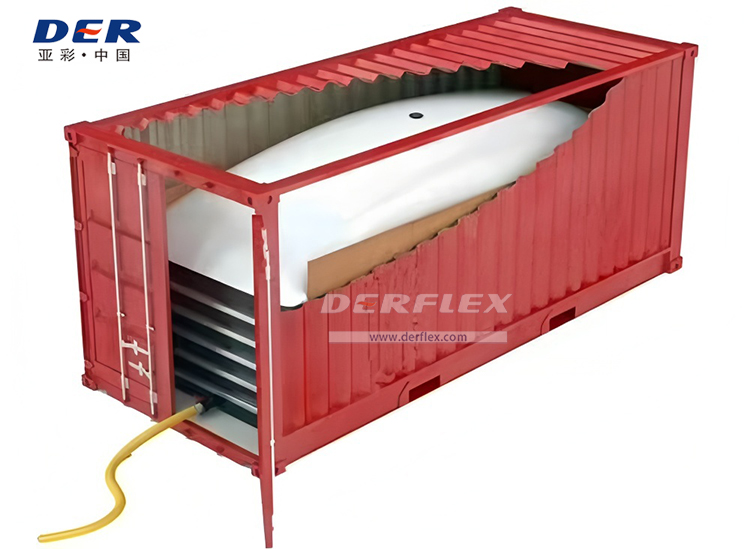
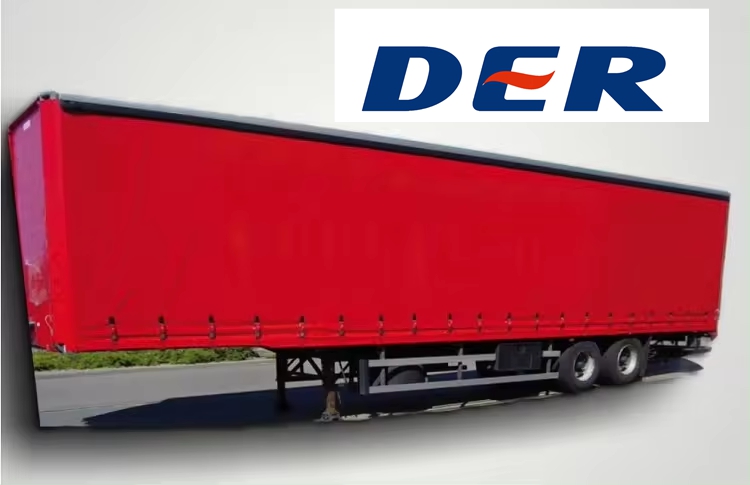
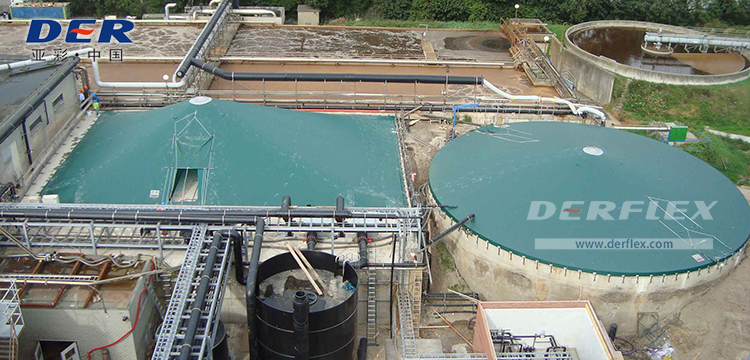
Product Image Display
DERFLEX coated-fabric and field-application references
These images illustrate related heavy duty covers, oil-industry technical textiles, tank covers and transport tarp applications. Final oilfield tarp shape and details are made around the buyer’s drawing or equipment dimensions.
Specification Table
Oilfield tarp specification direction
The ranges below are practical starting points for discussion. Final values depend on the cover function, finished dimensions, climate, fabrication method, handling frequency and validation requirements.
| Item | Common DERFLEX Direction | Buyer Decision Notes |
|---|---|---|
| Product form | PVC coated fabric rolls, cut panels, welded sheets, replacement skins or finished custom oilfield tarps | Confirm whether local fabrication or a ready-to-install cover is required. |
| Base material | High-tenacity polyester; selected TPU-coated polyester or nylon for specialized welded products | PVC is common for weather covers; TPU may be considered for demanding flexibility or liquid-contact systems. |
| Weight | Approx. 550, 650, 750, 900, 1100 or 1200 gsm; custom constructions available | Higher GSM can improve toughness but also increases handling weight and cost. |
| Thickness | Approx. 0.45–1.20 mm direction; wider custom range by structure | Thickness alone does not define strength. Review yarn, density, coating and finished reinforcement. |
| Roll width | Approx. 1.02–5.10 m depending on grade and production arrangement | Wide material can reduce seams but must match fabrication equipment and freight planning. |
| Surface | Matte, glossy, embossed, anti-blocking, printable or custom texture | Choose according to cleaning, abrasion, handling, branding and appearance. |
| Color | Black, grey, blue, green, orange, yellow, red and custom matching | Safety visibility, heat absorption, branding and dirt appearance may influence color. |
| Temperature | Typical outdoor direction around -30°C to +70°C, formulation dependent | Provide the real low/high temperature, folding condition and exposure duration. |
| Fabrication | Hot-air welding, HF/RF welding for compatible structures, sewing and reinforced hybrid construction | Seam tests should be completed before bulk production. |
| Finishing | Webbing, rope hems, eyelets, D-rings, buckles, straps, corner patches, pockets, handles and access flaps | Hardware layout should follow load paths and installation method, not a default spacing alone. |
| Functional options | UV-resistant, mildew-resistant, cold-flexible, abrasion-oriented, FR, anti-static or selected oil-resistant direction | Functional claims require an agreed standard, sample approval and—where relevant—third-party testing. |
| OEM supply | Logo, labels, serial identification, barcode, packing, pallet plan and repeat-order specification control | Useful for distributors, rental companies, contractors and equipment-cover brands. |
Important: a general oilfield tarp is a protective cover. It should not be treated as a certified primary containment, pressure membrane, gas barrier or personnel-support structure unless the entire finished system is specifically engineered and validated for that purpose.
Processing & Customization
From field dimensions to repeatable finished covers
DERFLEX supports custom oilfield tarp programs for contractors, fabricators, distributors, rental fleets and OEM equipment suppliers.
Define the duty
Identify the equipment, exposure, handling frequency, installation method and protection objective.
Build the material direction
Select PVC or TPU direction, GSM, base textile, surface finish and functional options.
Engineer the cover details
Confirm seams, hems, hardware, access points, cut-outs, drainage and high-wear zones.
Sample and approve
Review material, welds, fit, color, packing and required tests before repeat production.
A
Fitted 2D or 3D coversRectangular, circular, tapered or equipment-shaped construction from drawings or measured dimensions.
B
Access and inspection detailsZippers, hook-and-loop flaps, removable panels, pipe boots, clear windows and service openings.
C
Reinforcement strategyWebbing grids, double layers, corner patches, wear strips and protected edge zones.
D
Attachment systemEyelets, D-rings, straps, buckles, rope hems, bungee pockets and custom anchor interfaces.
E
Brand and identificationPrinted logo, safety marking, size labels, serialized panels, carton marks and private-label packaging.
F
Supply formatFull rolls, slit rolls, cut kits, semi-finished welded panels, replacement skins or finished tarps.
Oilfield Applications
Protection across drilling, production, maintenance and logistics
Each application creates different stresses. Cover size, access frequency, wind, liquid exposure and installation details should be reviewed before material selection.
Pumps, compressors and generators
Custom covers for idle, transported or stored field equipment, with ventilation or access features where appropriate.
Rig components and service modules
Weather covers, temporary enclosures, replacement panels and protective wraps for exposed site components.
Pipe, fittings and spare parts
Waterproof covers for pipe racks, palletized components, tools, hoses and field inventory stored outdoors.
Tank-top and process covers
Custom shapes around tank geometry, access hatches, nozzles and anchoring. Not intended for pressure or gas containment without engineering.
Truck, trailer and container loads
Heavy duty cargo covers for machinery, pipes, modules and supplies moving between bases and field locations.
Ground sheets and work-zone covers
Protective floor sheets, drip-area covers and temporary isolation surfaces. Liquid containment capability must be separately specified and tested.
Temporary field enclosures
Welded or fastened panels for weather shielding, storage shelters and maintenance curtains around non-pressurized work areas.
Reusable cover fleets
Standardized color, labels, repair patches and replacement-panel programs for rental and service organizations.
Distributor and equipment-brand programs
Repeatable materials, finished sizes, packaging, identification and documentation for private-label industrial tarp lines.
Procurement Guide
How to choose a custom oilfield tarp supplier
A useful supplier comparison should go beyond a single GSM or price and examine how the finished cover will be designed, tested and repeated.
1
Confirm material controlAsk whether the supplier controls base fabric, coating, GSM, width, finish and batch consistency.
2
Review finished-cover engineeringCheck reinforcement, hardware load paths, seam method, access details, drainage and installation.
3
Define special-performance evidenceFR, anti-static, oil or chemical resistance should reference a target standard, test liquid and exposure condition.
4
Plan repeat ordersDrawings, samples, color records, packaging and inspection criteria help maintain consistency across later batches.
5
Evaluate the whole landed programConsider service life target, installation labor, shipping weight, repairability and replacement-panel availability—not unit price alone.
Quality & Documentation
Inspection aligned with the agreed oilfield tarp specification
The inspection plan can be matched to the order, product form and risk level. Required standards and documentation should be confirmed before sampling and production.
Material and process checks
Possible checks include roll width, GSM, thickness, color, coating appearance, adhesion, tensile and tear direction, waterproof performance, weld behavior and surface defects.
Finished-cover checks
For fabricated tarps, inspection can cover dimensions, seam layout, reinforcement, grommet or D-ring position, straps, labels, packing and workmanship against the approved drawing or sample.
Incoming Material Review
Coating & Surface Inspection
GSM / Thickness Check
Weld & Seam Trial
Dimension & Hardware Check
Packing & Label Verification
Test reports, third-party inspection and certification-related documents can be discussed according to the selected grade, order quantity, destination market and agreed test standard. Final regulatory compliance belongs to the complete finished system and its actual use.
FAQ
Oilfield tarp questions from industrial buyers
Answers for contractors, equipment suppliers, fabricators, distributors and procurement teams.
What material is commonly used for heavy duty oilfield tarps?
PVC coated polyester is commonly selected because it combines waterproofing, tensile support, tear resistance, weldability and configurable outdoor performance. TPU coated fabric may be considered for specialized flexible containment or liquid-contact products, but the final grade depends on the actual function and test requirements.
Can DERFLEX make custom oilfield tarps from drawings or equipment dimensions?
Yes. DERFLEX can discuss flat, fitted and irregular covers based on drawings, photos, samples or measured dimensions. Custom details can include welded seams, pipe cut-outs, inspection flaps, clear windows, vents, webbing, grommets, D-rings, straps, labels and packing.
Are DERFLEX oilfield tarps waterproof?
PVC coated tarp material is designed as a waterproof surface. Finished performance also depends on seam construction, access openings, drainage slope, installation and wear. A sample or prototype is recommended for large fitted covers or applications with complex openings.
Are oilfield tarps resistant to oil, diesel or chemicals?
Selected PVC or TPU material directions can be discussed for oil, diesel, lubricants, hydraulic fluids or selected chemicals. There is no universal grade for every liquid. Compatibility should be evaluated using the actual liquid, concentration, temperature, contact time, cleaning method and finished seam design.
Can flame-retardant or anti-static performance be added?
FR and anti-static directions can be developed when the buyer provides the target test standard, market and application. These functions are not automatic in every oilfield tarp and should be verified through agreed testing before final use.
Does DERFLEX supply oilfield tarps wholesale or as OEM products?
DERFLEX supports bulk roll goods, cut panels, finished tarps and repeat OEM programs for distributors, fabricators, industrial-supply companies, rental fleets and equipment brands. Color, logo, labels, barcode, packing and pallet plans can be discussed.
What information is needed for an oilfield tarp quotation?
Please provide the application, cover size or drawing, quantity, target material or duty level, climate, oil or chemical exposure, temperature, seams, reinforcement, hardware, logo, packaging, destination and any test standard. This information helps DERFLEX recommend a more practical specification.
Build an oilfield tarp specification for the actual job
Send DERFLEX your equipment dimensions, field environment, cover duty, quantity and finishing requirements. We will review the material, reinforcement and supply format for sample development and quotation.
Equipment photo, drawing or measured dimensions
Rain, UV, wind, abrasion and liquid exposure
GSM, color, seams, hardware and access details
Quantity, logo, packaging and destination market