
When to evaluate PVC
Begin with PVC coated polyester when your conversion line, roll supply program and target cost favor this material family. Approve the actual formulation, folding behavior and welded assembly for the duty.



Secondary containment · OEM roll material
Specify spill berm fabric around the liquid it may contact and the basin it must become. DERFLEX supplies PVC coated polyester roll material for manufacturers developing portable berm floors, raised walls and maintenance liners. Containment berm material selection starts with liquid compatibility, welded joints, ground contact and repeated folding. Discuss coating construction, fabric weight, width, color and roll packing, then request samples for your liquid-exposure and fabrication trials.
For containment fabricators, industrial safety distributors and OEM product teams. Final suitability is specific to the approved material and finished berm.
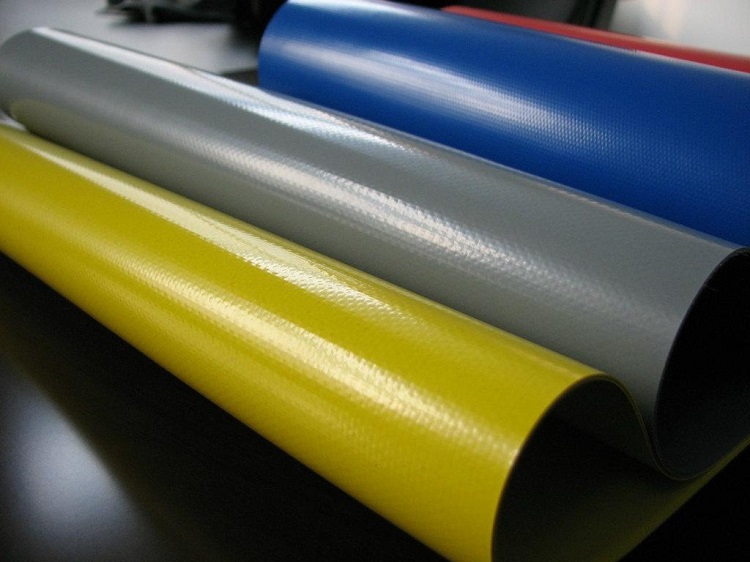
What is spill berm fabric?
PVC spill berm fabric is polyester reinforcement coated with polyvinyl chloride, then cut and welded into a floor, sidewalls and corners. The textile carries mechanical loads; the coating provides the barrier surface. The finished berm is secondary containment around a primary container or piece of equipment.
A useful specification treats the liquid-contact face, backing, reinforcing textile and welded assembly as separate requirements. A waterproof surface is a starting point. It does not establish resistance to a particular fuel, solvent or cleaning mixture.
Review the wider DERFLEX PVC coated fabric range when comparing substrate, coating and roll construction.
Identify the wetted side. Specify the formulation, surface finish and evidence needed for the intended liquid, temperature and duration.
Define tensile and tear requirements in both fabric directions. Do not use yarn denier or total weight as a substitute for measured performance.
Review abrasion, coating adhesion and puncture hazards. Where both faces need protection, discuss a two-side coated construction and a separate underlay.
Purchase specification
There is no single GSM or thickness that makes every PVC containment berm suitable. The following is a buyer’s specification framework, not a stock-grade datasheet. DERFLEX should confirm available construction and sample results before you approve an order.
| Item | Material / supply direction | What the buyer should specify |
|---|---|---|
| Material system | PVC coated polyester fabric; coating on each face to be agreed. | Wetted side, backing protection, base textile and exact grade reference. |
| Weight & thickness | Project-specific GSM and thickness, subject to construction review. | Nominal values, tolerances and measurement method. Compare flexibility and strength alongside mass. |
| Barrier & compatibility | Formulation selected for the proposed exposure. | Liquid name, concentration, additives, temperature, contact duration and approval evidence. |
| Mechanical performance | Reinforced textile with agreed tensile, tear, adhesion and contact-damage requirements. | Test method, specimen direction, conditioning and acceptance limits. |
| Weldability | Hot-air or HF/RF fabrication to be evaluated on the selected grade. | Your equipment, finish on the weld faces, overlap geometry and production trial. |
| Width & roll length | Custom discussion according to construction and production feasibility. | Usable width, seam allowance, cut plan, roll length, core and handling limits. |
| Finish & color | Color matching and smooth, matte or other finishes by technical review. | Cleaning method, weld-zone finish, visual inspection needs and approved color sample. |
| Exposure & reuse | Outdoor and cold-flexibility directions to be confirmed for the grade. | UV exposure, minimum folding temperature, storage cycle and cleaning conditions. |
| OEM roll supply | Roll goods with agreed packing, identification and order documentation. | Quantity, batch reference, labels, packing, destination and required reports. |
No fuel-compatibility rating, vehicle load rating, minimum order quantity or delivery time is implied by this table. Confirm these separately for the chosen material and order.
The general PVC tarpaulin roll supply overview provides background on custom material formats; a containment specification needs its own liquid-contact and seam approval.
Selection starts with exposure
Choose a candidate construction only after describing the liquid and operating cycle. The matrix below identifies what needs qualification; it does not declare a generic PVC grade compatible with the listed liquids.
| Berm duty | Specification focus | Before approving bulk material |
|---|---|---|
| Drum / IBC staging | Exact liquid compatibility, stable floor panels and protection beneath container feet. | Evaluate the liquid-contact face and welded sample; define loading and inspection procedures. |
| Generator / machinery service | Separate review of lubricants, hydraulic fluid, fuel and coolant; local wear protection. | List every credible spill medium. One oil test does not cover all fluids used by the equipment. |
| Vehicle-access berm | Puncture and abrasion performance, protected wheel paths, wall mechanism and ground pad. | Validate the assembled entrance and floor under the intended vehicle operation. Fabric alone has no drive-over rating. |
| Washdown collection | Detergent composition, recovered-water temperature, seams and drainage detail. | Evaluate the cleaning mixture and repeated wash / dry cycle, including fittings and corner welds. |
| Portable response kit | Low-temperature folding, packing bulk and reuse after exposure and cleaning. | Repeat deployment and folding trials at the intended minimum temperature; inspect coating and seams. |
| Outdoor tank support area | Weathering, site drainage, underlay, supported wall geometry and accessible inspection. | Confirm working capacity, weather allowance and exposure duration with the finished-system designer. |
Give the exact product or chemical name and safety data sheet, including concentration and relevant additives.
Distinguish occasional drips, a temporary spill and prolonged contact before recovery.
Specify liquid temperature separately from ambient temperature and the coldest folding condition.
Include the cleaner, dilution, washing temperature, drying and deployment frequency.
Agree what constitutes unacceptable swelling, stiffening, coating separation, strength loss or leakage.
Begin with PVC coated polyester when your conversion line, roll supply program and target cost favor this material family. Approve the actual formulation, folding behavior and welded assembly for the duty.
Compare a different grade or polymer when exposure, cleaning, low-temperature deployment or mechanical testing excludes the PVC candidate. See the dedicated TPU containment berm fabric guide. A polymer name is not a compatibility approval.
Fabrication details
A containment liner needs a continuous barrier through floor seams, wall transitions, corners and drain connections. Prepare these details before ordering rolls: they determine which surfaces must weld and where the coating is most stressed.
For other welded container formats, compare coated materials for flexible containers while retaining a separate approval for the open berm design.
Count the usable width after edge allowance. A nominally wider roll may still require a floor joint when the cut pattern, wall allowances and machine working width are considered. Plan joint positions around wear zones and inspection access.
Use the intended coating faces, surface finish, overlap and machine. A recipe developed on a different thickness or finish is not automatically transferable.
Record machine settings, speed or dwell, pressure and tooling as applicable. Check seal continuity and mechanical performance, then repeat after the agreed liquid and folding conditioning.
Stacked layers and changes in thickness can interrupt pressure or create a path for liquid. Check corner coupons and an assembled basin, not only a straight lap weld. Keep the construction accessible for inspection.
Drum rims, equipment feet and wheel paths create different wear patterns. Specify local protection and an underlay where needed. Higher fabric mass does not remove the need to evaluate the entrance, sidewall mechanism and ground.
Real material references
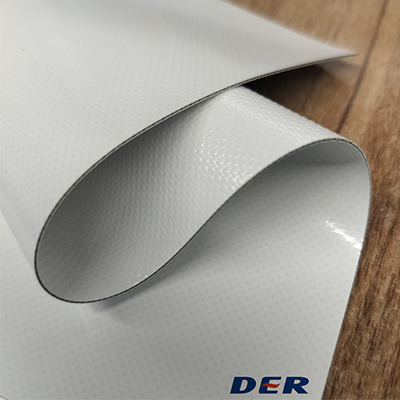
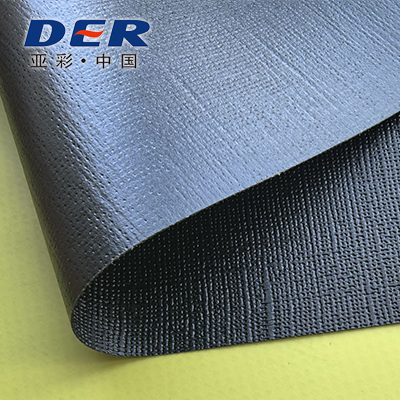
These existing DERFLEX product photos show coated textile appearance. Ask for the specific proposed berm grade so you can evaluate its wetted surface, backing, fold feel and welded sample.
Sample-to-production approval
Use a written acceptance plan before bulk purchase. The checks below are proposed qualification requirements to agree with DERFLEX and your fabricator; they are not claims that a specific grade has already passed them.
DERFLEX material supply
DERFLEX offers PVC coated textile manufacturing and custom roll supply. Use the inquiry to define the berm-specific construction rather than ordering a general waterproof cover material by appearance.
Compare the cost per usable finished floor, including cut waste, seam labor, reinforcement and qualification. A lower price per square meter may not produce the lower converted-product cost.
Buyer questions
Direct answers for containment manufacturers, converters and purchasing teams.
PVC coated polyester is used in many portable containment berms. Its reinforcement supports the basin, while the coating provides the barrier surface. TPU and other coated membrane grades are alternatives for specific duties. Select the actual grade by liquid exposure, mechanical requirements and fabrication trials.
Suitability depends on the selected formulation and the exact liquid, including concentration, additives, temperature and contact time. A waterproof PVC fabric is not automatically approved for fuel or chemical exposure. Request grade-specific evidence and evaluate material and welded samples under representative conditions.
There is no universal GSM or thickness for every berm. Choose these together with base textile strength, coating adhesion, liquid compatibility, foldability and seam performance. Tell DERFLEX the berm geometry, ground conditions, equipment contact and deployment cycle before confirming the construction.
Use it only if the specific grade and finished assembly meet the intended containment requirements. Rain protection does not prove suitability for liquid contact, cleaning chemicals or welded corner details. Qualify the coating, seams and assembled liner for the proposed service.
Vehicle access must be evaluated on the complete, berm, including the wall mechanism, entrance, floor protection, ground surface and operating procedure. PVC fabric alone has no vehicle load rating. Specify vehicle type, wheel contact, traffic frequency and intended entry method during development.
Compare the specific PVC and TPU grades rather than assuming one polymer always performs better. Liquid compatibility, cold folding, abrasion, cleaning, weldability and converted-product cost should guide the choice. Approve the selected material and finished basin through the same application-specific trial plan.
Make the next sample useful
Start your PVC coated fabric inquiry with the exposure and conversion details. DERFLEX can discuss the available material direction, sample format and roll supply scope for your spill containment program.
Contact: sales@derflex.com