Tarp-System Manufacturers
Source repeatable mesh or vinyl roll goods that can be cut, pocketed, reinforced and assembled into your own tarp-system products.



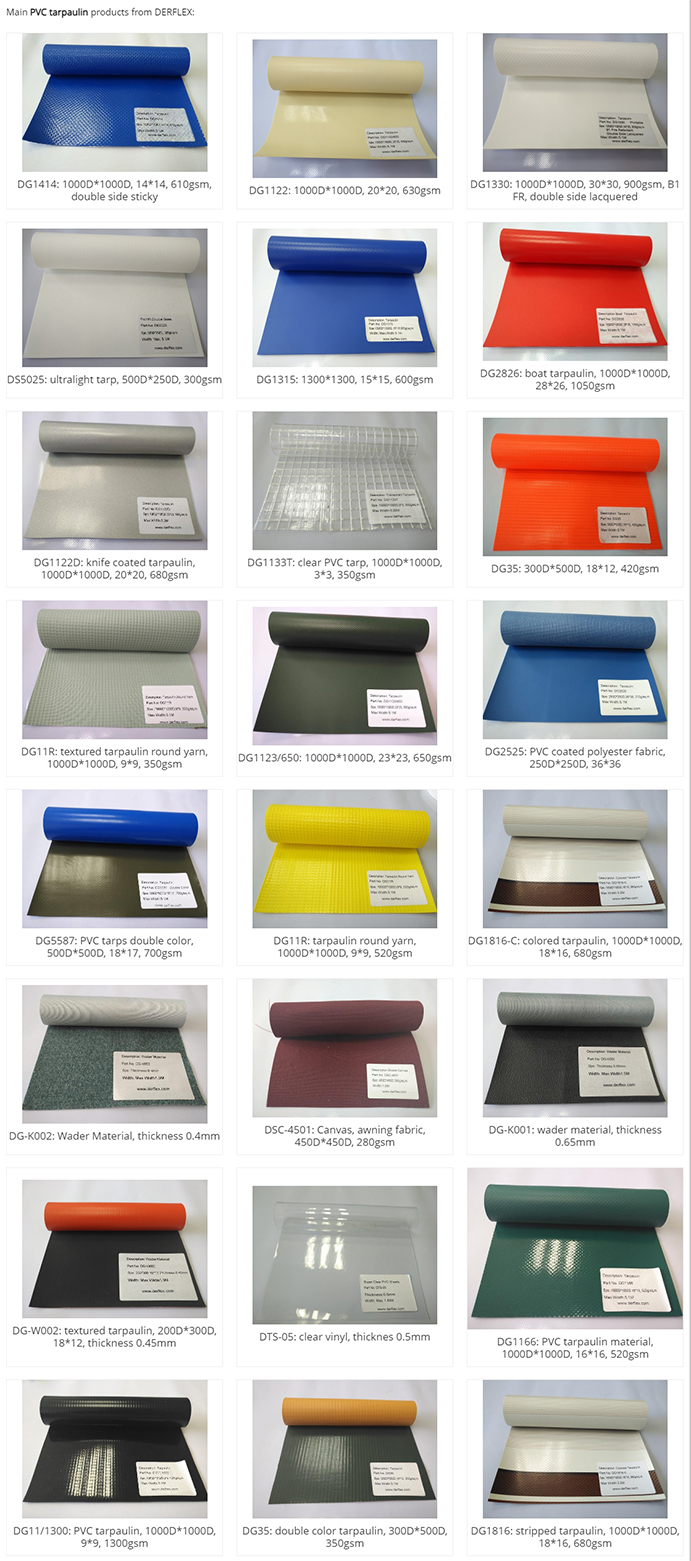
DERFLEX supplies replacement fabric for truck tarp systems in PVC-coated mesh and solid PVC/vinyl roll goods for tarp-system manufacturers, repair shops, truck body builders, distributors and fleet replacement programs.
The material is specified around how the finished tarp will roll, pull, flex, weld, sew and wear in service. Buyers can source continuous roll material for in-house conversion, cut panels for faster fabrication, or discuss finished replacement covers when a complete tarp is required.
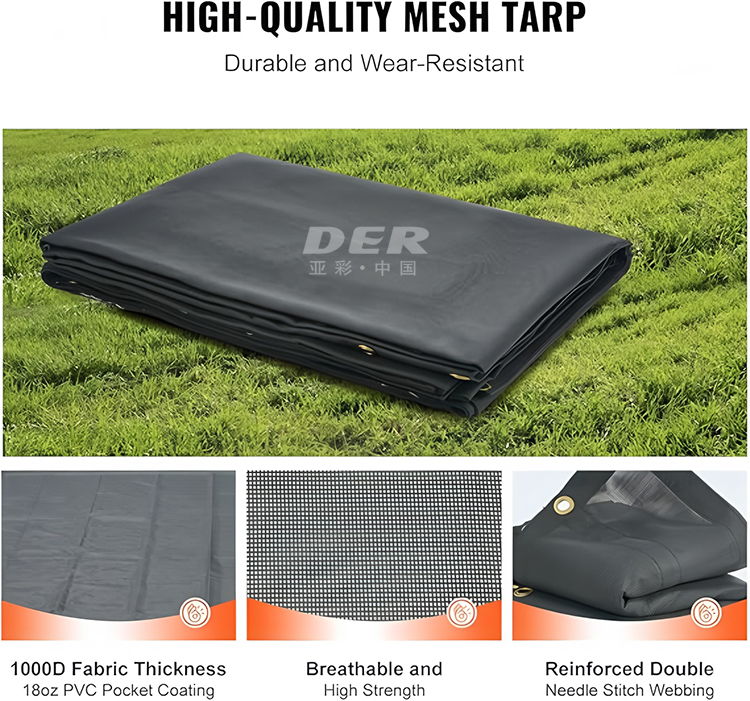
Truck tarp system replacement fabric is the mesh or solid vinyl material used to rebuild the moving cover on an existing truck, trailer or roll-off tarp system while retaining serviceable rollers, arms, tubes, cables or other hardware. It may be purchased as continuous roll goods for local fabrication, as cut panels, or as a finished replacement tarp.
Mesh is normally selected when airflow, lower billowing and containment of loose bulk material are the priorities. Solid PVC/vinyl is used when the cover needs a closed, waterproof material surface and better shielding from rain, road spray or fine material. Final fit still depends on seam construction, pockets, system geometry and installation.
This page is for buyers who already have a truck tarp mechanism or fabricate replacement covers. The purchasing decision starts with the material and conversion process rather than with motors, arms or retail hardware kits.
Source repeatable mesh or vinyl roll goods that can be cut, pocketed, reinforced and assembled into your own tarp-system products.
Keep conversion material in stock for worn-cover replacement, local custom fabrication, urgent repairs and fleet maintenance work.
Standardize material grades, roll widths, colors, labels and packaging for repeat aftermarket or private-label replacement programs.
The better material depends on what the cover needs to do. Weight alone is not a reliable selection rule because airflow, weather exposure, cargo particle size, winding behavior and reinforcement design can matter just as much.
| Decision Factor | PVC-Coated Mesh Roll Goods | Solid PVC / Vinyl Roll Goods |
|---|---|---|
| Primary function | Breathable load containment and reduced wind resistance. | Closed-surface weather shielding and containment of finer material. |
| Airflow | Open structure allows air to pass through and can reduce billowing. | Low airflow; system tension and geometry must manage a larger solid surface. |
| Water protection | Not waterproof because water can pass through the mesh openings. | PVC-coated surface is waterproof; finished protection also depends on seams and closure design. |
| Typical cargo direction | Aggregate, landscape material, recyclables, construction debris and other loose loads where airflow is useful. | Moisture-sensitive or fine loads, general weather protection and applications needing a closed cover surface. |
| Conversion focus | Stitched/webbing reinforcement, pockets, edge abrasion control and local stress reinforcement. | Welding or sewing process, pocket strength, seam design, edge reinforcement and surface durability. |
| Handling | Often easier to manage where breathable coverage is sufficient. | Usually heavier and more affected by wind; selected where weather shielding justifies the closed surface. |
| DERFLEX supply format | Mesh rolls, cut panels, semi-finished material or project-based finished covers. | PVC/vinyl rolls, cut panels, welded/sewn components or finished replacement tarps. |
Hot asphalt, unusually sharp scrap, elevated-temperature loads and regulated applications require a separate material review. Do not select standard mesh or vinyl only from a familiar oz/GSM label when temperature or exceptional abrasion is part of the duty cycle.
A converter-ready roll specification should describe the finished tarp process as well as the material. If a value is not already controlled in your drawing or current bill of materials, DERFLEX can review a practical direction from the actual system and use case.
| Specification Item | Available Direction | Why It Matters |
|---|---|---|
| Material family | PVC/vinyl-coated mesh or solid PVC-coated polyester. | Defines airflow, surface closure, handling and conversion route. |
| Weight / construction | Project-specific mesh and solid-vinyl structures; familiar market references can be reviewed against the required duty. | Weight interacts with yarn, weave, coating, flexibility and system load; heavier is not automatically better. |
| Roll width | Custom or existing DERFLEX roll-width programs subject to selected construction and production feasibility. | Width affects cutting yield, seam count, waste and workshop handling. |
| Roll length / core | Confirm according to material weight, converter equipment, storage and packing requirements. | Roll mass and core dimensions can affect machine feeding, forklift handling and export packing. |
| Color / finish | Standard or project-specific color; surface finish according to the selected vinyl grade. | Supports fleet identity, aftermarket SKU planning, cleanability and appearance. |
| Fabrication method | Hot-air or HF welding where appropriate, plus sewing and reinforcement processes by construction. | The coating and surface must match the converter's joining equipment and seam target. |
| Functional requirements | UV, cold-flex, anti-mildew, flame-retardant or other project requirements where available and confirmed. | Special treatments should be tied to a real service environment or required test standard. |
| Supply form | Continuous roll goods, cut panels, semi-finished material or finished replacement covers. | Lets buyers match supply to their own fabrication capability and inventory strategy. |
Buyers who need a broader material overview can compare truck tarpaulin fabric for transport conversion. For production planning around width, roll length and cutting efficiency, see tarp fabric by the roll.
A tarp material can be strong and still fail early if the finished cover rubs hardware, winds unevenly or concentrates force into one pocket or edge. Replacement-fabric buyers should document how the cover moves before standardizing the roll grade.
Identify front-to-back, side-roll, pull, cable or other operation and record the actual deployment path.
Mark roller pockets, pull-bar pockets, long edges, corners, grommet lines and recurring hardware contact areas.
Strengthen known stress points with webbing, reinforced hems or extra layers rather than making the entire cover unnecessarily heavy.
When geometry or material changes, confirm a pilot cover before locking the specification for fleet or dealer repeat orders.
The damage pattern on a worn cover can be useful evidence. It helps separate a material problem from a geometry, hardware or operating problem before the next roll specification is approved.
| Observed Failure | Possible Cause to Check | Replacement-Fabric Action |
|---|---|---|
| Tearing near roller or pull-bar pocket | Concentrated tension, undersized pocket, insufficient reinforcement, binding hardware. | Review pocket geometry and local reinforcement before simply increasing full-sheet weight. |
| Long-edge abrasion | Body rail contact, bow contact, over-width cover, rough hardware or misalignment. | Map the contact line; consider wear strips or revised width/edge construction. |
| Uneven rolling / wrinkling | Dimensional mismatch, off-square cover, inconsistent side tension or excessive bulk at reinforced edges. | Confirm finished geometry and reinforcement thickness as well as material flexibility. |
| Mesh opens or snags in one area | Sharp cargo, overfilling, repeated point contact or insufficient local protection. | Review load profile and use targeted reinforcement where the cover repeatedly contacts cargo. |
| Vinyl surface cracks during flexing | Low-temperature use, aging, unsuitable formulation or excessive fold stress. | Confirm operating temperature and flex requirement before selecting the next solid-vinyl grade. |
| Repeated replacement at the same location | Underlying system or hardware problem may still be present. | Inspect burrs, bent components, tension, alignment and travel clearance before installing a new cover. |
If your project includes a complete moving cover rather than only raw material, the broader truck tarp systems material guide explains how tarp covers interface with manual, electric, pull-style, roll-off and trailer applications.
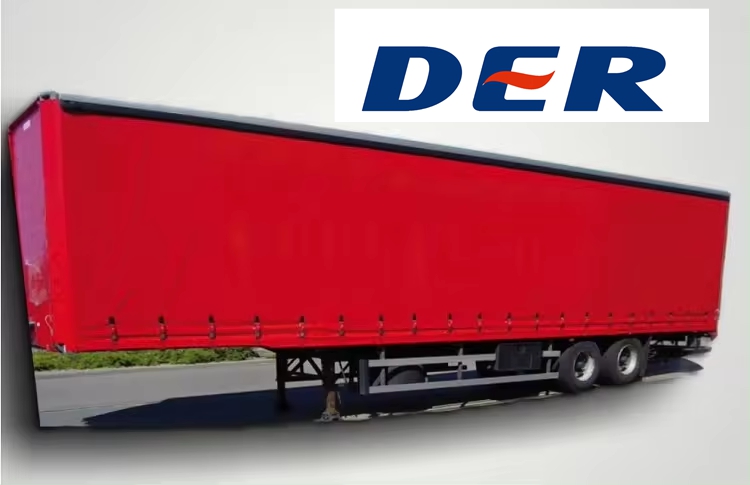
Mesh and solid vinyl can be converted into front-to-back or other replacement covers according to cargo, pocket construction and system geometry.
Replacement fabric can be built around roller tubes, crank or electric systems, pull bars and trailer-specific coverage requirements.
When the load requires a closed surface, PVC coated polyester provides a waterproof material platform that can be welded and reinforced.
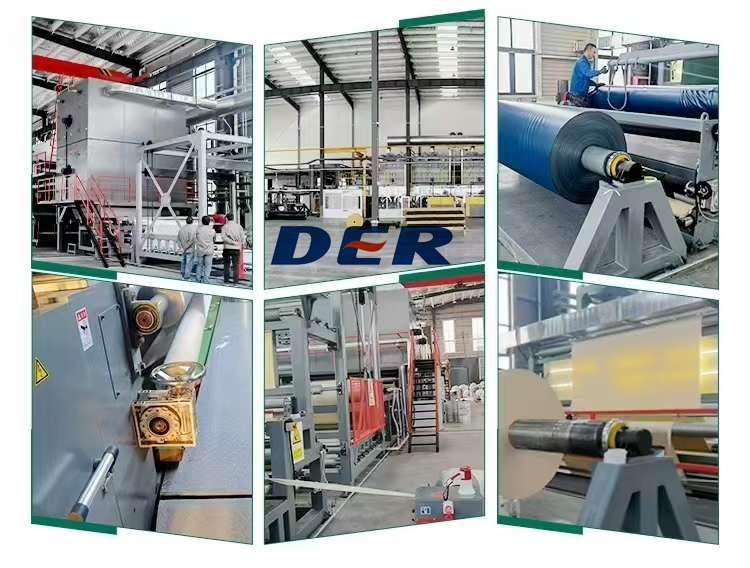
These images are hosted on DERFLEX and can support product understanding, image search and buyer confidence. The first image is used as the non-lazy Hero; below-fold images use lazy loading.
| Buying Format | Best For | Main Advantage | What to Confirm |
|---|---|---|---|
| Continuous roll goods | Converters, tarp-system manufacturers, repair networks and OEM factories. | Highest control over cutting layout, inventory and finished-SKU design. | Width, roll length, core, weight, fabrication method, packing. |
| Cut panels | Shops that want to reduce cutting time but still complete pockets, reinforcement and final assembly locally. | Faster conversion with less in-house cutting waste. | Panel orientation, tolerance, label, edge allowance and packing sequence. |
| Semi-finished components | Programs that need selected reinforcement or seams completed before local installation. | Balances factory processing with local customization. | Which seams/pockets are factory-finished and which remain open. |
| Finished replacement tarp | Fleet, dealer or aftermarket buyers who do not fabricate in-house. | Ready-to-fit cover developed from verified dimensions or an approved sample. | System geometry, old tarp, pockets, bars, reinforcement and pilot fit. |
Fabric weight does not define mesh openness, yarn construction, coating, flex behavior or reinforcement design.
Open mesh allows water through. Use a solid PVC/vinyl direction when the cover needs a closed waterproof material surface.
The old tarp may have stretched, shrunk or worn around a hardware problem. Rebuild the working specification, not only the outside dimensions.
Extra mass can change roll behavior and operator handling. Targeted reinforcement may solve a recurring stress problem more efficiently.
A roll can be technically strong but inefficient if its width, surface or welding behavior does not match the production process.
When material or geometry changes, one validated cover can prevent a fleet-size or dealer-size repeat error.
Six verified DERFLEX content links are used on this page to keep the topic cluster focused without turning the page into a generic truck-tarp hub.
Yes, when the roller, arms, tubes, cables, mounting points or other system hardware remain serviceable. The new cover should be built around the actual working geometry, pocket/attachment details and motion path rather than ordered only from nominal truck-bed dimensions.
PVC/vinyl-coated mesh and solid PVC-coated polyester are common material families. Mesh is selected for breathable containment; solid PVC/vinyl is used when a closed, waterproof material surface is more important. High-temperature or unusual abrasion applications may need a different project-specific structure.
No. Mesh contains openings that allow air and water to pass through. It helps contain loose loads while reducing billowing. Use solid PVC/vinyl when the application needs a waterproof material surface.
Buy roll goods when you cut, weld, sew and finish covers in-house or want to hold material inventory for multiple SKUs. Buy a finished tarp when you need a ready-to-fit replacement and do not have local conversion capability. Cut panels and semi-finished components sit between those two supply models.
Start from the finished panel width, seam plan, cutting yield, machine capacity and roll-handling limits. A wider roll can reduce seams but increases roll mass and may not improve yield if it does not match the finished pattern.
Many PVC-coated polyester tarp grades are designed for hot-air welding, and selected grades may also suit HF welding. The exact material, surface and welding parameters should be confirmed by sample or trial before bulk conversion.
Send material type, current sample or photo, target roll width, fabrication method, finished tarp or panel size, system type, cargo, color, required performance, quantity, packaging, destination and any required test standard.
DERFLEX can discuss repeat roll-goods and finished-tarp programs with controlled material direction, color, dimensions, labels and packaging. Final commercial terms, MOQ and lead time should be confirmed for the selected specification rather than assumed from a generic product page.
Send DERFLEX your current tarp material, roll width, finished cover size, system type, fabrication method, cargo, quantity and destination. If you have a worn cover, include photos of recurring damage and the pocket/attachment areas so the next specification can address the real failure point.